How to Build a Price Comparison Habit Before Shopping
You are standing in the aisle with an item in your hand, and your phone is in your pocket.
Most of us know we should compare prices. We just do not do it consistently. It feels like extra work, the moment passes, and the item goes into the cart. Later, we see the same thing for less somewhere else and feel a small pang of regret.
The fix is a habit, and willpower plays only a small part. Habits are built from a clear trigger, a simple routine, and a reward. This guide shows you how to turn price comparison into something you do almost automatically, without letting it take over your day. You will set a limit so it stays quick, and you will learn how to count what you save.

Know What You Plan to Spend Before You Shop
Download the free Money Reset Workbook and get a simple way to plan your purchases, so comparing prices becomes part of how you spend.
Get the Free WorkbookUnderstand why comparing is worth the small effort
A few minutes of checking can lower the price of many purchases, and the savings repeat every time you shop. Small differences matter most on things you buy again and again, and on bigger items where the gap can be large. If you like to think about how everyday choices shape your budget, my budgeting tips for creating a smarter money plan may help.
Comparing means knowing whether a price is fair and choosing on purpose, and it has little to do with hunting for the absolute lowest price at any cost.
Think of it as a short pause that protects your money.
Write down two purchases from the last month where you did not compare, and what you might have checked.
Pick your trigger, so the habit has a starting point
Habits begin with a cue. Choose a clear trigger for comparing, such as any non-grocery purchase over a certain amount, or any item you will use for a long time. Pick a number that fits your budget, perhaps twenty-five or fifty dollars, and write it down.
Make the trigger specific, so you do not have to decide each time. When the price is over your number, you compare. When it is under, you can buy without a fuss.
A simple rule is easier to follow than a vague intention.
Choose a dollar amount above which you will always compare prices, and write it on a note in your phone.

Keep a Reminder to Pause and Compare
Premier Print Works creates quality prints, mugs, and shirts for thoughtful shoppers. Find a small reminder to check before you buy.
Visit Premier Print WorksCreate a short checklist you can run in a few minutes
A checklist keeps comparing quick. Check the price at two or three other sellers. Look at the unit price, which is the price per ounce or per count, so sizes can be compared fairly. Add shipping, tax, and fees to see the total. Glance at recent reviews for quality. Check the return policy.
Write the checklist in your notes, and keep it handy. After a few times, you will know it by heart.
You are not trying to be perfect, just reasonably informed.
Write a five item comparison checklist, and save it somewhere you can reach quickly.
“A few minutes of comparing can protect your money on every purchase you make.”
Set a time limit, so comparing does not become a chore
The biggest threat to this habit is turning it into a long project. Set a limit, such as ten minutes for most purchases, and a bit longer for large ones. When the timer ends, decide with what you have.
A good-enough decision made quickly is better than a perfect one that costs an hour. Remember that your time has value, too.
If the potential savings are tiny, skip the extended search and move on.
Set a ten minute timer the next time you compare, and decide when it rings.
Track What Comparing Saves You
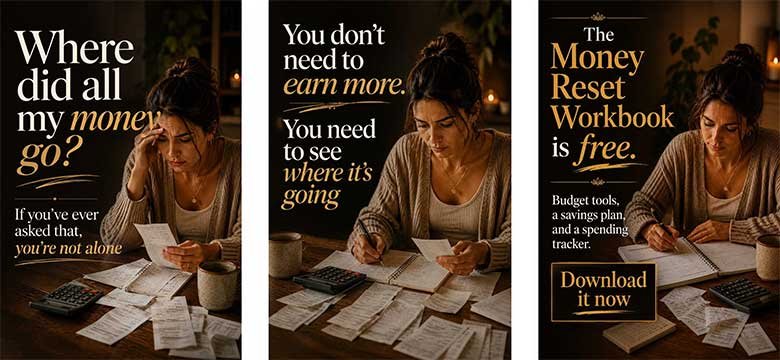
The free Money Reset Workbook gives you a clear page to record your savings, so you can see your new habit paying off.
Get the Free WorkbookUse a simple tool, such as a price notebook or note
Keep a short list of the things you buy often, with the usual price and the best price you have seen. After a few weeks, you will know instantly whether a price is good. Over time, this can replace much of your searching. For help organizing it with the rest of your money, these personal finance ideas for building a better budget fit well.
Add the store and the date, so you can see patterns. Many prices rise and fall in cycles, and your notes will show you when to buy.
Keep it on your phone or in a small notebook, wherever you will actually use it.
Start a price list with five items you buy regularly, and record today’s price for each.
Compare the total cost, and not just the sticker price
A low price can grow once you add shipping, tax, fees, or the extras you need. A cheaper item that needs a special accessory may cost more than a slightly pricier one that includes everything. Also think about how long something will last.
Check whether a store offers price matching, which means it may match a lower price from a competitor. Rules vary, so read the policy before you rely on it.
Weigh quality and cost together. The cheapest option is not always the best value.
For your next comparison, write the total cost at each seller, including shipping and tax.
Do not let the search cost more than the savings
Driving across town to save two dollars can cost more than it saves, once you count the fuel and time. Spending an hour to save a few cents rarely makes sense. Decide in advance what a reasonable amount of effort is for the likely savings. For help staying steady with your spending plan, these budgeting tips that help you take control of your money may be useful.
For larger purchases, the effort is more likely to pay off. For small ones, a quick check is usually enough.
Keep it proportional, and enjoy the feeling of a good decision.
Write a simple rule for how much effort you will spend comparing based on the size of the purchase.
Reward yourself, so the habit sticks
Habits grow when they feel good. Each time you compare and save, note the amount. Keep a running total in your notes. Seeing the number grow is a real reward.
You can also treat yourself to something small and free when you hit a milestone, like a favorite show or a walk with a friend. Some people move the savings into a separate account, so the money becomes visible.
A little celebration makes you more likely to repeat the habit.
Start a running total of your comparison savings, and decide what you will do when you reach your first milestone.
Keep the habit going, and refine it over time
After a month, look at your notes. Which comparisons saved the most? Which were a waste of time? Adjust your trigger and checklist. Over time, your instincts will sharpen, and the habit will feel natural. If you want to turn your savings into steady progress, these money saving habits that help you build financial confidence are a good companion.
Share the habit with your household, so everyone knows to pause before buying. Make it a friendly game rather than a rule.
The goal is to keep more of your money, with less stress.
At the end of the month, review your comparison notes, and adjust one thing about your trigger or checklist.
Explore Our Top Picks for a Better Life
We have gathered the tools, resources, and products we think are genuinely worth your time, covering mindset, self-care, health, and home. All in one place, hand-picked to support wise, confident spending.
See Our Top PicksReal Stories, Real Results
Let me share two examples I like to use. Amara wanted to compare prices more often, and she kept forgetting. She set a rule that any purchase over thirty dollars gets a ten minute comparison, and she saved a short checklist in her phone. She told me that after a few weeks, it became almost automatic, and she kept a running total of what she saved.
Joel’s challenge was spending too long searching. He added a timer, and he skipped comparing on small items. He said that the limit made the habit feel light, and he began to enjoy finding a better price. Both of them said the same thing: a simple trigger and a time limit made comparing something they actually did.
A Quick Comparison Habit Can Protect Your Money for Years
Picture the next time you reach for something over your set amount. You pause, run your short checklist, and decide within ten minutes. Sometimes you buy it right there, and sometimes you find a better price. Either way, you chose with your eyes open.
Choose your trigger, write your checklist, and set a timer. Download the free Money Reset Workbook to plan your purchases and track what you save. A small habit repeated often can add up to a lot.
Want Ready-Made Tools to Help You Put This Into Action?
Sometimes the fastest way forward is a tool that someone has already built. Browse our hand-picked resources and downloads, chosen to help you take the next step with less guesswork.
Browse Resources and Downloads
Ready to Make Comparing Prices a Habit?
The free Money Reset Workbook helps you see your numbers clearly, so every purchase starts with a plan.
Download Free Now
Fill Your Space With Things Chosen With Care
Premier Print Works makes quality prints, mugs, and shirts for people who compare before they buy. Browse the collection and find what speaks to you today.
Visit Premier Print WorksDisclaimer
The content on this page is for informational and inspirational purposes only. It is not professional financial, investment, tax, legal, insurance, or estate planning advice. Prices, return policies, price matching rules, and fees vary by store and change over time, so please check the details before you buy. Results vary widely from person to person.
The stories of Amara and Joel are illustrative composite characters created to bring the content to life. They are not real people. Any resemblance to a real person is purely coincidental.
Some links on this page, including links to Premier Print Works and other resources, are affiliate links. If you make a purchase through one of these links, we may earn a small commission at no extra cost to you. We do not own, produce, or control any affiliate products, and we are not responsible for them — we only own and sell the products offered through our own store, Premier Print Works.
All content on A Self Help Hub is the property of Digital Marketing 215 LLC and is protected by copyright law. No part of this page may be copied, reproduced, republished, distributed, or transmitted in any form without prior written permission from the author.