How to Use a Cash Envelope Tracker
There is something about handing over real cash that makes you think twice.
When you tap a card, spending feels almost weightless. When you count bills out of an envelope and watch the pile shrink, it feels different. That feeling is the heart of the cash envelope method. Many people find that it helps them stick to a budget, because the limit is something they can see and hold.
A tracker adds one more layer. It is a simple sheet, kept with each envelope, that records what you spend and what is left. Together, the envelope and the tracker give you a clear picture at every moment. This guide shows you how to set the system up, step by step, and how to keep it working. It is useful whether you use physical cash, or a digital version of the same idea.

Set Your Envelope Amounts From a Real Budget
Download the free Money Reset Workbook and get a simple way to choose how much goes in each envelope, so your cash plan matches your income.
Get the Free WorkbookUnderstand how the envelope method works
The idea is simple. You decide how much you can spend in each flexible category for a pay period, such as groceries, gas, eating out, and fun. You take out that amount in cash, and put it in a labeled envelope. When you spend in that category, you use the cash from that envelope. When the envelope is empty, you stop spending until the next pay period. If you want a quick refresher on tracking every dollar, my budgeting tips that help you track every dollar may help.
Fixed bills, like rent, utilities, and loan payments, are usually paid by check or online, and not from envelopes. Envelopes are for the spending that tends to be flexible.
The limit is built into the system, which is why it works for many people.
Write down which of your categories are flexible, and which are fixed bills that you will pay in the usual way.
Choose your envelope categories
Pick the categories where you tend to overspend. Common ones include groceries, gas, eating out, household items, personal care, kids, entertainment, and pets. Three to six envelopes are plenty to start.
Look at your last two or three months of statements to see what you actually spend in each. Use that to set a realistic amount. If you are not sure, start with a number that is a little lower than your average, and adjust.
Fewer categories are easier to manage, so begin with the ones that matter most.
Choose three to six envelope categories, and write down your recent average for each.

Keep a Reminder That Your Plan Is Working
Premier Print Works creates quality prints, mugs, and shirts for people who spend with a plan. Find a small reminder to check your envelopes.
Visit Premier Print WorksDecide the amount for each envelope
Start with your budget. Subtract your fixed bills and savings from your income, and divide what is left among your flexible categories. Match the pay period, whether weekly, every two weeks, or monthly. If you want a clear layout for this, these budgeting ideas that help you track every dollar can help.
For example, if your groceries budget is $480 a month, a weekly envelope would be about $110. Write each envelope’s amount on a list, with the total at the bottom. Make sure the total matches the money you have available.
Be honest and realistic. An envelope that is too tight will cause frustration.
Write the amount for each envelope for your next pay period, and check that the total fits your budget.
“When the envelope is empty, the decision has already been made, and that is the strength of the method.”
Set up your envelopes and your tracker
Use plain paper envelopes, or a small zippered pouch or a binder with pockets. Label each one clearly with its category and amount. On the front of each envelope, or on a card kept inside, make a simple tracker.
A tracker has columns for the date, where you spent, the amount, and the balance. At the top, write the starting amount. Each time you spend, subtract and write the new balance.
Keep the envelopes in a safe place at home, and take only what you need when you go out.
Label your envelopes, and draw a tracker with columns for date, store, amount, and balance on each one.

Plan Your Envelope Amounts in One Place
The free Money Reset Workbook gives you a clear page to assign each category, so every envelope has a purpose and a limit.
Get the Free WorkbookGet your cash, and fill the envelopes
Withdraw cash at the start of each pay period, from your own bank’s ATM to avoid fees. Ask for bills in smaller denominations, so you can make exact payments. Put the right amount in each envelope, and record the starting balance on the tracker. If you use a debit card for everyday spending right now, it may take a month or two to feel natural. For a printable layout, these budget planner pages that help you organize bills and expenses can be a great companion.
If you are paid by direct deposit, plan one trip to the bank or ATM per pay period. Fewer trips mean fewer temptations to spend.
Count the money twice, so your envelopes and your tracker agree.
Withdraw your cash, fill each envelope, and write the starting balance on each tracker.
Record every purchase, and update the balance right away
The tracker only works if you use it. After each purchase, take a moment to write the date, the place, and the amount, and subtract it from the balance. Do it in the moment, or at the end of the day, before you forget.
Here is an example. If your groceries envelope starts at $120, and you spend $38.40 on Monday and $45.15 on Thursday, your balance is $36.45. You can see at a glance how much you have left for the week.
Keep your receipts with the envelope, to check your math if something looks off.
Record every purchase on the tracker for one full week, and compare your balance with the cash in the envelope.
Follow a few simple rules when an envelope runs low
The power of the system comes from the limit, so decide in advance what happens when an envelope is nearly empty. Many people use a simple rule. When it is empty, stop spending in that category until the next pay period. If you must borrow from another envelope, write it down on both trackers, and make it up later. If you want to see where your money has been going, these budgeting habits that help you track spending better may be useful.
If you find that an envelope is often empty early, that is a sign to review the amount, or the habit, and not a reason to give up. If an envelope is often left with a lot, you may be able to lower it, and move money to savings.
Learn from each pay period, and adjust.
Write your rule for what you will do when an envelope runs out, and one for what you will do with leftover cash.
Keep your cash safe, and handle the practical challenges
Cash cannot be replaced if it is lost or stolen, so treat it with care. Keep your envelopes in a safe, hidden place at home, and carry only what you need for the day. Do not leave envelopes in the car.
Online purchases and automatic payments do not use cash. For online spending, you can set aside a separate account or a prepaid card with a set amount, which works like a digital envelope. Some budgeting apps also offer envelope-style features.
If you share finances with a partner, agree on the system together, and decide who handles which envelopes.
Choose a safe spot for your envelopes, and decide how you will handle online spending, such as a separate prepaid card.
Review each pay period, and make the system your own
At the end of each pay period, take ten minutes to review. Add up what you spent in each envelope. Note which ones came in under budget and which ran out early. Decide what to change for next time.
Move leftover cash to savings, or roll it into next period’s envelope, depending on your plan. Celebrate the wins. A small reward, like a favorite meal at home, makes the habit more fun.
After a few months, you may find that you no longer need every envelope, and that a few are enough. The method should serve you.
Schedule a ten minute review at the end of each pay period, and write the three questions you will ask.
Explore Our Top Picks for a Better Life
We have gathered the tools, resources, and products we think are genuinely worth your time, covering mindset, self-care, health, and home. All in one place, hand-picked to support a clear, confident money plan.
See Our Top PicksReal Stories, Real Results
Let me share two examples I like to use. Amara tried to use a budgeting app and kept overspending on groceries. She set up a weekly cash envelope with a tracker sheet, and watched the balance fall. She told me that seeing the cash shrink changed her choices at the store, and she stayed within her limit for the first time.
Joel’s challenge was eating out. He made an envelope for it, and when it was empty, he stayed home. He said that having a clear limit made him choose his meals out more carefully, and he enjoyed them more. Both of them said the same thing: the envelope and the tracker gave them a limit they could see.
A Simple Envelope and a Small Tracker Can Make Spending Feel Real
Picture a few labeled envelopes in a drawer, each with a tracker and a balance you can see. When you spend, you know exactly what is left. When an envelope is empty, you stop, and you feel in control. The month ends with no surprises.
Choose your categories, set your amounts, and fill your first envelope. Download the free Money Reset Workbook to plan your amounts. A hands-on system can make a budget feel much clearer.
Want Ready-Made Tools to Help You Put This Into Action?
Sometimes the fastest way forward is a tool that someone has already built. Browse our hand-picked resources and downloads, chosen to help you take the next step with less guesswork.
Browse Resources and Downloads
Ready to Try a Cash Envelope Tracker?
The free Money Reset Workbook helps you see your numbers clearly, so your envelopes start with the right amounts.
Download Free Now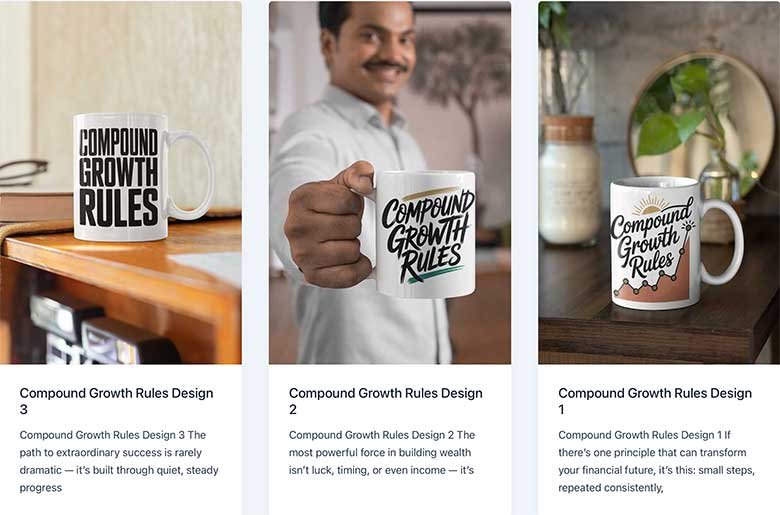
Fill Your Space With a Plan You Can Hold
Premier Print Works makes quality prints, mugs, and shirts for hands-on budgeters. Browse the collection and find what speaks to you today.
Visit Premier Print WorksDisclaimer
The content on this page is for informational and inspirational purposes only. It is not professional financial, investment, tax, legal, insurance, or estate planning advice. The numbers in the examples are made up to show how the method works. Cash that is lost or stolen is generally not recoverable, so please store and carry cash carefully. Bank fees, ATM fees, and account terms vary and change, so please check the details before you decide. Results vary widely from person to person.
The stories of Amara and Joel are illustrative composite characters created to bring the content to life. They are not real people. Any resemblance to a real person is purely coincidental.
Some links on this page, including links to Premier Print Works and other resources, are affiliate links. If you make a purchase through one of these links, we may earn a small commission at no extra cost to you. We do not own, produce, or control any affiliate products, and we are not responsible for them — we only own and sell the products offered through our own store, Premier Print Works.
All content on A Self Help Hub is the property of Digital Marketing 215 LLC and is protected by copyright law. No part of this page may be copied, reproduced, republished, distributed, or transmitted in any form without prior written permission from the author.