Noticing Your Own Patterns Around Payday: A Gentle Self-Awareness Check
What is the first thing you buy after your pay lands in your account? For some people it is groceries. For others it is takeout, a full tank of gas, or something they have wanted for weeks. Few of us stop to look at our payday spending patterns, yet the first day or two after pay can quietly shape the rest of the month.
Payday spending patterns are simply the habits that tend to repeat around the day money arrives. They might look like a rush of errands, a small treat, a burst of bill payments, or a tight feeling in the last few days before the next check. None of these habits make someone good or bad with money. They are just patterns, and patterns can be noticed.
This page offers a gentle self-awareness check, with questions and ideas you can try. It is general information only, not advice or instructions, and it is never meant to judge anyone. Every paycheck and every household is different. Go slowly, and try one small step at a time.

Plan Your Payday Before It Arrives
Download the free Money Reset Workbook and get simple pages to map out bills, needs, and small treats for each payday.
Get the Free WorkbookLook back at your last two paydays
A simple place to start is looking back. You might open your bank activity or gather your receipts and look at the two or three days after your last two paydays. What did you buy, and when?
Try to look with curiosity, the way you might read a stranger’s grocery list. You are gathering clues, and nobody is handing out grades.
Some people jot the purchases into a short list with three columns: what, how much, and how it felt.
List what you spent in the two days after your last payday.
Notice the feeling on payday morning
Payday can bring a strong feeling. Some people notice relief. Others notice excitement, a sense of reward, or even a little dread if most of the money is already spoken for.
Naming that feeling can make it easier to see which purchases tend to follow it. A person who feels “finally, I can breathe” might spend differently from someone who feels “here we go again.”
There is no correct feeling to have on payday. Each one is simply useful to know.
Write one word for how you feel on your next payday morning.
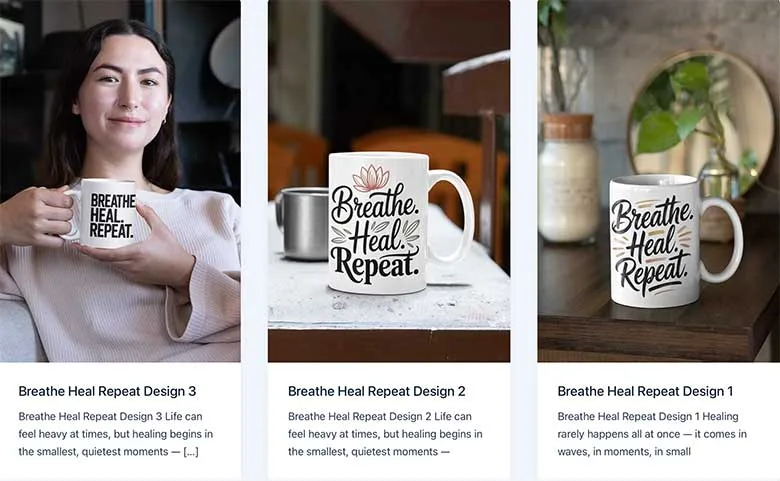
A Calm Reminder for Payday Mornings
Premier Print Works makes quality prints, mugs, and shirts. Find a small reminder to pause before the money moves.
Visit Premier Print WorksWatch for the payday treat
Many people give themselves a small reward when pay arrives. A coffee, a meal out, or a new item can feel well earned after a long stretch.
Here is an example with made-up numbers. Say a payday treat costs about $25, and pay comes every two weeks. Over 26 paydays, that adds up to $650.
Treats can be a fine choice. Seeing the total simply lets you decide whether it still fits your plans. For related reading, see habits for tracking spending.
Add up the payday treats from your last month.
“Each payday leaves a few footprints, and slowing down lets you see where they lead.”
Notice the order your money goes out
Some people pay bills the moment money lands. Others shop first and pay bills later. Either order can work, yet the order can shape how the rest of the pay period feels.
If bills come last, you might notice a tight, worried feeling near due dates. If bills come first, you might notice a calmer stretch with less left over for fun. Paying attention to your order can show which trade-off you tend to choose.
One option some people try is listing bills in due-date order on payday, before any other spending.
Write down the order your money went out last payday.

Keep Your Payday Log in One Place
The free Money Reset Workbook gives you a clear page to note what you paid first and how it felt, so patterns are easy to spot.
Get the Free WorkbookPay attention to the last few days before pay
The days just before payday can say a lot. Some people notice they eat what is left in the pantry, skip outings, or move money around to make it stretch.
Those last days can feel tight. Noticing how they feel can be useful when planning the next pay period. You might ask, “What would make the final three days feel a bit easier?”
Another place to look is ways to stop living paycheck to paycheck.
Write one thing that might help the last days before payday feel easier.
Spot the money that slips away in small pieces
Big bills are easy to see. Small purchases can slip by unnoticed. A snack here, a delivery fee there, a monthly charge you forgot about.
Here is another example with made-up numbers. Five small purchases of $6, $9, $4, $12, and $8 add up to $39 in the first week after payday. Each one felt tiny on its own.
Noticing the small ones can make your choices feel more like your own. You may also like budgeting when living paycheck to paycheck.
Circle the small purchases from your last pay period and add them up.
Ask what a pattern might be giving you
Most patterns stick around because they offer something. A payday dinner out might give you rest after a long week. A shopping trip might give you a sense of control.
Seeing what a pattern gives you can open up other ways to get the same thing, if you want them. A free afternoon at the park might bring rest too. A written plan might bring that same sense of control.
Some patterns you may decide to keep, and that choice is yours.
Write one pattern and one thing it seems to give you.
Try a gentle payday pause
One idea some people try is a short pause on payday before spending anything extra. It might be ten minutes, an hour, or until the bills are paid.
During the pause, you might look at what is due, check your list, and notice how you feel. Then you decide what comes next.
For related reading, see choosing a weekly or monthly budget.
Choose how long your payday pause might be.
Keep a three-line payday log
A log can reveal patterns over time. On each payday, you might write three lines: how you felt, what you paid first, and one thing you bought for fun.
After a few paydays, you can look back and see what repeats. Many people find that a pattern on paper feels easier to work with than one that only lives in their head.
A notebook, a phone note, or a sheet taped inside a cabinet can all hold the log.
Start a three-line payday log on your next payday.
Know where to turn when pay falls short
Sometimes the hardest pattern has little to do with habits. The pay simply may fall short of the bills. That can happen to anyone, and it says nothing about your worth.
Free help exists. A nonprofit credit counselor can talk through options, legal aid can help with legal questions, and in the United States, 2-1-1 can point to local help with food, rent, or utilities. Payday loans and other costly shortcuts can make things harder, so many people talk with a counselor first.
If money worries feel heavy, a doctor, counselor, or trusted person can help.
Save 2-1-1 and a local credit counseling number in your phone.
Explore Our Top Picks for a Better Life
We have gathered the tools, resources, and products we think are genuinely worth your time, covering mindset, self-care, health, and home. All in one place, hand-picked to support the goals you are working toward.
See Our Top PicksReal Stories, Real Results
Let me share two examples I like to use. Amara always felt broke by the second week after payday and could not see why. She kept a three-line log for two months. She noticed she ordered takeout almost every payday night because she felt worn out. She told me that seeing it in writing helped her plan an easy dinner at home for payday nights instead.
Joel paid his bills last and often felt a jolt of worry near due dates. He tried paying everything first on payday, then spending what was left. The money was the same, and his weeks felt calmer. Both of them said the same thing: noticing the pattern came first, and small changes felt easier after that.
A Payday That Feels Steady
Picture your next payday. You notice how you feel, take a short pause, and look at what is due. You pay what matters first, enjoy a small treat you planned for, and the rest of the pay period feels a little more settled.
Pick one question from this check to try on your next payday. Download the free Money Reset Workbook to keep your payday plan and your log in one place. Small moments of noticing can add up.
Want Ready-Made Tools to Help You Put This Into Action?
Sometimes the fastest way forward is a tool that someone has already built. Browse our hand-picked resources and downloads, chosen to help you take the next step with less guesswork.
Browse Resources and Downloads
Ready for a Steadier Payday?
The free Money Reset Workbook helps you see your numbers clearly, so each paycheck has a plan from the first day.
Download Free Now
Make Payday Mornings a Little Brighter
Premier Print Works offers prints, mugs, and shirts for people building calmer money habits. Browse the collection and see what you like.
Visit Premier Print WorksDisclaimer
The content on this page is for informational and inspirational purposes only. It is not professional financial, investment, tax, legal, insurance, or estate planning advice. The questions and ideas here are examples only. Nothing here is counseling, medical, or mental health advice, and a doctor, counselor, or trusted person can help with heavy feelings. If pay is falling short, a nonprofit credit counselor or a legal aid office can explain options, and in the United States, 2-1-1 can point to local help. The example numbers are made up to show how the math works. Prices, fees, and account terms vary and change, and results vary widely from person to person.
I am not a financial advisor, and I am not a licensed tax, legal, or investment professional. I share this information to help people learn about money and see new options. Please treat it as general information only, and talk with a qualified professional about your own situation before making financial decisions.
The stories of Amara and Joel are illustrative composite characters created to bring the content to life. They are not real people. Any resemblance to a real person is purely coincidental.
Some links on this page, including links to Premier Print Works and other resources, are affiliate links. If you make a purchase through one of these links, we may earn a small commission at no extra cost to you. We do not own, produce, or control any affiliate products, and we are not responsible for them — we only own and sell the products offered through our own store, Premier Print Works.
All content on A Self Help Hub is the property of Digital Marketing 215 LLC and is protected by copyright law. No part of this page may be copied, reproduced, republished, distributed, or transmitted in any form without prior written permission from the author.