The First Side Income Challenge: A Four-Week Plan to Test One Idea
Plenty of people carry a side income idea around for years. Maybe it is dog walking, baking, tutoring, or fixing bikes. The idea feels exciting, and it also feels risky, so it stays in the back of the mind.
A side income challenge gives that idea a small, safe test. For four weeks, you try one idea on a tiny scale, with a clear limit on time and money. At the end, you look at what happened and decide what to do next. The point of a side income challenge is to learn, not to build a business overnight.
This guide offers a week-by-week plan, ways to keep costs low, and a simple way to judge results. It shares general ideas to consider, and it is not advice. Income is never guaranteed, and every situation is different. Take it one week at a time.

Plan Your Four-Week Test
Download the free Money Reset Workbook and get simple pages to set your limits and track hours, income, and costs.
Get the Free WorkbookBefore you start: set a time limit and a money limit
A test works best with clear limits. Decide how many hours a week you can give without hurting your sleep, job, or family time. For many people, a few hours a week is plenty for a first try.
Set a money limit too. Many first ideas can start with little or no spending. Keeping the cost low means the test can end without regret if the idea does not work out. For related reading, see comparing side hustles by startup cost.
Write both limits down. They are your guardrails for the next four weeks.
Write down your weekly time limit and your total money limit.
Week 1: list your ideas and pick just one
Start by writing down every side income idea you have had. Think about skills you already use, hobbies people ask you about, or tasks friends have paid others to do.
Then pick one. A good first idea is something you already know how to do, that fits your schedule, and that does not need much gear. You can always test another idea later. You may also like choosing a side hustle that fits your schedule.
Choosing one idea keeps the test clean, so you can see clearly what worked.
List five ideas and circle the one you will test first.
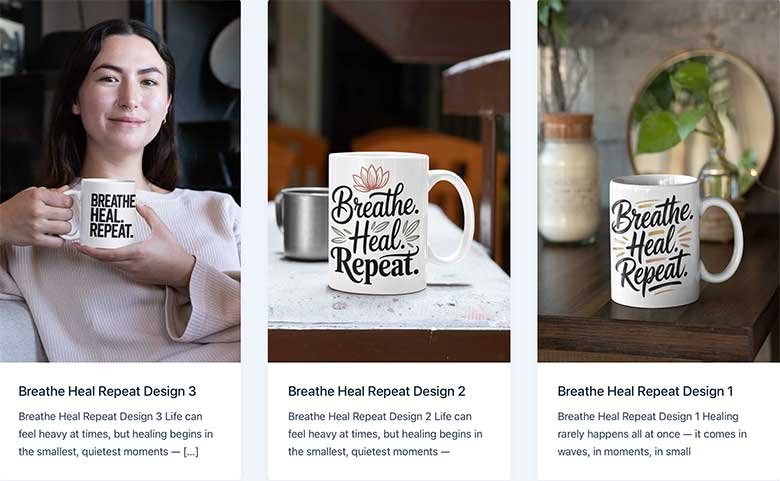
A Small Reminder to Try Your Idea
Premier Print Works creates quality prints, mugs, and shirts for people who test bold ideas. Find a reminder for your workspace.
Visit Premier Print WorksWeek 1: check the basic rules first
Some side work comes with rules. Your main job may have a policy about outside work. Some cities need permits for certain services. Renters may have lease rules about running a business from home.
Side income is often taxable, and tax rules vary from place to place. A qualified tax professional can explain what may apply to you. Keeping simple records from day one can make this easier later.
Checking these things first can save trouble down the road.
Write down any rules you will look into before taking on customers.
“A small test teaches more than a big dream that never leaves your notebook.”
Week 2: build the smallest possible version
The goal in week two is a tiny offer you can try right away. If you bake, it might be one type of cookie. If you tutor, it might be one subject for one age group. Simple is the point.
Write a short description of what you offer, in plain words. Who is it for? What do they get? How long does it take? A short paragraph is enough.
There is no need for a fancy website or logo yet. Those can come later, if the idea grows.
Write a three-sentence description of your tiny offer.

Track Your Side Income Test
The free Money Reset Workbook gives you a clear page to log every hour and every dollar.
Get the Free WorkbookWeek 2: set a simple price
Pricing can feel tricky. One way to start is to look at what others nearby charge for something similar. Another is to think about your time and any costs, then pick a number that feels fair.
It is okay to treat your first price as a test. You can change it later based on what you learn. Some people offer a small first-customer price and say so clearly.
Keep track of any costs, like supplies or gas, so you know what each sale truly brings in.
Write down your starting price and the costs for one sale.
Week 3: tell a small circle and find first customers
First customers often come from people you already know. A friendly note to friends, family, or neighbors can be a gentle start. You might say, I am testing a small service, and I would love feedback.
Local community boards and neighborhood groups can be helpful too. Be careful with online platforms that ask for fees up front or promise big earnings. For related reading, see ways to earn online with simple skills.
A handful of customers is plenty for a first test. The goal is learning, not volume.
Write a short message you could send to five people you know.
Week 3: track every hour and every dollar
Simple tracking turns a test into real information. Write down the hours you spend, the money you bring in, and any costs. A notebook or a basic spreadsheet works well.
Here is an example with made-up numbers. Say someone spends 10 hours on a test, earns 120 dollars, and spends 20 dollars on supplies. That leaves 100 dollars. Divided by 10 hours, that is 10 dollars an hour. Seeing the hourly number can help you judge the idea. Another place to look is tracking side hustle income and costs.
Also note how you felt. Did the work give you energy, or drain it?
Start a simple log for hours, income, costs, and feelings.
Week 4: look honestly at the results
In the last week, sit down with your notes. How many hours did you spend? How much did you bring in after costs? What did customers say? What did you enjoy, and what felt hard?
There is no wrong answer. A test that shows an idea is not a good fit has still done its job. It saved you from spending more time or money on the wrong path.
Some people find that a small change, like a higher price or a different customer group, could make a big difference.
Answer four questions about your test in writing.
Week 4: decide to keep, change, or stop
Once you have looked at the results, you have three main choices. You can keep going as you are, make a change and test again, or stop and try a new idea.
Each choice is valid. Keeping going might mean setting a new four-week goal. Changing might mean a new price or offer. Stopping might mean you learned something valuable for your next idea.
Whatever you choose, the skills you used, like planning, pricing, and tracking, will help with any future idea.
Write down your choice and one reason for it.
Explore Our Top Picks for a Better Life
We have gathered the tools, resources, and products we think are genuinely worth your time, covering mindset, self-care, health, and home. All in one place, hand-picked to support the goals you are working toward.
See Our Top PicksReal Stories, Real Results
Let me share two examples I like to use. Amara had always wanted to sell her homemade candles. She set a small supply budget and a limit of four hours a week. She sold to friends and a neighborhood group, and tracked every cost. She told me that the test showed her she loved making candles but needed a higher price to make it worth her time.
Joel tested a weekend bike repair idea. After four weeks, his notes showed that he earned a little, and he also felt worn out from giving up his Saturdays. He decided to stop and try tutoring later. Both of them said the same thing: the four-week test gave them real answers instead of guesses.
Four Weeks Can Turn an Idea Into an Answer
Picture yourself at the end of your test, notebook in hand. You know how many hours the idea took, what it brought in, and how it felt. Whether you keep going or try something new, you are making a choice based on real information.
You could start by listing your ideas tonight. Download the free Money Reset Workbook to set your limits and track your test. One small idea is a good place to begin.
Want Ready-Made Tools to Help You Put This Into Action?
Sometimes the fastest way forward is a tool that someone has already built. Browse our hand-picked resources and downloads, chosen to help you take the next step with less guesswork.
Browse Resources and Downloads
Ready to Test Your First Idea?
The free Money Reset Workbook helps you see your numbers clearly, so your next step is based on facts.
Download Free Now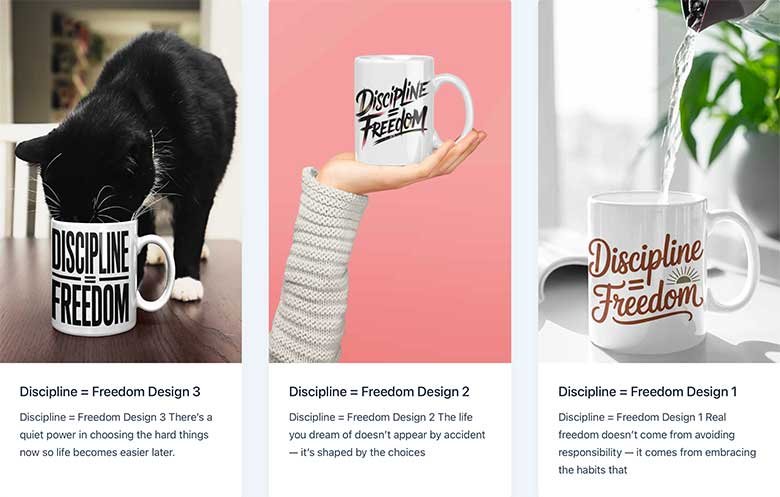
Celebrate Taking the First Step
Premier Print Works makes quality prints, mugs, and shirts for people who try new things. Browse the collection today.
Visit Premier Print WorksDisclaimer
The content on this page is for informational and inspirational purposes only. It is not professional financial, investment, tax, legal, insurance, or estate planning advice. Income is not guaranteed, and many side ideas earn little or nothing at first. The numbers in the example are made up to show how the math works. Tax rules, permits, and local laws vary and change, so a qualified tax professional or local office can explain what applies to you. Please be careful of programs that charge fees up front or promise fast income. Results vary widely from person to person.
I am not a financial advisor, and I am not a licensed tax, legal, or investment professional. I share this information to help people learn about money and see new options. Please treat it as general information only, and talk with a qualified professional about your own situation before making financial decisions.
The stories of Amara and Joel are illustrative composite characters created to bring the content to life. They are not real people. Any resemblance to a real person is purely coincidental.
Some links on this page, including links to Premier Print Works and other resources, are affiliate links. If you make a purchase through one of these links, we may earn a small commission at no extra cost to you. We do not own, produce, or control any affiliate products, and we are not responsible for them — we only own and sell the products offered through our own store, Premier Print Works.
All content on A Self Help Hub is the property of Digital Marketing 215 LLC and is protected by copyright law. No part of this page may be copied, reproduced, republished, distributed, or transmitted in any form without prior written permission from the author.