11 Emotional Boundaries Quotes That Help You Say No Without Guilt
The guilt that comes with saying no is not evidence that the no was wrong. It is evidence of how thoroughly the people-pleasing habit has been reinforced over time. The person who learned early that their value was tied to their availability — to the yes, the accommodation, the putting of other people’s comfort before their own — will feel the guilt as the alarm system that was installed to prevent the boundary from being set. The alarm is not truth. It is conditioning. And conditioning can be unlearned.
These eleven quotes are part of the unlearning. They are the clear-eyed reminders that the boundary is not an act of selfishness. That the no said with care is not unkind. That the protection of your own time and energy is not something you have to apologize for. Save the ones that reach the specific guilt that is loudest for you. Return to them when the yes begins to form against your actual wishes. The no you need to say is available. These words help it become possible.

Free Download: The Self-Care Starter Kit
Holding boundaries is easier from a foundation of daily self-care that keeps you grounded in your own needs and your own worth. The free Self-Care Starter Kit gives you simple daily practices for your mind, your body, and your inner life. Download it free today.
Get the Free Self-Care Starter KitQuote 1
“No is a complete sentence — and it does not require your explanation or your guilt.”
The over-explanation is one of the most reliable signs of a boundary set without the internal belief that it is allowed. The person who is confident in the no delivers it briefly and cleanly. The person who is still seeking external permission to have the boundary delivers it with multiple reasons, apologies, alternative offers, and qualifications that collectively suggest the no is provisional and available for negotiation. The over-explanation is the guilt showing its work.
No is a complete sentence. It does not require the three-paragraph explanation of why, the apology for the inconvenience, the alternative suggestion offered to make the no more palatable, or the reassurance that you still care about the person despite the refusal. These additions are the guilt tax. Stop paying it. The no is sufficient. Deliver it. Let it stand. The explanation and the guilt are not required by the person asking for them — they are demanded by the internal belief that the no needs to be earned before it is valid. It does not. It is valid as said.
“Every time you say no to what drains you you are saying yes to what matters most.”
Quote 2
“Every time you say no to what drains you you are saying yes to what matters most.”
The no and the yes are always paired. The no to the obligation that costs more than it returns is the yes to the energy that the thing being protected needs. The no to the commitment that was never genuinely wanted is the yes to the time that the genuinely wanted thing requires. The no to the relationship dynamic that consistently depletes is the yes to the relationships that genuinely restore. Every no is a redirection of a limited resource toward something with a better return. The guilt about the no ignores the yes it is making possible.
When the guilt arrives at the moment of the no ask the full question. What am I saying yes to by saying this no? Name it specifically. The afternoon protected for the creative work. The energy preserved for the people who genuinely matter. The time returned to the rest that the next productive day requires. The yes is real. It is as real as the no and it is what the no is for. Hold the yes when the guilt arrives about the no. The guilt narrows the view to the refusal. The yes is the full picture.
“No is a complete sentence — and it does not require your explanation or your guilt.”
Quote 3
“A boundary is not a wall — it is a door you choose who to open.”
Boundaries are often misunderstood as the act of closing — of shutting people out, of withdrawing from connection, of building the protective barrier that prevents intimacy. The misunderstanding comes from confusing the wall with the door. A wall excludes everything. A door chooses what to admit. The boundary is not the wall. It is the door that allows genuine connection with the people and things that belong inside it while declining the things that do not.
The boundary does not reduce the connection available to you. It improves the quality of it by determining that the connection allowed in is the kind that is genuinely welcome rather than merely permitted by the absence of the ability to refuse it. The relationships that exist inside a genuine boundary are better relationships than the ones that exist only because the door was never present. You are not shutting people out. You are deciding what gets in. That decision is the protection that makes real openness possible.
“Every time you say no to what drains you you are saying yes to what matters most.”
Quote 4
“You teach people how to treat you by what you accept and what you decline.”
The absence of the boundary is not neutral. It is a communication. It tells the people in your life what you will accept and therefore what they can expect to continue offering without cost. The treatment that is declined once is the treatment that is less likely to be repeated. The treatment that is accepted indefinitely becomes the established dynamic — the one that both people adjust to as the normal of the relationship. You are always communicating something with what you accept. The question is only whether it is the communication you intended.
This is not blame for the treatment received in the absence of a boundary. Most people are not consciously taking advantage of the absence of limits — they are simply operating within the space available. The boundary changes what space is available. The changed space produces changed behavior, not always immediately but eventually. You are not controlling other people with the boundary. You are communicating clearly about what you are available for. That clarity is one of the most respectful things you can offer any relationship.
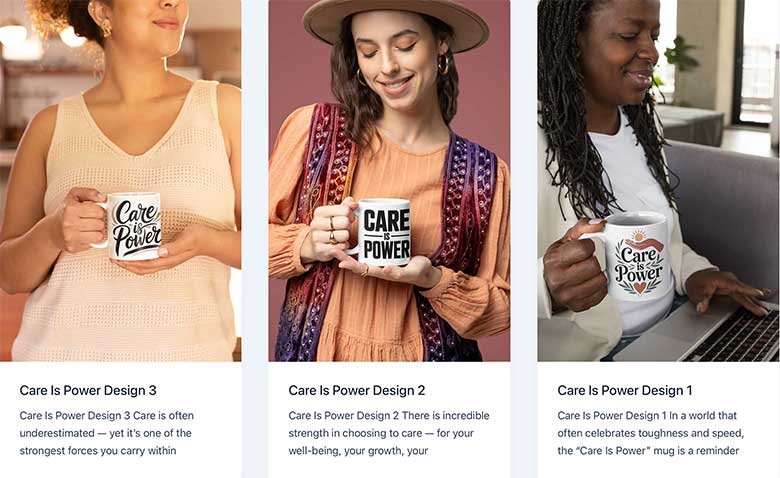
Visit Premier Print Works
Keep the boundaries quotes that remind you the no is not selfish visible where the daily deciding happens. Premier Print Works offers prints, mugs, and art for the person who is learning to hold the line with grace and without the guilt that was never theirs to carry. Visit the shop today.
Visit Premier Print WorksHow Sorcha Learned That the Guilt Was the Signal Not the Verdict
Sorcha had been unable to say no for as long as she could remember with any reliability. She could say it in the small situations — the piece of cake she did not want, the minor request she was genuinely too busy to fulfill. But in the situations that felt emotionally significant — the request from someone she cared about, the expectation from a group she wanted to belong to, the implied need from someone who had not asked directly but clearly wanted something she could give — the no consistently became a yes even when everything in her wanted to say otherwise.
She spent several months with a therapist working specifically on this pattern. The most useful thing the therapist named was the relationship between the guilt and the conditioning. Sorcha had been taught, through years of accumulated experience in her family of origin, that her worth was tied to her availability. That the yes made her lovable and the no put the love at risk. The guilt she felt when the no formed was the conditioned alarm system installed to protect the worth from the perceived risk of the refusal. It felt like a verdict — like the guilt was confirming that the no was wrong. It was not a verdict. It was the alarm doing its job.
She started treating the guilt differently. Instead of receiving it as confirmation that the no was a mistake she began receiving it as information about where the conditioning was active. The guilt as signal rather than the guilt as verdict. When the guilt arrived she asked: what old belief is this protecting? Almost every time the answer was some version of the same thing — the belief that the no would cost her something essential. Naming the belief did not make the guilt disappear immediately. It separated the guilt from the authority it had been given. The no did not require the guilt’s permission. The guilt was the alarm. The decision about whether to unlock the door belonged to her, not to the alarm.
Quote 5
“Saying no to one thing is always saying yes to something better — including yourself.”
The guilt of the no often comes partly from the focus on the person who received it. The disappointment they may feel. The need that will not be met by your yes. The thing that will not happen because you declined. This focus is real and the care it represents is genuine. What it misses is the full picture — what the person who said the no is saying yes to by doing so. And that yes, in the accounting the guilt never makes, often matters more than the guilt is willing to acknowledge.
Including yourself in the yes is not selfishness. It is the honest recognition that you are also one of the people your resources are meant to serve. The no that protects your energy is a yes to your own functioning. The no that protects your time is a yes to your own priorities. The no that protects your emotional capacity is a yes to your own wellbeing. You are allowed to be one of the recipients of the yes the no makes possible. You are allowed to include yourself in the accounting. The guilt that forgets you are there is doing incomplete math.
“No is a complete sentence — and it does not require your explanation or your guilt.”
Quote 6
“The people worth keeping in your life will respect the boundary — and those who do not are showing you something important.”
The boundary test is one of the most clarifying things a relationship can experience. The person who, when they receive a genuine and clearly delivered no, responds with respect for the limit — even if they are disappointed — is showing something about the nature of the relationship. The person who responds with pressure, manipulation, guilt induction, or persistent attempts to override the limit is showing something about the nature of the relationship too. Both responses are information. The boundary provides the conditions for the information to be revealed.
The fear that the boundary will cost the relationship is often a fear about a relationship that the boundary is actually testing. The relationship worth keeping does not require the constant sacrifice of your limits to be maintained. It can hold a no without that no ending it. The relationship that cannot hold a no without threatening its continuation is not the secure connection it presents as — and the boundary is doing the valuable work of making that visible. The people worth keeping will stay. The clarity about those who will not is also valuable.
“Every time you say no to what drains you you are saying yes to what matters most.”
Quote 7
“You cannot pour from an empty vessel — the no that protects the vessel protects everyone it serves.”
The caregiving instinct — the genuine desire to be available and helpful and present for the people who matter — is one of the most beautiful human qualities. It is also one of the most reliably depleted ones when it is given without limits. The person who pours without refilling runs out. And the empty version of the generous person has nothing left to give in exactly the situations where the giving most needs to happen. The no that protects the capacity is the thing that makes the future yes sustainable.
The boundary in service of the caregiving is not the opposite of the caregiving. It is the maintenance of it. The person who says no to the things that drain them most is the person who still has something real to offer the people they love most when the people they love most need it. The boundary protects the capacity. The capacity makes the genuine giving possible. The no is in service of the yes that the people who matter are waiting for. Tell the guilt that. The no is how you stay available for what actually matters.
“No is a complete sentence — and it does not require your explanation or your guilt.”
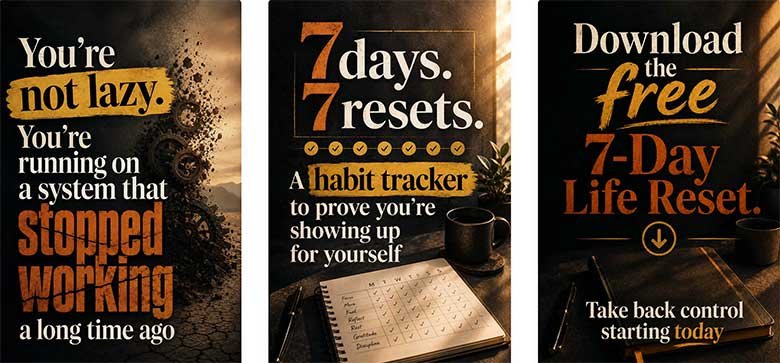
Free Download: The 7-Day Life Reset
Holding boundaries is easier from an intentional daily structure that keeps the most important things protected. The free 7-Day Life Reset gives you seven simple focused days to reset your daily habits and build the daily foundation from which saying no without guilt becomes more natural. Download it free today.
Get the Free 7-Day ResetQuote 8
“A boundary set with love is still a boundary — and it does not need to apologize for existing.”
The boundary does not have to be harsh to be real. The most effective and most sustainable boundaries are delivered with warmth rather than defensiveness. With care for the relationship and clarity about the limit. With the tone of someone who values the person they are declining rather than the tone of someone who is building a wall against them. The warmth does not soften the boundary into negotiability. It delivers it in a way the relationship can hold.
The gentle no is still a no. The kind delivery is not an apology for the limit. The warm tone does not obligate any further explanation or any reduction of the boundary’s clarity. You can say no with love and mean the no completely. The love and the limit can coexist. They do not contradict each other. The apology is not required by the caring. It is added by the guilt. The boundary set with love does not need the apology the guilt wants to attach to it. Let it stand as it is — warm, clear, and without apology.
“Every time you say no to what drains you you are saying yes to what matters most.”
Quote 9
“The discomfort of saying no is smaller than the resentment of the yes you did not mean.”
The yes given against the genuine preference produces something over time that the momentary discomfort of the no would not have produced. The resentment that accumulates from the repeated sacrifice of the genuine preference. The slow erosion of the energy that the unwanted yes keeps consuming. The distance that grows in relationships where the honest no was never allowed because the false yes was always substituted. These are the real costs of avoiding the discomfort of the no. They are larger than the discomfort they were avoiding.
The discomfort of the genuine no is real and it passes. The discomfort of the yes that was not meant tends to stay and compound. The guilt in the moment of the no is uncomfortable. The resentment of the month of the unwanted yes is more uncomfortable over a longer duration. When the comparison is made honestly the no — despite its short-term discomfort — is the kinder option for everyone. For you and for the relationship. The resentment that grows from the repeated false yes is not good for either one.
“No is a complete sentence — and it does not require your explanation or your guilt.”

Learning to Hold Boundaries Through Recovery? This Is for You.
For some people, learning to say no without guilt is one of the most important and ongoing parts of the recovery journey. If that is where you are, the free Sober Survival Guide offers honest daily support for the person building that capacity. Download it free.
Get the Free Sober Survival GuideQuote 10
“Your no is not a rejection of the person — it is a protection of yourself, and there is a difference.”
The conflation of the no with the rejection is one of the most common misunderstandings in boundary-setting — both in the person receiving the no and in the person saying it. The no feels like a rejection of the person because the person and the request have been merged in the understanding of what is being declined. But the no is almost always about the request, the situation, the timing, the capacity, or the direction — not about the worth of the person who asked.
Separate them clearly for yourself before delivering the no. I am declining this specific request at this specific time because of these specific reasons that have nothing to do with my valuation of you as a person. That internal clarity makes the delivery cleaner and the guilt lighter. The person is not being rejected. The request is being declined. The distinction is real and it is worth holding in both directions — when you are setting the boundary and when you are helping the person who received it understand what it means and what it does not.
“Every time you say no to what drains you you are saying yes to what matters most.”
Quote 11
“You are allowed to change your mind, add a limit, or say no to something you once said yes to — growth looks like that sometimes.”
The previous yes is not a permanent contract. The agreement made from a different place of understanding, a different capacity, a different season of life — that agreement can be revisited when the understanding, the capacity, or the season changes. The person who was once able to give a thing freely and is no longer able to do so has not made a promise they are obligated to keep indefinitely regardless of cost. They have changed. The arrangement can change with them.
The guilt of the changed yes — of the limit added to something that was once unlimited, of the no replacing a previous yes — is often sharper than the guilt of the original no. It carries the additional weight of appearing inconsistent or unreliable. But the consistency that matters is not the consistency of always saying yes to the same things. It is the consistency of honoring your own genuine capacity and communicating honestly about what it currently is. That consistency is more respectful to everyone involved than the false yes maintained past its actual availability. You are allowed to change your yes. Growth looks like that sometimes.
“No is a complete sentence — and it does not require your explanation or your guilt.”
How Weld Finally Said the No That Changed the Character of a Relationship He Had Been Exhausted By for Years
Weld had a close friendship that he genuinely valued and that was also, by any honest accounting, exhausting him. The friend was in a persistent difficult season — real difficulty, not manufactured, not something Weld was unsympathetic to. But the friendship had gradually become a one-way channel over the preceding two years. Every conversation was the friend’s difficulty. Every check-in became an extended processing session. Every time Weld brought something of his own the conversation eventually circled back to the friend’s situation. Weld cared about the friend. He was also running low in a way he had not allowed himself to name because naming it felt like a betrayal of someone who was genuinely struggling.
He did not set a boundary dramatically. He set it in a single conversation when the friend called and immediately launched into the current iteration of the ongoing difficulty. Weld said, quietly and without a long explanation: I want to be here for you and I need us to check in about how I am doing too before we go into your situation today. The friend was briefly surprised. Then they asked how Weld was doing. Weld told them. The conversation was different from every previous one. Both people were in it. The friend, it turned out, had not realized the extent to which the friendship had become one-directional. They had been absorbed in the difficulty in the way difficulty absorbs people. They had not intentionally excluded Weld’s experience. They had simply not been asked to make room for it.
The one boundary — the quiet, warm, specific request for reciprocity — changed the relationship more than two years of enduring the imbalance had. Not immediately. Gradually. The friendship became one that Weld actually wanted to show up for rather than one he felt obligated to maintain. The no to the one-way dynamic had been a yes to the real friendship that the dynamic had been slowly replacing. The guilt he had anticipated had been about a conversation that took four minutes and changed everything that came after it.
The No You Need to Say Is Available — These Quotes Are Here to Help It Happen
The boundary does not require a confrontation. It does not require the relationship to end or the person to be hurt or the guilt to be absent. It requires only the clarity about what you are available for and the willingness to say it honestly. The warmth can stay. The care can stay. The love can stay. The limit can also stay. All of them at once. These eleven quotes are here to help you believe that — to remind you that the no said with care is not selfish, that the guilt is not the verdict, and that every no you finally say to what drains you is a yes to everything that matters more. Save these. Use them. The no is available. Say it.

Free Download: The Self-Care Starter Kit
Support the boundary work with daily self-care that keeps you grounded in your own worth and your own needs. The free Self-Care Starter Kit gives you simple sustainable daily practices for your mind, your body, and your inner life. Download it free and keep saying no to what drains you.
Get the Free Self-Care Starter KitOur Top Picks for a Better Life
We have gathered our favorite tools, resources, and recommendations for building healthier emotional boundaries, developing the daily self-care that makes holding them possible, and creating the inner clarity that makes saying no without guilt feel more natural. Everything we trust enough to share, all in one place.
See Our Top Picks
Boundaries Prints at Premier Print Works
Keep the reminder that every time you say no to what drains you you are saying yes to what matters most visible where the daily decisions happen. Visit Premier Print Works for prints, mugs, and art for the person who is learning to hold the line with grace and without apology.
Visit Premier Print WorksDisclaimer
The content on A Self Help Hub is for informational and inspirational purposes only. The emotional boundaries quotes and personal stories in this article offer general support for everyday personal development and relationship health. They are not professional mental health advice, relationship counseling, psychological counseling, or any form of clinical treatment.
Everyone’s experience with boundary-setting, people-pleasing patterns, and relationships is different. If you are experiencing significant anxiety, depression, or other mental health conditions affecting your ability to maintain healthy boundaries, please speak with a qualified mental health professional. General inspirational content is not a substitute for professional care. If you are in an unsafe relationship situation, please reach out to a trusted person or professional resource right away. Your safety comes first.
The stories and composite characters in this article, including Sorcha and Weld, are illustrative. They are based on common experiences and created to make the content relatable. They are not real people. Any resemblance to a specific person is coincidental.
Some links on this site, including links to Premier Print Works, may be affiliate links. A Self Help Hub may earn a small commission at no extra cost to you. We only recommend things we genuinely believe in.
The Sober Survival Guide linked in this article is general supportive information only. It is not a substitute for professional addiction treatment or medical care. If you or someone you love is struggling with addiction, please seek help from a qualified professional. Recovery is possible.
If you are in a mental health crisis or thinking about self-harm, please do not rely on this content for support. Contact emergency services or a crisis helpline right away. You deserve real help and it is available to you now.
All content on A Self Help Hub is copyrighted. You may not copy or republish it without written permission. By reading this article you agree to this disclaimer.