11 Time Management Ideas That Help You Get Organized Fast
Does time management actually work, or is it just a nice idea that sells planners?
Researchers Brad Aeon, Aïda Faber, and Alexandra Panaccio set out to answer that. In a 2021 paper in PLOS ONE, they combined the results of 158 studies, covering more than 53,000 people across six continents. They found that time management is moderately related to job performance, academic achievement, and well-being. It also has a moderate negative relationship with distress. One result surprised me. Time management seemed to go with well-being, especially life satisfaction, more strongly than with performance. The authors say this challenges the common idea that time management is mainly about getting more done and that feeling better is a side effect.
Some cautions. A meta-analysis like this mostly shows links, and it can’t prove that time management causes better well-being or performance. The tips below are also mine. The research says time management is worth doing, and it doesn’t rank specific techniques.
So I’ve built these 11 ideas to be quick, with the goal of feeling in charge of your time. That’s the part the research suggests matters most.

Start With One Small Daily Habit
Grab my free 9 Daily Habits guide. It has nine morning practices you can pick from, and any one of them makes a good small first step.
Get the Free Guide1. Do a ten-minute brain dump of everything on your plate
Get it all out of your head. Write every task, errand, worry, and deadline on one page, in any order. Don’t sort yet.
Early on, I found that my scattered feeling came partly from trying to hold it all in my head. A ten-minute dump took the weight off right away. That’s my experience.
Try this: Set a ten-minute timer, and write down everything you need to do.
2. Circle the three things that matter most
From your dump, circle three. Not ten. Three items that would make the week feel successful if you finished them.
The rest can wait or be dropped. That’s my rule of thumb, and it makes the pile feel smaller.
Try this: Circle the three most important items on your list.

A Small Reminder to Make Time for What Matters
I make prints, mugs, and shirts at Premier Print Works. Some people like a reminder where they can see it.
Visit Premier Print Works3. Put your three on the calendar with a time
A task with a time has a much better chance of happening. Put each of your three items into a specific slot this week.
Be realistic about how long each will take. A few years ago, I started adding a little extra time to every estimate, and my days stopped falling apart. That’s my experience.
Try this: Give each of your top three a day and a time on your calendar.
Time management is less about squeezing in more and more about feeling in charge.
4. Use one list and one calendar, not five
Scattered notes cause missed tasks. Pick one place for your to-do list and one for your appointments. Move everything there.
It doesn’t matter whether it’s paper or an app. What matters is that you trust it. That’s my own preference.
Try this: Choose one list and one calendar, and move your scattered notes into them today.
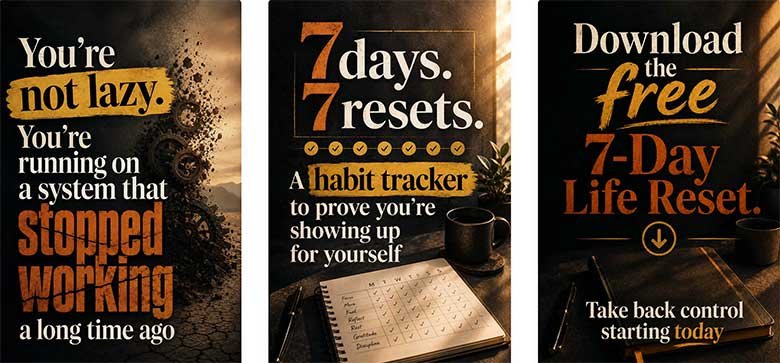
Take a Week to Get Your Time in Order
My free 7-Day Life Reset is a short week of reflection on your own routines. It’s a good place to start seeing what gets in your way.
Start the Free Reset5. Group similar tasks together
Do all your calls at once, all your errands in one trip, and all your email in a set window. Batching cuts down on stopping and starting.
It’s one of the easiest ways to feel more organized quickly. That’s my habit.
Try this: Pick two kinds of tasks to batch this week, and schedule one block for each.
6. Leave gaps between commitments
A packed calendar has no room for things that run late. Build in ten or fifteen minutes between big items.
Buffers reduce the feeling of rushing. That’s my suggestion, and it tends to help with the stress side that the research links to well-being.
Try this: Add a ten-minute buffer after each meeting or appointment tomorrow.
7. Decide what you’ll say no to
Being organized includes protecting your time. Decide in advance what kinds of requests you’ll turn down or delay.
A simple phrase helps: “I can’t fit that in right now.” The lead researcher described time management as a kind of personal boundaries device, according to a news article about the study. That’s not a formal finding, and I like the idea.
Try this: Write one sentence you can use to politely decline a request this week.
8. Set a daily shutdown time
Decide when work ends, and stick to it as much as you can. At that time, write tomorrow’s top tasks and close the list.
A clear stopping point helps you switch off. The research linked time management to less distress, and this habit is how I try to get that. That’s my own application.
Try this: Pick a shutdown time, and set an alarm five minutes before it.
9. Do a quick weekly reset
Once a week, look at your calendar and list for the next seven days. Move tasks that didn’t get done, and plan the week ahead.
Twenty minutes is plenty. I do mine on Sunday evening. That’s my routine, and it keeps the week from getting away from me.
Try this: Schedule a weekly reset for twenty minutes, and stick to it for a month.
10. Keep a short “someday” list
Ideas and wishes that aren’t urgent deserve a home. Put them on a “someday” list so they stop taking up mental space.
Every few months, look at it and pick one item to move forward. That’s my own trick.
Try this: Start a “someday” list with three things you’d like to do eventually.
11. Measure success by how you feel, not just what you finish
The study found time management went with well-being at least as strongly as with performance. So check in with how you feel. Are you less scattered? Less rushed?
If the answer is yes, your system is working, even when the to-do list isn’t empty. If stress stays high, it may help to talk with a doctor or counselor. That’s my caution.
Try this: At the end of each week, write one sentence about how your time felt, from 1 to 5.
Explore Our Top Picks for a Better Life
I put together a list of tools and products I think are worth your time, covering mindset, self-care, health, and home.
See Our Top PicksTwo People Who Got Organized Fast
I know a woman named Kezia who felt buried and kept adding to a list she never looked at. She did a ten-minute dump, circled three items, and put them on the calendar. She told me nothing about her workload changed, and for the first time in months she felt like she was steering.
I also think about a guy named Daniel who kept running late because every day was packed wall to wall. He added ten-minute buffers and a daily shutdown time. He told me his days were the same length, and they felt much calmer.
Picture a Week That Feels Under Control
Imagine opening your calendar and seeing your three priorities with times next to them. There’s a buffer or two, a shutdown time, and a list you actually trust. The work is still there. You aren’t drowning in it.
Start with the brain dump. Ten minutes is enough. If you’d like some simple habits to go with it, get my free 9 Daily Habits guide.
Want to Go Further?
I’m building out some deeper, paid resources for people who want more than a single article can cover. They’re not live yet, but you can see everything I currently have ready for you, free and otherwise, on my Top Picks page.
See What’s Available
Ready to Get Organized This Week?
Download my free 9 Daily Habits guide and pick one small habit to start today.
Download Free Now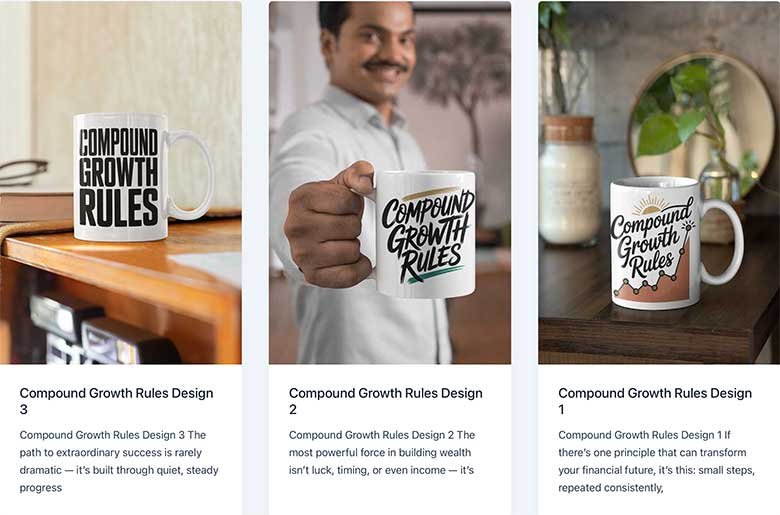
A Small Reminder to Make Time for What Matters
Take a look at Premier Print Works for prints, mugs, and shirts made for people who like a small daily reminder.
Visit Premier Print WorksDisclaimer
This page is for informational and inspirational purposes only. It is not professional, medical, or career advice. The research referenced here comes from the published work of Brad Aeon, Aïda Faber, and Alexandra Panaccio, “Does Time Management Work? A Meta-Analysis” (PLOS ONE, 2021), summarized here in plain language. It combined 158 studies with more than 53,000 respondents and found moderate relationships between time management and job performance, academic achievement, and well-being, with a stronger link to well-being than to performance; it shows associations and does not prove cause, and it does not rank specific techniques. The remark about personal boundaries comes from a news article about the study. The ideas on this page are my own and are based on my experience. If stress stays high, please talk with a doctor or licensed professional. Results vary from person to person.
Kezia and Daniel are made-up characters used to bring this content to life. They are not real people.
Some links on this page, including links to Premier Print Works, are affiliate links. If you buy something through one, we may earn a small commission at no extra cost to you. We only own and sell products through our own store, Premier Print Works.
All content on A Self Help Hub belongs to Digital Marketing 215 LLC and is protected by copyright law. No part of this page may be copied or reused without written permission.