13 Self Care Routine Ideas for People Who Feel Overwhelmed
The overwhelmed person does not need the elaborate self-care routine with the seventeen steps and the morning journaling and the evening skincare and the forty-five-minute meditation. The overwhelmed person is overwhelmed. The last thing the overwhelmed person needs is the additional expectation of the complex self-care practice to add to the list of the things already not being adequately done. What the overwhelmed person most needs is the specific, small, immediately accessible self-care practice that interrupts the overwhelm at the moment it is most running the day and provides the brief, genuine restoration that the overwhelm has been preventing without requiring the time or the energy that the overwhelm has already consumed.
These 13 self care routine ideas are built for the person who feels overwhelmed. Each one is the specific, accessible, low-barrier entry point into the self-care practice that the overwhelmed daily life most genuinely needs and most genuinely has the capacity to begin from the overwhelmed position. Start with the one that requires the least available today. The self-care routine for the overwhelmed person begins from the smallest available starting point and grows from there.
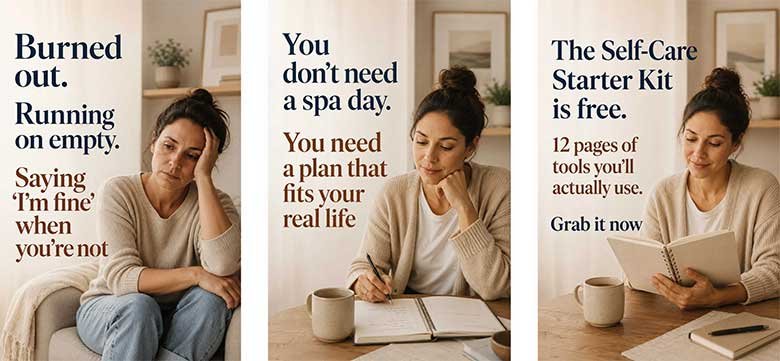
Free Download: The Self-Care Starter Kit
If you feel overwhelmed and need the simplest available starting point for the self-care routine, the free Self-Care Starter Kit gives you simple daily practices that build the grounded inner foundation from which the overwhelm begins to ease. No elaborate routine required. Just the specific, accessible practices that make the genuine difference. Download it free today.
Get the Free Self-Care Starter Kit1. The five-breath reset: the self-care routine that takes under two minutes and works immediately.
“The overwhelmed person does not need the elaborate self-care routine. What they most need is the specific, small, immediately accessible practice that interrupts the overwhelm at the moment it is most running the day and provides the brief, genuine restoration that the overwhelm has been preventing without requiring the time or the energy the overwhelm has already consumed.”
Five slow breaths with the exhale twice the length of the inhale is the self-care routine idea that requires the least time, the least energy, and the least preparation of any practice on this list and produces the most immediate physiological return: the extended exhale directly activates the parasympathetic nervous system, shifting the body from the stress-response dominant state toward the regulated baseline from which the overwhelm is most manageable. Two minutes. No equipment. Available anywhere. For the overwhelmed person who has been told that the self-care requires the elaborate routine before it can provide the genuine restoration, the five-breath reset is the specific evidence that the smallest available self-care practice produces the genuine physiological return. Breathe first. The rest of the list is available from the slightly less overwhelmed position the breathing provides.
2. The brain dump: write everything in the head onto the page and put the page down.
The overwhelm is often the specific cognitive experience of the too-many-open-loops running simultaneously in the working memory without the external capture that would allow the working memory to release the carrying of them. The brain dump, the ten-minute practice of writing every thought, worry, task, concern, and mental item currently being held in the working memory onto the page without the editing or the organizing, is the self-care routine idea that most directly addresses this specific source of the overwhelm by externalizing the content: the page now holds what the working memory was holding, the working memory is released from the carrying, and the cognitive pressure of the too-many-simultaneous-open-loops is measurably reduced by the externalization that the brain dump most directly provides. Write everything out. Put the page down. The carrying is released. The overwhelm is reduced by the releasing.
3. The one-task focus: choose one thing and do only that thing for ten minutes.
“The brain dump externalizes the content that the working memory was holding. The page now holds what the working memory was holding. The working memory is released from the carrying. Write everything out. Put the page down. The cognitive pressure of the too-many-simultaneous-open-loops is measurably reduced by the externalization the brain dump provides.”
The overwhelm is frequently the specific experience of the too-many-things-simultaneously-requiring-the-attention that the multitasking environment most consistently produces in the person whose attention has been divided among the competing demands until the capacity for the adequate attention to any of them has been exhausted. The one-task focus, the deliberate, ten-minute commitment to one specific thing with the full available attention and the phone in the other room, is the self-care routine idea that interrupts the multitasking-overwhelm at its structural source: the divided attention. Ten minutes of the complete attention to the one thing produces the specific, absorbed, present-moment quality of the engagement that the divided attention has been preventing and the overwhelm has been sustaining. Choose one thing. Do only that. The overwhelm is interrupted by the completeness of the present-moment single-task attending.
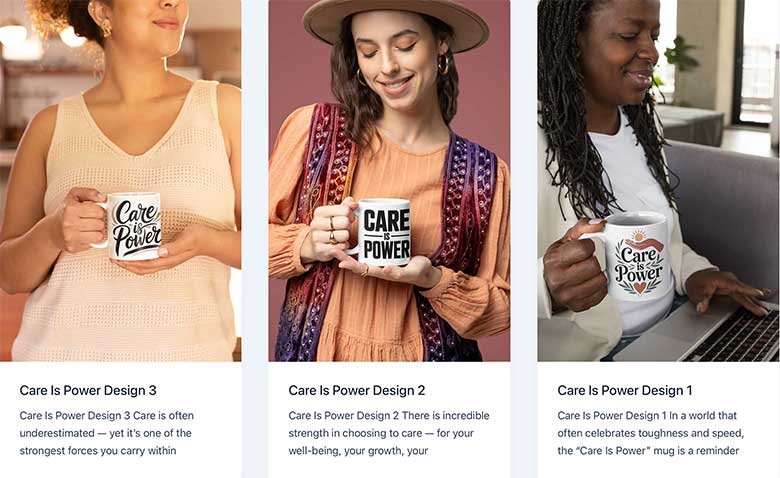
Visit Premier Print Works
Keep the reminders of the calm and the self-care you are building visible in your daily space. Premier Print Works offers prints, mugs, and art for people who are doing the daily work of managing the overwhelm through the right self-care practices and want their environment to reflect and reinforce the calm and the direction they are actively cultivating. Visit the shop today.
Visit Premier Print Works4. The ten-minute walk: the movement that discharges the stress the overwhelm is holding in the body.
The overwhelm that is most chronically present in the person who has been managing it primarily through the cognitive strategies of the planning and the organizing is the overwhelm that has also been accumulating in the body as the physiological stress response that the sitting and the managing most consistently fail to discharge. The ten-minute walk, practiced outside whenever available and inside when necessary, is the self-care routine idea that most directly addresses the physical dimension of the overwhelm by providing the physiological stress discharge that the movement produces and the cognitive reset that the brief change of the environment and the pace most reliably delivers. Ten minutes. The cortisol reduces. The perspective shifts slightly. The return from the ten-minute walk is the return from a different position than the one the walk began from.
5. The two-minute tidy: clear one small surface in the immediate physical environment.
The physical environment of the overwhelmed person is often the reflection of the overwhelmed inner state: the cluttered surface, the accumulated mess, and the visual chaos of the space that has been neglected during the period of the overwhelm. The two-minute tidy, the specific, small act of clearing one surface, the desk corner, the kitchen counter, the bedside table, is the self-care routine idea that interrupts the overwhelm at the environmental level by providing the specific, immediate, visible evidence of the restored order that the small act of the clearing most directly produces. The two minutes of the tidy produces the specific quality of the having-done-one-manageable-thing from the position of the person who has been most consistently doing nothing because everything has felt too large to begin. One surface. Two minutes. The manageable small thing done.
6. The hydration and the nourishment check: when did you last drink water and eat a real meal?
“The two-minute tidy interrupts the overwhelm at the environmental level by providing the specific, immediate, visible evidence of the restored order the small act of clearing most directly produces. One surface. Two minutes. The manageable small thing done from the position of the person for whom everything has felt too large to begin.”
The overwhelmed person is almost always the person who has also been neglecting the most basic available physiological self-care: the water not drunk because the managing of the overwhelm has been consuming the available attention that the drinking of the water requires the remembering of, and the meal not eaten or eaten inadequately because the time for the genuine nourishment has been consumed by the demands that the overwhelm has been producing. The hydration and the nourishment check is the self-care routine idea that asks the specific, practical question: when did you last drink water and eat a real meal? The answer frequently identifies the most immediate available self-care action. Drink water now. Eat something real. The physiological baseline restored is the platform for the everything-else to be managed from more effectively.
7. The one-minute gratitude: name three specific things genuinely good right now.
The overwhelm most consistently occupies the full available attention with the problematic, the demanding, and the not-yet-resolved, producing the specific inner experience of the everything-is-wrong that the attention-fully-occupied-by-the-wrong most accurately describes as the inner experience of the person whose attention has found nothing good because it has been looking at nothing good. The one-minute gratitude, the specific, sixty-second practice of naming three things currently present in the life that are genuinely good, is the self-care routine idea that interrupts the attention-occupied-by-the-wrong with the brief, directed redirection toward the genuinely-present-good. The three things are real, specific, and currently available rather than abstract. The naming takes one minute. The redirected attention produces the brief, genuine shift in the inner experience that the overwhelm-occupied attention was preventing. Three things. One minute. The inner experience shifts from the fully-occupied-by-the-wrong toward the briefly-attended-to-good that the overwhelm was obscuring.
8. The no-decision meal: eat the same simple thing and remove the food decision from the overwhelmed day.
The decision fatigue that the overwhelmed person most consistently experiences from the excessive number of the daily decisions the overwhelmed life requires is the specific source of the additional overwhelm that the no-decision meal most directly addresses: the what-should-I-eat decision, made multiple times daily from the depleted decision-making capacity of the overwhelmed person, contributes the specific, additional cognitive load that the no-decision alternative of the same simple reliable meal removes from the depleted decision-making capacity. The no-decision meal is the self-care routine idea that reduces the cognitive load of the daily life by one of the most frequently recurring and most easily simplified decision categories available. Choose the simple, reliable meal for the period of the overwhelm. Eat it without the deliberation. Reserve the decision-making capacity for the decisions most requiring it.
9. The five-minute nature connection: step outside and attend to the natural environment for five minutes.
“The no-decision meal removes from the overwhelmed day one of the most frequently recurring and most easily simplified decision categories available. Choose the simple, reliable meal for the period of the overwhelm. Eat it without the deliberation. Reserve the depleted decision-making capacity for the decisions most genuinely requiring it.”
The five-minute nature connection, the deliberate stepping outside and the specific, unplugged attention on the natural environment for five minutes, is the self-care routine idea that provides the fastest available access to the specific restorative quality of the natural environment outside the formal nature immersion of the longer walk or the extended outdoor time: the sky, the air, the trees, the light, attended to genuinely for five minutes. The attention restoration theory identifies the natural environment as the specific context that most effectively restores the directed attention that the overwhelm depletes, and the five-minute version of the natural attending is the most immediately accessible entry point into the restoration that the longer version most fully provides. Five minutes. Outside. Attending to the natural. The directed attention is partially restored. The overwhelm is slightly less total.
10. The phone-free thirty minutes: protect a brief daily window from the incoming stimulation.
The phone-free thirty minutes is the self-care routine idea for the overwhelmed person who has been seeking the relief from the overwhelm in the exact source most consistently adding to it: the social media scroll, the news feed, and the continuous incoming notification that maintains the nervous system in the low-level activation that prevents the genuine settling the overwhelm most requires. The thirty minutes without the phone, practiced in the early morning before the day has begun or in the evening before the sleep, produces the specific quality of the uninterrupted inner quiet that the phone-present alternative most consistently prevents. Thirty minutes. No incoming. The nervous system receives the first sustained period of the unactivated quiet it has had since the last phone-free window. The overwhelm is slightly less total from the reduced activation the quiet provides.
11. The single small completion: do one small thing that has been undone and complete it fully.
The single small completion is the self-care routine idea that interrupts the paralysis-of-the-too-large that the overwhelm most commonly produces in the person whose task list has grown to the size that no available starting point feels proportionate to the whole of what needs doing. The single small thing completed, the one email sent, the one dish washed, the one item crossed from the list, is the specific, available action that breaks the paralysis by producing the evidence of the manageable-thing-done from the position of the person for whom everything has been feeling unmanageable. The single small completion does not solve the overwhelm. It interrupts the paralysis that the overwhelm produces and provides the specific, immediate evidence that the doing is available from the overwhelmed position. One thing. Fully completed. The evidence that the doing is available from here.
12. The support reach-out: contact one person and tell them specifically what you are carrying.
“The single small completion breaks the paralysis of the too-large by producing the evidence of the manageable-thing-done from the position of the person for whom everything has been feeling unmanageable. One thing. Fully completed. The specific, immediate evidence that the doing is available from the overwhelmed position the completion proves.”
The overwhelm is most chronic in the person who has been carrying the full weight of the overwhelmed load without the sharing of the carrying that the genuine support most directly provides: the named and the shared overwhelm is the specifically less heavy version of the same overwhelm that the unnamed, unshared version most consistently remains. The support reach-out, the specific act of contacting one person and telling them specifically what is being carried, is the self-care routine idea that most directly reduces the weight by the sharing that the reaching-out most genuinely produces. Not the complaint. The specific, honest naming of the carrying to the specific person whose support is most available. The sharing is the relief. The reaching out is the self-care that the self-only-managing was most consistently withholding from the overwhelmed person who most needed the sharing the self-managing was substituting for.
13. The tomorrow plan: before sleep, write three specific things for tomorrow and put the list down.
The tomorrow plan is the self-care routine idea for the overwhelmed person whose evening is most consistently consumed by the anxiety of the tomorrow-not-yet-prepared-for that the evening-without-the-tomorrow-plan most reliably produces: the mental rehearsing of the tomorrow’s demands without the specific, written plan that would release the rehearsal from the working memory and provide the settled closure that the evening most essentially requires for the sleep the overwhelmed person is most in need of. Three specific things for tomorrow. Written down. The writing releases the mental rehearsing. The plan is held by the page rather than the mind. The mind is available for the sleep that the mind-held-plan was most consistently preventing. Put the list down. The tomorrow is planned. The sleep is available. The self-care of the tomorrow plan is the self-care of the tonight’s rest.
How Amara and Daniel Each Found the Self Care Routine Idea That Most Directly Interrupted the Specific Quality of the Overwhelm That Had Been Most Running the Daily Life
Amara had been in the specific overwhelm pattern most common in the person whose daily life had grown too large for the available daily attention: the too-many-open-loops running simultaneously in the working memory, each one insufficient to complete in the available time and each one too important to release from the carrying. The cognitive pressure of the carrying had been producing the specific quality of the paralyzed overwhelm in which the awareness of everything undone had been preventing the doing of anything. The self care routine idea that most directly interrupted this specific pattern was the brain dump. The ten-minute practice of writing everything onto the page without the editing or the organizing produced the specific, immediate release of the cognitive pressure that the carrying had been producing: the page held what the working memory had been holding, the working memory was released from the carrying, and the paralyzed overwhelm was replaced by the specific, more manageable experience of the person who had a list on a page rather than the simultaneously running mental inventory of the unorganized everything. She brain dumps daily now. The carrying is released daily. The overwhelm that the carrying was producing is daily interrupted by the externalization that the brain dump most directly provides.
Daniel’s self care routine idea was the tomorrow plan. He had been in the specific overwhelm pattern most common in the person whose evening was most consistently consumed by the anxiety of the unprepared tomorrow: the mental rehearsing of the next day’s demands without the written plan that would have released the rehearsing from the evening that most needed the sleep the rehearsing was preventing. The three-things tomorrow plan, practiced in the five minutes before the sleep, produced the specific, immediate release of the evening anxiety that the written plan most directly provides: the tomorrow’s three most important things written down, the page holding the plan, the mind released from the rehearsing. The sleep quality improved in the first week of the consistent tomorrow-planning practice. Not because the tomorrow’s demands had changed. Because the mind’s relationship to them had changed from the holding to the releasing. The tomorrow plan is now the daily practice that the evening most essentially begins with and most essentially ends from. The overwhelm of the evening has reduced in direct proportion to the increased confidence in the written tomorrow plan that the five-minute daily practice most directly provides.
The Self Care Routine for the Person Who Feels Overwhelmed Is Not the Elaborate Practice That Requires the Time and the Energy the Overwhelm Has Already Consumed. It Is the Specific, Small, Immediately Accessible Practice That Interrupts the Overwhelm at the Moment It Is Most Running the Day.
The self care routine ideas most genuinely useful for the overwhelmed person are the ones that require the least available and provide the most immediate return: the five breaths that regulate the nervous system in two minutes, the brain dump that releases the working memory carrying, the one-task focus that interrupts the multitasking overwhelm, the ten-minute walk that discharges the physiological stress, the two-minute tidy that restores one manageable piece of order, the hydration and nourishment check that addresses the most basic neglected physiological need, the one-minute gratitude that briefly redirects the attention toward the genuinely present good, the no-decision meal that removes one recurring decision from the depleted capacity, the five-minute nature connection that partially restores the directed attention, the phone-free thirty minutes that reduces the activation, the single small completion that breaks the paralysis, the support reach-out that shares the carrying, and the tomorrow plan that releases the evening anxiety. These thirteen self care routine ideas are the specific, honest, low-barrier entry points into the self-care that the overwhelmed person most genuinely needs and most genuinely has the capacity to begin from right now.
Start with one. The one that requires the least available today. Practice it consistently for one week. Add one more from the list the following week. The self care routine for the overwhelmed person is built from the one small accessible practice maintained, not the complete routine attempted and abandoned from the overwhelming of the adding-it-all-at-once. One practice. This week. The overwhelm is interrupted one small practice at a time.
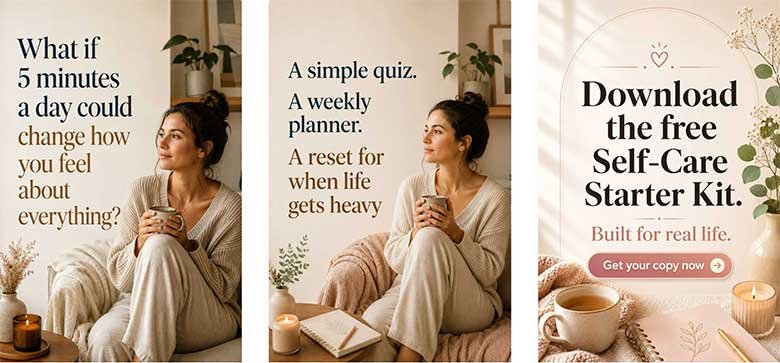
Free Download: The Self-Care Starter Kit
Let these self care routine ideas be the reminder that the self-care routine for the overwhelmed person starts with the smallest available practice consistently maintained rather than the elaborate routine attempted once and abandoned. The free Self-Care Starter Kit gives you those smallest available practices. Download it free today.
Get the Free Self-Care Starter KitOur Top Picks for a Better Life
We have gathered our favorite tools, resources, and recommendations for people managing the overwhelm through the right accessible self-care practices, developing the specific small daily routines that interrupt the overwhelm without adding to it, and creating the daily inner foundation from which the overwhelmed person most naturally and most sustainably begins to find the ground the overwhelm had been covering. Everything we trust enough to share, all in one place.
See Our Top Picks
Calm and Self-Care at Premier Print Works
Keep the reminders of the calm and the self-care you are building visible in your daily space. Visit Premier Print Works for prints, mugs, and art for people who are doing the daily work of managing the overwhelm through the right accessible self-care practices and want their environment to reflect and reinforce the calm and the direction they are actively cultivating.
Visit Premier Print WorksDisclaimer
The content on A Self Help Hub is for informational and inspirational purposes only. The self care routine ideas and personal stories in this article offer general support for everyday wellness, stress management, and intentional living. They are not professional mental health advice, psychotherapy, medical advice, or any form of clinical treatment.
If you are experiencing significant or chronic overwhelm, burnout, anxiety, depression, or other conditions that are significantly affecting your daily functioning and wellbeing, please speak with a qualified mental health professional. General self-help content is not a substitute for professional care.
The stories and composite characters in this article, including Amara and Daniel, are illustrative. They are based on common experiences and created to make the content relatable. They are not real people. Any resemblance to a specific person is coincidental.
Some links on this site, including links to Premier Print Works, may be affiliate links. A Self Help Hub may earn a small commission at no extra cost to you. We only recommend things we genuinely believe in.
If you are in a mental health crisis or thinking about self-harm, please do not rely on this content for support. Contact emergency services or a crisis helpline right away. You deserve real help and it is available to you now.
All content on A Self Help Hub is copyrighted. You may not copy or republish it without written permission. By reading this article you agree to this disclaimer.