13 Self Discovery Tips for People Who Want More Clarity
Clarity about yourself rarely arrives as a single, sweeping realization that resolves everything at once. It tends to accumulate through smaller, more specific insights — a pattern finally noticed, a preference finally named honestly, a belief finally examined instead of simply assumed. Self discovery, approached this way, becomes less an occasional dramatic event and more a steady, ongoing practice.
The thirteen tips below are built around that steadier version. Each one is a specific, doable practice for understanding yourself more honestly, rather than a vague suggestion to simply reflect more.

Build the Daily Habits Behind Genuine Self Discovery
Download the free 9 Daily Habits guide and get nine simple morning practices that build the daily foundation these self discovery tips are meant to support.
Get the Free Guide1. Notice what you complain about repeatedly, since a recurring complaint often points toward a genuine, unmet need worth examining.
A complaint that surfaces only once is frequently circumstantial, but a complaint that recurs across many different situations tends to point toward something deeper and more consistent about your own actual needs or values, something worth examining directly rather than dismissing as ordinary venting. Tracking these recurring complaints reveals a pattern that is easy to miss when each individual complaint is treated as an isolated event.
Notice one complaint you find yourself repeating often, and consider what genuine need it might actually be pointing toward.
2. Pay attention to what you avoid doing, since avoidance often reveals more honest information than what you actively pursue.
What a person actively pursues is sometimes shaped by external expectation as much as genuine desire, while what a person consistently avoids tends to reveal something more honest and less filtered, since avoidance rarely gets performed for anyone else’s benefit. Examining a pattern of avoidance, rather than only a pattern of pursuit, often surfaces clarity that pursuit alone would miss.
Identify one thing you consistently avoid, and consider honestly what that avoidance might be revealing about your actual priorities or fears.

Surround Yourself With What Supports Your Self Discovery
Premier Print Works creates quality prints, mugs, and shirts for people who are building the daily habits that support genuine self discovery. Find what speaks to your journey today.
Visit Premier Print Works3. Ask what you would do if no one else’s opinion mattered, since this question often separates genuine preference from performed identity.
A great deal of daily decision-making is quietly shaped by an awareness of how choices will be perceived by other people, which can obscure a genuine preference underneath that external awareness. Deliberately asking what you would choose if no one else’s opinion mattered strips away this layer, at least momentarily, and often reveals a preference that had been quietly overridden by performance.
Ask yourself this question about one current decision: what would you choose if no one else’s opinion factored in at all?
“Self discovery is not one big answer. It is a collection of small, honest observations, added up over time.”
Get Clear on Who You Actually Are, One Honest Prompt at a Time
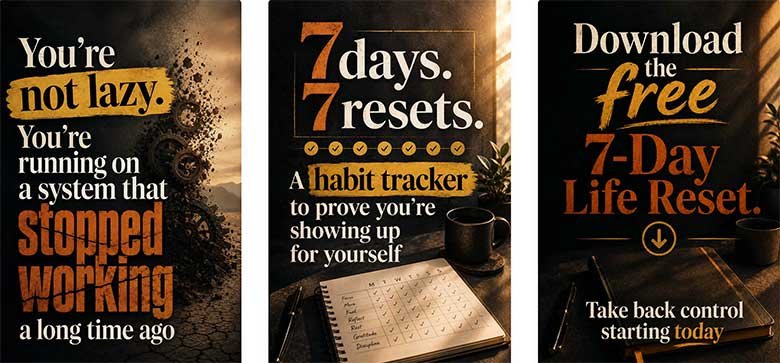
The free 7-Day Life Reset gives you one short prompt a day for a week, helping you build genuine clarity about your own actual priorities and values.
Start the Free Reset4. Notice what genuinely energizes you versus what merely occupies time, since the two are frequently confused for each other.
An activity that fills time is not automatically the same as an activity that genuinely energizes a person, and confusing the two can lead to a schedule full of things that look productive or engaging on the surface while quietly draining the energy that a genuinely energizing activity would actually restore. Distinguishing between the two reveals clarity about what actually belongs in a life, versus what has simply been filling space.
Track which activities this week genuinely energize you versus which ones merely occupy time, and notice the honest difference between the two lists.
5. Examine a belief you have held for a long time, and ask honestly whether you still actually agree with it or simply never questioned it.
Beliefs adopted early, often from family, culture, or an earlier version of yourself, can continue operating unquestioned for years, simply because they were never actually revisited rather than because they were genuinely re-examined and reaffirmed. Deliberately examining a long-held belief, asking whether it still genuinely holds up, often reveals whether it is still truly yours or simply inherited and never questioned.
Choose one long-held belief, and honestly examine whether you still genuinely agree with it or have simply never questioned it before.
6. Notice the compliments that make you uncomfortable, since discomfort at a specific compliment often reveals a belief you have not fully accepted about yourself.
A compliment that is easily accepted usually aligns with an existing, comfortable self-belief, while a compliment that produces genuine discomfort or reflexive denial often touches on something the person has not yet fully accepted as true about themselves, making the discomfort itself a useful clue. Noticing these specific reactions reveals gaps between self-perception and how you are actually seen.
Notice the next compliment that makes you uncomfortable, and consider honestly what belief about yourself that discomfort might be revealing.
7. Ask what you would regret not trying, since regret about inaction often points more clearly toward genuine values than stated goals do.
Stated goals are sometimes shaped by what sounds impressive or expected, while the specific things a person suspects they would regret not trying tend to reflect something more honest and less filtered by external expectation. This question bypasses some of the performance that stated goals can carry, surfacing something closer to genuine desire.
Ask yourself honestly what you suspect you would regret not trying, and consider what that regret reveals about your genuine priorities.
8. Notice who you become in different environments, since the version of yourself that shows up consistently across settings is often the most genuine one.
A person frequently behaves somewhat differently across different environments — work, family, close friendships — and while some of this variation is normal, the version of yourself that remains most consistent across very different settings tends to reflect something closer to a genuine core, less shaped by any single environment’s specific expectations.
Notice which qualities about yourself remain consistent across your different environments this week, and treat that consistency as genuine information.
9. Examine what you are most defensive about, since defensiveness often protects a belief that has not been fully examined or accepted.
A topic that produces an unusually strong defensive reaction, disproportionate to the actual stakes of the conversation, often points toward an area of genuine internal uncertainty being protected rather than an area of settled confidence. Examining this defensiveness honestly, rather than simply reacting from it, often reveals something worth understanding more clearly about yourself.
Notice one topic that reliably makes you defensive, and consider honestly what internal uncertainty that defensiveness might be protecting.
10. Notice what you find yourself explaining or justifying most often, since frequent justification can reveal an area of genuine internal conflict.
A choice made from genuine, settled clarity rarely requires much justification, while a choice frequently explained or defended, even to yourself, often points toward an underlying area of internal conflict that has not yet been fully resolved. Noticing where justification shows up repeatedly reveals exactly where more honest self-examination might be useful.
Notice one choice or belief you find yourself justifying often, and examine honestly what internal conflict that repeated justification might be revealing.
11. Ask what advice you consistently give others but do not follow yourself, since this gap often reveals a genuine area for self discovery.
Advice given confidently to other people, but not followed personally, reveals a gap between stated wisdom and actual internal belief, and examining this specific gap honestly often surfaces exactly the area where self-understanding has not yet caught up with intellectual knowledge.
Identify one piece of advice you regularly give others but do not follow yourself, and examine honestly what that gap might reveal.
12. Notice what genuinely surprises you about your own reactions, since surprise often signals an outdated self-image being challenged.
A reaction that genuinely surprises you — a stronger emotion than expected, an unexpected preference, a reaction that contradicts how you usually describe yourself — often signals that your current self-image has fallen behind your actual, present self, since genuine growth frequently outpaces the updated self-description that should accompany it.
Notice the next time your own reaction genuinely surprises you, and use that surprise as a signal to update your self-understanding.
13. Revisit your own self-understanding periodically, since clarity about yourself is an ongoing practice, not a single discovery made once.
Self-understanding gathered at one point in life can become outdated as genuine growth and changed circumstances accumulate, continuing to be assumed accurate even after it has quietly stopped reflecting who someone has actually become. Periodically revisiting this self-understanding keeps clarity aligned with who you actually are now, rather than who you once were.
Spend some time this month revisiting your own self-understanding, and honestly update any part of it that no longer reflects who you have become.
Explore Our Top Picks for a Better Life
We have gathered the tools, resources, and products we think are genuinely worth your time — covering mindset, habits, health, and home. All in one place, hand-picked to support the clarity behind these tips.
See Our Top PicksReal Stories, Real Results
Kezia had always assumed her stated career goals reflected her genuine priorities, until she started tracking which activities actually energized her versus which ones simply occupied her time, and the gap between the two lists surprised her considerably. The activities she had assumed were fulfilling turned out to be mostly time-occupying, while a few small, previously overlooked activities turned out to be genuinely energizing. She said the exercise had not changed her actual life yet. It had simply shown her, honestly, where her actual energy already wanted to go.
Daniel had never really questioned a belief he had carried since childhood about what counted as a legitimate use of his time, until he deliberately sat down to examine whether he still genuinely agreed with it or had simply never revisited it. Once examined directly, the belief turned out to be considerably looser than he had assumed, inherited from a specific environment rather than something he had ever actually chosen for himself. He said the belief had felt permanent right up until the moment he finally looked at it honestly.
Clarity Is Built Insight by Insight, Not All at Once
Each tip in this article uncovers a specific, honest piece of self-understanding — the recurring complaint, the pattern of avoidance, the belief never actually questioned. None of these require a single dramatic revelation in order to work.
Choose the one or two tips that speak most directly to where your own clarity currently feels least settled, and try them this week. Download the free 9 Daily Habits guide to give this ongoing self discovery a consistent daily foundation to build from. Clarity about yourself is built through small, honest observations, added up over time.

Ready to Build the Habits Behind Genuine Self Discovery?
The free 9 Daily Habits guide walks you through nine simple morning practices that build the daily foundation these self discovery tips are meant to support.
Download Free Now
Fill Your Space With What Supports Your Self Discovery
Premier Print Works makes quality prints, mugs, and shirts for people building genuine clarity about who they actually are. Browse the collection and find what speaks to your journey today.
Visit Premier Print WorksDisclaimer
The content on this page is for informational and inspirational purposes only. It is not professional mental health or medical advice of any kind. If you are experiencing significant or persistent stress, identity confusion, or other mental health challenges, please consider seeking support from a qualified mental health professional. Results and experiences vary significantly from person to person.
The stories of Kezia and Daniel are illustrative composite characters created to bring the content to life. They are not real people. Any resemblance to a real person is purely coincidental.
Some links on this page, including links to Premier Print Works and other resources, are affiliate links. If you make a purchase through one of these links, we may earn a small commission at no extra cost to you. We do not own, produce, or control any affiliate products, and we are not responsible for them — we only own and sell the products offered through our own store, Premier Print Works.
All content on A Self Help Hub is the property of Digital Marketing 215 LLC and is protected by copyright law. No part of this page may be copied, reproduced, republished, distributed, or transmitted in any form without prior written permission from the author.