13 We Do Recover Messages for People Who Need Encouragement
When someone asks me whether recovery is really possible, I point to one number. In a national survey published in 2017, a research team led by Dr. John Kelly found that about 9 out of every 100 U.S. adults, roughly 22 million people, said they used to have a problem with alcohol or drugs but no longer do. The survey relies on what people report about themselves, so it isn’t a perfect count. Still, it tells us something simple. Recovery is common, and it is happening in ordinary homes and workplaces right now.
You often hear “we do recover” in recovery rooms, and it’s a good phrase to have on a rough day. The 13 messages below are my own words for the moments when you need a push. They aren’t a treatment plan. If you need help today, there’s a box near the end of this page with numbers to call.
Get the Guide for the Hard Moments
Grab my free Sober Survival Guide. It’s a practical resource for people building a sober life, one day at a time.
Get the Free Guide1. “You are more than the worst days of your addiction.”
Addiction can lead a person to do things they never planned to do. It’s easy to let those memories become the whole story. But those days are chapters, not the whole book.
Today, notice one small thing you did that doesn’t fit the old story. Maybe you showed up, told the truth, or asked for help. Write it down. That is evidence of who you are becoming.
2. “Millions of people have stood where you are standing, and many of them are doing well today.”
The 2017 study I mentioned above found that about 9.1 percent of U.S. adults say they have resolved a drug or alcohol problem. That works out to around 22 million people. Some of them are your neighbors, your coworkers, and maybe your relatives.
When it feels like you’re the only one, remember that number. You are not the exception. You are in very large company.

A Small Reminder for the Hard Days
I make prints, mugs, and shirts at Premier Print Works. Some people like a daily reminder where they can see it.
Visit Premier Print Works3. “Recovery does not need a perfect plan. It can start with one phone call.”
Many people wait until they feel ready or until everything is figured out. That day rarely comes. A first step can be small, like calling a helpline, telling a doctor the truth, or walking into a support meeting.
If you don’t know where to start, the SAMHSA National Helpline at 1-800-662-4357 can point you toward treatment and support. You can also search findtreatment.gov. Make just one call today.
“About 9 out of every 100 U.S. adults say they used to have a problem with alcohol or drugs but no longer do.”
4. “You do not have to feel strong to keep going. You only have to keep going.”
Some days recovery feels like a steady walk. Other days it feels like pushing a car uphill. Strength is not a feeling you wait for. It is a choice you make in small pieces, one meal, one meeting, one honest text at a time.
On a heavy day, shrink the goal. Ask yourself, “What do I need to do in the next hour?” Do only that. Then ask again.
Keep Support Close on Hard Days
My free Sober Survival Guide is meant for the moments when a craving or a rough day hits. Keep it handy.
Get the Free Guide5. “Asking for help is not weakness. It is how most people get through this.”
Recovery is rarely a solo project. Doctors, counselors, peer groups, family, and friends all play a part. Reaching out tells everyone, including you, that you are serious about getting better.
One safety note matters here. Stopping alcohol or certain drugs suddenly can cause dangerous withdrawal, sometimes including seizures. Please do not detox alone. Talk with a doctor or call the SAMHSA helpline at 1-800-662-4357 before you stop.
6. “A craving is a wave. It rises, it peaks, and it passes.”
Cravings can feel like they will last forever, but they usually rise and fall instead of holding steady. Many people find that if they can get through the peak, the urge loosens. A walk, a shower, a phone call, or a cold glass of water can help you ride it out.
The next time a craving hits, call someone or move your body. Then notice how the feeling has changed a little while later. That small proof can make the next wave easier to face.
7. “Your worth is not measured by a calendar.”
Sober days matter, and it’s fine to celebrate them. But your value as a person does not climb on day 100 or drop on day 3. You mattered before you started counting, and you matter now.
If counting days makes you proud, keep counting. If it brings shame, track something else too, like sleeping through the night, a repaired conversation, or a morning you actually enjoyed.
8. “A slip is a signal to get more support, not a reason to quit.”
Doctors treat a return to use as a relapse, much like a flare-up of a long-term health condition. The National Institute on Drug Abuse notes that roughly 40 to 60 percent of people treated for a substance use disorder relapse at some point, a rate similar to conditions like high blood pressure and asthma. When those conditions flare, doctors adjust the treatment. They don’t declare the person beyond help.
If you slip, reach out to your doctor, counselor, or support person soon. Be careful, too. After time without using, your body’s tolerance can drop, and your old amount can be far more dangerous now. If you or someone else is in danger, call 911.
9. “You can’t always see your progress from the inside. Look back at where you started.”
Change in recovery is slow enough to miss. You may not notice that you’re sleeping better or arguing less until you compare today to your first week.
Take five minutes to write down three things that are different from when you began. Keep the list where you can find it on a bad day.
10. “Small wins count. Getting through today is a win.”
Recovery can look like a huge mountain if you stare at the top. But nobody climbs a mountain all at once. They climb the next step.
Tonight, name one small win out loud or on paper. It might be a meal you ate, a call you returned, or a craving you rode out.
11. “Recovery is not only about what you give up. It is about what you get back.”
People often list what they’ll lose, like the drink, the drug, and the old crowd. It’s just as useful to picture what can return, like clearer mornings, steadier moods, trust with people you love, and money in your pocket.
Write down three things you’d like to get back. Put the list somewhere you’ll see it. On a hard day, read it.
12. “You are allowed to rebuild trust slowly.”
People you’ve hurt may need time, and that’s fair. Trust grows through repeated actions, not one big promise.
Focus on what you can control. Show up when you say you will, tell the truth, and be patient with their pace.
13. “We do recover. Not perfectly, not overnight, but truly.”
This is the heart of it. The road has bumps, and no two paths look alike. Some people use treatment, some use peer support groups, some use medication or faith, and many use a mix. Researchers who study recovery describe many different pathways.
If you take one thing from this page, let it be this: help is available, and recovery is possible. Reach out today. And if you are reading this for someone you love, send it to them.
If You Need Help Today
The SAMHSA National Helpline is free and open around the clock at 1-800-662-4357. You can also search for treatment near you at findtreatment.gov. Please do not detox alone, because stopping some substances suddenly can be dangerous. Talk with a doctor first. If you are in crisis or thinking about suicide, call or text 988, the Suicide and Crisis Lifeline. In an emergency, such as a suspected overdose, call 911.
Find Treatment Near YouOne Woman’s Early Days
I know a woman named Marguerite who felt completely alone in her first weeks of recovery. She was sure everyone else had it figured out. Then she learned that millions of adults say they’ve resolved a drug or alcohol problem, and she called a helpline that same afternoon. She told me that knowing she wasn’t the only one is what got the phone into her hand.
Months later she had a slip, and shame nearly kept her quiet. Instead she remembered that doctors treat a relapse as a signal to adjust care. She called her counselor within a day, and they changed her plan. She says that call kept one bad night from turning into a bad year.
Recovery Is Common, and It Can Start Small
Picture a morning a few months from now. You wake up clear-headed. You’re not perfect, but you’re steady, and you know who to call if the day turns hard. That picture is not a fantasy. It is where millions of people have already landed.
Today, do one small thing toward it. Make the call, send the text, or read the list you wrote. Then get some rest. You did something hard.
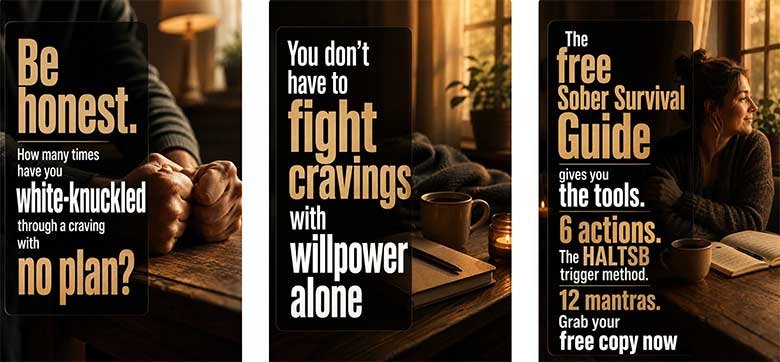
Ready for Some Extra Support?
My free Sober Survival Guide gives you practical help for the rough patches. It’s free, and it’s yours to keep.
Download Free Now
A Small Reminder for the Hard Days
Take a look at Premier Print Works for prints, mugs, and shirts made for people who like a daily reminder.
Visit Premier Print WorksDisclaimer
This page is for encouragement and general information only. It is not medical advice, diagnosis, or treatment, and it is not a substitute for care from a qualified professional. Please do not detox alone. Stopping alcohol or certain other substances suddenly can cause serious, even life-threatening withdrawal, so talk with a doctor before making changes. If you need help finding treatment, call the SAMHSA National Helpline at 1-800-662-4357 or visit findtreatment.gov. If you are in crisis or thinking about suicide, call or text the 988 Suicide and Crisis Lifeline. In an emergency, call 911.
The recovery figure cited here comes from Kelly, Bergman, Hoeppner, Vilsaint, and White, “Prevalence and pathways of recovery from drug and alcohol problems in the United States population” (Drug and Alcohol Dependence, 2017), a national survey based on what adults reported about themselves. The relapse comparison comes from the National Institute on Drug Abuse, which draws on a 2000 review by McLellan and colleagues in the Journal of the American Medical Association. Both are summarized here in plain language. A return to use is treated in medicine as a signal to resume, adjust, or change treatment, not as a personal failure. Results and experiences vary from person to person.
The 13 messages above are original reflections written for this site. They are not attributed to, or the words of, any real person or organization.
Marguerite is a made-up character used to bring this content to life. She is not a real person.
Some links on this page, including links to Premier Print Works, are affiliate links. If you buy something through one, we may earn a small commission at no extra cost to you. We only own and sell products through our own store, Premier Print Works.
All content on LifeAndSobriety.com belongs to Digital Marketing 215 LLC and is protected by copyright law. No part of this page may be copied or reused without written permission.