15 Emotional Intelligence Tools That Help You Build Better Self Control
Self control is often imagined as suppressing a reaction through sheer willpower, gritting your teeth until the impulse passes. Emotional intelligence offers a different, generally more sustainable path — understanding an emotion clearly enough that a more considered response becomes available, rather than white-knuckling through the reactive one. Willpower alone tends to run out. Genuine understanding tends to hold up better over time.
The fifteen tools below build that kind of understanding-based self control, addressing emotional awareness, regulation, and response from several different angles rather than repeating the same basic advice to just calm down.

Build the Daily Practice Behind Genuine Self Control
Download the free Self-Care Starter Kit and get simple, practical tools for building a daily rhythm that supports thoughtful, emotionally intelligent responses.
Get the Free Starter Kit1. Name the emotion specifically before responding, since a precisely identified feeling is easier to work with than a vague, undifferentiated one.
A vague sense of feeling upset, without further identification, tends to produce a reactive response poorly matched to the actual underlying emotion, since anger, hurt, and frustration all call for genuinely different responses. Pausing to name the specific emotion allows a more accurate, more controlled response to follow, rather than a generic reaction to an unnamed feeling.
The next time a strong feeling arises, pause to name it as specifically as you can before deciding how to respond.
2. Notice the physical sensation an emotion produces before it fully takes over, using the body as an early warning system.
Emotions frequently announce themselves physically before they fully register consciously — a tightening in the chest, a flush of heat, a clenched jaw — and this physical signal, if noticed early enough, provides a window to respond deliberately before the emotion has fully taken hold. Learning to notice this physical signal builds a genuine early warning system that supports self control before the reactive moment fully arrives.
Practice noticing the physical sensation your strongest emotions produce this week, catching the signal as early as possible before it fully takes over.
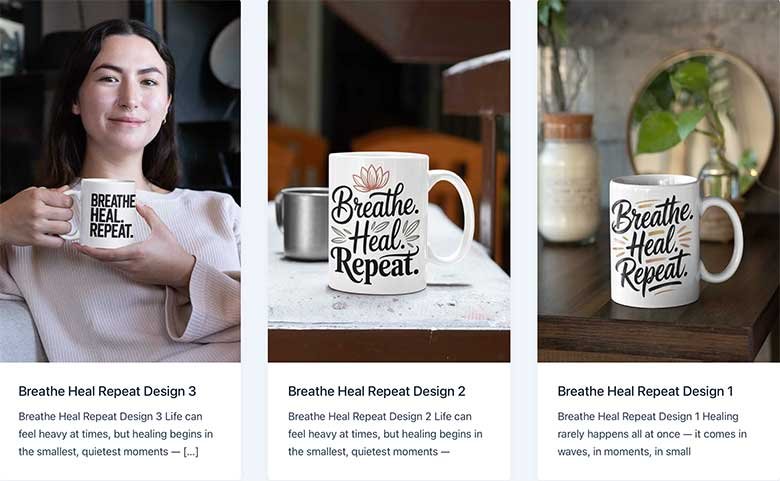
Surround Yourself With What Supports Your Self Control
Premier Print Works creates quality prints, mugs, and shirts for people who are building the daily habits that support thoughtful, emotionally intelligent responses. Find what speaks to your journey today.
Visit Premier Print Works3. Build in a deliberate pause between stimulus and response, using even a few seconds to interrupt an automatic reaction.
A reaction fired immediately, with no pause at all, tends to come from the least considered part of a response, which is precisely why so many regretted words and actions happen in the heat of an unpaused moment. A small, deliberate pause — even a handful of seconds — creates a gap that allows a more considered response to emerge instead of the automatic one.
The next time something triggers a strong reaction, practice a deliberate pause of at least a few seconds before responding, rather than reacting immediately.
“Self control is not suppression. It is understanding an emotion clearly enough to choose your response to it.”
Build the Morning Habits That Support Better Self Control
The free 9 Daily Habits guide gives you nine simple morning practices that build the daily foundation these emotional intelligence tools are meant to support.
Get the Free Guide4. Identify the actual need underneath a difficult emotion, since most strong feelings are pointing toward something specific worth addressing.
Difficult emotions frequently carry useful information about an underlying, unmet need — rest, respect, clarity, connection — but this information is easy to miss if the emotion is only suppressed or managed rather than examined for what it might actually be signaling. Identifying this underlying need turns self control from purely reactive suppression into something genuinely informative.
The next time a difficult emotion arises, practice asking what specific underlying need it might be pointing toward, rather than only managing the feeling itself.
5. Use a physical reset when emotions run high, engaging the body’s own regulatory systems to support a calmer state before responding.
Emotional states have a genuine physical component, and the body’s own regulatory systems, activated through slow breathing, a change in posture, or brief movement, can meaningfully support a calmer state that pure mental effort alone often cannot achieve as reliably. A brief physical reset, practiced consistently, becomes a genuinely useful tool for self control during moments emotions run especially high.
Choose one physical reset — slow breathing, a short walk, a change in posture — and practice using it the next time emotions run high before you respond.
6. Reframe a triggering situation from a different vantage point, deliberately considering how someone less personally invested might see it.
A situation viewed only from the most personally invested, most emotionally activated vantage point tends to produce the most reactive possible interpretation of it, one that a more distanced perspective would likely see differently. Deliberately considering how a less personally invested observer might interpret the same situation often reveals a more measured reading that supports a more controlled response.
The next time a situation triggers a strong reaction, deliberately consider how someone less personally invested might interpret the same situation.
7. Practice delaying a response to anything sent in writing while emotionally activated, using the natural pause that writing allows.
A message written and sent immediately while emotionally activated is considerably more likely to be regretted than the same message reviewed after even a brief delay, since writing naturally allows for a pause that speaking in the moment does not. Deliberately building in this delay — drafting now, sending later — uses the format itself to support better self control.
The next time you draft a message while emotionally activated, wait at least an hour before sending it, using that delay to review it with a calmer perspective.
8. Track your emotional triggers over time, building awareness of your own specific patterns rather than relying on generic self-control advice.
Generic self-control advice rarely matches an individual’s actual specific triggers precisely, while a direct record of your own recurring triggers reveals your own genuine pattern, which tends to be far more specific and far more useful to address directly than any generic advice could be.
Start tracking your emotional triggers this week, noting what specifically tends to precede your strongest reactions, building your own specific awareness over time.
9. Practice self-compassion immediately after a regretted reaction, since harshness tends to interfere with the reflection that actually improves self control.
Harsh self-criticism after a moment of lost self control is frequently assumed to prevent it from happening again, but it more often produces defensiveness that interferes with the honest reflection that actually improves future self control. Self-compassion after a regretted reaction, treating the moment with genuine understanding rather than harshness, tends to produce a more useful and more lasting improvement.
The next time you regret a reaction, practice responding to yourself with genuine compassion rather than harsh self-criticism.
10. Build a specific plan for your most common trigger situations, deciding your response in advance rather than in the heat of the moment.
Deciding how to respond to a common, recurring trigger in the actual moment it occurs, under real emotional pressure, tends to produce a worse decision than the same response planned in advance during a calmer moment. A specific, pre-decided plan for your most common trigger situations removes this pressure from the moment it would otherwise be needed most.
Identify your most common trigger situation, and build a specific plan in advance for how you want to respond the next time it occurs.
11. Practice naming your emotional state out loud to someone else, since verbalizing tends to reduce the intensity of a strong feeling.
Verbalizing an emotional state, even briefly, engages a different part of the brain than simply feeling it internally, and this verbalization has a documented effect of reducing the intensity of the emotion itself, supporting a calmer, more controlled response. Practicing this verbalization, even in a small way, builds a genuinely useful regulation tool.
The next time you notice a strong emotion building, practice naming it out loud to someone nearby, and notice whether the intensity shifts.
12. Practice a values-based check before reacting, asking whether the reaction you are about to have actually reflects who you want to be.
A reaction driven purely by the immediate emotional impulse can diverge significantly from how you would genuinely want to show up, based on your own actual values, if you had a moment to consider it deliberately. A brief values-based check before reacting — does this reflect who I want to be — introduces exactly that moment of deliberate consideration.
The next time you feel a strong reaction building, pause to ask whether that reaction actually reflects who you want to be, before acting on it.
13. Build a specific recovery response for moments you do lose self control, since what happens immediately after matters more than the lapse itself.
A single moment of lost self control rarely causes lasting damage on its own, but the response to that moment frequently does — treating it as evidence of total failure tends to trigger a longer, more damaging spiral than the original lapse ever warranted. A predetermined, constructive recovery response — acknowledging it, repairing where needed, returning to the practice — prevents one lapse from becoming several.
Decide now what your recovery response will be the next time you lose self control, so the response is already planned rather than left to a reactive moment.
14. Practice recognizing when you are emotionally depleted, since self control is measurably harder to access when underlying capacity is already low.
Self control draws on a genuine, limited capacity that depletes over the course of a demanding day, which means the same trigger that would be easy to handle calmly in the morning can feel considerably harder to manage by evening. Recognizing when this underlying capacity is already low allows you to plan around it, rather than being caught off guard by a lapse that depletion made more likely.
Notice your own emotional capacity throughout today, and plan around moments of recognized depletion rather than assuming your self control is equally available all day.
15. Revisit your emotional intelligence practices periodically, since what actually supports your self control may shift as your life and self-understanding evolve.
Emotional regulation tools adopted at one point can become less effective as genuine self-understanding deepens and circumstances change over time, continuing to be practiced out of habit even after they have stopped being the most useful tool available. Periodically revisiting and updating these tools keeps the ongoing practice aligned with what actually supports self control now.
Spend some time this month honestly reviewing your current emotional regulation tools, and consider whether any deserve to be updated or replaced.
Explore Our Top Picks for a Better Life
We have gathered the tools, resources, and products we think are genuinely worth your time — covering emotional wellness, mindset, health, and home. All in one place, hand-picked to support the self control behind these tools.
See Our Top PicksReal Stories, Real Results
Kezia had always assumed self control meant simply suppressing a reaction through willpower, gritting through moments of frustration until they passed, and that approach had left her feeling drained and, eventually, prone to a larger blowup once the suppressed frustration finally found an outlet. Practicing naming the specific emotion before responding, rather than only suppressing it, gave her something to actually work with instead of just holding back. She said the emotion itself had not become less intense. Her ability to respond to it deliberately, rather than either suppressing or exploding, had genuinely improved.
Daniel had a habit of firing off messages the moment something upset him, and the fallout from those messages had become a recurring pattern he had never quite connected back to the speed of his responses. Practicing a deliberate delay before sending anything written while emotionally activated changed that pattern almost immediately. The messages he actually sent, reviewed after even an hour of distance, were consistently calmer and more measured than the ones he would have sent in the moment. He said the delay had not made him less honest about his feelings. It had simply given him a chance to express them in a way he did not later regret.
Better Self Control Is Built Through Understanding, Not Suppression
Each tool in this article builds self control through genuine emotional understanding — the named feeling, the noticed physical sensation, the underlying need, the planned response to a common trigger. None of these depend on willpower alone to work.
Choose two or three tools that address your own most common patterns of lost self control, and build them into your week. Download the free Self-Care Starter Kit to give this practice a consistent daily structure to build from. Better self control is built through understanding your emotions, not through fighting them.

Ready to Build Your Own Genuine Self Control?
The free Self-Care Starter Kit gives you simple, practical tools to build a daily rhythm that supports thoughtful, emotionally intelligent responses, one small habit at a time.
Download Free Now
Fill Your Space With What Supports Your Self Control
Premier Print Works makes quality prints, mugs, and shirts for people building genuinely thoughtful, emotionally intelligent responses. Browse the collection and find what speaks to your journey today.
Visit Premier Print WorksDisclaimer
The content on this page is for informational and inspirational purposes only. It is not professional mental health or medical advice of any kind. If you are experiencing significant or persistent difficulty regulating your emotions, anxiety, or other mental health challenges, please consider seeking support from a qualified mental health professional. Results and experiences vary significantly from person to person.
The stories of Kezia and Daniel are illustrative composite characters created to bring the content to life. They are not real people. Any resemblance to a real person is purely coincidental.
Some links on this page, including links to Premier Print Works and other resources, are affiliate links. If you make a purchase through one of these links, we may earn a small commission at no extra cost to you. We do not own, produce, or control any affiliate products, and we are not responsible for them — we only own and sell the products offered through our own store, Premier Print Works.
All content on A Self Help Hub is the property of Digital Marketing 215 LLC and is protected by copyright law. No part of this page may be copied, reproduced, republished, distributed, or transmitted in any form without prior written permission from the author.