17 Time Management Tips That Help You Build a Life You Love
Most time management advice focuses on efficiency — getting more done in less time — without ever asking whether the things filling that time actually reflect what a person genuinely wants their life to look like. A perfectly optimized schedule full of the wrong priorities is not actually a solution. It is simply a more efficient version of the same misalignment.
The seventeen tips below start from a different question: not how to fit more in, but how to make sure what is already there actually reflects a life worth building. Efficiency still matters, but only in service of that larger alignment.

Build the Daily Habits Behind a Life You Genuinely Love
Download the free 9 Daily Habits guide and get nine simple morning practices that build the daily foundation this entire article is pointing toward.
Get the Free Guide1. Audit your current calendar against your actual values, checking whether your real time allocation reflects what you say matters most.
A gap frequently exists between what someone says matters most and what their actual calendar reflects, a gap that rarely gets examined directly because the calendar is experienced one commitment at a time rather than reviewed as a whole. Auditing an entire week against stated values reveals this gap clearly, providing a concrete starting point for realignment rather than a vague sense that something feels off.
Review your calendar from the past week against your stated values, and honestly note where the two genuinely align and where they diverge.
2. Schedule what matters most before anything else claims the time, protecting genuine priorities from being pushed out by whatever is simply more urgent.
Urgent but less important tasks reliably claim available time before genuinely important but less urgent priorities ever get a chance, since urgency naturally commands attention regardless of actual significance. Scheduling what matters most first, before the day’s urgent demands have a chance to fill the available time, protects genuine priorities from being consistently pushed aside.
Identify your single most important priority for this week, and schedule time for it before anything else has a chance to claim that time.

Surround Yourself With What Supports the Life You Are Building
Premier Print Works creates quality prints, mugs, and shirts for people who are building the daily habits that lead to a life they genuinely love. Find what speaks to your journey today.
Visit Premier Print Works3. Practice saying no to opportunities that do not align with what you actually want, even when they look objectively appealing to someone else.
An opportunity can be objectively appealing — well-paying, prestigious, generally desirable — while still not genuinely aligning with what a specific person actually wants their life to look like, and accepting it anyway simply because it looks good on paper quietly fills a life with things that were never truly chosen. Practicing no to these misaligned opportunities, however appealing they appear, protects time for what genuinely matters.
The next time an objectively appealing but genuinely misaligned opportunity arises, practice declining it, even without a perfect external justification.
4. Track how your time actually feels, not just how it is spent, since a schedule can look productive while feeling entirely draining.
Two identical amounts of time can produce vastly different felt experiences depending on whether the activity genuinely aligns with what a person wants, which means tracking only the objective allocation of time misses this crucial subjective dimension entirely. Tracking how time actually feels, alongside how it is spent, reveals misalignment that a purely objective schedule review would miss.
Track how each major block of your time actually feels this week, not just what it consists of, and notice any patterns that emerge.
“A life you love is not built by managing time better. It is built by managing time toward the right things.”

Get Clear on What a Life You Love Actually Looks Like
The free 7-Day Life Reset gives you one short prompt a day for a week, helping you get honest about the life you are actually trying to build.
Start the Free Reset5. Batch necessary but low-value tasks together, minimizing their footprint so they take up less of the time that matters more elsewhere.
Necessary but low-value tasks — errands, routine administrative work — tend to expand to fill whatever time is available for them if handled without any structure, quietly consuming time that could otherwise go toward higher-value priorities. Batching these tasks into a single, contained block minimizes their overall footprint, freeing up more time for what actually matters.
Identify your recurring low-value but necessary tasks, and batch them into a single, contained block this week rather than letting them scatter throughout it.
6. Build in unstructured time deliberately, since a life you love requires space for spontaneity, not just efficient execution of a plan.
A schedule optimized entirely for efficient execution, with no unstructured space left at all, leaves no room for the spontaneous moments and unplanned connections that frequently turn out to matter more than anything on the actual agenda. Deliberately protecting unstructured time makes room for this kind of spontaneity, rather than optimizing it out of existence entirely.
Block off some genuinely unstructured time this week, protecting it from being filled with anything planned in advance.
7. Revisit your definition of a productive day, since a day filled with the wrong priorities, however efficiently executed, is not actually a productive one.
A definition of productivity based purely on volume of tasks completed can mask a deeper misalignment, since a day full of efficiently completed but genuinely unimportant tasks technically counts as productive under that narrow definition while still failing to build toward a life actually loved. A definition of productivity that includes alignment with genuine priorities, not just volume, captures what actually matters.
Rewrite your personal definition of a productive day to include genuine alignment with your priorities, not just the volume of tasks completed.
8. Practice single-tasking for your highest-priority work, giving it full attention rather than splitting focus across several things at once.
Genuinely important work handled while multitasking receives a fraction of the attention it would get through focused, single-tasked effort, which means the same time investment produces a worse result and less genuine satisfaction than the equivalent time spent fully focused. Single-tasking your highest-priority work protects both its quality and the sense of genuine accomplishment that follows completing it well.
Choose your highest-priority task today and give it your full, single-tasked attention, resisting the urge to split focus elsewhere.
9. Set boundaries around your time with people who do not respect it, since a life you love requires protecting the resource that builds it.
Time is the fundamental resource that any genuinely loved life gets built from, and relationships or situations that consistently disregard boundaries around that time quietly drain the resource needed to build toward what actually matters. Setting clear, held boundaries protects this resource, even when doing so requires a genuinely uncomfortable conversation.
Identify one relationship or situation where your time boundaries are not currently being respected, and set a clearer boundary this week.
10. Schedule regular time specifically for relationships that matter, since connection tends to get crowded out by whatever feels more urgent otherwise.
Relationships that genuinely matter frequently receive whatever time happens to be left over after more urgent demands are handled, rather than a deliberately protected allocation of their own, which means they can quietly shrink over time even when they remain genuinely important. Scheduling regular, protected time specifically for these relationships prevents this gradual, unintentional shrinkage.
Schedule specific, protected time this week for one relationship that genuinely matters to you, rather than leaving it to whatever time happens to be left over.
11. Review your commitments quarterly, releasing anything that no longer genuinely serves the life you are actually trying to build.
Commitments made at one point in life can quietly outlive their genuine relevance as priorities shift, continuing to consume time out of habit or obligation long after they have stopped actually serving the life currently being built. A quarterly review, specifically checking each commitment against current genuine priorities, catches this drift and allows outdated commitments to be released deliberately.
Set a recurring quarterly reminder to review your ongoing commitments, and honestly release anything that no longer genuinely serves your current priorities.
12. Practice ending your workday at a consistent time, protecting personal time from the natural tendency of work to expand indefinitely.
Work, left unbounded, tends to expand to fill however much time is available for it, which means a workday with no consistent ending point gradually consumes more and more of the time meant for the rest of a genuinely loved life. A consistent, protected end time forces this expansion to stop, preserving the time needed for everything outside of work.
Choose a consistent time to end your workday this week, and protect it as genuinely non-negotiable rather than a loose intention.
13. Design your environment to support your priorities, reducing the friction that makes aligned choices harder than they need to be.
An environment not deliberately designed to support genuine priorities tends to add friction to exactly the choices that matter most, making the aligned option consistently harder than the misaligned default. Deliberately designing the environment — physical space, digital setup, daily defaults — to reduce this friction makes the aligned choice the easier one by default.
Identify one piece of friction in your environment currently working against a genuine priority, and remove it this week.
14. Practice gratitude for time already well spent, reinforcing the alignment you are building rather than only noticing what still needs to change.
Attention focused entirely on what still needs to change can overlook the genuine progress already happening, which produces a discouraging picture even when real alignment is being built. Deliberately noticing and acknowledging time already well spent reinforces the pattern being built, rather than treating the whole process as a permanent, unfinished project.
Identify one specific block of time this week that felt genuinely well spent, and take a moment to actually acknowledge it.
15. Build a simple ritual to transition between different areas of your life, marking clear boundaries rather than letting everything blur together.
Different areas of life — work, family, personal time — blurring together without any clear transition tend to produce a day that feels neither fully present in one area nor another, attention split across all of them without ever being genuinely focused in any. A simple, deliberate transition ritual marks a clear boundary between areas, allowing each to actually receive fuller presence during its own time.
Build a brief, specific transition ritual between two areas of your life that currently blur together, and use it consistently this week.
16. Revisit what “a life you love” actually means to you periodically, since that definition tends to evolve as your circumstances and self-understanding do.
A definition of a loved life adopted at one point, perhaps shaped by an earlier stage of circumstances or priorities, can become outdated as genuine self-understanding deepens over time, continuing to guide time allocation toward a version of life that no longer actually reflects what is currently valued. Periodically revisiting this definition keeps time management aligned with what actually matters now.
Spend some time this year honestly reconsidering what a life you love actually means to you currently, and whether your time allocation still reflects that.
17. Choose one specific change to make this week, rather than trying to overhaul your entire relationship with time all at once.
Attempting to overhaul an entire relationship with time all at once tends to produce an unsustainable burst of effort followed by a return to old patterns, since the scope of change attempted exceeds what can realistically be sustained. Choosing one specific, manageable change to make this week builds momentum through an achievable step, rather than risking the entire effort on an unsustainable, all-at-once transformation.
Choose one specific tip from this article to actually implement this week, rather than attempting to change everything about your relationship with time at once.
Explore Our Top Picks for a Better Life
We have gathered the tools, resources, and products we think are genuinely worth your time — covering mindset, habits, health, and home. All in one place, hand-picked to support the life you are building.
See Our Top PicksReal Stories, Real Results
Amara had always considered herself reasonably good at time management, efficiently working through a full calendar week after week, without ever stepping back to check whether that calendar actually reflected what she genuinely wanted her life to look like. Auditing a full week against her stated values for the first time was uncomfortable, revealing a significant gap between what she said mattered most and what her actual time allocation showed. Realigning her calendar, even partially, produced a sense of genuine satisfaction that simply being more efficient had never provided. She said she had spent years optimizing the wrong thing, and no amount of efficiency had ever fixed a misalignment that efficiency was never designed to address.
Joel had always let his workday expand to fill however much time was available, assuming this was simply what a strong work ethic required, and the time meant for the rest of his life had quietly shrunk to whatever was left over. Choosing a consistent, protected end time for his workday felt uncomfortable and almost irresponsible at first, but the time it freed up for the relationships and activities he had claimed to value went from a vague intention to an actual, protected reality. He said the work had never actually required the extra hours it had been claiming. He had simply never drawn a boundary around them before.
A Life You Love Is Built Through Alignment, Not Just Efficiency
Each tip in this article manages time toward genuine alignment rather than pure efficiency — the audited calendar, the protected relationship time, the boundary around an expanding workday. None of these require overhauling your entire schedule overnight.
Choose one specific tip from this article to actually implement this week, and build from there. Download the free 9 Daily Habits guide to give this alignment a consistent daily foundation to build from. A life you love is built through what your time actually goes toward, not how efficiently that time gets managed.

Ready to Build the Habits Behind a Life You Truly Love?
The free 9 Daily Habits guide walks you through nine simple morning practices that build the daily foundation this entire article is pointing toward.
Download Free Now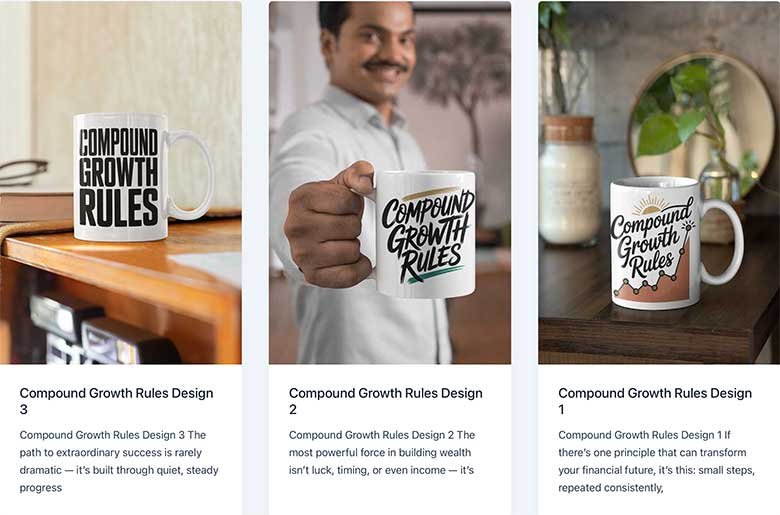
Fill Your Space With What Supports the Life You Are Building
Premier Print Works makes quality prints, mugs, and shirts for people building the daily habits that lead to a life they genuinely love. Browse the collection and find what speaks to your journey today.
Visit Premier Print WorksDisclaimer
The content on this page is for informational and inspirational purposes only. It is not professional mental health, career, or coaching advice of any kind. If you are experiencing significant or persistent stress, anxiety, or other mental health challenges, please consider seeking support from a qualified mental health professional. Results and experiences vary significantly from person to person.
The stories of Amara and Joel are illustrative composite characters created to bring the content to life. They are not real people. Any resemblance to a real person is purely coincidental.
Some links on this page, including links to Premier Print Works and other resources, are affiliate links. If you make a purchase through one of these links, we may earn a small commission at no extra cost to you. We do not own, produce, or control any affiliate products, and we are not responsible for them — we only own and sell the products offered through our own store, Premier Print Works.
All content on A Self Help Hub is the property of Digital Marketing 215 LLC and is protected by copyright law. No part of this page may be copied, reproduced, republished, distributed, or transmitted in any form without prior written permission from the author.