15 Positive Thinking Quotes That Help You Create a Better Outlook
Positive thinking gets a bad reputation when it is confused with toxic positivity — the forced cheerfulness that denies what is real, bypasses what is hard, and insists on the bright side when what is actually needed is the honest acknowledgment of the dark. That kind is not what these quotes are about. These quotes are about the other kind: the realistic, grounded, eyes-open positive thinking that sees the hard thing clearly and still chooses to look for what is also true alongside it.
What is possible in this situation. What strength is available. What has survived previous difficulty and is still here. What is worth holding onto even when everything else feels uncertain. That kind of positive thinking is not denial. It is a deliberate choice about where to direct the attention when the attention could go anywhere. These fifteen quotes are the tools for making that choice more consistently. Save the ones that help. Return to them when the outlook needs the reset.
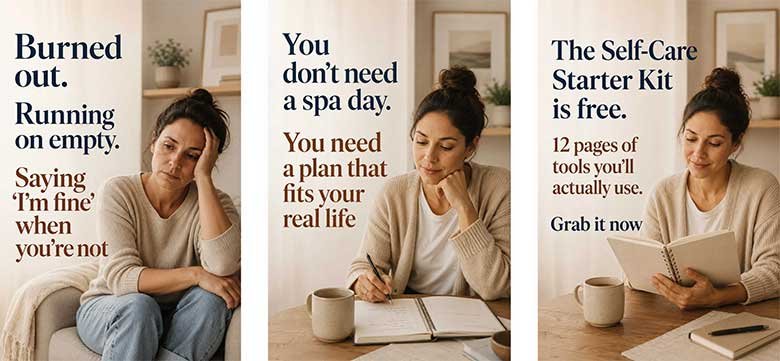
Free Download: The Self-Care Starter Kit
A better outlook is easier to sustain from a foundation of daily self-care that keeps you grounded and open to it. The free Self-Care Starter Kit gives you simple daily practices for your mind, your body, and your inner life to support the perspective you are building. Download it free today.
Get the Free Self-Care Starter KitQuote 1
“Positive thinking is not denial — it is the decision to keep believing in better.”
The decision to keep believing in better is not the same as insisting the current situation is fine. It is the refusal to let the current situation be the final word on what is possible. The difficulty is real. The possibility of what comes after the difficulty is also real. Positive thinking holds both without requiring either to disappear for the other to be present. The current hard thing acknowledged honestly. The better thing that is still possible held alongside it with equal honesty.
Believing in better does not require certainty about the outcome. It requires the willingness to stay open to the possibility that the outcome is not yet determined. That the story is not finished. That the chapter being lived right now is not the last one. That kind of believing is not naive. It is the specific quality that keeps the path forward available rather than foreclosed. Keep believing in better. The believing keeps the better possible.
“The way you think about life quietly becomes the life you live — think accordingly.”
Quote 2
“The way you think about life quietly becomes the life you live — think accordingly.”
The thoughts held consistently enough become the lens through which everything is filtered. The person who consistently thinks in terms of what is wrong produces a mental environment that finds more wrong things to confirm the pattern. The person who consistently looks for what is still working finds evidence of that too. Both are doing the same basic operation — filtering an ambiguous reality through a consistent lens and finding what the lens is looking for. The lens is not fixed. It is chosen.
Think accordingly is the instruction to make the choice deliberately. Not by refusing to acknowledge what is wrong — the problems are real and they need to be addressed. By also consistently looking for what is still right, what is still working, what is still available, what the current situation still makes possible. The life lived from that lens over time produces different results than the one lived from the lens that only finds what is wrong. Think accordingly. The lens shapes the life.
“Positive thinking is not denial — it is the decision to keep believing in better.”
Quote 3
“Hope is not a passive wish — it is the active choice to keep moving toward better.”
Hope that is only a feeling — the passive wish that things will improve without the active engagement toward improvement — is fragile and easily lost when the circumstances are stubborn enough. The hope that lasts through genuinely hard seasons is the kind backed by the active choice to keep moving in the direction of the better thing even when the better thing is not yet visible. The movement is the expression of the hope. The hope and the movement sustain each other.
Where is the movement that expresses the hope you are trying to hold? Not the feeling of it — the action of it. The small step taken today in the direction of the better thing you are hoping for. The choice made that reflects the belief that the better thing is still worth moving toward. Hope without movement eventually runs out of its own fuel. The movement is what keeps the hope alive long enough to become the thing it was hoping for.
“The way you think about life quietly becomes the life you live — think accordingly.”
Quote 4
“What you focus on expands — so focus on what you want more of.”
Attention is not neutral. The thing consistently attended to receives the mental resources that increase its visibility, its perceived significance, and the probability that more of it will be noticed and sought. The problem attended to consistently grows in the mind’s assessment of its size and its impact. The possibility attended to consistently grows in the mind’s assessment of its accessibility and its likelihood. Both are real. The attention is what determines which one expands.
This is not the instruction to pretend problems do not exist. Give the problems the attention they need — diagnose them, plan the response, address what can be addressed. Then redirect the remaining attention toward what is possible, what is working, what is within reach of the current effort. The problems do not need unlimited attention to be solved. The possibilities need consistent attention to remain visible and available. Allocate accordingly.
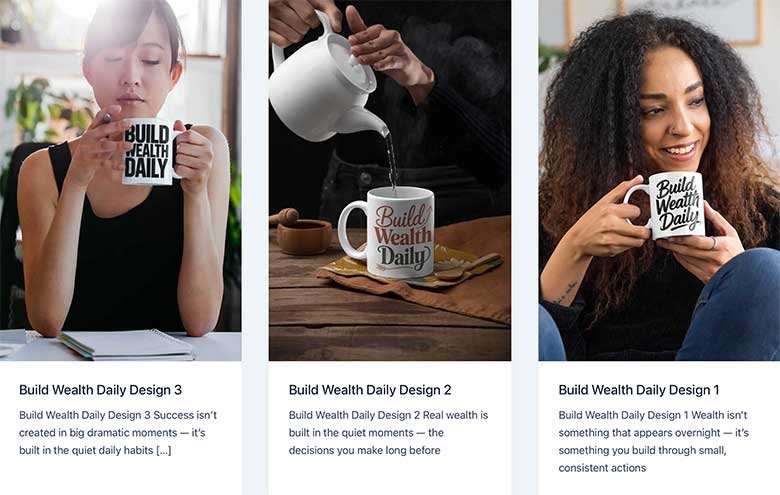
Visit Premier Print Works
Keep the positive thinking quotes that reset the outlook visible where the daily perspective work happens. Premier Print Works offers prints, mugs, and art for the person choosing to think accordingly and building the life that thinking produces. Visit the shop today.
Visit Premier Print WorksHow Amara Built a Better Outlook Not by Pretending Things Were Fine but by Choosing Where to Look When They Were Not
Amara was honest about the fact that her default thinking pattern was pessimistic. Not dramatically so — she was not someone who expected catastrophe in every situation. She was the person who, when something went wrong, had an unusually detailed mental model of everything else that was likely to follow it going wrong. The first domino fell and her mind quickly populated the trajectory of every domino behind it. It was not irrational — she had good predictive instincts. It was also exhausting and not as accurate as it felt in the moment. Most of the subsequent dominoes she predicted never actually fell.
She tried an experiment she had been skeptical about. For thirty days she committed to ending each day by writing down three things that had gone right — not three things she was grateful for in a general sense, but three specific things in that specific day that had worked the way they were supposed to or better than expected. She kept the bar low on purpose. A conversation that went well. A task completed cleanly. A decision made that she felt good about afterward. Small things that the normal operating consciousness had been walking past without registering.
The first week she found the exercise faintly forced. By week two she noticed something unexpected — she was starting to notice the three things during the day rather than only when trying to remember them in the evening. The noticing-during was different from the recording-after. She was beginning to operate with a slightly more active attention toward what was working rather than her habitual orientation toward what might go wrong. The pessimistic pattern did not disappear. It became quieter. The better-outlook pattern became louder. Not because her life had changed but because she had changed where the attention was consistently pointed. The daily practice had gradually rewired which things the day registered most clearly.
Quote 5
“Every day carries the possibility of something good — some days you have to look harder.”
The good is not equally visible in every day. The hard days hide it behind the difficulty. The exhausting days bury it under the depletion. The discouraging days make it seem absent entirely when it is actually just obscured. But the day that holds genuine difficulty almost always also holds something small and real that is good — the moment of connection, the task accomplished, the small comfort that was still available, the beauty that was still there if looked for. The presence of the hard thing does not remove the presence of the good thing. It just requires looking harder for it.
On the days when the good feels absent ask the question deliberately. What is one thing that was still good today? Not to minimize what was hard. To widen the view enough to include what is also true. The one good thing noticed on the hardest days is the one that keeps the better outlook alive through the stretch that would otherwise make it feel impossible to maintain. Look harder on the hard days. The good is there. Finding it matters.
“Positive thinking is not denial — it is the decision to keep believing in better.”
Quote 6
“The thoughts you return to most shape the person you are becoming.”
The thinking that runs on repeat is not background noise. It is active shaping. The thoughts returned to consistently become the assumptions carried into every new situation. The beliefs held about what is possible. The expectations formed about how things typically go. The identity built from the accumulation of what the mind confirms as true about the self and the world. The thoughts that run the most are doing the most work on the person being formed from them.
What thoughts do you return to most often? The ones that open possibility or the ones that close it? The ones that move toward the better outcome or the ones that predict the worse one? You do not have to banish the unhelpful thoughts — they will return regardless. You can notice them, decline to amplify them, and deliberately choose to return to the more useful ones instead. The returning is the practice. The practice shapes the person.
“The way you think about life quietly becomes the life you live — think accordingly.”
Quote 7
“Gratitude is not the absence of difficulty — it is the presence of perspective alongside it.”
Gratitude is often misunderstood as the emotional state available only when things are going well. When the difficulty is present the gratitude feels out of place — like being asked to feel happy about the fire while the house is burning. But gratitude is not the denial of the fire. It is the widened view that can hold the fire and also notice the people who showed up to help put it out, the belongings that were saved, the strength that was found in the responding. Both are in the same picture. The gratitude holds the wider one.
The gratitude available in difficult times is not for the difficulty. It is for what is still present alongside it. The relationships that have held. The strength that has not run out. The small reliabilities — the morning coffee, the familiar walk, the person who checked in — that are still there even while the larger things are uncertain. These are real. Noticing them does not minimize the hard thing. It keeps the full picture visible when the difficulty would narrow it to only itself.
“Positive thinking is not denial — it is the decision to keep believing in better.”
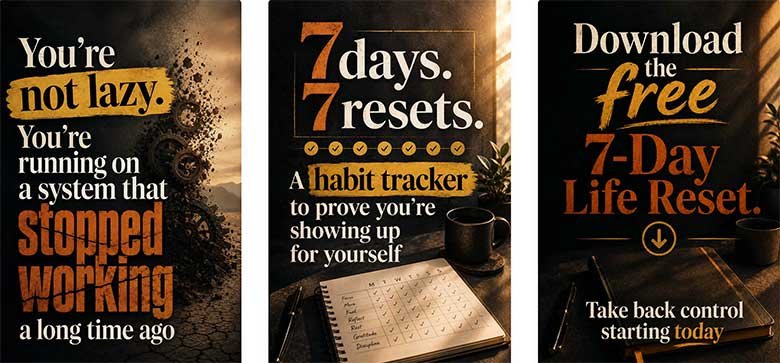
Free Download: The 7-Day Life Reset
A better outlook settles most naturally into a daily life that has been intentionally structured to support it. The free 7-Day Life Reset gives you seven simple focused days to reset your daily habits and begin building the intentional daily foundation from which the better perspective grows. Download it free today.
Get the Free 7-Day ResetQuote 8
“The obstacle in the path is still the path — keep walking.”
The thing that appears to block the way forward is almost never a reason to stop. It is a feature of this specific part of the path — the resistance that this stretch requires navigating rather than avoiding. The obstacle encountered on the way to something worth reaching is part of what the journey requires. The path that has no obstacles is not the path to anything of significance. The obstacles are evidence that the destination is worth the path it takes to get there.
Positive thinking in the face of an obstacle is not pretending the obstacle is not there. It is the refusal to let the obstacle be interpreted as a stop sign. It is the continued forward motion — perhaps slower, perhaps redirected slightly, but still forward. The person who treats the obstacle as part of the path and keeps walking through it arrives somewhere the person who stopped at the obstacle does not. Keep walking.
“The way you think about life quietly becomes the life you live — think accordingly.”
Quote 9
“A better day is always possible — even when the current one is hard to get through.”
The hard day does not predict every day after it. The streak of hard days does not determine the direction permanently. The current difficulty is a current condition — real and requiring the full honest engagement it deserves — and also not the final word on what the days after this stretch will look like. A better day is always possible. Not guaranteed. Not necessarily close. But possible. And the possible is worth holding.
On the hardest days the most available positive thought is often the simplest one: tomorrow could be different. Not definitely better. Possibly better. The possible better is enough to keep the forward motion going on the day when the definite better is nowhere in sight. Hold the possible. It is real. The hard day does not have the authority to cancel it. A better day is still available after this one. Keep going toward it.
“Positive thinking is not denial — it is the decision to keep believing in better.”

Building a Better Outlook Through Recovery? This Is for You.
For some people, building a better outlook is one of the most important and daily parts of the recovery journey. If that is where you are, the free Sober Survival Guide offers honest daily support for the person building that perspective one day at a time. Download it free.
Get the Free Sober Survival GuideQuote 10
“Optimism is not about predicting the outcome — it is about being willing to show up for it.”
The misunderstanding about optimism is that it requires confidence in a positive outcome. That the optimist is the person who is certain things will work out. That kind of optimism is indeed fragile — it breaks the first time the outcome is not the predicted positive one. The more durable kind does not make predictions. It makes commitments. The commitment to show up for whatever the outcome turns out to be. To engage fully with what is available. To bring the effort and the attention regardless of what the result will eventually be.
That kind of optimism does not require certainty about the outcome. It requires the willingness to be present for the attempt. The willingness to show up fully without the guarantee. The choosing to engage rather than to withdraw because the outcome is uncertain. That is the optimism that survives the difficult outcomes because it was never dependent on the positive outcome for its reason to exist. Show up for it. That is the whole practice.
“The way you think about life quietly becomes the life you live — think accordingly.”
Quote 11
“The story is not finished — and the best chapters are often the ones that come after the hardest ones.”
The hard chapter in the middle of the story looks different from the chapter that follows it than it does from inside it. The loss that produced the redirection. The failure that forced the change that led to the better thing. The difficulty that stripped away what was not essential and left the clarity about what was. These things can only be read forward from the vantage point of having moved through them. From inside the hard chapter they look only like the hard chapter. From later they look like the turning point.
The story is not finished. The current hard chapter is real and it deserves honest acknowledgment. It is also not the last chapter. The best chapters are often the ones that come after the hardest ones — not despite the difficulty but partly because of what the difficulty required and built. That perspective is not available from inside the hard chapter. Holding the possibility of it from inside the hard chapter is the act of positive thinking that keeps the story open to what the next chapters might hold.
“Positive thinking is not denial — it is the decision to keep believing in better.”
Quote 12
“Even a small amount of light is enough to see by — find yours and protect it.”
The light available during genuinely dark times is often small. A single friendship that has held steady. The one thing in the daily life that still brings something genuine. The small hope that the current situation will eventually be different. The brief moments of genuine calm in the middle of the ongoing difficulty. These are small. They are real. And the person who finds and protects the small available light is the person who can see well enough to keep moving through the dark.
What is the small available light in the current circumstances? Not the large one — the large one may not be present. The small one. The one thing that still works, still matters, still brings something real. Find it. Protect it. Return to it when the dark is heaviest. The small light is not a solution to the darkness. It is the visibility it provides that makes the navigation of the darkness possible. That is enough. A small amount of light is enough to see by.
“The way you think about life quietly becomes the life you live — think accordingly.”
Quote 13
“Choose to see possibility before you look for evidence of impossibility.”
The search for evidence of impossibility almost always finds it. The mind directed toward what cannot work produces a very efficient inventory of reasons it will not. The mind directed first toward what might still be possible before cataloguing the obstacles produces a different picture of the same situation — the same facts, the same constraints, but a different first frame that opens options the impossibility-first frame was already closing before they had a chance to be examined.
This is not the instruction to ignore the evidence of limitation. It is the instruction to check the possibility landscape first, before the limitation inventory is complete enough to have already foreclosed what the possibility check might have revealed. Look for what might still work before the full accounting of what will not. The shift in sequence changes what is seen. The change in what is seen changes what is available to do.
“Positive thinking is not denial — it is the decision to keep believing in better.”
Quote 14
“What you are going through is making you into someone who can help others go through it too.”
The difficulty that produces understanding is the most specific kind of understanding available. The person who has been through the thing understands what the person still inside it is carrying in a way that the person who has only observed it from the outside never fully can. The empathy that comes from genuine experience of the difficulty — not imagined but lived — is one of the most valuable things one person can offer another. The difficulty is producing it right now in the person going through it.
This is not a reason to be grateful for the hard thing itself. It is a reason to recognize that the hard thing is also building something that will eventually be of real use — to the people in your life who will go through their own version of this, to the understanding you will carry into your own future, to the specific and earned compassion that is only available to the person who has been there. The going through is building the understanding. The understanding will matter.
“The way you think about life quietly becomes the life you live — think accordingly.”
Quote 15
“Today is a new chance — not a continuation of yesterday unless you choose it to be.”
The day inherits from the previous day only what is carried forward. The mood, the narrative, the accumulated weight of the things that did not go well — these arrive in the morning not as facts but as defaults. The default can be accepted or it can be interrupted. The new day is genuinely new. It has not yet been lived. It does not know yet what yesterday decided about it. Only the person waking up into it knows that. And the person waking up into it gets to decide how much of yesterday’s weight comes with them into today.
Start the day as a new chance rather than as a continuation of the previous day’s unfinished difficulty. Not by pretending yesterday did not happen. By choosing what comes forward and what stays behind. The lesson comes forward. The discouragement can stay. The honest acknowledgment of what is still hard comes forward. The story that it will always be this hard can stay. The new day is genuinely available. It is a new chance. Use it as one.
“Positive thinking is not denial — it is the decision to keep believing in better.”
How Joel Rebuilt His Outlook After a Year That Had Taken Most of It
Joel had come through a genuinely difficult year. Not the worst year anyone had ever had — he knew that and did not claim otherwise. But difficult enough that his default orientation toward life had shifted noticeably from what it had been before the year began. He had been, before the difficult stretch, genuinely optimistic in an unexamined way — not through any deliberate practice but through the accumulated experience of a life that had mostly gone in the right direction. The difficult year had tested the unexamined optimism and found it shallower than he had known it was. When things stopped going in the right direction the optimism had not held.
He was not depressed in the clinical sense — he had checked that. He was pessimistic in a way that had not been his characteristic mode before and that was producing a noticeably worse quality of daily life than the earlier optimism had. He engaged less. He expected less from situations before they had a chance to produce anything. He carried the previous difficult year’s pattern into each new situation as though it were the reliable predictor of what each new situation would also deliver.
A therapist he had been seeing made a simple suggestion. Each morning before the day began he would write down one thing he was genuinely open to going well today. Not predicted to go well — open to. The openness was the whole thing. It did not require certainty or even strong probability. Just the genuine acknowledgment that the thing was still possible. He did the exercise. It was small. The first week it felt slightly mechanical. By the third week he noticed that the open-to things were sometimes actually happening — not all of them, but more than his pessimistic year-end default had been predicting. He had not changed the probabilities of the world. He had changed how available the good outcomes were to his awareness when they occurred. The positive thinking had not changed the outcomes. It had changed his ability to see them when they arrived.
Come Back to These Quotes Every Time the Outlook Needs the Reset
The better outlook is not a permanent arrival. It is a daily choosing — made more deliberately on the days when the natural default is toward the darker view, made easily on the days when the good is visible without effort. These fifteen quotes are tools for the days that require the deliberate choosing. Save them. Return to the one that most accurately meets the specific shape of the difficulty you are in. Let it do whatever small good it can do. The way you think about life quietly becomes the life you live. Think accordingly. Think better. Let the better thinking become the better life.

Free Download: The Self-Care Starter Kit
Support the better outlook with daily self-care that keeps the foundation steady enough to sustain it. The free Self-Care Starter Kit gives you simple sustainable daily practices for your mind, your body, and your inner life. Download it free and keep building the perspective worth living from.
Get the Free Self-Care Starter KitOur Top Picks for a Better Life
We have gathered our favorite tools, resources, and recommendations for building a better outlook, developing the positive thinking habits that are grounded in reality, and creating the daily practices that make the better perspective more accessible every day. Everything we trust enough to share, all in one place.
See Our Top Picks
Better Outlook Prints at Premier Print Works
Keep the reminder that the way you think about life quietly becomes the life you live visible where the daily perspective work happens. Visit Premier Print Works for prints, mugs, and art for the person choosing to think accordingly and building the better life from it.
Visit Premier Print WorksDisclaimer
The content on A Self Help Hub is for informational and inspirational purposes only. The positive thinking quotes and personal stories in this article offer general support for everyday outlook building and personal development. They are not professional mental health advice, psychological counseling, or any form of clinical treatment.
Everyone’s experience with optimism, outlook, and personal growth is different. If you are experiencing significant depression, anxiety, or other mental health conditions that are affecting your daily functioning and ability to maintain a positive outlook, please speak with a qualified mental health professional. General positive thinking content is not a substitute for professional care. If you are in an unsafe situation, please reach out to a trusted person or professional resource right away. Your safety comes first.
The stories and composite characters in this article, including Amara and Joel, are illustrative. They are based on common experiences and created to make the content relatable. They are not real people. Any resemblance to a specific person is coincidental.
Some links on this site, including links to Premier Print Works, may be affiliate links. A Self Help Hub may earn a small commission at no extra cost to you. We only recommend things we genuinely believe in.
The Sober Survival Guide linked in this article is general supportive information only. It is not a substitute for professional addiction treatment or medical care. If you or someone you love is struggling with addiction, please seek help from a qualified professional. Recovery is possible.
If you are in a mental health crisis or thinking about self-harm, please do not rely on this content for support. Contact emergency services or a crisis helpline right away. You deserve real help and it is available to you now.
All content on A Self Help Hub is copyrighted. You may not copy or republish it without written permission. By reading this article you agree to this disclaimer.