17 Budgeting Tips That Help You Build More Financial Freedom
Think back to the last time you got a raise. For a few weeks, it felt great. Then it quietly became your normal, and the bigger paycheck stopped feeling special.
Economists Rafael Di Tella, John Haisken-DeNew, and Robert MacCulloch put numbers on that experience. In a 2010 paper in the Journal of Economic Behavior and Organization, they followed 7,812 people in Germany from 1984 to 2000 and looked at how their reported happiness changed after their income did. In the year of an income increase, happiness was higher. But about 65 percent of that year’s effect on happiness was gone over the following four years.
I don’t want to overread this. It measured answers to a life-satisfaction survey for people in Germany, and it doesn’t tell anyone what to do with money. But it made me think differently about financial freedom. If a bigger paycheck stops feeling special within a few years, then a lasting change may have to come from somewhere else. My own guess, and it’s only a guess, is that one place is the gap between what you earn and what you spend.
So the 17 tips below are about building that gap and the choices it gives you. The research only supports the first idea, that the boost from higher income fades. Everything else is my own thinking, and I’ll say so as we go.
Start Designing Your Freedom on Paper
Grab my free Money Reset Workbook. It’s a good place to start putting your goals and numbers in one spot.
Get the Free Workbook1. Decide what “freedom” means to you in specific terms
Freedom can mean different things. It might be three months of expenses saved, being able to leave a job that’s wearing you down, or taking a Friday off each month. The clearer you are, the easier it is to plan.
Write down what freedom would look like in your life, in one or two sentences. Use real examples. A vague dream is hard to budget for, and a specific one is a goal.
Try this: Finish this sentence: “For me, financial freedom means being able to ___.”
2. Remember that a raise tends to fade, so decide what to do with it in advance
This is the research idea. Most of the happiness boost from higher income had faded after four years in that German study. If that holds for you, then spending the whole raise on a nicer lifestyle may leave you about where you started, with higher bills.
Decide before the raise arrives how you’ll use it. You’re much more likely to follow a plan made in advance than to decide in the moment. That advice is mine.
Try this: Write down your plan for your next raise or bonus before you get it.

A Small Reminder of What You’re Building
I make prints, mugs, and shirts at Premier Print Works. Some people like a reminder where they can see it.
Visit Premier Print Works3. Split every raise, with part for your life and part for your freedom
One simple approach is to divide a raise in two. Part goes toward things that make life better now. Part goes toward the gap between income and spending, like savings or debt payments. You choose the split.
Early on, I sent all of a raise to my lifestyle, and a year later I couldn’t say what had improved. When I started splitting, the freedom share added up. This approach is my own.
Try this: Decide on a split, like half and half, and apply it to your next raise.
A raise feels big for a while. A cushion keeps mattering long after.
4. Automate the freedom share
If you have to move the money yourself, it may not happen. Set up an automatic transfer for the freedom share on the day you get paid. That way the money is gone before you can spend it.
Automation removes the daily decision. It’s one of my favorite habits, though the research doesn’t test it.
Try this: Set up an automatic transfer for your freedom share on your next payday.

Take a Week to Think About What Freedom Means
My free 7-Day Life Reset is a short week of reflection on your own routines. It’s a good place to start seeing what matters to you.
Start the Free Reset5. Track the gap between what you earn and what you spend
The gap is your freedom. Every month, subtract your spending from your income and write down the result. A growing gap means more options. A shrinking one is a warning.
It takes a few minutes. The number tells you more than your balance does. That’s my way of looking at it.
Try this: Calculate the gap for last month and write it down.
6. Build a cash cushion before anything else
A cushion is a kind of freedom on its own. It lets you handle a surprise without panic or debt. Start with a week of expenses, then a month, then three.
Everything else feels more possible when an emergency isn’t a crisis. That’s my own priority, and it’s a good first step.
Try this: Set a first cushion goal of one month’s basic expenses and name the account “Freedom.”
7. Pay down high-interest debt
Interest payments are money that can’t go toward your choices. High-interest debt can quietly eat into the gap you’re trying to build.
List your debts by interest rate and put any extra money on the most expensive one, while paying the minimum on the rest. It’s a common approach, and a qualified professional can help you pick the best one for your situation.
Try this: Write down your debts by interest rate and pick one to pay extra on.
8. Keep your fixed costs as low as you reasonably can
Rent, car payments, and subscriptions are commitments. The more of your income is committed, the fewer choices you have. Lower fixed costs mean more flexibility.
That doesn’t mean living in a tiny place or never upgrading. It means noticing how each new commitment affects your options. That’s my view.
Try this: Look at your three biggest fixed costs and ask whether any of them could be lowered.
9. Think twice before an upgrade you may stop noticing
A nicer car, a bigger place, a faster phone. If the boost from higher income fades, the boost from upgrades may fade too. That’s my guess, and it isn’t something the study tested.
Before a big upgrade, ask yourself how much you’ll care about it in four years. If the answer is “probably not much,” consider waiting or choosing a simpler version.
Try this: Before your next big purchase, write down how you think you’ll feel about it in four years.
10. Plan enjoyment on purpose
Freedom isn’t only about saving. A budget with no room for fun tends to break. Set aside a set amount each month for things you love, and spend it without guilt.
When I cut everything out, I ended up overspending later. A planned treat works better than a forced sacrifice. That’s my experience.
Try this: Decide on a monthly amount for things you enjoy and put it in your budget.
11. Find a small cut and send it to your freedom account
Look through your spending and find one expense you’d barely miss. Cancel it, and send the same amount to your cushion or debt. You’ve given yourself a small raise without earning more.
It’s a neat trick. You’re creating the gap from your own choices. This is my own idea.
Try this: Pick one small expense to cut, and move the same amount into savings this month.
12. Review your recurring bills once a year
Insurance, phone plans, internet, and subscriptions can creep up. Once a year, go through them and call to ask whether there’s a better rate, or shop around.
A few phone calls can free up real money. I do mine each January, and it’s paid off more often than not. That’s my own routine.
Try this: Put a yearly “bill review” on your calendar and write down which bills you’ll check.
13. Keep a fund for a choice you might want to make
Some freedoms cost money, like changing careers, taking time off, or going back to school. A small fund set aside for one of these lets you say yes when the chance comes.
Name the fund after the choice. It makes the goal real and keeps you motivated. That’s my approach.
Try this: Name one future choice you’d like to be free to make, and start a fund for it with any amount.
14. Hold a money day once a year
Set aside a day, or a few hours, to look at your whole picture. Review your goals, your cushion, your debts, and your gap. Adjust your plans for the next year.
It’s like a yearly check-up. Nothing dramatic has to happen. You just stay in charge of the direction. This is my own habit.
Try this: Pick a date for your yearly money day and put it on your calendar.
15. Write down what you’d do with one more free day
Sometimes money feels abstract. Asking “What would I do with an extra free day?” makes freedom concrete. You might garden, see family, or start a project.
Keep the answer where you can see it. When you’re tempted by a purchase that doesn’t fit, it can help you remember what you’re building. That’s my idea.
Try this: Write down three things you’d do with an extra free day, and put the list somewhere visible.
16. Notice your milestones and mark them
Your first month of expenses in savings. A debt paid off. Your first full year with a positive gap. These are real steps toward freedom, and they’re worth noticing.
Mark them in a small way. Tell someone, write it down, or have a nice meal. Celebrating keeps you going. That’s my own approach.
Try this: Decide on your next milestone and how you’ll mark it.
17. Be patient, because freedom tends to build quietly
Freedom rarely arrives in one big moment. It builds month by month, in small gaps and small cushions. The change is usually quiet.
If you’re feeling discouraged, look back at where you started a year ago. Progress is easier to see from a distance. That’s my experience, and it’s kept me going.
Try this: Write down one thing that’s different about your finances compared with a year ago.
Explore Our Top Picks for a Better Life
I put together a list of tools and products I think are worth your time, covering mindset, self-care, health, and home.
See Our Top PicksTwo People Who Split Their Raises
I know a woman named Kezia who got a raise and, for the first time, decided on a plan in advance. Half went to a cushion and half went toward life. She told me a year later she couldn’t point to anything that was worse, and she had two months of expenses saved.
I also think about a guy named Daniel who’d spent every raise on a nicer setup and felt no freer. He started automating a freedom share the day his pay arrived. He told me the amount wasn’t large, but having a cushion changed how he thought about taking a risk at work.
Picture the Gap Getting Wider
Imagine looking at your budget and seeing the gap between your income and your spending slowly growing. You have a cushion, fewer commitments, and a fund for a choice that matters to you. Nothing flashy has changed, but your options have.
Start with the first tip. Write down what freedom means to you in one sentence. If you’d like a place to plan it, get my free Money Reset Workbook.
Want to Go Further?
I’m building out some deeper, paid resources for people who want more than a single article can cover. They’re not live yet, but you can see everything I currently have ready for you, free and otherwise, on my Top Picks page.
See What’s Available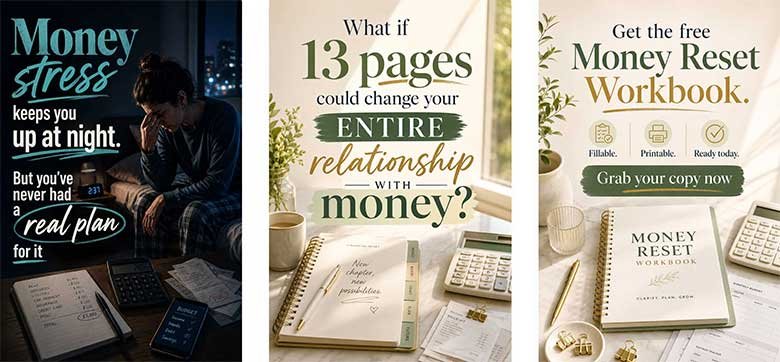
Ready to Build More Freedom?
Download my free Money Reset Workbook and start planning the gap between what you earn and what you spend.
Download Free Now
A Small Reminder of What You’re Building
Take a look at Premier Print Works for prints, mugs, and shirts made for people who like a small daily reminder.
Visit Premier Print WorksDisclaimer
This page is for information only. It is not financial, tax, legal, insurance, investment, or estate planning advice. Everyone’s finances are different, so consider speaking with a qualified professional, such as a certified financial planner or a nonprofit credit counselor, before making major money decisions. The research referenced here comes from the published work of Rafael Di Tella, John Haisken-DeNew, and Robert MacCulloch, “Happiness Adaptation to Income and to Status in an Individual Panel” (Journal of Economic Behavior and Organization, 2010), summarized here in plain language. It used survey data on the life satisfaction of 7,812 people in Germany from 1984 to 2000, so it shows a pattern in one country and doesn’t say what anyone should do with their money. The tips are my own thinking and are based on my experience, not on research. Results vary from person to person.
Kezia and Daniel are made-up characters used to bring this content to life. They are not real people.
Some links on this page, including links to Premier Print Works, are affiliate links. If you buy something through one, we may earn a small commission at no extra cost to you. We only own and sell products through our own store, Premier Print Works.
All content on A Self Help Hub belongs to Digital Marketing 215 LLC and is protected by copyright law. No part of this page may be copied or reused without written permission.