17 Self Care Tips That Help You Feel More Calm and Centered
Here’s something real and physical worth knowing about feeling calm: it’s not only a mindset. A systematic review published in the journal Neuroscience and Biobehavioral Reviews, analyzing over 200 real studies, found that slow, controlled breathing with a longer exhale genuinely activates the parasympathetic nervous system through the vagus nerve, the real, physical system responsible for rest, measurably improving heart rate variability.
These 17 tips are built around that specific, real, physical mechanism, not just a general idea of “relaxing.”
Get the Kit That Supports This Real, Physical Calm
Grab my free Self-Care Starter Kit. It’s a set of simple daily practices that support this exact kind of real, physical steadiness.
Get the Free Kit1. Make your real exhale specifically longer than your inhale
This specific, real pattern, a longer exhale, is what actually triggers the calming response through the vagus nerve. A vague “deep breath” doesn’t target this the same way.
Try one real breath today with your exhale specifically longer than your inhale.
2. Practice this real breathing pattern before a known stressful moment, not only after
Using it proactively, before a real, anticipated hard moment, can help your actual body start from a calmer real baseline going in.
Practice this real pattern today before one moment you know will be stressful.

A Small Reminder for This Real Calm
I’ve got prints, mugs, and shirts at Premier Print Works for people practicing this real, physical steadiness. Take a look if a daily reminder would help.
Visit Premier Print Works3. Notice your own real breathing pattern the moment anxiety shows up
A real, honest, quick check on your own breathing, usually short and shallow when anxious, gives you an accurate, physical signal of where you actually are right now.
Check your own real breathing today the next time anxiety shows up.
“Calm isn’t just a mindset. Slow, controlled breathing with a longer exhale genuinely activates the parasympathetic nervous system through the vagus nerve.”
4. Use a real, specific ratio, not just a vague “deep breath”
A specific, real ratio, exhaling roughly twice as long as you inhale, gives your body an actual, repeatable pattern to work from, rather than an unclear instruction.
Try a real, specific ratio today, exhaling roughly twice as long as you inhale.

Build the Daily Habits Behind This Real Calm
My free 9 Daily Habits guide gives you nine simple morning practices that support this real, physical steadiness.
Get the Free Guide5. Practice this real breathing pattern daily, even on calm days, to actually build the skill
Real research on this specifically studied repeated practice sessions over time, not just single, emergency use. Building it now makes it genuinely more available when you actually need it.
Practice this real pattern today, even if you’re already feeling calm.
6. Pair the real breathing with one, specific physical grounding point
Feeling your actual feet on the floor while breathing this way adds a real, physical anchor alongside the breath itself.
Pair your next real breathing practice today with feeling your actual feet on the floor.
7. Be honest that this won’t erase a real problem, only lower your body’s real stress response to it
This real technique changes your actual physiology, not the external situation itself. Being honest about that keeps expectations realistic.
Use this real technique today for your body’s response, not to solve the actual problem itself.
8. Use it specifically before a hard conversation, not only once it’s already tense
Starting a real, hard conversation from a calmer actual baseline changes how the whole thing tends to go.
Use this real breathing pattern today before your next genuinely hard conversation.
9. Build a real, brief breathing pause into a transition point in your day
Attaching it to something that already happens, walking through a door, sitting at your desk, makes the real practice considerably more consistent.
Attach a real, brief breathing pause today to one existing transition in your day.
10. Start gently if you’re new to this, since real over-deep breaths can cause lightheadedness
A real, gentler pace at first prevents the actual discomfort that can come from breathing too deeply too soon.
Start today with a real, gentle version, and deepen it gradually as it feels comfortable.
11. Notice your actual heart rate settling as real, physical evidence it’s working
Feeling your own real pulse slow slightly afterward is honest, physical confirmation, not just a hopeful assumption.
Notice today whether your own real heart rate settles slightly after this practice.
12. Pair the real breath with one short, specific phrase
A real, brief phrase repeated with the breath, “calm” on the exhale, can reinforce the actual physical effect with a simple mental anchor.
Pair your next real breath today with one short, specific word or phrase.
13. Use this real technique specifically when you notice a physical stress symptom
A tight chest or a racing heart is real, physical information that this specific technique directly addresses.
Use this real technique today the next time you notice an actual physical stress symptom.
14. Build a real, short daily practice, not only an emergency-only habit
Using it only in crises means you’re learning it under the worst real conditions. A real, daily practice builds the actual skill in calmer moments first.
Build one real, short daily practice today, separate from any actual emergency use.
15. Notice which specific real situations trigger your fastest, shallowest breathing
Identifying your own real, specific triggers lets you apply this technique proactively, right where it’s actually needed most.
Notice today which real, specific situation triggers your fastest, shallowest breathing.
16. Teach this real technique to someone else
Explaining it out loud to someone else tends to reinforce your own real understanding and actual practice of it.
Teach this real technique today to one other person.
17. Revisit and adjust your own real ratio and pace as it becomes more natural
Your own real, comfortable pace may shift over time as the practice becomes more familiar. Revisit and adjust it honestly.
Revisit your own real breathing ratio today, and adjust it if it’s changed.
Explore Our Top Picks for a Better Life
I put together a list of tools and products I genuinely think are worth your time, covering mindset, self-care, health, and home.
See Our Top PicksTwo Real, Physical Shifts
I know a woman named Amara who used to describe feeling “wired” before big meetings, with no real strategy beyond hoping it would pass on its own. The day she tried a real, specific slow-exhale pattern beforehand, she said she could actually feel her own heart rate settle within a couple of minutes, something she hadn’t expected from just breathing differently.
I also think about a guy named Joel, who used to notice his chest tightening during hard conversations, and would just push through it. The time he used this real technique specifically before starting one of those conversations, he said the conversation itself still wasn’t easy, but his own body felt noticeably steadier going into it.
Calm Starts in the Body, Not Just the Mind
Each tip here targets a real, physical mechanism, not just a mental reframe. The specific exhale ratio. The physical grounding point paired with breath. The actual heart rate noticed settling afterward.
Practice this real technique today, even briefly, and notice the actual physical shift. Get the free Self-Care Starter Kit to support this kind of daily, physical steadiness.
Want to Go Further?
I’m building out some deeper, paid resources for people who want more than a single article can cover. They’re not live yet, but you can see everything I currently have ready for you, free and otherwise, on my Top Picks page.
See What’s Available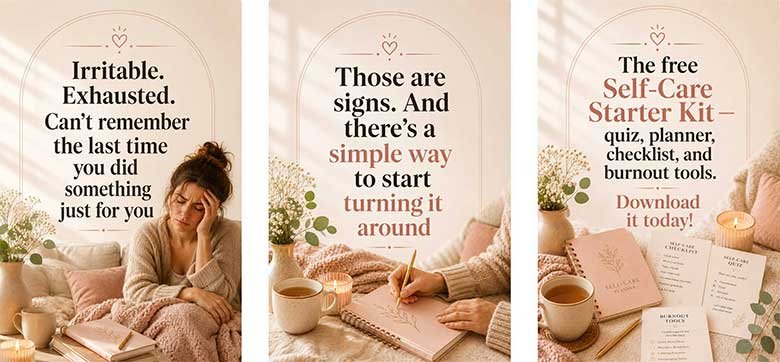
Ready to Build This Real, Physical Calm?
My free Self-Care Starter Kit walks you through simple daily practices that support this exact kind of real, physical steadiness.
Download Free Now
A Small Reminder for This Real Calm
Take a look at Premier Print Works for prints, mugs, and shirts made for people practicing this real, physical steadiness.
Visit Premier Print WorksDisclaimer
This page is for informational and inspirational purposes only. It is not professional coaching, therapy, or medical advice. The research on slow breathing and heart rate variability referenced here comes from the real, published systematic review and meta-analysis by Laborde, Allen, Borges, and colleagues (Neuroscience and Biobehavioral Reviews, 2022), summarized here in plain language. If you have a heart or respiratory condition, or feel lightheaded during breathing practice, consult a qualified medical professional before continuing. Results and experiences vary from person to person.
Amara and Joel are made-up characters used to bring this content to life. They are not real people.
Some links on this page, including links to Premier Print Works, are affiliate links. If you buy something through one, we may earn a small commission at no extra cost to you. We only own and sell products through our own store, Premier Print Works.
All content on A Self Help Hub belongs to Digital Marketing 215 LLC and is protected by copyright law. No part of this page may be copied or reused without written permission.