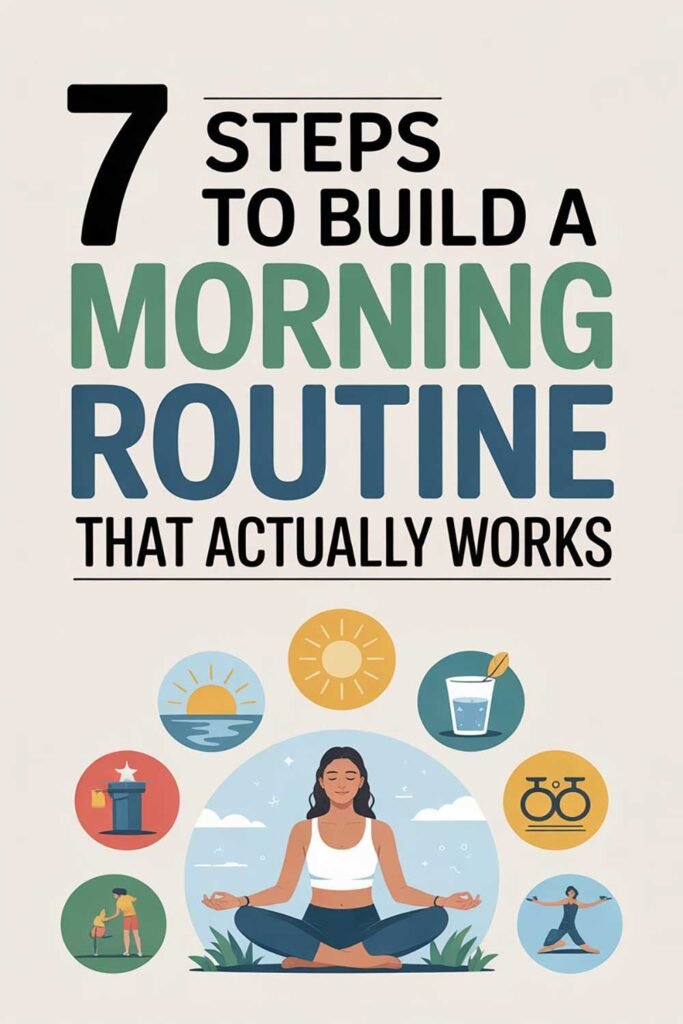
7 Morning Routine Ideas for Starting the Day With Clarity
Some mornings my head feels like a browser with forty tabs open. I haven’t even had coffee, and I’m already replaying a conversation, rehearsing a meeting, and worrying about a bill. I can’t tell which thought matters.
Then I came across a study that changed how I start the day. In 2011, psychologists Gerardo Ramirez and Sian Beilock published experiments on what happens when people write about their worries right before a high-pressure moment. In one of them, ninth graders at a Midwestern high school spent ten minutes before a biology final either writing about their thoughts and feelings about the exam or writing about a biology topic that probably wouldn’t be on it. Among the students who were prone to test anxiety, those who wrote about their feelings scored about 6 percent higher on the final. That was the difference between an average of B-plus and B-minus, and it brought them level with classmates who weren’t anxious.
The researchers’ reasoning is that worries use up working memory, which is the mental space we need to think. Getting the worries onto paper may free that space. I want to be clear that this study was about exams, and the writing came right before a test. I’m borrowing the idea for the start of an ordinary day, and that’s my own extension, not something the study tested.
The seven ideas below are built on it, and I’ll flag what’s mine. They’re all small, and you can do most of them with a pen and ten minutes.
Start With One Small Morning Habit
Grab my free 9 Daily Habits guide. It has nine morning practices you can pick from, and any one of them makes a good small first step.
Get the Free Guide1. Write for ten minutes about what’s on your mind before anything else
This is the idea straight from the research. In the study, students wrote for ten minutes about their thoughts and feelings about what was coming. I use the same length at the start of my day. I write whatever is in my head: worries, to-dos, half-formed thoughts.
Don’t edit, and don’t try to sound smart. The page is just a place to put things down. I remember a morning when I wrote a full page about a meeting I dreaded. By the end, the dread had shrunk to one specific thing I could prepare for.
Try this: Tomorrow, before you look at your phone, set a ten-minute timer and write whatever is on your mind.
2. Get specific about the worry that’s loudest
In the study, students wrote about their feelings about the exam itself. A vague worry is hard to work with, and a specific one is easier. Instead of writing “work is stressful,” try “I’m worried I’ll freeze when my manager asks about the report.”
Naming the exact worry can make it feel smaller, and it often points to a next step. This is how I apply the study, so it’s my own approach.
Try this: Pick the loudest worry on your page and rewrite it as one specific sentence.

A Small Reminder to Start Clear
I make prints, mugs, and shirts at Premier Print Works. Some people like a reminder where they can see it.
Visit Premier Print Works3. Write down the one thing that matters most today
After you’ve emptied your head, use the space to choose. This step is my own addition. The study was about worries, not priorities. But once the clutter is on paper, it’s easier to see what matters.
Pick one thing, not five. If you finish it, the day is a success, and everything else is a bonus.
Try this: Under your worries, write “Today’s one thing:” and fill in the blank.
A cluttered mind is easier to clear on paper than in your head.
4. Close the notebook on purpose
When you’re done, close it. This matters more than it sounds. Closing the notebook tells your mind that the worries are safe on paper and you can get on with your day.
I say “done for now” out loud. It feels a little silly. If the worries creep back, I remind myself they’re written down and I’ll look at them later. That’s a trick of mine, not a research finding.
Try this: After writing, close the notebook and say “done for now.”

Take a Week to Look at Your Mornings
My free 7-Day Life Reset is a short week of reflection on your own routines. It’s a good place to start seeing what gets in your way.
Start the Free Reset5. Keep the pen and paper where you’ll see them first thing
A habit is easier when the tools are right there. Put a notebook and pen on the kitchen table or your nightstand. If you have to hunt for them, you’ll skip it.
I keep a cheap notebook next to my coffee maker. Seeing it is the reminder. This is a small logistics tip, and it’s my own.
Try this: Put a notebook and pen where you’ll see them before you see your phone.
6. Do it before you pick up your phone
Your phone is full of other people’s demands. If you check it first, you fill your mind with their worries before you’ve even looked at your own. Writing first lets you start the day from your own thoughts.
That’s my reasoning, not a finding. But it matches how I feel. On mornings when I write first, the day feels like mine. On mornings when I scroll first, it doesn’t.
Try this: Leave your phone in another room tonight, and write first tomorrow.
7. Keep it short and forgiving
Some mornings you won’t have ten minutes. Write for two. Some mornings you’ll skip it, and that’s okay. The habit matters more than any single day.
One caution. If your worries feel constant or overwhelming, writing may not be enough, and that isn’t a failing. Please talk with a doctor or a licensed mental health professional. This study was about everyday test nerves, not about anxiety disorders.
Try this: Set a two-minute minimum for busy days, so you can always keep the habit.
Explore Our Top Picks for a Better Life
I put together a list of tools and products I think are worth your time, covering mindset, self-care, health, and home.
See Our Top PicksTwo People Who Cleared Their Heads on Paper
I know a woman named Amara who used to start every workday already tense. She began writing for ten minutes before she opened her laptop. She told me the real worry was almost never the one she expected. Once it was on the page, she could do something about it.
I also think about a guy named Joel who didn’t like the idea of writing about feelings. He started with just a list of what was on his mind and one line for “today’s one thing.” He told me that one line changed how focused his mornings felt.
Picture a Morning With Room to Think
Imagine sitting down with a notebook before the day begins. The loud thoughts are on the page, and the one thing that matters is circled. You close the book, take a breath, and start with a clear head.
Try it for one morning this week. You only need a pen and ten minutes. If you’d like more simple ways to build your mornings, get my free 9 Daily Habits guide.
Want to Go Further?
I’m building out some deeper, paid resources for people who want more than a single article can cover. They’re not live yet, but you can see everything I currently have ready for you, free and otherwise, on my Top Picks page.
See What’s Available
Ready for a Clearer Morning?
Download my free 9 Daily Habits guide and pick one small habit to start tomorrow.
Download Free Now
A Small Reminder to Start Clear
Take a look at Premier Print Works for prints, mugs, and shirts made for people who like a small daily reminder.
Visit Premier Print WorksDisclaimer
This page is for informational and inspirational purposes only. It is not professional therapy or mental health advice. The research referenced here comes from the published work of Gerardo Ramirez and Sian L. Beilock, “Writing About Testing Worries Boosts Exam Performance in the Classroom” (Science, 2011), summarized here in plain language. The field study involved ninth-grade biology students before a final exam, so applying the idea to ordinary mornings is my own extension and not something the study tested. The ideas labeled as my own are based on my experience, not on research. If worry feels constant or overwhelming, please talk with a doctor or licensed mental health professional. Results vary from person to person.
Amara and Joel are made-up characters used to bring this content to life. They are not real people.
Some links on this page, including links to Premier Print Works, are affiliate links. If you buy something through one, we may earn a small commission at no extra cost to you. We only own and sell products through our own store, Premier Print Works.
All content on A Self Help Hub belongs to Digital Marketing 215 LLC and is protected by copyright law. No part of this page may be copied or reused without written permission.