9 Growth Mindset Tips for People Who Want to Get Ahead in Life
The gap between where you are and where you want to be is almost never a talent gap. It is almost always a thinking gap. The way you interpret a setback. The story you tell yourself about what the hard thing means. Whether you see a challenge as evidence that you do not belong or as the training ground for the person who does. Those interpretations are the difference. And the good news is that interpretations can be changed.
A growth mindset is not an optimism trick. It is a practical set of beliefs about effort, challenge, and failure that consistently produces better outcomes for the people who hold them. These nine tips will help you build those beliefs into the way you think every day. Not overnight. One deliberate shift at a time. The mindset that gets you ahead is always available to you. It starts with choosing it.

Free Download: The 9 Daily Habits Checklist
A growth mindset is built from consistent daily practices. The free 9 Daily Habits Checklist gives you nine proven daily habits to help you build the mindset and the momentum that gets you ahead. Download it free today.
Get the Free Habits Checklist1. Replace the Fixed Story With the Growth Question
“The only limit to your growth is the story you keep telling yourself about why it is not possible.”
The fixed mindset runs on stories. I am not good at this. I am not the kind of person who does that. People like me do not get things like that. These stories feel like facts because they have been rehearsed so many times they have the texture of truth. But they are not facts. They are conclusions drawn long ago from limited evidence. And they can be replaced.
The replacement is not a positive affirmation. It is a question. Instead of I am not good at this, ask: what would it take to get better at this? Instead of I cannot do that, ask: what would I have to learn to make that possible? The question opens a door the story keeps closed. Practice asking the question every time the story shows up. The question is the beginning of the growth mindset in action.
“A growth mindset does not see failure — it sees data.”
2. Change How You Talk About Failure
“The only limit to your growth is the story you keep telling yourself about why it is not possible.”
The language you use about failure shapes your relationship with it. I failed is a verdict. The approach did not work is information. I am bad at this is identity. I have not figured this out yet is a position on a learning curve. The language is not just semantics. It changes what you do next. The verdict produces shame and avoidance. The information produces curiosity and adjustment.
Practice changing the language. When something does not work, name it as information rather than judgment. What did not work? What does that tell me? What would I do differently? The growth mindset person is not the one who never fails. They are the one who processes failure as data rather than verdict and gets back to work faster than everyone else because they are not spending energy on the shame.
“A growth mindset does not see failure — it sees data.”
3. Seek Out the Feedback You Are Most Afraid to Hear
“The only limit to your growth is the story you keep telling yourself about why it is not possible.”
The feedback you most need is almost always the feedback you are most reluctant to ask for. The honest assessment of the blind spot you suspect might be there. The genuine read from someone whose opinion you value on the thing you are not sure you are doing well. The fixed mindset avoids this feedback because it might confirm the fear. The growth mindset seeks it because the knowing is always more useful than the not knowing.
Ask for one piece of honest feedback this week from someone who will tell you the truth. Not the comfortable feedback. The real one. Then receive it without defending against it. Just listen. Take it home. Sit with it. Ask what is useful about it rather than what is wrong with it. The feedback you were most afraid to hear is often the most valuable thing someone can give you. Stop avoiding it.

Visit Premier Print Works
Keep the reminder that a growth mindset does not see failure — it sees data — visible where your daily mindset work happens. Premier Print Works offers prints, mugs, and art for the person building the thinking that gets them ahead. Visit the shop today.
Visit Premier Print WorksHow Rowena Changed the Way She Talked to Herself After a Setback and Changed the Outcome That Followed
Rowena had applied for a promotion and had not gotten it. The person who got it instead had less experience and she could not understand the decision. For two weeks after the news she carried the weight of it in a way that was affecting her work and her mood and her willingness to put herself forward for anything. The story she was telling herself was clear and consistent and she had repeated it enough times that it felt entirely true. She was being overlooked. She was not being valued. She was in the wrong place and it was never going to change.
A mentor suggested she try one thing before acting on any of those conclusions. Ask the hiring manager for the honest feedback on why she had not been selected. Not to argue with it. Just to hear it. Rowena resisted. She did not want to hear something that might confirm the story. The mentor pointed out that was exactly why she needed to do it — because the story was running her and the feedback might replace it with something more accurate and more useful.
She asked. The feedback was not what she expected. It was specific and actionable and had nothing to do with being overlooked or undervalued. There were two specific gaps in how she had been presenting herself at the leadership level that the hiring manager named clearly. Both were addressable. Neither was a verdict on her capability. They were information. Rowena took the information and spent four months addressing both gaps deliberately. She applied again six months later. She got the role. Not because the circumstances had changed. Because she had replaced the story with the data and worked with the data instead of the story.
4. Stop Comparing Your Chapter Three to Someone Else’s Chapter Twenty
“A growth mindset does not see failure — it sees data.”
Comparison is one of the fastest ways to produce the fixed mindset. The comparison to someone further along the path produces the feeling of being behind. The feeling of being behind produces the story that you are not capable of the thing you are trying to do. The story stops the trying. And the not-trying confirms the story. The loop is vicious and it starts with the comparison.
The person you are comparing yourself to is not you. They have a different starting point, different resources, different obstacles, and a different timeline. Their chapter twenty is not your chapter three. The only useful comparison is the one between who you are now and who you were a year ago. That comparison almost always shows real progress. Make that one instead. It is the only comparison that tells you anything true about your own trajectory.
“The only limit to your growth is the story you keep telling yourself about why it is not possible.”
5. Add the Word Yet to Every Limitation You Name
“A growth mindset does not see failure — it sees data.”
I cannot do this yet. I do not know how to do this yet. I am not good at this yet. The word yet is small. Its effect is significant. It converts a closed statement about a fixed state into an open statement about a current position on a learning curve. The current position can change. The fixed state cannot. And the brain responds to the distinction in ways that are more than semantic.
Make yet a daily practice. Every time you catch yourself making a closed statement about a current limitation add the word. Say it out loud. Write it down. The practice is simple but it reshapes the relationship between you and your own limitations over time. The limitation with the yet is a problem to be solved. The limitation without it is a verdict to be lived with. Choose the problem. It has a solution.
“The only limit to your growth is the story you keep telling yourself about why it is not possible.”
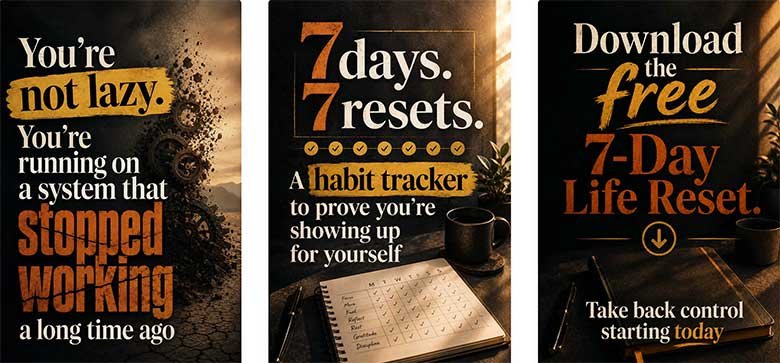
Free Download: The 7-Day Life Reset
A growth mindset takes root most easily in a daily structure that supports it. The free 7-Day Life Reset gives you seven simple focused days to reset your daily habits and begin building the intentional daily foundation your mindset work needs. Download it free today.
Get the Free 7-Day Reset6. Celebrate the Effort Regardless of the Outcome
“A growth mindset does not see failure — it sees data.”
The fixed mindset measures success by outcome only. Either you succeeded or you failed. The growth mindset has a second measurement: the effort and the learning regardless of the outcome. The presentation that did not land but that you prepared more thoroughly than any before it. The business idea that did not work but that taught you more about what customers actually need than two years of research. The attempt that was not successful but that was made at all.
Build the habit of acknowledging the effort independently of the result. After any significant attempt, ask two questions. What did I do well in the effort itself? What did I learn from how it went? The first question builds confidence. The second builds capability. Both produce the growth that the outcome measurement alone misses. Celebrate the effort. The outcome takes care of itself when the effort is consistently high and consistently learned from.
“The only limit to your growth is the story you keep telling yourself about why it is not possible.”
7. Find the Person Who Did What You Think Is Impossible and Study How
“A growth mindset does not see failure — it sees data.”
One of the most powerful things you can do for your growth mindset is find a concrete example of someone who did the thing you have told yourself cannot be done. Not to compare yourself to them. To disprove the story. If someone with a similar background or similar obstacles or similar starting point achieved what you are trying to achieve, the story that says it is not possible for someone like you loses its authority.
Find that person. Read their story. Study what they actually did. Not the highlight reel. The real path — the obstacles they faced, the specific decisions they made, the way they responded to the setbacks that came. The concrete example of the possible is more persuasive than any motivational quote about believing in yourself. It converts the abstract belief into the demonstrated reality. Find the person. Study the how.
“The only limit to your growth is the story you keep telling yourself about why it is not possible.”

Building a Growth Mindset Through Recovery? This Is for You.
For some people, building a growth mindset and rewiring the thinking that keeps them stuck is happening alongside the daily work of sobriety. If that is where you are, the free Sober Survival Guide offers honest support for the person doing both kinds of work at once. Download it free.
Get the Free Sober Survival Guide8. Treat Every Difficult Season as Required Training for the Next Level
“A growth mindset does not see failure — it sees data.”
The fixed mindset experiences the hard season as evidence that the path is wrong or that the goal is unreachable or that something fundamental is broken. The growth mindset experiences the hard season as the training that the next level requires. The difficulty is not the obstacle to the destination. It is the path to it. The person who comes out the other side of the hard season has something the person who avoided it does not. They have the specific resilience and knowledge that only that season could have built.
When the hard season arrives, ask: what is this building in me? Not what is going wrong. What is being developed. The patience. The resilience. The specific knowledge gained from the specific failure. The deeper understanding of what you are actually building and what it actually requires. The difficult season is always building something. The growth mindset makes sure you collect what is being built rather than just enduring the building.
“The only limit to your growth is the story you keep telling yourself about why it is not possible.”
9. Invest Daily in Getting Better at One Thing That Matters
“A growth mindset does not see failure — it sees data.”
The growth mindset without the growth is just a philosophy. It becomes real through the daily practice of actually getting better at something. The deliberate investment — however small — in developing a skill, deepening a knowledge, or improving a capacity that matters for the direction you are heading. Not passive consumption. Active development with the goal of being meaningfully better in thirty days than you are today.
Pick one thing. The skill most needed for the next level you are building toward. Invest fifteen minutes every day in getting better at it. Read. Practice. Seek feedback. Repeat. The deliberate daily investment compounds in ways that feel invisible for a long time and then suddenly become obvious. The person who has been investing daily in one skill for a year is in a fundamentally different position from the one who has been meaning to. The growth mindset is proven in the investment. Make it daily. Make it real.
“The only limit to your growth is the story you keep telling yourself about why it is not possible.”
How Croft Rewired the Story That Had Been Keeping Him at the Same Level for Three Years
Croft had a story about himself that was three years old and showed no signs of updating. The story said he was good at the execution part of his work and not good at the strategy part. He had evidence for it — or what felt like evidence. He had been passed over for roles that required more strategic thinking. He had struggled in the conversations where strategic thinking was being evaluated. The story felt true because the experiences that produced it were real.
He came across the concept of the yet in a book he was reading and something about it stopped him. He had been saying I am not strategic. He tried saying I am not strategic yet. The addition felt awkward at first. Then it felt like it opened something. Because yet implied that strategic thinking was learnable. And if it was learnable then the story was not a verdict. It was a current position that could change with the right investment.
He spent three months deliberately studying and practicing strategic thinking. Not in the abstract. He read about it, he watched how the strategic thinkers in his organization approached problems, and he started practicing the skill in low-stakes contexts where he could get feedback without much risk. He had real conversations about strategy with people who were good at it and paid attention to how they structured their thinking. At the end of three months he was not a master strategist. He was meaningfully better than he had been. Better enough that the conversations that had previously felt exposing started to feel manageable. The story had not been wrong about his current position. It had been wrong about whether the position was fixed. The yet had been the beginning of proving it.
Picture the Mindset That Gets You Ahead Built From These Nine Tips
Not the person who never struggles or never fails or never faces the hard season. The person who processes the struggle as training, the failure as data, and the hard season as the required curriculum for the next level. Who asks the growth question instead of repeating the fixed story. Who seeks the feedback instead of avoiding it. Who invests daily in getting better at the thing that matters. That mindset is available to you. It is built from these nine tips practiced deliberately over time. Start with one today. The mindset that gets you ahead is already in the building.

Free Download: The 9 Daily Habits Checklist
Keep building the growth mindset with the daily habits that support it. The free 9 Daily Habits Checklist gives you the simple daily structure to keep the most important mindset-building practices consistent week after week. Download it free today.
Get the Free Habits ChecklistOur Top Picks for a Better Life
We have gathered our favorite tools, resources, and recommendations for building a growth mindset, rewiring the thinking that keeps you stuck, and creating the daily habits that move you forward. Everything we trust enough to share, all in one place.
See Our Top Picks
Growth Mindset Prints at Premier Print Works
Keep the reminder that the only limit to your growth is the story you keep telling yourself visible where your daily mindset work happens. Visit Premier Print Works for prints, mugs, and art for the person building the thinking that gets them ahead.
Visit Premier Print WorksDisclaimer
The content on A Self Help Hub is for informational and inspirational purposes only. The growth mindset tips and personal stories in this article offer general support for everyday personal development and mindset work. They are not professional mental health advice, psychological counseling, or any form of clinical treatment.
Everyone’s experience with mindset, personal growth, and professional development is different. If you are dealing with significant depression, anxiety, or other mental health conditions affecting your daily functioning and ability to grow, please speak with a qualified mental health professional. General mindset content is not a substitute for professional care.
The stories and composite characters in this article, including Rowena and Croft, are illustrative. They are based on common experiences and created to make the content relatable. They are not real people. Any resemblance to a specific person is coincidental.
Some links on this site, including links to Premier Print Works, may be affiliate links. A Self Help Hub may earn a small commission at no extra cost to you. We only recommend things we genuinely believe in.
The Sober Survival Guide linked in this article is general supportive information only. It is not a substitute for professional addiction treatment or medical care. If you or someone you love is struggling with addiction, please seek help from a qualified professional. Recovery is possible.
If you are in a mental health crisis or thinking about self-harm, please do not rely on this content for support. Contact emergency services or a crisis helpline right away. You deserve real help and it is available to you now.
All content on A Self Help Hub is copyrighted. You may not copy or republish it without written permission. By reading this article you agree to this disclaimer.