9 Money Saving Tips for Living Better on Less
The idea that a better life costs more money is one of the most expensive beliefs most people carry. It is the belief that keeps them spending toward a feeling of abundance that the spending never quite delivers. The nicest restaurant is not always the best meal. The most expensive version of something is not always the one that brings the most genuine satisfaction. And the life that costs the most is not always the one that feels the most full.
Living better on less is not about settling. It is about getting clearer on what actually makes your life feel good and directing more of your money there while spending less on the things that were never really doing what you thought they were. These nine tips will help you do exactly that. Not a smaller life. A smarter one.
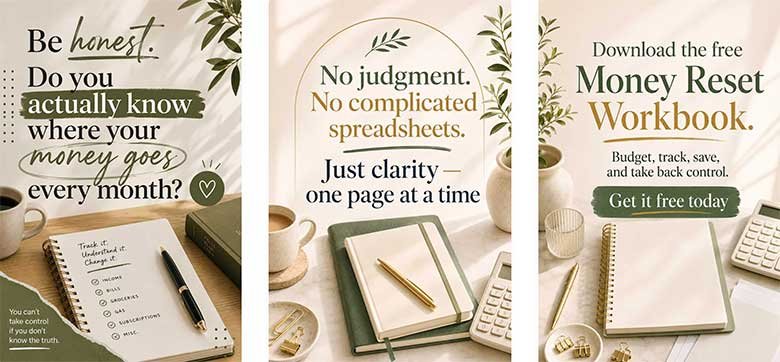
Free Download: The Money Reset Workbook
Living better on less starts with knowing where your money is actually going. The free Money Reset Workbook gives you the clear step-by-step framework to find the leaks, redirect the flow, and start building the life you actually want with what you have. Download it free today.
Get the Free Money Reset Workbook1. Identify What Actually Makes Your Life Feel Rich
“Living well has never been about spending more — it has always been about choosing better.”
Most people have never honestly asked themselves this question. They spend on what feels like it should make life feel good — the nicer apartment, the newer car, the restaurant that costs twice as much as the one down the street. But what actually makes your specific life feel genuinely rich? The long conversation with a close friend. The morning that started slowly with good coffee and no rush. The weekend trip to somewhere simple that cost almost nothing and felt like everything.
Write a list. Not the things you are supposed to value. The things you actually value. Be specific. Look at the times in the last year when you felt most alive and most satisfied and most like yourself. What was present in those moments? What did they cost? The answer usually reveals that most of what makes life feel genuinely good is either free or significantly cheaper than the things money is actually being spent on. That gap is the opportunity.
“Less spending, more living — that is the whole strategy.”
2. Stop Paying for the Feeling and Start Creating It Directly
“Living well has never been about spending more — it has always been about choosing better.”
A lot of spending is actually feeling-purchasing. You are not buying the restaurant meal. You are buying the feeling of being treated well and not having to cook. You are not buying the new outfit. You are buying the feeling of confidence that you hope it will produce. You are not buying the vacation. You are buying the feeling of escape and restoration that the vacation promises.
The hack is learning to create the feeling more directly for less. What produces the feeling of being treated and restored without the restaurant price? A beautiful meal you make at home with good ingredients and candles and no phone. What produces the feeling of confidence without the new outfit? The workout that makes you feel capable in your body. The feeling is available. The spending is just one expensive path to it. Find the cheaper path to the same feeling and you have not sacrificed anything real.
“Less spending, more living — that is the whole strategy.”
3. Build a Joy List and a Drain List and Redirect Accordingly
“Living well has never been about spending more — it has always been about choosing better.”
Two lists. One for the things that genuinely bring joy and satisfaction relative to their cost. One for the things that drain the budget without proportionally filling the life. The joy list and the drain list reveal the specific spending patterns that are working for you and the ones that are working against you.
The gym membership that costs eighty dollars a month and is used twice goes on the drain list. The twenty dollar monthly library card that fuels two books a week goes on the joy list. The streaming service watched most evenings goes on the joy list. The subscription box that sits unopened for two weeks every time it arrives goes on the drain list. The lists tell you where to spend more and where to spend less without any generalized sacrifice. Just the specific redirecting of money from low-satisfaction spending to high-satisfaction spending.
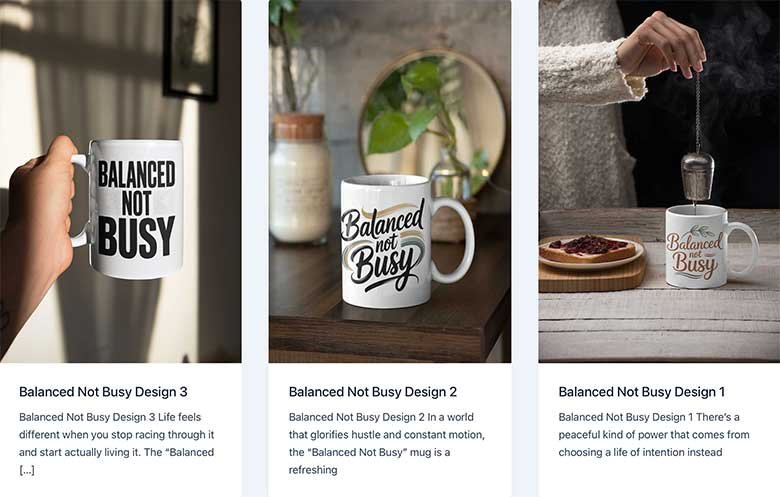
Visit Premier Print Works
Keep the reminder that living well has never been about spending more — it has always been about choosing better — visible where your daily choices happen. Premier Print Works offers prints, mugs, and art for the person building a life that feels rich without the price tag. Visit the shop today.
Visit Premier Print WorksHow Heloise Built a Life That Felt More Abundant After She Spent Less on It
Heloise had a comfortable income and a persistent feeling that the money was not doing what it was supposed to do. She was not in financial trouble. She was not going without anything obvious. But she had the nagging sense that the spending did not match the satisfaction. The month reliably ended with less than she expected to have and more vague dissatisfaction than she could account for.
She spent one Sunday afternoon doing the two-list exercise. The joy list and the drain list from the last three months of spending. The drain list surprised her with how many things on it she had been spending on out of habit rather than genuine pleasure. The gym she had not been to in six weeks. The restaurant she kept choosing because it was convenient rather than because she actually enjoyed it. The online shopping habit that produced a stream of packages that felt exciting for thirty minutes and then joined the pile of things she did not need.
She cancelled three things from the drain list that week. She redirected the money toward two things that were on her joy list but that she had been treating as luxuries she could not justify. The weekly farmers market. The cooking class she had been wanting to try for a year. The total spending did not change dramatically. The satisfaction from the spending changed completely. She was not spending less on her life. She was spending more intentionally on the parts of her life that actually mattered to her. That shift produced the abundance she had been trying to buy with the spending that had been going elsewhere.
4. Master the Art of the Free and Low-Cost Version First
“Less spending, more living — that is the whole strategy.”
Before spending money on the paid version of something, find out if the free or low-cost version is available and whether it meets the need. The library before the bookstore. The free trial before the subscription. The YouTube tutorial before the paid course. The state park before the resort. The homemade version before the restaurant version. In most cases the free or low-cost version meets the actual need completely adequately.
The paid version sometimes adds genuine value. The course with the community and the accountability. The resort with the service and the amenities. Sometimes the premium is worth it. But the default should be the free version first and the upgrade second if the free version genuinely cannot meet the need. Most people have this backwards. They go to the premium by default and discover later that the free version would have been fine. Reverse the order. Start low. Upgrade only when the difference is real and meaningful.
“Living well has never been about spending more — it has always been about choosing better.”
5. Cook More Often and Make It an Experience Rather Than a Chore
“Less spending, more living — that is the whole strategy.”
Food spending is one of the most flexible budget categories available and one of the most consistently over-spent. The average restaurant meal costs three to five times more than the same meal made at home. The delivery order adds fees and tips that can push the effective cost even higher. For someone eating out four or five times a week the annual cost difference between cooking at home and eating out regularly is often several thousand dollars.
The shift that makes home cooking feel like a win rather than a deprivation is reframing it as an experience rather than a task. Good ingredients that make the cooking worth doing. A playlist or podcast that makes the time enjoyable. A meal that is genuinely better than what the restaurant at that price point would have produced. When cooking at home feels like an act of care for yourself rather than a second-best option, the spending shift becomes natural. You are not depriving yourself of the restaurant. You are upgrading to the better experience that costs a fraction of it.
“Living well has never been about spending more — it has always been about choosing better.”
Free Download: The Self-Care Starter Kit
Living better on less means taking better care of yourself without spending more to do it. The free Self-Care Starter Kit gives you simple daily practices for your mind, your body, and your inner life that cost nothing and give back everything. Download it free today.
Get the Free Self-Care Starter Kit6. Build a Regular Spending Fast Into Your Month
“Less spending, more living — that is the whole strategy.”
A spending fast is a defined period where discretionary spending stops entirely. Not permanently. For a week or a weekend or a single day per week. During the fast no discretionary purchases are made. No takeout. No shopping. No impulse buys. Only the necessary fixed expenses. The fast does two things simultaneously. It saves the money that would have been spent during that period and it builds the awareness of how much of the typical spending is genuinely optional.
Start with one no-spend day per week. Pick the same day each week so it becomes a habit rather than a decision. Find alternatives for everything that you would normally spend on during that day. The creativity required is the point. You discover quickly that most of what was being spent on is optional and that the alternatives available at no cost are often just as satisfying. The habit of the regular fast trains the awareness that makes smarter spending possible on every other day.
“Living well has never been about spending more — it has always been about choosing better.”
7. Buy Second-Hand First for Non-Essential Items
“Less spending, more living — that is the whole strategy.”
Most things that are not food or personal care products can be bought second-hand for a fraction of the new price. Clothing. Furniture. Books. Electronics. Kitchen equipment. Sports and hobby gear. Tools. The second-hand version is often in excellent condition because most things are sold not because they are worn out but because the owner no longer needs them or wants them.
Platforms like Facebook Marketplace, eBay, ThredUp, Poshmark, and local thrift stores make second-hand buying accessible for almost any category. Before buying anything new ask first whether the second-hand version is available and whether it meets the need. In most cases it does. The quality is often equivalent to new. The price is typically fifty to seventy percent less. The only real sacrifice is the new-item packaging — which ends up in the recycling bin immediately anyway.
“Living well has never been about spending more — it has always been about choosing better.”

Living Better on Less Through Recovery? This Is for You.
For some people, building a better life on a tighter budget is happening alongside the daily work of sobriety. If that is where you are, the free Sober Survival Guide offers honest support for the person doing both kinds of building at once. Download it free.
Get the Free Sober Survival Guide8. Invest in Experiences Over Things
“Less spending, more living — it is the whole strategy.”
Research on happiness and spending consistently shows the same finding. People derive more lasting satisfaction from experiences than from things. The thing bought produces a spike of pleasure that fades quickly as it becomes part of the normal background of the home. The experience — the weekend trip, the concert, the cooking class, the day adventure — produces memories that are recalled and relived and that contribute to the sense of a life being fully lived long after the experience itself is over.
Redirect discretionary spending from things toward experiences. Not necessarily more expensive experiences. Often cheaper ones. The hike that costs nothing. The dinner party that costs a fraction of the restaurant. The day trip to somewhere within an hour that felt like a real escape. The experiences do not have to be expensive to be memorable. They just have to be lived fully and with presence. The life built from accumulated experiences tends to feel richer than the life built from accumulated possessions — at any budget level.
“Living well has never been about spending more — it has always been about choosing better.”
9. Track Your Spending With Gratitude Instead of Judgment
“Less spending, more living — that is the whole strategy.”
The way most people track their spending produces shame. They look at the numbers, feel bad about what they see, and close the app or the spreadsheet and do not look again for another month. The shame does not produce better decisions. It produces avoidance. And avoidance produces more of the same spending followed by more of the same shame. The cycle is expensive and unproductive.
Try tracking your spending with a different lens. Instead of judgment use curiosity and gratitude. Look at each purchase and ask: did this give me value? If yes, appreciate that the money went toward something real. If no, get curious about it rather than judgmental. What was I trying to get from this? What would have been a better way to get it? The curious and grateful approach to money tracking produces the awareness and the adjustment without the shame that shuts the process down. Track it. Look at it honestly. Be curious about it. The awareness is the tool. Use it without the punishment.
“Living well has never been about spending more — it has always been about choosing better.”
How Rafferty Built the Most Satisfying Year of His Life on Significantly Less Than He Had Been Spending
Rafferty had a spending problem he did not recognize as a spending problem because it did not look like one from the outside. He was not in debt. He was not buying things he could not afford. He was just spending his whole income every month and feeling vaguely unsatisfied with the life the spending was producing. Nice things. Nice experiences. Nothing he regretted. But nothing that had accumulated into the feeling of a life genuinely well-lived either.
He tried the experiment of one no-spend weekend per month for three months. Not to save the money specifically. Just to see what he learned about what he was actually spending on. The first no-spend weekend was uncomfortable in a way that surprised him. He did not know what to do with a Saturday that had no spending in it. He eventually went for a long bike ride, cooked a meal from what was already in the kitchen, and spent the evening reading. He went to bed that night feeling more satisfied than most Saturdays he could remember from the previous year.
He sat with that for a while. What had produced the satisfaction? None of it had cost anything. The movement. The meal made with care. The quiet evening with a book he had been meaning to read for months. He started looking at his spending differently. Not at the total. At the satisfaction return per dollar. The categories that were producing the most satisfaction were almost all low-cost. The categories producing the least satisfaction were almost all high-cost. He redirected spending over the following six months toward the high-satisfaction categories and away from the low-satisfaction ones. At the end of that year he had spent significantly less and felt significantly more like he had actually lived it.
Picture the Life That Feels Rich Without Costing More
The morning that started slowly and well without spending a dollar. The meal that was better than any restaurant because it was made with care for the people at the table. The weekend that was full and satisfying and cost almost nothing. The wardrobe that fits and flatters and came from a thrift store. The library that fed the mind all year for twenty dollars. The life built from experiences and presence and intentional choosing rather than from the amount spent on it. That life is available right now. Not when the income is higher. Now. With what you have. Spent better than before.
Free Download: The Money Reset Workbook
Start redirecting your money toward the things that actually matter. The free Money Reset Workbook gives you the step-by-step tools to see where the money is going and start choosing better with every dollar. Download it free today.
Get the Free Money Reset WorkbookOur Top Picks for a Better Life
We have gathered our favorite tools, resources, and recommendations for living better on less, building intentional spending habits, and creating the life that feels rich without the price tag. Everything we trust enough to share, all in one place.
See Our Top Picks
Intentional Living Prints at Premier Print Works
Keep the reminder that less spending and more living is the whole strategy visible where your daily choices are made. Visit Premier Print Works for prints, mugs, and art for the person building a life that feels genuinely rich.
Visit Premier Print WorksDisclaimer
The content on A Self Help Hub is for informational and inspirational purposes only. The money saving tips, financial perspectives, and personal stories in this article offer general guidance for everyday money management and lifestyle choices and do not constitute professional financial advice, investment advice, tax advice, or legal advice of any kind. A Self Help Hub is not a licensed financial advisor and nothing in this article should be interpreted as a recommendation to take any specific financial action.
Every person’s financial situation is unique. The general strategies described here may not be appropriate for every financial situation. Before making significant financial decisions please consult a qualified and licensed financial professional. Any savings figures referenced in this article are general estimates and not guarantees of specific results. Individual results will vary based on individual circumstances.
The stories and composite characters in this article, including Heloise and Rafferty, are illustrative. They are based on common experiences and created to make the content relatable. They are not real people. Any resemblance to a specific person is coincidental.
Some links on this site, including links to Premier Print Works, may be affiliate links. A Self Help Hub may earn a small commission at no extra cost to you. We only recommend things we genuinely believe in.
The Sober Survival Guide linked in this article is general supportive information only. It is not a substitute for professional addiction treatment or medical care. If you or someone you love is struggling with addiction, please seek help from a qualified professional. Recovery is possible.
If you are in a mental health crisis or thinking about self-harm, please do not rely on this content for support. Contact emergency services or a crisis helpline right away. You deserve real help and it is available to you now.
All content on A Self Help Hub is copyrighted. You may not copy or republish it without written permission. By reading this article you agree to this disclaimer.