9 Sobriety Tips for People Who Are Ready to Live Free
There is a specific kind of clarity that only arrives when the fog of addiction lifts. The thoughts that feel like yours again. The mornings that begin without dread. The slow, quiet recognition that the life being lived is starting to reflect the person actually inside it rather than the one the substance had been shaping. That clarity is worth everything it took to find it. And these nine tips are here to help you keep it — to build the daily structure, the mindset, and the support that make the free life not just possible but genuinely worth living.
These tips are for the person who has made the decision. Who is ready — or as ready as anyone gets, which is never perfectly ready. Who is willing to put in the daily work that sobriety requires and who wants the practical understanding of what that work looks like in the real days that follow the decision. Every tip here is honest. None of them pretend the free life is easy to build. All of them point toward the life that is waiting on the other side of the building. That life is real. These tips are how you get to it one day at a time.
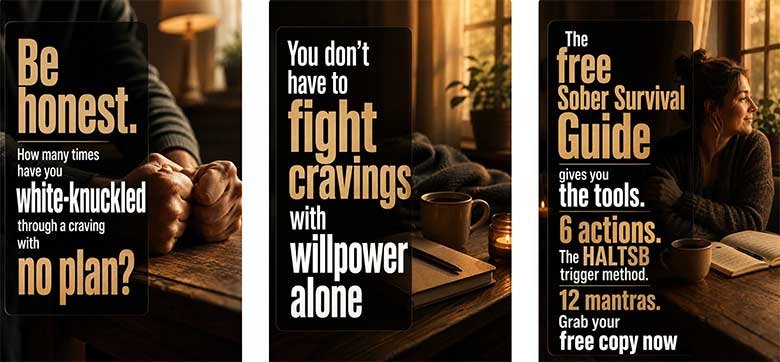
Free Download: The Sober Survival Guide
The Sober Survival Guide was built for exactly the person reading this — the one who has made the decision and needs honest daily support to make it stick. Download it free today and carry it through the days that need it most.
Get the Free Sober Survival Guide1. Understand That Sobriety Is a Daily Practice, Not a Single Decision
“Sobriety is not the end of fun — it is the beginning of a life you actually remember and are proud of.”
The decision to get sober is the beginning of the work, not the completion of it. The people who struggle most in early recovery are often the ones who believed the decision was the hard part and the maintenance would follow naturally. It does not. The maintenance is its own daily practice — the choosing of sobriety again each morning, in each difficult moment, in each situation that used to be answered with the substance. The decision was the door. The daily practice is the life that door opened into.
Understanding this early protects you from the discouragement that arrives when the days still feel hard after the decision has been made. The hard days are not evidence that the decision was wrong. They are the content of the practice. The daily practice is the choosing again and again until the choosing becomes the new normal — until the sober life is the default rather than the deliberate effort. That transition happens through the daily practice. Not around it. Stay in it.
“Freedom starts the moment you decide you are worth more than the thing that was holding you back.”
2. Build a Morning Routine That Anchors the Day Before It Begins
“Sobriety is not the end of fun — it is the beginning of a life you actually remember and are proud of.”
The morning is when the daily choice to stay sober is most available and most important. The day without a structured beginning is the day that floats into whatever the mood and the impulse and the environment produce. The day with a structured morning — however simple — begins from a chosen starting point rather than a default one. The morning routine does not have to be elaborate. The glass of water, the five minutes of quiet, the one honest sentence about where you are today, the brief reminder of why the choice was made. These small anchors are the difference between the day owned by the person living it and the day that drifts.
Build the morning routine before the challenges of the day arrive. In early recovery especially, the morning is the one time when the space between the decision and the temptation is most reliably present. Use it deliberately. Plant the intention for the day. Name the reason. Breathe. Arrive in the day from a position of choice rather than reaction. The morning routine is not just good self-care. In recovery it is the daily infrastructure of the decision being renewed.
“Freedom starts the moment you decide you are worth more than the thing that was holding you back.”
3. Identify Your Triggers and Make a Plan Before They Arrive
“Sobriety is not the end of fun — it is the beginning of a life you actually remember and are proud of.”
The trigger is the specific situation, emotion, person, or environment that reliably activates the pull toward the substance. The stress that has always reached for the drink. The social situation that has always felt impossible without it. The specific person whose presence produces the specific feeling that used to be numbed. Every person in recovery has a set of triggers that are genuinely theirs — specific, predictable, and worth knowing. The person who knows their triggers before they arrive can make a plan. The person who discovers them in the moment is navigating without one.
Make the list. The specific situations that have been the hardest historically. The emotions that have reliably produced the pull. The places and people that carry the association. Write them down with complete honesty. Then for each one, name the available response that is not the substance. The call to the accountability partner before the difficult event. The exit from the situation if it becomes too much. The specific phrase held ready for the social pressure. The plan does not guarantee the outcome. It gives the difficult moment a structure that the unplanned moment does not have. Make the plan before you need it. You will need it.
Visit Premier Print Works
Keep the reminders of why you chose this life visible where the daily choosing happens. Premier Print Works offers prints, mugs, and art for the person building the sober and free life one day at a time. Visit the shop today.
Visit Premier Print WorksHow Keiran Built the Daily Structure That Made His Sobriety Last When the Previous Attempts Had Not
Keiran had tried to get sober three times before the attempt that held. Each previous attempt had followed the same pattern. The decision was genuine and motivated. The first two weeks were powered by the clarity and the relief of the decision itself. Then the structure that had been sustaining the clarity ran out — because there had not been a structure. There had been the decision and the willpower and the sincere belief that this time would be different. The willpower and the belief were real. They were not sufficient. Without the daily structure to hold the recovery when the initial energy faded, each previous attempt had drifted back to the default.
In the attempt that held, the first thing Keiran built was not the commitment to never drink again. He had made that commitment three times. He built a morning routine. Specific, simple, and non-negotiable. He was up at the same time every morning. He made the coffee. He sat with it for ten minutes before the phone. He wrote one sentence in a small notebook about where he was that day. Then he named one reason the day mattered. The whole thing took fifteen minutes. He held it every day.
By the end of the first month he understood something about his previous attempts that he had not understood before. The willpower had not been the missing ingredient. The structure that held the willpower when it was not at full strength had been missing. On the days when the pull was strongest the fifteen-minute morning routine was the bridge from the night before to the day that needed to be navigated. It reminded him of the decision when the decision needed reminding. It gave the hard day a beginning that was already on his side before the hard part arrived. The structure did not make the sobriety easy. It made it possible on the days when possible was the only available standard. That was enough. That was what the previous attempts had been missing.
4. Find Your People — Recovery Is Not a Solo Journey
“Freedom starts the moment you decide you are worth more than the thing that was holding you back.”
The isolation of addiction is one of its most consistent features. The substance becomes the relationship — the reliable presence that is always available, always predictable, always able to provide the numbing or the stimulation or the comfort that human relationships are more complicated to access. Sobriety requires building back the human relationships that the addiction crowded out. Not the social life of the using days. The genuine connection — the people who know where you are in the journey and are willing to be present for it without judgment.
The research on recovery consistently shows that social support is one of the strongest predictors of sustained sobriety. Not just any social support — the specific kind that is honest, non-judgmental, and available when the hard moments arrive. A recovery community. A sponsor. A therapist who specializes in addiction. The two or three people in the personal life who know the real situation and have chosen to stay present for it. These connections are not the reward of successful recovery. They are the infrastructure of it. Find your people before the hard day arrives. The hard day is easier to navigate from inside a community than from outside one.
“Sobriety is not the end of fun — it is the beginning of a life you actually remember and are proud of.”
5. Replace What the Substance Was Doing — Not Just What It Was
“Freedom starts the moment you decide you are worth more than the thing that was holding you back.”
The substance was doing something. Numbing the anxiety. Providing the social lubrication. Offering the reward at the end of the hard day. Filling the silence that felt unbearable without it. Simply removing the substance without replacing what it was doing leaves the original need unaddressed — and the unaddressed need is one of the most reliable sources of relapse. The recovery that lasts is almost always the recovery that replaced what the substance was doing with something that addresses the same underlying need in a way that does not cost the life.
Identify honestly what the substance was doing for you. Not what it was doing to you — what you were using it to do. Then look for the replacements. The physical exercise that addresses the anxiety the drink was numbing. The honest conversation that addresses the connection the substance was substituting for. The creative practice that addresses the need for reward and release. The mindfulness practice that addresses the silence that felt unbearable without the noise. The replacements are not perfect equivalents — nothing produces the same immediate effect as the substance. They are real alternatives that address real needs. Find them. Build them in. The recovery that replaces the function is the one that lasts.
“Sobriety is not the end of fun — it is the beginning of a life you actually remember and are proud of.”

Free Download: The 9 Daily Habits Checklist
The daily habits that support recovery are the same ones that build a life worth living sober. The free 9 Daily Habits Checklist gives you nine simple daily practices to support the structure, the clarity, and the forward motion that sobriety builds from. Download it free today.
Get the Free Habits Checklist6. Accept That Some Relationships Will Change — and That Is Part of the Healing
“Freedom starts the moment you decide you are worth more than the thing that was holding you back.”
Sobriety changes the social landscape. Relationships that were built around the shared using do not always survive the recovery. The drinking buddy who is not equipped to be a sober friend. The social circle where the substance was the organizing principle. The dynamic in a close relationship that depended on the using to stay in its current form. These changes are real, they are often painful, and they are part of the healing rather than a sign that something is wrong with the recovery.
The relationships that survive and deepen in sobriety are almost always more genuine than the ones that do not. The connection that remains when the substance is no longer the shared activity is the connection that was real to begin with. The relationship that requires the sobriety to be abandoned to be maintained was not the relationship it appeared to be. Grieve the losses honestly — they are real losses. Then give the energy to the relationships that can grow in the new direction. Those relationships are what the free life is built from. They are worth the loss of the ones that could not make the journey.
“Sobriety is not the end of fun — it is the beginning of a life you actually remember and are proud of.”
7. Treat a Relapse as Information, Not as Evidence That You Cannot Do This
“Freedom starts the moment you decide you are worth more than the thing that was holding you back.”
Relapse is common in recovery. Not inevitable, not acceptable as a permanent outcome, but statistically common enough that treating it as the final verdict rather than as specific information about what the recovery needs is one of the most preventable reasons that people do not find their way back. The person who relapses and treats it as proof that they cannot do this has turned specific information into a permanent conclusion. The person who relapses and asks what specifically the relapse revealed about what the recovery was missing has treated it as the information it actually is.
If a relapse happens, come back. Come back as quickly as possible. Go back to the support — the community, the sponsor, the therapist, the morning routine. Examine honestly what the relapse was pointing to. The trigger that was not planned for. The support that was not in place. The underlying need that was not being addressed. The specific gap in the recovery structure that the relapse identified. Address the gap. The recovery that comes back from a relapse with that information is a stronger recovery than the one that had not been tested. Relapse is not the end. It is the hard data about what the recovery needs next. Use it.
“Sobriety is not the end of fun — it is the beginning of a life you actually remember and are proud of.”
Free Download: The Sober Survival Guide
For the days when the recovery needs honest practical support rather than inspiration, the Sober Survival Guide is built for exactly that. Download it free and keep it close through every season of the journey.
Get the Free Sober Survival Guide8. Build the Vision of the Life Sobriety Makes Possible
“Sobriety is not the end of fun — it is the beginning of a life you actually remember and are proud of.”
Recovery without a vision of what is being built toward is harder to sustain than recovery with one. The not using is a negative definition — it says what the life is without but not what the life is becoming. The vision of the life sobriety makes possible is the positive definition. The relationships fully present for. The mornings arrived at with a clear head. The creative work that the using had been borrowing against. The professional goal that required the clarity the substance was consuming. The physical health that had been slowly sacrificed. The specific version of the free life that is waiting on the other side of the building.
Name the vision. Write it down. Be specific about what the sober life looks like in the areas that matter most to you. The relationship that gets to be fully inhabited. The work that gets to be fully engaged with. The morning that gets to begin with clarity rather than dread. These specifics are the motivation that sustains the recovery on the days when the absence of the substance is the loudest thing in the room. The vision is what the absence is making space for. Know what that is. Return to it when the absence is hardest to hold.
“Freedom starts the moment you decide you are worth more than the thing that was holding you back.”
9. Celebrate the Small Milestones — They Are Not Small
“Sobriety is not the end of fun — it is the beginning of a life you actually remember and are proud of.”
The first sober morning. The first sober weekend. The first sober difficult situation navigated without the substance. The first month. The first holiday. These milestones are not small things given a polite acknowledgment before moving on to the bigger goals. They are evidence that the decision is holding. They are the specific proof that the person doing this is capable of doing it. Each milestone is a new piece of evidence in the record — the growing record of someone who chose themselves and kept choosing them even when the choosing was hard.
Celebrate the milestones in whatever way is genuine for you. The acknowledgment to the trusted person in your life. The entry in the journal that names specifically what was accomplished. The moment of genuine self-recognition that this specific milestone represents something real. The milestones do not need to be performed for anyone else. They need to be recognized by the person who earned them. That recognition is not vanity. It is the honest accounting of the life being built — and the honest accounting of the life being built is one of the most powerful fuels available for the building of more of it. Mark the milestones. They matter. They are the life already happening.
“Freedom starts the moment you decide you are worth more than the thing that was holding you back.”
How Marguerite Found the Vision That Made Her Sobriety Worth Every Hard Moment of Building It
Marguerite had gotten sober twice before. The first time lasted eight months. The second lasted fourteen. Both attempts had been genuine. Both had been built on what she was walking away from rather than what she was walking toward. The first attempt was fueled by the fear of what would happen if she continued. The second was fueled by the damage that had already been done. Both of these were real motivations. Neither was enough to hold the recovery through the long ordinary stretch when the acute crisis had passed and the life being built felt more like an absence than a presence.
In the attempt that was now approaching two years, the difference she had made was the vision. Early in this recovery — during the first week, when the clarity was new and before the effort of maintaining it had set in — she had sat with a question she had never asked in the previous attempts. What does the life I actually want to be living look like? Not the life without the substance. The specific life she wanted.
What came up was detailed and honest. She wanted to be genuinely present in her relationship with her daughter — not the version of present that was physically in the room while mentally somewhere else. She wanted to finish the novel she had been starting and abandoning for six years. She wanted the mornings back — the early ones she remembered from before the years when getting up was the first difficulty of every day. She wanted to look back at a year and be able to account for where it went rather than finding that months had passed in a blur she could not reconstruct.
She wrote these things down. She kept the list where she could see it. On the days when the absence of the substance was the loudest thing in the room she did not focus on the absence. She focused on what the absence was making space for. The novel was at sixty thousand words now. The mornings were back. The relationship with her daughter had changed in ways she was still finding the words for. The vision had not made the sobriety easy. It had made it worth every hard moment of building it. That was what the previous attempts had been missing. Not the willingness to stop. The reason to keep going.
The Free Life You Chose Is Already Being Built From Every Day You Stay in It
Every sober morning is the life being built. Every trigger navigated is the evidence being added to the record. Every relationship genuinely inhabited rather than managed from behind a fog is the free life showing itself in real time. The building is already happening. The nine tips in this article are the structure and the support for the building that is already underway. Hold the vision. Build the structure. Find your people. Come back when the hard days arrive. The free life is worth every moment of the building it takes. You are already in the building. Keep going.
Free Download: The Sober Survival Guide
Keep the support close on every day of the journey — especially the hard ones. The Sober Survival Guide is built for the person who chose this life and needs honest practical daily support to keep building it. Download it free today.
Get the Free Sober Survival GuideOur Top Picks for a Better Life
We have gathered our favorite tools, resources, and recommendations for the recovery journey — for building the daily structure, finding the community, and developing the habits and the mindset that make the sober and free life not just possible but genuinely worth every hard moment it took to build. Everything we trust enough to share, all in one place.
See Our Top Picks
Sobriety Prints at Premier Print Works
Keep the reminder that freedom starts the moment you decide you are worth more than the thing that was holding you back visible where the daily choosing happens. Visit Premier Print Works for prints, mugs, and art for the person living the free life they chose.
Visit Premier Print WorksDisclaimer
The content on Life and Sobriety is for informational and inspirational purposes only. The sobriety tips and personal stories in this article offer general support for the recovery journey. They are not professional medical advice, addiction treatment guidance, mental health advice, or any substitute for working with a qualified addiction specialist, counselor, physician, or mental health professional.
Addiction and recovery are serious and complex. Every person’s journey is different and the appropriate support varies significantly based on individual circumstances, the nature and history of the addiction, and other health factors. If you or someone you love is struggling with addiction, please seek help from a qualified professional. Please do not use general content as a substitute for proper medical or clinical evaluation and treatment. Withdrawal from some substances can be medically dangerous — always consult a healthcare professional before stopping substance use, especially alcohol, opioids, or benzodiazepines.
Relapse is addressed in this article in an informational context. If you are currently experiencing a relapse or a mental health crisis, please reach out for immediate help. In the US you can contact the SAMHSA National Helpline at 1-800-662-4357 (free, confidential, available 24 hours a day, 7 days a week) or contact emergency services if you are in immediate danger. Recovery is possible and help is available right now.
The stories and composite characters in this article, including Keiran and Marguerite, are illustrative. They are based on common experiences in recovery and created to make the content relatable and honest. They are not real people. Any resemblance to a specific person is coincidental.
Some links on this site, including links to Premier Print Works, may be affiliate links. Life and Sobriety may earn a small commission at no extra cost to you. We only recommend things we genuinely believe in.
If you are in a mental health crisis or thinking about self-harm, please do not rely on this content for support. Contact emergency services or a crisis helpline right away. You deserve real help and it is available to you now.
All content on Life and Sobriety is copyrighted. You may not copy or republish it without written permission. By reading this article you agree to this disclaimer.