11 Inner Peace Quotes for Letting Go of Stress
A considerable amount of stress is spent on things that were never actually within a person’s control to begin with — someone else’s opinion, an outcome still genuinely uncertain, a past decision that cannot be undone. Letting go of stress rarely means the stressful situation disappears. It means the grip on what cannot actually be changed finally loosens.
The eleven reflections below are written for that specific loosening. Each one supports releasing what genuinely cannot be controlled, and settling more fully into what actually remains.

Build the Daily Practice Behind Genuine Inner Peace
Download the free Self-Care Starter Kit and get simple, practical tools for building a daily rhythm that supports letting go of stress you cannot control.
Get the Free Starter Kit1. Not everything demanding your attention actually deserves it, and noticing the difference is where genuine peace begins.
“Not everything asking for your attention actually deserves it. Peace begins with noticing the difference.”
Stress is sometimes given automatically to anything that demands attention, without ever actually checking whether the demand genuinely deserves that response. Noticing this distinction directly — what genuinely deserves concern versus what simply demands it loudly — is often the first, genuine step toward letting go of unnecessary stress.
Notice one current source of stress today, and honestly consider whether it actually deserves the attention you have been giving it.
2. Holding onto something you cannot change does not protect you from it. It simply adds the weight of holding on.
“Holding onto what you cannot change does not protect you. It just adds the weight of holding on.”
Continued mental grip on something genuinely outside of control is sometimes mistaken for a form of protection or vigilance, when it more often simply adds an additional, unnecessary weight on top of a situation that was never actually within reach to change. Recognizing this directly reveals letting go as a genuine relief, not a form of giving up.
Identify one thing you are currently holding onto that you genuinely cannot change, and consider what letting go would actually relieve.
Surround Yourself With What Supports Inner Peace
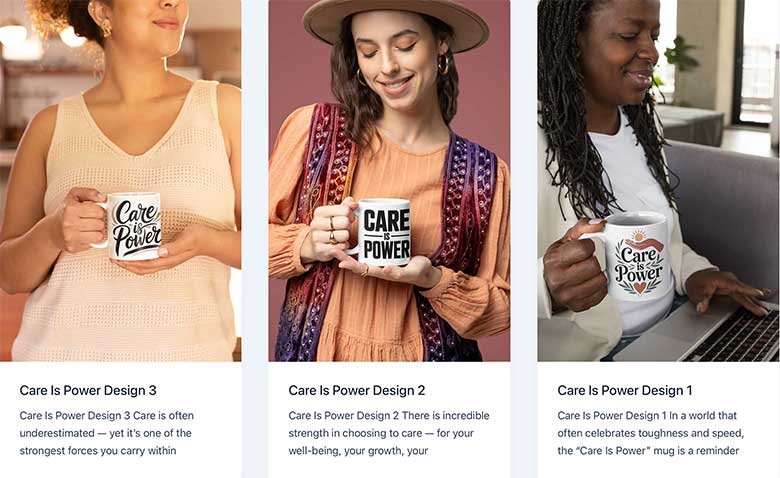
Premier Print Works creates quality prints, mugs, and shirts for people who are building the daily habits that support genuine inner peace. Find what speaks to your journey today.
Visit Premier Print Works3. Peace is not the absence of a difficult situation. It is the presence of a steadier relationship with it.
“Peace is not the absence of the storm. It is a steadier relationship with it.”
Inner peace is sometimes assumed to require the difficult situation itself to first disappear, an expectation that leaves peace permanently out of reach whenever a genuine difficulty is present. A more accurate, more achievable version of peace exists within the difficulty, as a steadier relationship with it, rather than requiring its removal first.
Practice building a steadier relationship with one current difficulty, rather than waiting for it to disappear before allowing peace.
“Letting go of stress does not mean the situation changes. It means your grip on it finally does.”

Build the Morning Habits That Support Inner Peace
The free 9 Daily Habits guide gives you nine simple morning practices that build the daily foundation these reflections are meant to support.
Get the Free Guide4. The stress carried about an uncertain future rarely actually prepares you for it. It usually just borrows against today’s peace.
“Worrying about an uncertain future does not prepare you for it. It just borrows against today’s peace.”
Stress carried in advance about a genuinely uncertain future is sometimes assumed to function as useful preparation, when it more often simply consumes present-moment peace without actually improving readiness for whatever the future eventually brings. Recognizing this distinction directly separates genuine preparation from unproductive, borrowed worry.
Notice one piece of future-focused stress today, and consider whether it is actually preparing you for anything, or simply borrowing against your present peace.
5. Releasing a grudge does not mean the original situation was acceptable. It means you have decided to stop carrying it.
“Letting go of a grudge does not excuse what happened. It just means you decided to stop carrying it.”
Releasing a genuine grudge is sometimes confused with excusing or minimizing what actually happened, when letting go is actually a separate decision about what continues to be carried forward, entirely independent of whether the original situation was acceptable. Recognizing this distinction removes a common obstacle to genuine release.
Identify one grudge you have been carrying, and consider releasing the weight of it without requiring it to mean the original situation was acceptable.
6. Comparing your current stress to someone else’s struggle does not actually make your own stress lighter to carry.
“Comparing your stress to someone else’s does not actually make yours lighter.”
A person’s own genuine stress is sometimes minimized internally by comparing it to someone else’s apparently greater struggle, as though this comparison should logically reduce the actual weight being carried, when comparison rarely functions this way in practice and often simply adds guilt on top of the original stress. Releasing this comparison allows the actual stress to be addressed directly.
The next time you minimize your own stress through comparison, release that comparison and address the actual stress directly instead.
7. A single peaceful moment, fully allowed, is not undone by the stressful moment that comes right after it.
“A peaceful moment is not canceled out by the stressful one that follows it. Both are simply allowed to be real.”
A moment of genuine peace, experienced in the middle of an otherwise stressful stretch, is sometimes dismissed as not fully counting, since stress returns again shortly afterward, when the peaceful moment was actually entirely real and valid on its own terms, independent of what came before or after it. Allowing it to fully count restores genuine value that dismissal discards.
The next time you experience a peaceful moment during a stressful stretch, let it fully count, without dismissing it because stress returns afterward.
8. You are allowed to set down a stressful thought before it has actually been fully resolved.
“You do not need to finish resolving a thought before you are allowed to set it down for now.”
A stressful, unresolved thought is sometimes held onto continuously, out of a sense that setting it down before full resolution would be irresponsible, when a thought can genuinely be set down temporarily, to be picked back up later, without that pause meaning it has been abandoned or ignored. Allowing this temporary release supports genuine, periodic rest from continuous stress.
Practice setting down one unresolved, stressful thought today, without requiring it to be fully resolved first.
9. Inner peace is not required to be constant to be genuine. A brief, interrupted version still counts as real.
“Inner peace does not need to last all day to be real. A brief version still counts.”
Inner peace is sometimes measured by how long or how constant it manages to remain, a standard that discounts brief, genuinely felt moments of peace simply because they did not last the entire day. Recognizing that a brief, interrupted version of peace still genuinely counts removes an unrealistic requirement that pure, uninterrupted peace was never actually necessary to begin with.
Notice one brief moment of genuine peace today, and let it count fully, even if it does not last the whole day.
10. Letting go of stress is a practice returned to repeatedly, not a single decision made once and then permanently secured.
“Letting go is not a single decision. It is a practice you keep returning to.”
Letting go of stress is sometimes expected to happen through a single, decisive moment of release, permanently securing peace afterward, when it more accurately functions as an ongoing practice, returned to repeatedly as new stress inevitably arises. Recognizing this as an ongoing practice, rather than a one-time achievement, removes the discouragement of feeling like the release should have already been permanent.
Return to the practice of letting go again today, treating it as ongoing rather than something you should have already permanently achieved.
11. Revisit what actually helps you let go periodically, since the specific practices that work may shift as your life and stressors genuinely change.
“What helped you let go last year may not be what helps you now, and that shift is simply part of the ongoing practice.”
A specific set of letting-go practices that worked at one point can become less effective as genuine circumstances and stressors change over time, continuing to be relied on out of habit even after they have stopped providing the same relief. Periodically revisiting what genuinely helps keeps the practice aligned with what actually supports inner peace now.
Spend some time this month honestly reviewing what actually helps you let go of stress, and consider whether any current practices deserve to be updated.
Explore Our Top Picks for a Better Life
We have gathered the tools, resources, and products we think are genuinely worth your time — covering mindset, self-care, health, and home. All in one place, hand-picked to support the peace behind these reflections.
See Our Top PicksReal Stories, Real Results
Amara had spent months carrying stress about a decision that had already been made and could not actually be undone, holding onto it as though the continued grip might somehow still protect her from its consequences. Recognizing that holding on was not actually offering any genuine protection, only adding weight, finally let her set it down. She said the original decision had never gotten any less permanent. Her sense that holding onto it was doing something useful finally had.
Joel had always assumed that letting go of a grudge from years earlier would mean excusing what had actually happened, a belief that kept him carrying the weight of it far longer than he ever consciously wanted to. Recognizing that letting go was a separate decision, entirely independent of excusing the original situation, finally let him set the grudge down without that requirement attached. He said the original situation had never actually become acceptable to him. He had simply stopped needing it to be, in order to finally let it go.
Inner Peace Is Built by Loosening the Grip, Not by Fixing Everything
Each reflection in this article releases a specific, common source of unnecessary stress — the undeserved attention, the borrowed worry, the grudge held out of obligation. None of these require the underlying situation to actually change first.
Choose the one or two reflections that speak most directly to what you are currently holding onto, and return to them regularly. Download the free Self-Care Starter Kit to give this practice a consistent daily structure to build from. Letting go of stress does not mean the situation changes. It means your grip on it finally does.

Ready to Build Your Own Practice of Letting Go?
The free Self-Care Starter Kit gives you simple, practical tools to build a daily rhythm that supports letting go of stress you cannot control.
Download Free Now
Fill Your Space With What Supports Inner Peace
Premier Print Works makes quality prints, mugs, and shirts for people building genuine, lasting inner peace. Browse the collection and find what speaks to your journey today.
Visit Premier Print WorksDisclaimer
The content on this page is for informational and inspirational purposes only. It is not professional mental health or medical advice of any kind. If you are experiencing significant or persistent stress, anxiety, or other mental health challenges, please consider seeking support from a qualified mental health professional. Results and experiences vary significantly from person to person.
The quotes in this article are original reflections written for A Self Help Hub and are not attributed to any real person. The stories of Amara and Joel are illustrative composite characters created to bring the content to life. They are not real people. Any resemblance to a real person is purely coincidental.
Some links on this page, including links to Premier Print Works and other resources, are affiliate links. If you make a purchase through one of these links, we may earn a small commission at no extra cost to you. We do not own, produce, or control any affiliate products, and we are not responsible for them — we only own and sell the products offered through our own store, Premier Print Works.
All content on A Self Help Hub is the property of Digital Marketing 215 LLC and is protected by copyright law. No part of this page may be copied, reproduced, republished, distributed, or transmitted in any form without prior written permission from the author.