15 Self Discovery Habits That Help You Understand Your Life Better
What are you good at, and when did you last use it on purpose? Most of us can list our weak spots in seconds. Naming our strengths takes longer.
That gap is one reason a 2005 experiment caught my attention. Psychologist Martin Seligman, Tracy Steen, Nansook Park, and Christopher Peterson ran a six-group, randomized, placebo-controlled study over the internet with more than 500 adults. They tested five exercises that were meant to increase happiness, along with one control exercise. Three of the five lastingly increased happiness and decreased depressive symptoms. Two of those are the ones I built this article on. In one, people took a survey to find their top character strengths and then used one of them in a new way each day for a week. In the other, people wrote down three good things that happened each day for a week, along with why they happened. Both effects lasted for the six months the researchers tracked.
Some cautions. This was one online study, and it has been followed by replication attempts, so I treat it as promising and not settled. It also measured happiness and depressive symptoms. It didn’t measure “understanding your life,” so I’m making a connection that’s my own: finding your strengths and noticing what goes well are both ways of getting to know yourself.
The 15 habits below start with those two exercises, and the rest are my own. I’ll mark the ones that come from the study.
Start With One Small Daily Habit
Grab my free 9 Daily Habits guide. It has nine morning practices you can pick from, and any one of them makes a good small first step.
Get the Free Guide1. Take a character-strengths survey to find your top five
In the study, people completed a survey to identify their strongest character traits. The VIA Institute offers a free online character-strengths survey, as far as I know, so check its site for the current details.
Go in with curiosity. You’ll get a ranked list, and the top of it is worth looking at. Some results will feel obvious, and some may surprise you.
Try this: Take a free character-strengths survey this week and write down your top five.
2. Read each strength and ask whether it sounds like you
A survey isn’t the last word. Look at your top five and ask, “Is this true? When have I seen it in action?” Cross out anything that doesn’t fit.
I took a survey like this a few years ago, and two of my top results surprised me. One of them sounded wrong until I thought of a few times it had quietly shown up. That’s my experience, not a study result.
Try this: Next to each of your top five, write one moment when you used it.
A Small Reminder to Notice Yourself
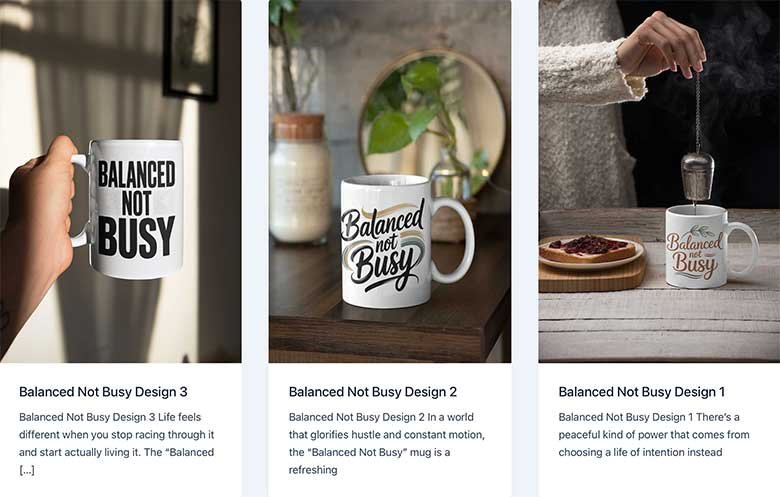
I make prints, mugs, and shirts at Premier Print Works. Some people like a reminder where they can see it.
Visit Premier Print Works3. Use one top strength in a new way each day for a week
This is straight from the study. Participants picked one of their signature strengths and used it in a new and different way each day for a week. If kindness is a strength, you might write a thank-you note on Monday and help a neighbor on Tuesday.
The “new way” part matters. It pushes you to see your strength in more situations. Keep a short list of what you try.
Try this: Choose one strength, and plan one new way to use it tomorrow.
You learn more about yourself by noticing than by guessing.
4. Write down three good things each night for a week
The second exercise in the study was simple. Each night for a week, people wrote down three things that went well that day. It can be small, like a good cup of coffee or a call from a friend.
This can also teach you about your life, since you start to see what a good day looks like for you. Try it for seven nights in a row.
Try this: Tonight, write three things that went well today.
Take a Week to Get to Know Yourself
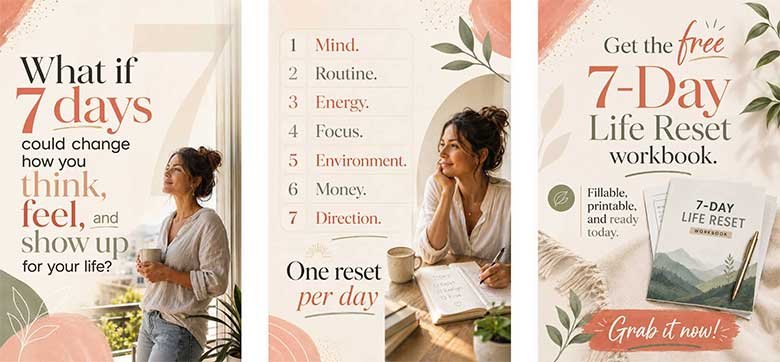
My free 7-Day Life Reset is a short week of reflection on your own routines. It’s a good place to start seeing what matters to you.
Start the Free Reset5. Next to each good thing, write why it happened
In the study, people also wrote about why each good thing happened. That step is important. It turns a list into something you can learn from.
“The call happened because I reached out.” “The walk was nice because I went early.” Seeing the causes shows you what you have a hand in.
Try this: Beside each of your three good things, add one sentence starting with “It happened because.”
6. Notice which strengths show up in your good things
Put your two exercises together. Look at your good things, and ask which strengths were at work. Did curiosity, patience, humor, or courage help?
This is my own link between the two exercises. It can help you see your strengths in your real life, not only on a survey.
Try this: After a week of three good things, circle any strengths you notice and count how often each appears.
7. Ask two people what they see as your strengths
Other people often see what we miss. Ask two people you trust, “What do you think I’m good at?” Listen without arguing.
It can feel awkward, and the answers are usually kind and useful. I asked a friend once, and her answer was something I’d never thought of as a strength. This is my idea, not from the study.
Try this: Send a short message to two people asking what they think your strongest qualities are.
8. Look for patterns in your best days
Think back over the past month. Pick your three best days and ask what they had in common. Was it time with certain people, being outdoors, finishing something, or learning something?
Patterns are easier to see when you write them down. This habit comes from me, and it’s a good way to learn what your life is made of.
Try this: Write down your three best days from the past month and list what they had in common.
9. List three moments you felt proud, and find the strengths behind them
Pride tends to point at what matters to you. Write down three times you felt proud of yourself, and they don’t have to be big. Then ask which strengths you used.
Seeing the strength behind a proud moment makes it easier to repeat. That’s my own reflection exercise.
Try this: Write down three proud moments from any time in your life and name the strength in each.
10. Keep a short “what I learned about myself” note
Once a week, write one sentence: “This week I learned that I ___.” Over time, the notes become a record of how you’re changing.
It takes a minute, and it makes self-discovery feel like something you do regularly. That’s my own habit.
Try this: On Sunday, write one sentence about what you learned about yourself this week.
11. Name your top three values in a few words
Strengths describe what you’re good at, and values describe what matters to you. Write down three words for the things you care about most, like “family,” “honesty,” or “creativity.”
There are no wrong answers. Keep the list where you can see it. It’s my own suggestion, and it pairs well with your strengths.
Try this: Write three words that describe what matters most to you and put them somewhere visible.
12. Check whether your week matches your strengths and values
Look at your calendar. How much of your time goes to things that use your strengths or serve your values? Is there room to change that?
Don’t worry if the answer is “not much.” Just notice. You don’t have to overhaul your life, and a small shift counts. That’s my own exercise.
Try this: Go through this week’s schedule and mark any activity that uses a strength or serves a value.
13. Try one new thing each month to learn more
You can’t always tell what you’ll like until you try it. Once a month, do something you haven’t done before, like a class, a hobby, or a new route home.
Afterward, ask yourself how it felt and what it showed you. I’ve found some of my favorite things by accident. This is my habit and not a finding.
Try this: Pick one new thing to try this month and put a date on the calendar.
14. Make one small change based on what you learn
Self-discovery is most useful when it leads somewhere. Pick one thing you’ve learned, and make a small change. Add more time for something that energizes you, or drop something that doesn’t fit.
Keep it small and low-pressure. You can adjust it later. This step is my own advice.
Try this: Write down one small change you’ll make this month based on what you’ve noticed.
15. Be patient, because you’re more than one answer
You won’t find one final answer about who you are. You’ll find a growing picture that changes as you do. Some weeks you’ll learn a lot, and some weeks nothing.
If questions about yourself feel heavy or distressing, or your low mood won’t lift, please talk with a doctor or licensed mental health professional. Self-discovery is a good thing to do with support. That’s my caution, not a finding.
Try this: Write down one thing you understand about yourself now that you didn’t a year ago.
Explore Our Top Picks for a Better Life
I put together a list of tools and products I think are worth your time, covering mindset, self-care, health, and home.
See Our Top PicksTwo People Who Started Noticing
I know a woman named Kezia who never thought of herself as “good at” anything special. She took a strengths survey and then wrote three good things each night for a week. She told me she noticed that her best moments almost always involved helping someone figure something out, and that changed how she thought about her job.
I also think about a guy named Daniel who was afraid self-discovery would feel self-centered. He started with the “what I learned about myself” note on Sundays. He told me it made him a better listener, because he’d learned what he was like when he was tired.
Picture Knowing Yourself a Little Better
Imagine looking back at a month of notes and seeing a pattern. You can name your strengths, you know which days felt best, and you see where you want to go. You aren’t a finished puzzle, and you’re a clearer picture.
Start with one exercise tonight. Write down three good things that went well today. If you’d like more simple habits to build on, get my free 9 Daily Habits guide.
Want to Go Further?
I’m building out some deeper, paid resources for people who want more than a single article can cover. They’re not live yet, but you can see everything I currently have ready for you, free and otherwise, on my Top Picks page.
See What’s Available
Ready to Know Yourself a Little Better?
Download my free 9 Daily Habits guide and pick one small habit to start today.
Download Free Now
A Small Reminder to Notice Yourself
Take a look at Premier Print Works for prints, mugs, and shirts made for people who like a small daily reminder.
Visit Premier Print WorksDisclaimer
This page is for informational and inspirational purposes only. It is not professional therapy, coaching, or mental health advice. The research referenced here comes from the published work of Martin E. P. Seligman, Tracy A. Steen, Nansook Park, and Christopher Peterson, “Positive Psychology Progress: Empirical Validation of Interventions” (American Psychologist, 2005), summarized here in plain language. It was a randomized, placebo-controlled internet study of more than 500 adults in which three of five exercises lastingly increased happiness and decreased depressive symptoms, including using signature strengths in a new way and writing three good things. It measured happiness and depressive symptoms, not self-understanding, and later replication attempts exist, so it is promising and not settled. The other habits on this page are my own and are based on my experience. If you’re struggling with low mood or thoughts of hurting yourself, please reach out to a doctor or a licensed mental health professional, or, in the U.S., call or text 988. Results vary from person to person.
Kezia and Daniel are made-up characters used to bring this content to life. They are not real people.
Some links on this page, including links to Premier Print Works, are affiliate links. If you buy something through one, we may earn a small commission at no extra cost to you. We only own and sell products through our own store, Premier Print Works.
All content on A Self Help Hub belongs to Digital Marketing 215 LLC and is protected by copyright law. No part of this page may be copied or reused without written permission.