7 Productive Day Tips That Help You Start Strong
You probably know someone who’s sharp at 7 a.m., and someone else who doesn’t say anything useful until after lunch. Most of us fall somewhere in between, and we tend to plan our days as if everyone ran on the same clock.
Psychologists Mareike Wieth and Rose Zacks studied what that does to our thinking. In a 2011 paper in the journal Thinking & Reasoning, they had 428 college students fill out a questionnaire to find out whether they were morning types, evening types, or neither. Then the students tried six problems in either the morning or the late afternoon. Half were analytic problems, which you solve step by step. Half were insight problems, the kind that seem impossible until an “aha” moment. On the analytic problems, time of day made no consistent difference. On the insight problems, students did consistently better at their non-optimal time of day, meaning mornings for evening types and late afternoon for morning types. Students with no preference showed no difference.
The researchers’ explanation is that at our sharpest time of day we’re very good at filtering out distractions, sometimes too good, which can get in the way of a fresh idea. Wieth also cautioned that for most types of work, your optimal time is still the better choice.
Two cautions from me. These were short lab puzzles given to college students, so I’m applying the idea to your workday as my own extension. And the seven tips below are mine. I’ll flag the ones that lean on the study.

Start With One Small Morning Habit
Grab my free 9 Daily Habits guide. It has nine morning practices you can pick from, and any one of them makes a good small first step.
Get the Free Guide1. Find out whether you’re a morning or an evening person
In the study, students answered a questionnaire to learn their type. You can do a rough version at home. Ask yourself when you feel sharpest if nobody is telling you when to get up. If you need an alarm and still feel foggy at 9, you may lean toward evenings.
When I first paid attention to this, I noticed I do my clearest thinking before ten and lose steam around three. That’s my pattern, and yours may be different. Notice it for a week before you decide.
Try this: For one week, rate your focus from 1 to 5 at 9 a.m., noon, 3 p.m., and 7 p.m.
2. Put your most careful, step-by-step work in your sharpest hours
Analytic work, like budgeting, writing a report, or checking details, is where focus pays off. Wieth advised that for most work, your optimal time is still the better choice. So guard those hours for the tasks that need your full attention.
Don’t spend your sharpest hour on email. That’s my own advice, and it’s the change that helped me most.
Try this: Choose the one task tomorrow that needs the most careful thinking, and schedule it in your sharpest window.
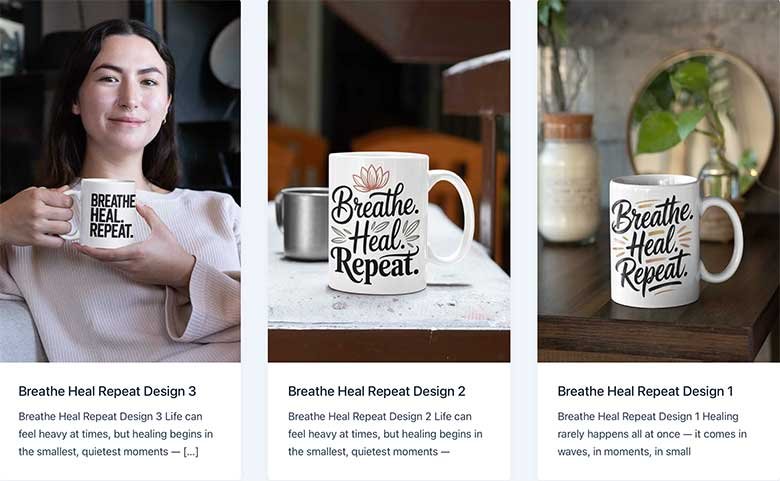
A Small Reminder to Start With What Matters
I make prints, mugs, and shirts at Premier Print Works. Some people like a reminder where they can see it.
Visit Premier Print Works3. Save stubborn problems and fresh ideas for your off-peak time
This is the surprise from the study. Insight problems were solved more often when students weren’t at their peak. If you’re stuck on something that needs a new angle, try it when you’re a little less sharp.
It’s an extension to apply this to your own stuck problems, since the study used puzzles. But it’s worth a try. A few years ago, I got unstuck on a project by taking it up at the end of a long day instead of pushing through in the morning.
Try this: Pick one problem you’re stuck on, and look at it again at your off-peak time.
Your best hour for focus and your best hour for ideas may not be the same hour.
4. Choose one clear task to start with
A strong start doesn’t mean doing more. It means beginning with something specific. Decide your first task the night before, and write it where you’ll see it.
When you know what comes first, you skip the drifting. That’s my own habit. It works with any schedule, including an evening-person one.
Try this: Tonight, write tomorrow’s first task on a sticky note.

Take a Week to Learn Your Own Rhythm
My free 7-Day Life Reset is a short week of reflection on your own routines. It’s a good place to start seeing what gets in your way.
Start the Free Reset5. Protect your first hour from other people’s requests
Whatever your sharpest time is, don’t hand it over. Put your phone on silent and hold off on messages until you’ve made some progress.
Even twenty minutes of uninterrupted work can set the tone. That’s my suggestion, and it fits the idea of guarding your best hours.
Try this: For the first twenty minutes of your sharpest window, close messages and notifications.
6. Plan tomorrow before you finish today
Five minutes at the end of the day saves time the next morning. Write down your first task and the two or three things that matter most.
Then you can start right away when your sharp hours arrive. That’s a habit I rely on, and it’s not from the study.
Try this: Before you close your day, write your top three tasks for tomorrow.
7. Adjust after a week, since your clock isn’t fixed in stone
Look back at your notes. Did your focus rise when you expected? Did a problem come together at an odd hour? Adjust your schedule to match.
Your energy can shift with seasons, sleep, and life changes. If your sleep is often poor or you feel tired most of the time, it’s worth talking with a doctor. That’s my caution, not a finding.
Try this: After seven days, circle your best and worst times in your notes, and move one task to match.
Explore Our Top Picks for a Better Life
I put together a list of tools and products I think are worth your time, covering mindset, self-care, health, and home.
See Our Top PicksTwo People Who Stopped Fighting Their Clock
I know a woman named Amara who tried to do her hardest work at 6 a.m. because that’s what productive people do. After a week of notes, she saw she was sharpest at mid-morning. She moved her reports there and left her early hours for easy tasks. She told me the work felt lighter right away.
I also think about a guy named Joel who was stuck on a design problem for days. He set it aside until the end of his workday, when he was a bit tired, and the answer came in about twenty minutes. He told me he still doesn’t fully trust the trick, and he uses it anyway.
Picture a Day That Matches Your Energy
Imagine your hardest work landing in your sharpest hours, and your stubborn problems waiting for a looser moment. You start with one clear task. You’re not working more. You’re working at the right times.
Try tracking your focus for one week. If you’d like simple habits to build a stronger start, get my free 9 Daily Habits guide.
Want to Go Further?
I’m building out some deeper, paid resources for people who want more than a single article can cover. They’re not live yet, but you can see everything I currently have ready for you, free and otherwise, on my Top Picks page.
See What’s Available
Ready to Start Tomorrow Strong?
Download my free 9 Daily Habits guide and pick one small habit to start tomorrow.
Download Free Now
A Small Reminder to Start With What Matters
Take a look at Premier Print Works for prints, mugs, and shirts made for people who like a small daily reminder.
Visit Premier Print WorksDisclaimer
This page is for informational and inspirational purposes only. It is not medical, psychological, or career advice. The research referenced here comes from the published work of Mareike B. Wieth and Rose T. Zacks, “Time of Day Effects on Problem Solving: When the Non-Optimal Is Optimal” (Thinking & Reasoning, 2011), summarized here in plain language. It involved 428 undergraduates who identified as morning, evening, or neutral types and solved analytic and insight problems in the morning or afternoon, so applying it to a full workday is my own extension. The other tips are my own and are based on my experience. If you feel tired most of the time or your sleep is poor, please talk with a doctor. Results vary from person to person.
Amara and Joel are made-up characters used to bring this content to life. They are not real people.
Some links on this page, including links to Premier Print Works, are affiliate links. If you buy something through one, we may earn a small commission at no extra cost to you. We only own and sell products through our own store, Premier Print Works.
All content on A Self Help Hub belongs to Digital Marketing 215 LLC and is protected by copyright law. No part of this page may be copied or reused without written permission.