7 Productivity Tips That Help You Stop Wasting Time
Some of the time you lose is not lost to distraction. It is lost to being tired.
I used to blame every wasted afternoon on weak willpower. Then I noticed how often the drifting started right after a long stretch of hard focus, when my brain simply ran low. A 2022 review in PLOS ONE, led by Patricia Albulescu, pooled 22 studies with 2,335 people on micro-breaks, meaning breaks of ten minutes or less. Across those studies, short breaks gave a small but real boost in vigor and a small drop in fatigue. They did not make a significant difference to task performance overall, although the benefit showed up for less demanding tasks, and longer breaks helped performance more. So breaks are no miracle. But the findings changed how I think about “wasting time.” Some of it is drift that I can fix, and some of it is a sign that I should have rested on purpose.
These seven tips are about telling those two apart. You will see where your time leaks, plan the rest you really need, and protect the hours that matter.
Build the Daily Habits Behind Time Well Spent
Download the free 9 Daily Habits guide and get nine simple morning practices that help you start the day on purpose instead of by drift.
Get the Free Guide1. Find out where your time actually leaks, since guessing usually points at the wrong culprit.
For three ordinary days, write down what you do in rough chunks. Do not try to be perfect. Jot the time you switch from one thing to another, and add a few words about what it was. Include scrolling, errands, chats, and the small gaps between tasks.
Most people are surprised. The big leaks are often not what they expected. A few short check-ins here, a long wander through email there, and a late start after lunch can add up to hours.
I did this once during a week that felt hopelessly scattered. The log showed that my worst time was the hour right after lunch, which told me something useful about my energy.
Keep a rough time log for three days, and circle the two biggest leaks.
2. Separate drifting from resting, because they feel similar and work very differently.
Drifting is when you slide into something without choosing it. You open your phone for one thing and look up twenty minutes later. Resting is when you choose a break and take it, knowing why.
The difference matters because drifting tends to leave you feeling worse, while a chosen break can leave you a little restored. The review found that short breaks were linked to more vigor and less fatigue, which suggests that real rest has a point.
Next time you notice yourself drifting, ask a simple question: am I tired, bored, or avoiding something? The answer tells you what to do.
The next time you catch yourself drifting, name whether you are tired, bored, or avoiding something.

Keep a Reminder to Spend Your Time on Purpose
Premier Print Works creates quality prints, mugs, and shirts for people who guard their time. Find a small reminder to choose where your hours go.
Visit Premier Print Works3. Plan short breaks of ten minutes or less into your day, so rest happens on your terms.
A micro-break is a break of ten minutes or less. In the research, these short pauses were linked to small gains in energy and small drops in tiredness. A planned pause is much better than one you steal from yourself in guilty bits.
Pick natural points: after a block of focused work, before a call, or when you finish a task. Set a timer if it helps. When the timer ends, you go back to work with no leftover guilt.
A planned break is a promise that rest will come, which can make hard work feel easier to start.
Put two ten-minute breaks on your calendar tomorrow, and keep them as if they were meetings.
“Some wasted time is drift that you can fix, and some of it is rest that you forgot to plan.”
4. Choose break activities that really restore you, and experiment to find your best ones.
Not every break feels the same. The studies in the review used many kinds of breaks, from physical movement to more engaging activities like watching videos, and the authors noted that researchers still do not know which activities work best. That means your own experiment is worth running.
Try different options over a week. Walk around the block, stretch, step outside, make tea, chat with someone, or just look out a window. After each, notice how you feel when you return to work.
If a break leaves you more wired or more tired than before, it may not be the right one for you.
Try three different break activities this week, and note which one leaves you feeling best.
Take a Week to See Where Your Time Really Goes
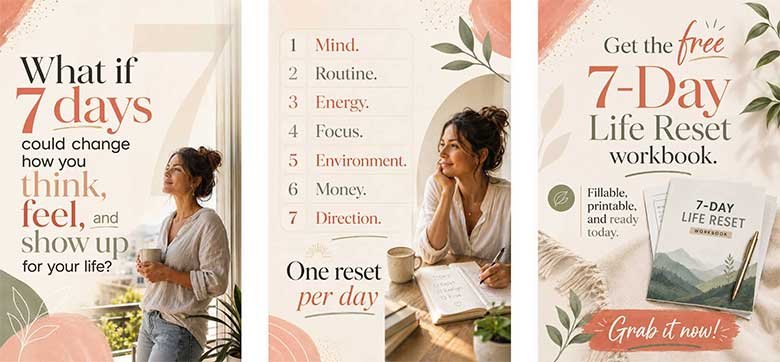
The free 7-Day Life Reset gives you a short, simple way to look back at your week and see which hours were spent on purpose.
Get the Free Reset5. Protect your focus blocks, so small interruptions cannot eat your best hours.
If you want to stop wasting time, guard the time that counts most. Pick one stretch each day, maybe 45 to 90 minutes, for your most important task. During that time, close extra tabs, silence notifications, and let people know you will reply later.
You do not need to do this all day. A single protected block can change how productive a day feels. Then you can take one of your planned breaks and move on to lighter tasks.
Start with a block you think you can actually keep. A protected thirty minutes beats a plan for three hours that never happens.
Choose one focus block for tomorrow, and put your phone and extra tabs out of reach for that time.
6. Match the hardest work to your best energy, and give heavy tasks longer rests.
The review found that the performance benefits of breaks showed up for less demanding tasks, and that longer breaks helped performance more. The authors suggested that recovering from very draining work may take more than a ten-minute break.
In practice, that means two things. First, notice when you are sharp, and put your hardest work there. Second, after a truly demanding task, give yourself a longer rest before the next one, such as a proper lunch or a walk.
Light tasks like email, filing, and errands fit well into low-energy times.
Write down the time of day you usually feel sharpest, and schedule your hardest task there.
7. Set a stopping time and take a short look back, so the day does not drag on and wasted time does not carry over.
Work that has no end tends to expand and blur into the evening. Choose a stopping time and keep it as best you can. Before you stop, spend five minutes writing what you finished and what comes first tomorrow.
That short review gives your mind permission to rest. It also shows you where your time went, which is the best teacher about wasted hours.
Over a few weeks, you will see patterns in what takes longer than you expect, and you can plan around them.
Pick a stopping time for tomorrow, and write down your first task for the next day before you stop.
Explore Our Top Picks for a Better Life
We have gathered the tools, resources, and products we think are genuinely worth your time, covering mindset, self-care, health, and home. All in one place, hand-picked to support the way you spend your days.
See Our Top PicksReal Stories, Real Results
Let me share two examples I like to use. Amara felt she wasted every afternoon. When she kept a rough time log, she saw that the drifting always started after a long morning of hard thinking. She added a planned ten-minute walk before lunch and another in mid-afternoon. She told me she still had slow patches, but they felt different. She was resting on purpose, so the guilt dropped away.
Joel’s leak was email. He checked it constantly and lost track of time. He protected one forty-five-minute focus block each morning, silenced notifications, and checked email at set times. After two weeks, he said his days felt shorter in a good way. Both of them said the same thing: seeing where the time went came first, and the fixes came second.
Time Feels Less Wasted When Your Hours Are Spent on Purpose, Including Rest
Picture a workday with a protected focus block, two short planned breaks, and a clear stopping point. You still get tired, and you still get distracted sometimes. But you know what to do about each, and the day feels like yours.
Choose two or three tips from this list, and begin with the three-day time log. Download the free 9 Daily Habits guide to help you start each day on purpose. Spending time well is partly about working hard and partly about resting wisely.
Want Ready-Made Tools to Help You Put This Into Action?
Sometimes the fastest way forward is a tool that someone has already built. Browse our hand-picked resources and downloads, chosen to help you take the next step with less guesswork.
Browse Resources and Downloads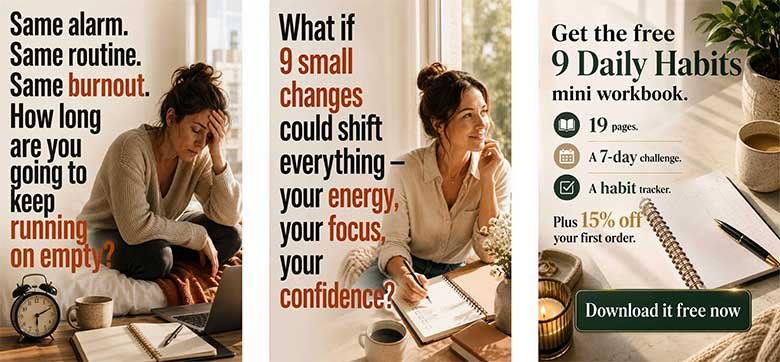
Ready to Spend Your Time on Purpose?
The free 9 Daily Habits guide gives you simple morning practices that make well-spent days easier to repeat.
Download Free Now
Fill Your Space With Time Well Spent
Premier Print Works makes quality prints, mugs, and shirts for people building focused, steady days. Browse the collection and find what speaks to your journey today.
Visit Premier Print WorksDisclaimer
The content on this page is for informational and inspirational purposes only. It is not professional mental health, medical, or career advice of any kind. If you are experiencing persistent exhaustion, difficulty concentrating, or other health concerns, please consult a qualified professional. Results and experiences vary significantly from person to person. The research mentioned in this article was a review of 22 studies of short breaks, many done in lab or work-simulation settings, and its findings may not apply the same way to every kind of work.
The stories of Amara and Joel are illustrative composite characters created to bring the content to life. They are not real people. Any resemblance to a real person is purely coincidental.
Some links on this page, including links to Premier Print Works and other resources, are affiliate links. If you make a purchase through one of these links, we may earn a small commission at no extra cost to you. We do not own, produce, or control any affiliate products, and we are not responsible for them — we only own and sell the products offered through our own store, Premier Print Works.
All content on A Self Help Hub is the property of Digital Marketing 215 LLC and is protected by copyright law. No part of this page may be copied, reproduced, republished, distributed, or transmitted in any form without prior written permission from the author.