13 Best Life Advice Tips That Help You Align With Your Values
There is a specific kind of tired that does not come from working too much. It comes from working hard on things that do not actually matter to you. From spending the energy of your life in directions that were chosen by habit, by expectation, by what seemed reasonable at the time — rather than by any deliberate reckoning with what you genuinely value. The life that looks fine from the outside can carry this tiredness. The life that looks successful can carry it. It is the tiredness of the misalignment between what is being built and what was actually wanted.
These thirteen tips are the tools for closing that gap. Not by abandoning the life you have but by gradually and intentionally bringing it into closer alignment with the values that are actually yours. Some of the tips are clarifying — they help you see what you value more clearly. Some are practical — they help you organize the daily life around those values more deliberately. All of them move in the same direction: the life that feels genuinely like yours because it is built from what genuinely matters to you.

Free Download: The Self-Care Starter Kit
Aligning your life with your values is easier from a foundation of daily self-care that keeps you connected to who you actually are. The free Self-Care Starter Kit gives you simple daily practices for your mind, your body, and your inner life. Download it free today.
Get the Free Self-Care Starter Kit1. Name Your Top Five Values in Specific Words — Not Categories
“When your actions align with your values the noise of the world gets a lot quieter.”
Most people have a vague sense of what they value without ever naming it with enough specificity to use it as a guide. Family is not specific enough to be useful as a value. Deep and unhurried time with the people I love most is specific enough to make decisions from. Growth is a category. Learning something genuinely new every year is a value you can act on. The specificity is what turns an abstract sense of what matters into something that can actually direct daily choices.
Sit with this long enough to get past the first answers. The first answers are almost always the ones you think you are supposed to give. Dig past them to the ones that are actually true. What makes you feel most like yourself? What, when it is absent from your life, makes everything feel slightly hollow? What, when it is present, makes even the difficult days feel worthwhile? Name those things specifically. Write them down. Those are the values that deserve to organize the life.
“The most peaceful life is the one lived in honest alignment with who you actually are.”
2. Audit Where Your Time Actually Goes Against Where You Say Your Values Are
“When your actions align with your values the noise of the world gets a lot quieter.”
The most honest measure of what someone actually values is not what they say they value. It is where they spend their time without being asked to. Where the discretionary hours go. What gets the energy when the obligations are met and the choice is genuinely free. Most people discover a significant gap between the values they name and the daily life that time reveals. The person who says family is the most important thing and whose discretionary hours show almost nothing invested there. The person who says creativity matters to them whose week shows almost no time spent creating.
Track one week of time honestly. Not the obligated hours — the discretionary ones. Where did they go? What do they reveal about what actually has the priority in the actual daily life? The gap between the stated values and the revealed time use is not a reason for self-criticism. It is information. It is the map showing where the alignment work is most needed.
“The most peaceful life is the one lived in honest alignment with who you actually are.”
3. Make One Small Decision Each Day From Your Values Rather Than From Habit
“When your actions align with your values the noise of the world gets a lot quieter.”
The daily life is mostly run on habit. The same choices made in the same way from the same automatic patterns that have organized the days for years. The alignment does not happen all at once by overhauling everything. It happens one small decision at a time — the moment when the habitual choice is paused and the values-based choice is made instead. The short conversation extended because connection was the value. The yes declined because deep work was the value. The evening protected because restoration was the value.
Choose one values-based decision per day. Not a life overhaul. One moment where the habit would have run automatically and instead the values were consulted. Over time the accumulation of those small decisions changes the character of the daily life more durably than any dramatic single change could. The alignment is built in the moments. The moments are what the days are made of.
“The most peaceful life is the one lived in honest alignment with who you actually are.”
4. Let the Values Guide What You Say No To — Not Just What You Say Yes To
“When your actions align with your values the noise of the world gets a lot quieter.”
Most people think about values in terms of what to pursue. But the values are just as useful — often more useful — for clarifying what to decline. The invitation that sounds interesting but will consume the energy that a deeply held value needs. The opportunity that looks good on paper but pulls in a direction that the honest values examination says is not actually yours. The commitment that would expand the life in the wrong direction rather than the right one. The values-informed no is not a rejection of opportunity. It is the protection of the life being built from the inside out.
Before the next significant yes ask whether it serves the values you named. Not whether it is a good opportunity in the abstract. Whether it moves the daily life in the direction of what you said actually matters. The no that comes from clear values does not produce the guilt that the reflexive no does. It produces the quiet confidence of a choice made from genuine knowing rather than from avoidance.
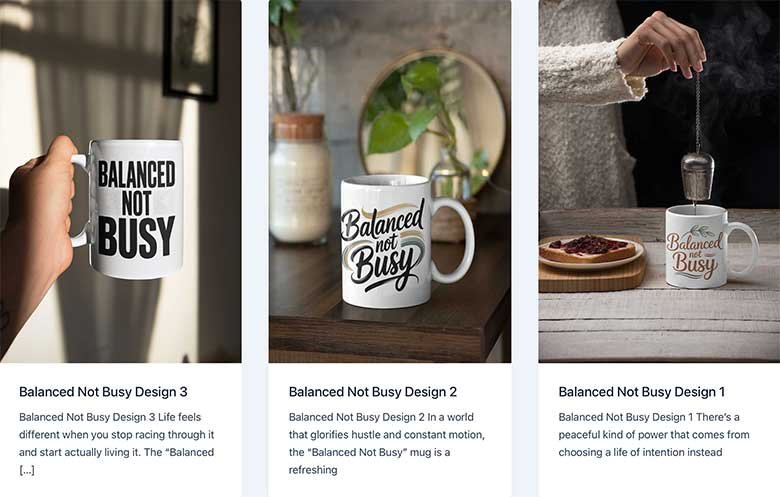
Visit Premier Print Works
Keep the reminder that the most peaceful life is the one lived in honest alignment with who you actually are visible where your daily decisions happen. Premier Print Works offers prints, mugs, and art for the person building the life that feels genuinely theirs. Visit the shop today.
Visit Premier Print WorksHow Rowena Finally Felt at Home in Her Own Life by Getting Honest About What She Actually Valued
Rowena had built what looked like a very good life from the outside. A well-paying career in a respected field. A social life that was busy and full of interesting people. A city apartment that reflected the taste and the income level of the life she had built. She was not complaining about any of it. She was quietly, persistently puzzled by the feeling that something was missing — and she had been puzzled by it for long enough that the puzzlement itself had become part of the daily background.
A retreat she attended required an exercise she found initially irritating in its simplicity. Write your five most important values. Not your professional values. Your life values. The things that, when present, make the life feel worthwhile. She wrote the obvious ones first. Family. Growth. Security. Then the retreat facilitator asked her to look at the list and ask honestly: do these show up in my actual daily life or just in my stated priorities? She looked at the week before the retreat. Family showed up in one brief phone call. Growth showed up in no meaningful way she could identify. Security was present as a financial fact but the inner experience of it was not.
She stayed with the exercise longer than it was scheduled for. What came up underneath the standard answers was more specific and more embarrassing in its honesty. What she actually valued, it turned out, was solitude and creative work and deep connection with a very small number of people. The life she had built was optimized for the opposite of all three. It was loud and social and professionally demanding in ways that left almost no room for the things the honest reckoning had revealed. She did not overhaul everything overnight. But she started making different choices from the new information. Smaller social calendar. Sunday mornings protected for the creative work that had not been touched in years. Investment in three specific friendships rather than the maintenance of twenty casual ones. The puzzlement gradually quieted as the life gradually came into closer alignment with the values the honest exercise had finally surfaced.
5. Identify the Values That Belong to Others That You Have Been Carrying as Your Own
“The most peaceful life is the one lived in honest alignment with who you actually are.”
Most people carry values that are not originally theirs. The achievement orientation absorbed from a parent who communicated love through performance. The ambition calibrated to a peer group’s standards rather than to any internal sense of what is enough. The life milestones pursued because the culture presented them as the markers of a successful life rather than because they were actually wanted. These borrowed values can run the life for decades before the question of whether they were ever genuinely chosen is asked.
Look at the values you named and ask of each one: is this actually mine or did I inherit it from somewhere? Not to dismiss it if the answer is that it was inherited — some inherited values are genuinely yours once examined. But to know which is which. The value held because it is genuinely yours produces a different quality of energy when pursued than the one held because it was given and never questioned. Know the difference. Carry the genuine ones. Set down the borrowed ones that were never truly yours.
“When your actions align with your values the noise of the world gets a lot quieter.”
6. Notice What Produces the Specific Feeling of Being Most Fully Yourself
“The most peaceful life is the one lived in honest alignment with who you actually are.”
There are moments in the daily life when you feel most fully yourself. Not the most productive or the most impressive or the most comfortable. Most fully yourself. The conversation that had the quality of real recognition. The work that produced genuine absorption rather than effortful output. The environment that felt like a natural fit rather than a performance. The activity that seemed to require no translation between the inner life and the outward expression. These moments are the clearest signals about what alignment feels like — and therefore about the direction the alignment work should go.
Start noticing and recording those moments. Not at the end of the week when the specifics have faded. In the moment or the hour when they happen. A sentence in a journal or a note in the phone. I felt most fully myself today when I was doing this specific thing with these specific people in this specific context. The accumulation of those notes over weeks and months draws a map of the conditions that produce alignment. Build more of those conditions into the daily life. That is the whole practice.
“When your actions align with your values the noise of the world gets a lot quieter.”
7. Build the Values Into the Weekly Schedule Before Everything Else Claims the Time
“The most peaceful life is the one lived in honest alignment with who you actually are.”
The values that do not have time scheduled for them will be outcompeted by everything that does. The obligation is scheduled. The meeting is scheduled. The appointment is scheduled. The value that matters most but has no dedicated time on the calendar will always lose to the things that claimed their hours first. This is why people with clear stated values and genuine intentions still live lives that do not reflect them — not from hypocrisy but from the absence of the structural protection that makes the values real in the daily life.
Before the week begins look at the calendar and ask: where is each of my core values represented in this specific week? If deep connection is a value — is there scheduled uninterrupted time with someone who matters? If creative work is a value — is there a protected block for it before everything else claims the energy? If physical health is a value — is the movement built in before the day’s demands push it out? Schedule the values. The life that is built around them is built when the calendar reflects them.
“When your actions align with your values the noise of the world gets a lot quieter.”
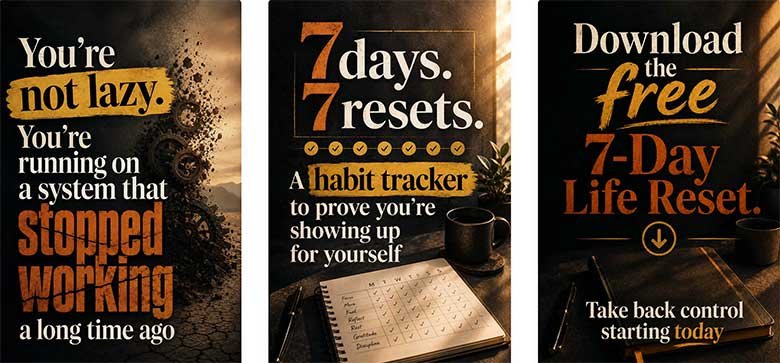
Free Download: The 7-Day Life Reset
Values alignment settles most deeply into a daily life that has been intentionally structured to support it. The free 7-Day Life Reset gives you seven simple focused days to reset your daily habits and begin building the daily structure from which the values-aligned life grows. Download it free today.
Get the Free 7-Day Reset8. Release the Guilt of Choosing Your Values Over Others’ Expectations
“The most peaceful life is the one lived in honest alignment with who you actually are.”
The alignment work almost always requires disappointing someone. The family member whose expectation for your life differs from the one your values are pointing toward. The colleagues whose definition of dedication conflicts with the boundary the values demand. The version of success that the culture promotes that does not match what you have discovered actually satisfies you. Living in alignment with your genuine values is not universally appreciated by the people who had expectations based on your previous misalignment.
The guilt of disappointing those expectations is real. It is not, however, a reliable guide. The people who genuinely care about you will adjust. The expectations that were never truly yours to carry do not deserve the guilt that their release produces. The life built to manage others’ expectations at the cost of your own alignment is a life that belongs to everyone but you. Release what needs to be released. The guilt softens with practice. The alignment grows stronger from each honest choice made in its direction.
“When your actions align with your values the noise of the world gets a lot quieter.”
9. Use Discomfort as a Signal That the Values Are Being Tested
“The most peaceful life is the one lived in honest alignment with who you actually are.”
The discomfort that arrives when the values are compromised is one of the most useful signals in the daily life — and one of the most consistently ignored. The uneasy feeling after agreeing to something that cost too much of what matters. The low-level irritability that follows a week lived entirely from obligation and none from genuine choice. The sense that something is off that cannot be named precisely but persists. These are not random feelings. They are the values communicating that something in the current arrangement needs attention.
When the discomfort arrives ask what value it is trying to protect. What was compromised? What was not given the space it required? What agreement was made against the grain of what is genuinely important? The answer is almost always specific and addressable. The discomfort is not the problem. It is the signal. Use it as such. The life that is paying attention to those signals and adjusting from them gradually becomes the life that produces fewer of them.
“When your actions align with your values the noise of the world gets a lot quieter.”
10. Reconnect With Your Values After Every Major Life Change
“The most peaceful life is the one lived in honest alignment with who you actually are.”
Values are not completely fixed. What genuinely mattered most at twenty-five may be different from what genuinely matters most at forty-five. A major life change — a loss, a significant achievement, the end of a long relationship, the arrival of a new chapter — often shifts the value landscape in ways that the existing life structure does not automatically adjust for. The person who built a life around ambition and achievement and then experienced a significant health event may find that those values have genuinely shifted without the daily life having adjusted to reflect the shift.
After every major life change take the time to revisit the values. Not to find new ones to perform but to honestly check whether the values that were organizing the previous version of the life are still the genuine ones organizing this next version. The adjustment made after the values shift is not a sign of inconsistency. It is the sign of a person paying honest attention to who they are becoming and building the life to match rather than to maintain a previous version that no longer fits.
“When your actions align with your values the noise of the world gets a lot quieter.”

Aligning Your Life With Your Values Through Recovery? This Is for You.
For some people, getting honest about their genuine values and building a life that reflects them is one of the most important and ongoing parts of the recovery journey. If that is where you are, the free Sober Survival Guide offers honest daily support for that work. Download it free.
Get the Free Sober Survival Guide11. Evaluate Relationships by Whether They Support or Contradict Your Values
“The most peaceful life is the one lived in honest alignment with who you actually are.”
The people closest to you have an enormous influence on the values that operate in daily life. Not because they impose their values but because the relationships that require you to suppress or contradict your genuine values in order to maintain them gradually erode the clarity and confidence of those values over time. The relationship where being fully yourself requires too much management is the relationship that is costing the alignment work something it cannot easily replace.
Look at the closest relationships honestly. Which ones make it easier to live from your values and which ones make it harder? The ones that make it easier deserve investment. The ones that make it consistently harder deserve honest examination — not necessarily immediate exit but the honest question of whether the current version of the relationship is serving the person you are trying to become or the person you are trying to leave behind. The relationships that support the alignment are among the most important resources the alignment work has.
“When your actions align with your values the noise of the world gets a lot quieter.”
12. Measure the Quality of a Day by Alignment — Not by Productivity
“The most peaceful life is the one lived in honest alignment with who you actually are.”
The highly productive day that advanced none of the values that actually matter is a day that produced output without meaning. The quieter day that held a genuine connection, an hour of creative work, and a decision made honestly from the values — that day was aligned. The productivity measure and the alignment measure produce entirely different assessments of the same day. And the day measured only by productivity is the day that never notices the alignment erosion happening underneath all the output.
At the end of each day ask not how much was done but whether the day reflected the values that matter most. Not in every hour — the obligations are real and they consume real time. But in some of the hours. In some of the choices. In the direction the day moved even when it could not move as far as the values would ideally require. The day that included some genuine alignment is a better day than the productive but hollow one — even if it looks less impressive from the outside.
“The most peaceful life is the one lived in honest alignment with who you actually are.”
13. Build Toward the Life That Makes Sense to You — Not the One That Makes Sense to Others
“When your actions align with your values the noise of the world gets a lot quieter.”
The life built to make sense to other people is the life that needs constant external validation to feel worthwhile. Because it was built for external approval it requires external approval to sustain the sense that it is the right one. The life built from genuine values does not have this dependency. It feels worthwhile because the person living it knows what it is built from and what it is building toward — and that knowing does not require anyone else’s agreement to hold its validity.
Build toward the life that makes sense to you. Not the one that is easiest to explain at dinner parties. Not the one that looks most impressive in the external metrics the culture uses to keep score. The one that, when you are living it honestly and looking at it clearly, feels most genuinely like yours. That life will disappoint some expectations. It will also produce the specific quality of peace and purpose that the life built for others’ approval cannot manufacture — because it was built from the inside out rather than from the outside in. That is the life these thirteen tips are pointing toward. Start building it today.
“The most peaceful life is the one lived in honest alignment with who you actually are.”
How Croft Found the Life That Felt Like His by First Getting Honest About the Life That Did Not
Croft had spent his twenties and early thirties building competently toward a version of success that he had never examined closely enough to question. The career trajectory was strong. The credentials were accumulating. The apartment was the kind that other people commented on favorably. He was doing the things that the people around him considered the right things to be doing and doing them well. The specific hollow feeling underneath all of it was something he had explained to himself for years as the cost of ambition — the dissatisfaction that came before the achievement that would resolve it.
The achievement arrived. The promotion that was supposed to change the feeling. It did not. The feeling was not the cost of ambition. It was the signal of misalignment that he had been misreading as a temporary condition for years.
He started asking the actual questions. Not what is the next achievement but what does the life that would feel genuinely mine actually look like. Not what should I want but what do I actually want when the performance of wanting the right things is set aside. The answers were inconvenient. The life that would feel genuinely his was quieter than the one he was living. It involved more time in nature and fewer evenings at professional events. It involved a kind of work that engaged the part of him that the current career had never reached. It involved close relationships that were few in number and deep in quality rather than many in number and professionally useful.
He did not walk away from everything in a week. He started with the smallest available alignment move and made the next one from there. Three years later the life looked different in ways that were hard to quantify from the outside but unmistakable from the inside. The hollow feeling was gone. Not because everything was perfect. Because the gap between the life being lived and the values the life was supposed to be built from had finally been closed enough to matter. The noise of the world had genuinely gotten quieter. The alignment had done exactly what these tips promised it would.
The Life That Feels Genuinely Yours Is Already Pointing to Itself
In the moments when you feel most fully yourself. In the discomfort that arrives when the values are compromised. In the quiet knowing that something in the current arrangement is not quite aligned with who you actually are. These signals are already there. These thirteen tips are the tools for listening to them more carefully and acting from them more deliberately. The life built from genuine values does not need the world’s approval to feel worthwhile. It needs only the honesty of the person building it. Start with one tip today. Let the alignment begin from there. The noise gets quieter every time the next values-based choice is made.

Free Download: The Self-Care Starter Kit
Support the values alignment work with daily self-care that keeps you grounded and connected to who you actually are. The free Self-Care Starter Kit gives you simple sustainable daily practices for your mind, your body, and your inner life. Download it free and keep building the life that feels genuinely yours.
Get the Free Self-Care Starter KitOur Top Picks for a Better Life
We have gathered our favorite tools, resources, and recommendations for clarifying your values, building a values-aligned life, and developing the daily habits that make the most peaceful and purposeful version of your life more accessible every day. Everything we trust enough to share, all in one place.
See Our Top Picks
Values Alignment Prints at Premier Print Works
Keep the reminder that when your actions align with your values the noise of the world gets a lot quieter visible where your daily decisions are made. Visit Premier Print Works for prints, mugs, and art for the person building the life that feels genuinely theirs.
Visit Premier Print WorksDisclaimer
The content on A Self Help Hub is for informational and inspirational purposes only. The life advice tips and personal stories in this article offer general support for everyday personal development and values clarification. They are not professional mental health advice, psychological counseling, life coaching, or any form of clinical treatment.
Everyone’s experience with personal values, life direction, and inner alignment is different. If you are experiencing significant depression, anxiety, or other mental health conditions affecting your sense of self and daily functioning, please speak with a qualified mental health professional. General self-help content is not a substitute for professional care. If you are in an unsafe situation, please reach out to a trusted person or professional resource right away. Your safety comes first.
The stories and composite characters in this article, including Rowena and Croft, are illustrative. They are based on common experiences and created to make the content relatable. They are not real people. Any resemblance to a specific person is coincidental.
Some links on this site, including links to Premier Print Works, may be affiliate links. A Self Help Hub may earn a small commission at no extra cost to you. We only recommend things we genuinely believe in.
The Sober Survival Guide linked in this article is general supportive information only. It is not a substitute for professional addiction treatment or medical care. If you or someone you love is struggling with addiction, please seek help from a qualified professional. Recovery is possible.
If you are in a mental health crisis or thinking about self-harm, please do not rely on this content for support. Contact emergency services or a crisis helpline right away. You deserve real help and it is available to you now.
All content on A Self Help Hub is copyrighted. You may not copy or republish it without written permission. By reading this article you agree to this disclaimer.