7 Daily Habits to Improve Your Life One Small Step at a Time
The life improvement that sticks is almost never the dramatic overhaul. It is the small daily practice that was easy enough to start and consistent enough to compound. The person who exercises for ten minutes every morning for a year arrives somewhere the person who joined the gym in January and stopped in February does not. The person who reads for fifteen minutes before bed every night for a year reads fifteen to twenty books. The small habit done every day beats the ambitious habit done occasionally by such a wide margin that the math makes the dramatic overhaul look unnecessary.
These seven habits are the small-step version of the life improvement most people try to make all at once. Each one is designed to be started this week and maintained without heroic effort. Each one compounds. Each one builds something real from very little daily investment. Start with the one most available to you right now. The improvement begins with the first day it is practiced. The life it builds becomes visible one consistent small step at a time.

Free Download: The 9 Daily Habits Checklist
Improving your life one small step at a time starts with the right daily habits. The free 9 Daily Habits Checklist gives you nine proven daily practices to build your foundation on. Download it free today and start your small-step improvement right now.
Get the Free Habits Checklist1. Start Each Morning With Two Minutes of Deliberate Intention
“Improve by one percent every day and in a year you will be thirty seven times better than when you started.”
Two minutes before the day begins can change the entire character of the day. Not because two minutes is a lot of time. Because the two minutes spent deliberately — naming one thing being worked toward, taking three slow breaths, reading one sentence worth believing before anything else fills the mind — is the two minutes that makes the rest of the day intentional rather than reactive. The day without those two minutes belongs to whatever claims it first. The day with them belongs to the person living it.
The practice is not elaborate. Before the phone. Before the news. Before the first obligation of the morning. Two minutes of choosing what the mind holds first. The direction for the day. The quality of the breath. The one thing that matters most from the available options. That choosing, done every day, produces the person whose days are directed rather than the person whose days are managed. Two minutes. Before everything else. The day begins from what the two minutes plants.
“Small habits do not feel like progress until the day they suddenly become your life.”
2. Move for Ten Minutes Without Conditions or Excuses
“Improve by one percent every day and in a year you will be thirty seven times better than when you started.”
The fitness habit that requires the gym, the equipment, the specific time slot, and the ideal energy level is the fitness habit that gets missed most days. The fitness habit that requires only ten minutes and the willingness to move is the one that happens every day. A ten-minute walk. Ten minutes of stretching. Ten minutes of whatever is available in the space and energy of the current moment. The condition removed from the habit is the condition that would have prevented it from happening on most of the days it was needed.
Ten minutes every day adds up to over sixty hours of movement across the year. Sixty hours of consistent movement produces measurable improvements in energy, mood, sleep quality, and physical health that the sporadic ambitious session does not produce with the same reliability. The research on the mental and physical health effects of daily movement is consistent: even brief sessions produce real effects when they are reliable. Make the habit unconditional. Ten minutes. Every day. No excuses. The consistency is what produces the result the occasional marathon session never quite delivers.
“Small habits do not feel like progress until the day they suddenly become your life.”
3. Learn One Small Thing That Is Genuinely New Each Day
“Improve by one percent every day and in a year you will be thirty seven times better than when you started.”
The one percent improvement model is most tangible in the learning habit. Learning one genuinely new small thing every day — not the summary of something already understood, not the recycled content about familiar topics, but the specific fact, concept, skill fragment, or perspective that was not present in the mind yesterday — is the practice of the expanding mental model. Each day’s addition is small. The year’s accumulation is a different and more capable mind than the one that started it.
The source of the one new thing can be anything with genuine novelty in it. The book that is about something not yet known. The article that explains something previously accepted as a black box. The conversation that introduces a perspective not previously held. The skill practiced for the first time — the chord, the phrase in the new language, the line of code, the first stroke of the new creative medium. What matters is that it is genuinely new. The new thing practiced every day builds the kind of intellectual flexibility that the comfortable routine of familiar inputs does not.

Visit Premier Print Works
Keep the reminder that small habits do not feel like progress until the day they suddenly become your life visible where the daily building happens. Premier Print Works offers prints, mugs, and art for the person growing one small step at a time. Visit the shop today.
Visit Premier Print WorksHow Clem Improved Her Life Significantly Without Overhauling Anything by Making One Small Change Every Week for a Year
Clem had attempted the dramatic life overhaul several times. The Monday that began with the new diet, the gym membership, the journaling practice, the reading goal, the early bedtime, the productivity system, and the decision to finally learn Spanish simultaneously. She was consistent at the whole system for an average of nine days before the first part of it broke down and the rest followed. The overhaul approach had never produced anything that lasted longer than two weeks.
She changed the strategy completely. Instead of the overhaul she committed to one small change per week. Just one. It had to be small enough to maintain without special effort. It had to be specific enough to track. And she had to maintain the previous week’s change before adding the next one. The new change did not get added until the previous one was running on autopilot.
Week one was the two-minute morning intention. Week three was the ten-minute daily walk after she had confirmed the morning practice was solid. Week six was the fifteen minutes of reading before bed. Week ten was the glass of water first thing each morning. By the end of the year she had built twelve consistent daily habits from twelve small weekly commitments — each one running reliably because it had been given a week to become automatic before the next one was added. The system that had lasted nine days under the overhaul approach had been running continuously for eleven months under the one-small-change-per-week approach. The life it produced looked dramatically different from the one she had started with. Not from any single week’s addition. From all twelve compounding over the year. The dramatic improvement had come from the undramatic method.
4. Drink Enough Water to Make Your Body Function at Its Best
“Improve by one percent every day and in a year you will be thirty seven times better than when you started.”
Hydration is one of the most consistently underestimated variables in daily energy, focus, mood, and physical performance. The majority of people in the modern world are mildly dehydrated for most of the day — not dramatically so, just enough to produce the low-level fatigue, reduced concentration, and mood dip that are frequently attributed to other causes. The improvement in daily functioning from adequate hydration is not glamorous. It is also real and available every day for essentially no cost.
A general guideline often cited is around eight glasses of water per day, though individual needs vary based on body size, activity level, and climate — consult a healthcare professional for guidance specific to your situation. What matters for the habit is the structure. A glass first thing in the morning before anything else. A glass with each meal. A water bottle visible on the desk rather than stored in the kitchen. The structural cues that make the drinking happen reliably rather than only when the thirst is already present — because thirst arrives after the dehydration has begun. Build the cues. The hydration becomes automatic. The functioning it produces is a daily baseline improvement that requires very little to maintain.
“Small habits do not feel like progress until the day they suddenly become your life.”
5. End Each Day With Three Minutes of Honest Review
“Improve by one percent every day and in a year you will be thirty seven times better than when you started.”
Three minutes at the end of the day for the honest review of what it contained is one of the highest-return small habits available. Not the extended journal. Not the comprehensive life audit. Three minutes that ask three questions: What went well today? What do I want to do differently tomorrow? What is the one most important thing I need to do when tomorrow begins? The first question builds the daily evidence of progress. The second question converts the day’s learning into forward adjustment rather than just experience. The third question sets the direction for the morning before the morning has to find its own.
The three questions together take three minutes. Over a year they produce three hundred and sixty-five days of small learning that the unreflective year does not produce. They build the habit of treating the daily life as a source of usable information rather than just a sequence of events to be gotten through. The person who has been asking these three questions for a year at the end of every day knows themselves, their patterns, their progress, and their direction in a way the person who has not asked them does not. Three minutes. Three questions. Every day. The compound return on three minutes is larger than it appears from the outside of the habit.
“Small habits do not feel like progress until the day they suddenly become your life.”

Free Download: The 7-Day Life Reset
Seven daily habits improving your life one small step at a time start even more powerfully from a seven-day reset that builds the foundation. The free 7-Day Life Reset gives you seven simple focused days to reset your daily habits and start your small-step improvement from the best available foundation. Download it free today.
Get the Free 7-Day Reset
Improving Your Life One Day at a Time Through Recovery? This Is for You.
For some people, the one-small-step-at-a-time approach is the daily practice of sobriety itself. If that is where you are, the free Sober Survival Guide offers honest daily support for building the life you want one step at a time. Download it free.
Get the Free Sober Survival Guide6. Protect One Relationship With Consistent Small Investment
“Improve by one percent every day and in a year you will be thirty seven times better than when you started.”
Relationships decline when they are maintained by intention without action. The relationship that is thought about frequently but contacted rarely is a relationship in passive decline regardless of the genuine care behind the thought. The consistent small investment — the text that says I was thinking about you today, the thirty-minute check-in scheduled and kept, the remembering of the thing that matters to the other person and asking about it — is what keeps the relationship active and present rather than fading into the background of the full life.
Choose one relationship that deserves more consistent investment than it has been receiving. Not the one that is already well-maintained — the one that has been losing ground to the busyness. Make one small investment in it every day for thirty days. The text. The voice message. The article sent because it reminded you of them. These thirty days of small investment will change the quality and the closeness of that relationship more than the occasional significant gesture that happens once or twice a year. The relationship improved by daily small investment is the one that is there when the significant occasions require it. Build it in the ordinary days. The ordinary days are where the relationship actually lives.
“Small habits do not feel like progress until the day they suddenly become your life.”
7. Go to Sleep at the Same Time Every Night — Including the Weekends
“Improve by one percent every day and in a year you will be thirty seven times better than when you started.”
Sleep consistency is one of the most underutilized life improvement levers available. The body’s sleep system is regulated by a circadian rhythm that responds to consistency far more reliably than it responds to the total hours logged. The person who sleeps eight hours but at wildly variable times — midnight on weekdays, two AM on weekends — does not get the same quality of sleep as the person who sleeps seven consistent hours at the same time every night. The consistent timing allows the body to predict the sleep and prepare for it in a way the variable timing does not.
A consistent sleep time — the same bedtime every night including weekends, give or take thirty minutes — is the single most effective lever available for improving sleep quality without any additional investment. It is also the most frequently sacrificed on the weekends when staying up late feels like a reasonable trade for the social or entertainment value. The research consistently shows that the social jet lag produced by weekend schedule variation produces the cognitive and mood effects on Monday that feel like the week’s demands rather than the weekend’s scheduling choices. Pick a consistent sleep time. Hold it. The quality of the waking hours improves from the improved sleep more reliably than almost any other single habit change available.
“Small habits do not feel like progress until the day they suddenly become your life.”
How Ridley Discovered That Consistency Was the Missing Variable in Every Improvement He Had Tried Before
Ridley had tried many approaches to improving his daily life over the years. He had tried the productivity systems. He had tried the morning routines. He had tried the fitness plans and the reading goals and the sleep hygiene protocols. Each attempt had produced improvements for the first two to three weeks. Then the consistency had broken down and the improvement had reversed. He had concluded, after enough repetitions of this cycle, that he was simply not someone who could maintain consistent habits. He had given the problem an identity rather than a diagnosis.
The diagnosis arrived when he actually examined what had happened at the point of breakdown in each previous attempt. Without exception, the breakdown had occurred not on the hard day but on the good day — the day when the habit had been missed once because something more interesting was happening and the recovery from that single miss had never occurred. The first miss had not been the problem. The failure to return after the first miss had been. He had not been building habits that could survive the inevitable interruption. He had been building habits that were only viable when uninterrupted — and no habit in an actual human life goes uninterrupted indefinitely.
He changed one thing about his approach. He built a specific rule: missing once is normal, missing twice is the beginning of stopping. The first miss got zero attention — it was expected and irrelevant. The second miss was the thing to prevent at any cost. With this rule in place the habits that had previously dissolved after the first interruption began surviving it. The sleep consistency habit survived the late night that broke it once and returned to the schedule the following night. The movement habit survived the travel day and resumed on the next available morning. The daily small habit built with a recovery policy survived the interruptions that had been ending the previous versions. Consistency had not been his missing character trait. It had been his missing recovery plan. With the plan in place the consistency arrived as the natural output of returning after the inevitable misses rather than treating each miss as the end of the attempt.
Seven Habits. One Small Step at a Time. The Life Being Built Is Already Underway.
The improvement does not arrive as a dramatic event. It arrives as the accumulation of the two-minute morning intention practiced three hundred and sixty-five times. The ten-minute daily walk logged across the year into sixty-plus hours of consistent movement. The three end-of-day questions answered enough times that the answers reveal the patterns that the daily view was too close to see. The relationship invested in through the small daily touchpoint until it is closer and more present than it has been in years. These are the improvements. Small individually. Large collectively. The life built from them is already underway from the day the first habit is started. Keep starting. Keep returning. The small steps are already adding up.

Free Download: The 9 Daily Habits Checklist
Keep improving one small step at a time with the daily habits checklist that keeps the most important daily practices consistent week after week. The free 9 Daily Habits Checklist is the simple daily structure that makes the small steps happen reliably. Download it free today.
Get the Free Habits ChecklistOur Top Picks for a Better Life
We have gathered our favorite tools, resources, and recommendations for building better daily habits, developing the small-step consistency that produces the biggest life improvements, and creating the daily structure from which the life worth living quietly grows. Everything we trust enough to share, all in one place.
See Our Top Picks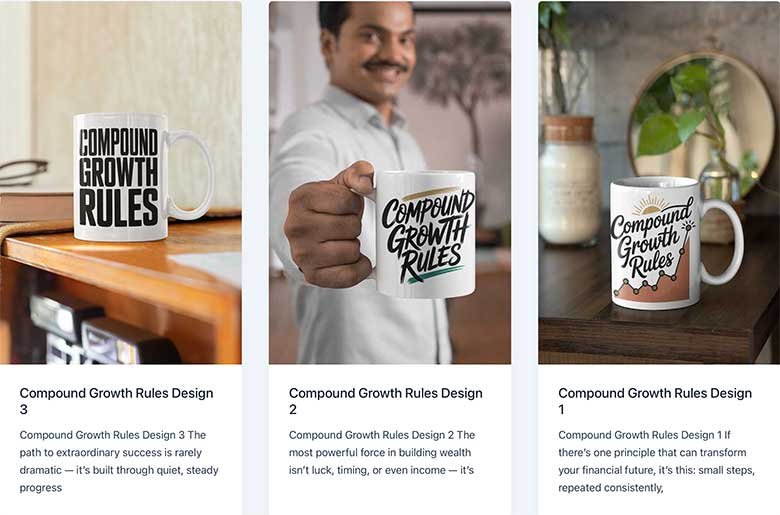
Small Step Growth Prints at Premier Print Works
Keep the reminder that small habits do not feel like progress until the day they suddenly become your life visible where the daily building happens. Visit Premier Print Works for prints, mugs, and art for the person showing up in the small ways that add up to everything.
Visit Premier Print WorksDisclaimer
The content on A Self Help Hub is for informational and inspirational purposes only. The daily habits and personal stories in this article offer general support for everyday personal development and life improvement. They are not professional medical advice, mental health advice, or any form of clinical treatment.
Individual health and hydration needs vary. The hydration guidance in this article is general in nature. Consult a qualified healthcare professional for personalized guidance on hydration, exercise, sleep, and other health-related habits appropriate for your specific situation. Everyone’s experience with habit building and personal growth is different. If you are dealing with significant depression, anxiety, or other mental health conditions affecting your ability to build and maintain daily habits, please speak with a qualified mental health professional. General self-help content is not a substitute for professional care. If you are in an unsafe situation, please reach out to a trusted person or professional resource right away. Your safety comes first.
The stories and composite characters in this article, including Clem and Ridley, are illustrative. They are based on common experiences and created to make the content relatable. They are not real people. Any resemblance to a specific person is coincidental.
Some links on this site, including links to Premier Print Works, may be affiliate links. A Self Help Hub may earn a small commission at no extra cost to you. We only recommend things we genuinely believe in.
The Sober Survival Guide linked in this article is general supportive information only. It is not a substitute for professional addiction treatment or medical care. If you or someone you love is struggling with addiction, please seek help from a qualified professional. Recovery is possible.
If you are in a mental health crisis or thinking about self-harm, please do not rely on this content for support. Contact emergency services or a crisis helpline right away. You deserve real help and it is available to you now.
All content on A Self Help Hub is copyrighted. You may not copy or republish it without written permission. By reading this article you agree to this disclaimer.