9 Personal Finance Tips That Help You Create Long Term Income
The long-term income that produces genuine financial freedom is not built from the dramatic event — the lottery ticket, the viral product, the single investment that changes everything overnight. It is built from the consistent, patient, compounding decisions made across years and decades by people who understood that the most powerful financial force available is time — and that the best use of time in the financial life is the early start on the patient strategy rather than the late start on the dramatic one. The person who starts the modest consistent investment at twenty-five does better over a lifetime than the person who starts the aggressive investment at thirty-five — not because they are smarter or luckier but because they gave the compound effect more of the one resource it requires: time.
These nine tips are the specific financial decisions and habits that build toward the long-term income that outlasts the effort invested in building it. Each tip addresses a different component of the long-term financial picture — from the foundation that makes the building possible to the specific strategies that accelerate the building to the mindset that sustains the patient work across the years that the long-term result requires. These are general educational concepts — always work with a qualified financial advisor, tax professional, and legal advisor before making specific investment, income, or financial planning decisions. The right strategy depends heavily on individual circumstances that general content cannot account for.

Free Download: The Money Reset Workbook
Building long-term income starts with the clearest possible picture of where every current dollar is going so you can identify every dollar available to redirect toward the long-term financial foundation. The free Money Reset Workbook gives you that complete picture. Download it free today.
Get the Free Money Reset Workbook1. Build the Financial Foundation First — The Long-Term Income Cannot Stand Without It
“Long term income is built in the decisions most people are too impatient to make.”
The long-term income strategy that begins before the financial foundation is in place is the strategy with no base to build from — the investment that has to be liquidated when the unexpected expense arrives because there is no emergency fund to absorb it, the income-building effort that has to be paused when the high-interest debt consumes the returns faster than the strategy produces them. The financial foundation is not the boring detour from the long-term income plan. It is the first phase of it — the emergency fund, the high-interest debt eliminated, the basic insurance coverage in place that prevents the catastrophic loss from erasing the progress being built.
Complete the financial foundation before the long-term income strategies in the tips that follow. The emergency fund of three to six months of essential expenses, held in a liquid account separate from the investment activity. The high-interest consumer debt eliminated — it is nearly impossible for any investment strategy to outperform the guaranteed return of eliminating a high-interest debt. The protection in place through the basic insurance coverage appropriate to the individual situation. From this foundation the long-term income building stands on the solid base it requires. From anywhere less solid than this base, the strategy is vulnerable to the first significant disruption that the foundation was designed to absorb. Build the foundation. The long-term income grows from there.
“Plant the financial seeds today that your future self will live off of tomorrow.”
2. Invest Consistently — The Amount Matters Less Than the Habit
“Long term income is built in the decisions most people are too impatient to make.”
The consistent investment of a modest amount across years produces more long-term wealth than the irregular investment of larger amounts at inconsistent intervals — because the consistent investment captures the market’s full range of conditions rather than attempting to time the entry, because the automatic behavior of the consistent contribution requires no ongoing decision-making that can be disrupted by the short-term emotional response to market conditions, and because the habit of the consistent investment sustains itself across the years that the impatient strategy cannot. The investment behavior that runs automatically and consistently is the investment behavior that actually compounds.
Set up the automatic investment contribution and make it the default behavior rather than the deliberate monthly decision. The automatic transfer to the investment account that happens on the same day as the paycheck, in the amount that the budget can sustain without disruption, without requiring the monthly decision about whether to do it or how much to contribute. The automatic behavior removes the decision from the moment of competing temptations and market anxiety and makes the consistent investment the path of least resistance rather than the deliberate effort. Start with whatever amount is available. Increase it with every income increase. The habit is the asset. The amount grows from the habit. Investment involves risk including potential loss of principal. Always consult a qualified financial advisor.
“Plant the financial seeds today that your future self will live off of tomorrow.”
3. Understand and Use the Tax-Advantaged Accounts Available to You
“Long term income is built in the decisions most people are too impatient to make.”
The tax-advantaged investment accounts — the 401(k), the IRA, the Roth IRA, the HSA, and others depending on the employment situation — are the most significant available multiplier of the investment return that the individual investor has direct access to. The tax advantage is not the small optimization — in the right circumstances it represents the difference between paying taxes on every year’s investment return and paying no taxes on decades of compound growth. This is a return multiplier of meaningful magnitude over the long investment timeline that the long-term income strategy operates on.
Maximize the use of the available tax-advantaged accounts before investing in taxable accounts for the long-term income strategy. Contribute at least enough to the workplace retirement plan to capture any employer match — the match is the immediate guaranteed return on the contributed dollar that no market investment can reliably replicate. Beyond the match, understand the current contribution limits, the tax treatment, and the eligibility requirements for each type of account available in the specific situation. These rules change over time and vary significantly by employment status, income level, and other individual factors. Consult a qualified tax professional and financial advisor for guidance on which specific accounts are appropriate and most advantageous for the specific situation. The tax-advantaged account maximization is the most accessible and most underused financial acceleration available to most individual investors.

Visit Premier Print Works
Keep the reminder that long term income is built in the decisions most people are too impatient to make visible where the daily financial decisions are made. Premier Print Works offers prints, mugs, and art for the person building the patient financial foundation that the long-term freedom grows from. Visit the shop today.
Visit Premier Print WorksHow Mirren Changed Her Long-Term Financial Future Without Changing Her Income by Changing What She Did With What She Had
Mirren had always understood intellectually that the early investment produced the better long-term result. She had absorbed the compound interest examples — the chart that shows the dramatic difference between the person who starts at twenty-five and the person who starts at thirty-five — and had found them genuinely compelling as a concept without translating the concept into the specific behavior that the concept was calling for. She was thirty-one when she realized that the translation had not yet happened and that every year of the translation delay was a year she could not recover.
The obstacle that had been preventing the translation was not the knowledge and not the income. It was the belief that the amount available to invest — the amount left after the essential expenses and the modest discretionary spending that was producing a genuine quality of life — was too small to matter. The compound interest chart had shown the person investing meaningfully large amounts. She was looking at the amount available to her and concluding that the amount was not large enough to produce the kind of result the chart was showing. She had been comparing her starting point to the chart’s endpoint and finding the gap discouraging rather than using the chart as the evidence that the starting point, however modest, was the place the endpoint was built from.
She started the automatic investment of the amount that was available — a modest monthly contribution to a low-cost index fund inside the Roth IRA account she opened in the same week she made the decision. The amount she invested in the first year was not impressive. The behavior was. The behavior ran automatically the following year. It ran the year after that. By the time she was thirty-five the behavior had been running for four years, the amount had been increased twice as the income had grown, and the balance in the account was a number she would not have believed at thirty-one if she had been shown it. She had not changed her income. She had changed what the income did when it arrived. That change, made at thirty-one from the modest available amount, was the financial decision that her future self would be living from for decades. She had understood it intellectually at twenty-five. She had made it at thirty-one. She was glad she had not made it at forty.
4. Learn the Basics of Investing — Enough to Avoid the Common Costly Mistakes
“Plant the financial seeds today that your future self will live off of tomorrow.”
The investor who does not understand the basic principles of investing is the investor who is most vulnerable to the costly mistakes that the basic education would have prevented: the high-fee actively managed fund that underperforms the low-cost index fund over the long term, the emotional selling during the market downturn that locks in the loss that the patient holding would have recovered, the concentrated position in a single stock that produces the catastrophic loss that the diversified portfolio would have avoided. These are not advanced investment mistakes. They are the common mistakes that the basic financial education prevents.
Invest the time in the basic financial education that the long-term investing strategy requires. The concept of diversification — spreading the investment across multiple asset classes rather than concentrating it in any single one. The concept of cost — understanding the fees charged by investment products and their significant long-term impact on the compounded return. The concept of time horizon — understanding that the appropriate investment approach depends heavily on how long the money will be invested before it is needed. The concept of risk tolerance — understanding the personal capacity to hold through the market declines that all long-term investors will experience. These four concepts are the minimum educational foundation for the long-term investor. Build the foundation before the money is deployed. The costly mistake it prevents is worth every hour of the education.
“Long term income is built in the decisions most people are too impatient to make.”
5. Build Multiple Income Streams — Diversify the Income the Way the Portfolio Is Diversified
“Plant the financial seeds today that your future self will live off of tomorrow.”
The long-term income built on a single income source is the long-term income built on a single point of failure — the job that could be eliminated, the business that could decline, the investment whose return could compress. The diversified income — the multiple streams that each contribute to the total rather than the single stream that provides all of it — is the more resilient long-term financial position. The diversification of income sources does not require the simultaneous development of all streams from scratch. It requires the gradual addition of the second stream from the foundation of the first, and the third from the foundation of the second, built at the pace that the available time and energy can sustain without disrupting the quality of the primary income source.
Consider the income diversification in stages rather than all at once. The employed professional who adds the freelance consulting income. The freelancer who adds the digital product that produces income without additional time. The investor who adds the dividend income to the capital appreciation strategy. The professional who adds the rental income to the employment and investment income. Each additional stream adds resilience to the total financial position and reduces the dependence on any single source. The diversification of income is the long-term financial equivalent of the portfolio diversification — the protection against the single-source failure and the platform for the long-term income growth that the single source cannot provide. Always consult qualified financial, tax, and legal professionals before pursuing any specific income strategy, as tax treatment and legal implications vary significantly by approach and individual situation.
“Long term income is built in the decisions most people are too impatient to make.”
6. Invest in the Skills That Increase the Primary Income — Human Capital Is the Foundation
“Plant the financial seeds today that your future self will live off of tomorrow.”
The long-term income strategy that focuses exclusively on the financial capital while neglecting the human capital — the skills, the knowledge, the professional capabilities that determine the earning power of the primary income — is the strategy that is building the second floor before the first. The primary income is the source from which every other financial strategy draws its raw material. The higher the primary income, the more raw material is available for the investment, the saving, the additional income development, and the financial foundation building that the long-term income strategy requires. Investing in the skills and the professional development that increase the primary income is the investment with the highest available return for most people at most stages of the career.
Identify the one or two specific skill investments that would most directly increase the primary income in the next three to five years. The professional certification that opens the next level of opportunity. The technical skill that is increasingly in demand in the field. The leadership capability that would position for the management transition and the income increase it brings. The skill investment is the investment that the human capital account — the one that cannot be lost to the market downturn — holds. Build the human capital alongside the financial capital. The primary income that grows from the human capital investment is the foundation from which every other financial strategy in this article compounds most powerfully.
“Long term income is built in the decisions most people are too impatient to make.”

Free Download: The 9 Daily Habits Checklist
Long-term income is built from the consistent daily financial habits that keep the strategy running when the short-term rewards are not yet visible. The free 9 Daily Habits Checklist gives you the daily structure to keep the most important financial habits alive. Download it free today.
Get the Free Habits Checklist7. Protect the Long-Term Income From the Short-Term Emotional Decisions
“Long term income is built in the decisions most people are too impatient to make.”
The long-term investment strategy is most vulnerable not to the market itself but to the emotional response to the market — the fear in the downturn that produces the selling at the bottom, the excitement in the boom that produces the buying at the top, the impatience in the flat period that produces the strategy abandonment that replaces the patient approach with the next thing being marketed as better. Each of these emotional responses to short-term market conditions produces the long-term underperformance that the patient, consistent, undisrupted strategy does not produce. The long-term income strategy requires the emotional management of the investor as much as it requires the financial intelligence.
Build the structural protections against the emotional response before the emotional conditions arrive — because they will arrive, reliably, at the worst available timing. The automatic investment behavior that runs regardless of the market conditions. The investment policy statement — even a simple written summary of the investment philosophy and the commitment to the long-term approach — that can be read during the market anxiety to re-anchor the behavior. The qualified financial advisor who provides the second opinion before the emotional decision is executed. These are the structural protections that prevent the behavioral finance mistakes from disrupting the long-term income strategy that the patient behavior produces. Build them before they are needed. They will be needed.
“Plant the financial seeds today that your future self will live off of tomorrow.”

Building Financial Freedom Through Recovery? This Is for You.
For some people, building long-term income is part of the larger work of building a genuinely stable and free life in recovery. If that is where you are, the free Sober Survival Guide offers honest daily support for that whole journey. Download it free.
Get the Free Sober Survival Guide8. Plan for the Long-Term Income’s Tax Efficiency — What You Keep Matters as Much as What You Earn
“Long term income is built in the decisions most people are too impatient to make.”
The long-term income strategy that is built without attention to the tax efficiency of the income it produces is the strategy that may generate significantly less than the pre-tax number suggests. Different types of income carry different tax treatments — capital gains from investments held longer than one year are generally taxed at lower rates than ordinary income, qualified dividends receive preferential tax treatment, municipal bonds may produce income that is exempt from certain taxes, and the timing of the income can significantly affect the tax liability it produces. Understanding the basic tax landscape of the income types being built is not the advanced optimization — it is the basic stewardship of what the long-term strategy produces.
Work with a qualified tax professional to understand the tax treatment of the specific income types in the specific strategy being built. The tax planning conversation is not the annual tax return filing — it is the proactive planning that considers the tax implications of the income being built and the structure being created to hold it. The long-term income strategy built with the tax professional’s input is the strategy that keeps more of what it earns than the strategy built without it. Tax laws change regularly and vary significantly by income level, filing status, and jurisdiction. Always consult a qualified tax professional for guidance specific to your situation before making any tax-related financial decision.
“Plant the financial seeds today that your future self will live off of tomorrow.”
9. Protect the Long-Term Income With the Right Insurance and Legal Structure
“Long term income is built in the decisions most people are too impatient to make.”
The long-term income built without the protection of the appropriate insurance and legal structure is the long-term income with the incomplete foundation — vulnerable to the specific catastrophic loss that the uninsured event produces, or the legal liability that the unstructured business activity creates, or the estate planning gap that the income built over decades fails to transfer efficiently to the next generation or the intended beneficiaries. The protection of the long-term income is not the afterthought to the building of it — it is the parallel work that ensures the built income remains intact and is transferred or utilized as the builder intends.
Review the protection structure of the long-term income plan with the appropriate professionals. The insurance professional for the assessment of the disability insurance that protects the human capital, the life insurance appropriate to the specific family and financial situation, and the umbrella policy that provides additional liability protection beyond what the standard policies cover. The attorney for the estate planning basics — the will, the beneficiary designations, the power of attorney — that ensure the income and the assets built over decades are directed as intended. The business attorney for the appropriate legal structure if business income is part of the strategy. The protection is not the exciting part of the long-term income plan. It is the part that ensures the exciting part is not lost to the specific preventable catastrophe. Do not skip it.
“Plant the financial seeds today that your future self will live off of tomorrow.”
How Dunstan Built His Long-Term Financial Picture by Finally Treating the Patient Decision as the Exciting One
Dunstan had a specific and honest problem with long-term financial thinking: the patient, consistent, low-drama strategy bored him. He understood intellectually that the index fund held for thirty years outperformed the active trading strategy for the vast majority of investors. He had read the research. He believed the research. He still found the patient strategy emotionally unsatisfying in the way that watching the grass grow is emotionally unsatisfying even when intellectually you understand that grass growing is exactly what is supposed to be happening.
The shift came from a reframing his financial advisor offered during an annual review. The advisor pointed out that Dunstan had been comparing the patient strategy to the exciting strategy and finding the patient one less engaging. The comparison he had not been making was the patient strategy against the long-term financial freedom that the patient strategy was building toward. He had been measuring the strategy by the excitement of the daily behavior rather than by the magnitude of the destination it was producing. The exciting investment that would produce the large short-term movement was interesting to think about. The patient index fund that was building the financial position that would eventually make thirty years of work optional was producing an outcome that was orders of magnitude more significant than any single exciting investment move. The reframing was not the pretending that the patient strategy was exciting. It was the genuine recognition that the patient strategy was the more important one — and that the importance of the outcome was the more relevant measure than the entertainment value of the process.
He stopped trying to make the patient strategy feel exciting. He started measuring it by what it was producing. At the first annual review after the reframe the balance in the account was a number that, projected forward at a reasonable rate, would produce genuine financial options that the previous approach had not been building toward. The projection was not the guarantee — he knew that — but it was the evidence that the patient strategy was working in the direction that the exciting strategy had not been. He had found the genuine satisfaction of the long-term plan by measuring it by the right thing. The patient decision was the exciting one when it was measured by what it was actually building.
The Long-Term Income That Builds Real Financial Freedom Is Built From These Nine Patient Compounding Decisions
Build the financial foundation first. Invest consistently — the habit before the amount. Maximize the tax-advantaged accounts. Learn the investing basics that prevent the costly mistakes. Build multiple income streams at the pace the current foundation sustains. Invest in the human capital that grows the primary income. Protect the long-term strategy from the short-term emotional decisions. Plan for the tax efficiency of the income being built. Protect the built income with the appropriate insurance and legal structure. Nine tips. The long-term income that outlasts the effort is built from these nine patient decisions compounding across the time that the compound effect requires. Plant the seeds. Water them consistently. The future self who lives from what is being planted today is being built from exactly this. Start the planting.

Free Download: The Money Reset Workbook
Build the complete financial picture that makes these long-term income tips part of a strategy that produces real financial freedom. The free Money Reset Workbook gives you the spending tracker, the savings framework, and the monthly review tools to keep every available dollar moving toward the long-term financial future being built. Download it free today.
Get the Free Money Reset WorkbookOur Top Picks for a Better Life
We have gathered our favorite tools, resources, and recommendations for building long-term income, developing the daily financial habits that keep the strategy running consistently, and creating the financial clarity that makes the patient decisions feel like the genuinely exciting ones they actually are. Everything we trust enough to share, all in one place.
See Our Top Picks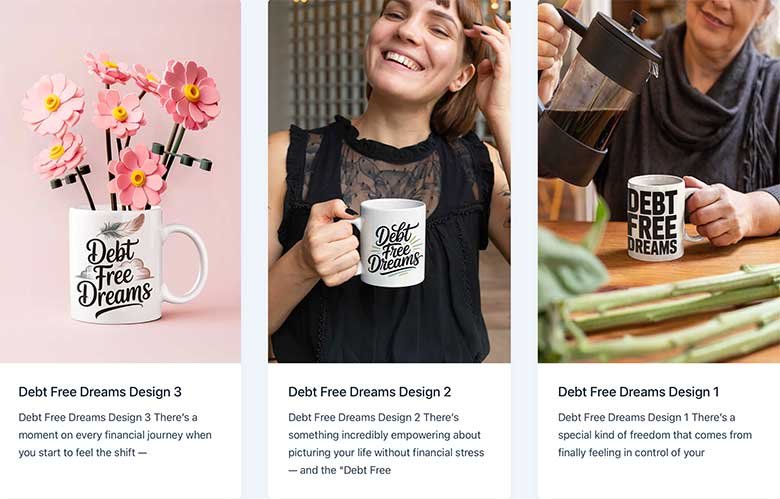
Long-Term Freedom Prints at Premier Print Works
Keep the reminder that plant the financial seeds today that your future self will live off of tomorrow visible where the daily financial decisions are made. Visit Premier Print Works for prints, mugs, and art for the person building the long-term income that makes the future worth looking forward to.
Visit Premier Print WorksDisclaimer
The content on A Self Help Hub is for informational and educational purposes only. The personal finance tips and personal stories in this article offer general information about long-term income concepts and financial strategies and do not constitute professional financial advice, investment advice, tax advice, legal advice, or any other form of professional guidance. A Self Help Hub is not a licensed financial advisor, investment advisor, tax professional, or attorney, and nothing in this article should be interpreted as a recommendation to take any specific financial, investment, tax, or legal action.
Building long-term income through investing, income diversification, and financial planning involves significant complexity and risk, including the potential loss of principal. Investment returns are not guaranteed and past performance does not guarantee future results. Tax treatment of investment income, retirement accounts, and business income varies significantly by individual situation, income level, filing status, and jurisdiction, and changes over time. Always consult a qualified and licensed financial advisor, certified financial planner (CFP), tax professional, and where appropriate a licensed attorney before making any decisions related to long-term income planning, investment allocation, income diversification, or business structure.
Income diversification strategies referenced in this article — including freelance income, digital products, rental income, and business income — each carry their own tax, legal, and business risk implications that vary significantly by individual situation and jurisdiction. Always consult qualified professionals before pursuing any specific income strategy.
The stories and composite characters in this article, including Mirren and Dunstan, are illustrative. They are based on common experiences in financial planning and created to make the content relatable. Any financial figures, timelines, projections, or outcomes described are examples only and not representations of typical, average, or guaranteed results for any individual.
Some links on this site, including links to Premier Print Works, may be affiliate links. A Self Help Hub may earn a small commission at no extra cost to you. We only recommend things we genuinely believe in.
The Sober Survival Guide linked in this article is general supportive information only. It is not a substitute for professional addiction treatment or medical care. If you or someone you love is struggling with addiction, please seek help from a qualified professional. Recovery is possible.
If you are in a mental health crisis or thinking about self-harm, please do not rely on this content for support. Contact emergency services or a crisis helpline right away. You deserve real help and it is available to you now.
All content on A Self Help Hub is copyrighted. You may not copy or republish it without written permission. By reading this article you agree to this disclaimer.