11 Emotional Intelligence Tools That Help You Respond Instead of React
The difference between a response and a reaction is not the feeling. Both can involve strong emotion, genuine upset, real anger, or deep hurt. The difference is what happens between the feeling and the behavior. A reaction is immediate, automatic, and driven by the emotional state without the intervention of conscious choice. A response involves the same feeling but adds the space in which a choice can be made, in which values rather than impulses can drive the behavior.
Building that space reliably, not just on the easy days but on the days when the trigger is real and the feeling is strong, is what emotional intelligence training is actually for. These 11 tools are the practical mechanisms for building it. Each one works differently, targeting a different dimension of the emotional experience that produces reactivity. Together they form a toolkit that, used consistently, changes the ratio of reactive responses to chosen ones in ways that improve every significant relationship in your life.

Free Download: The Self-Care Starter Kit
Responding instead of reacting requires a person who is rested, grounded, and emotionally resourced. The free Self-Care Starter Kit gives you simple daily practices for your mind and body that build the emotional foundation genuine responsiveness requires. Download it free today.
Get the Free Self-Care Starter Kit1. The physiological sigh.
“A reaction involves strong feeling followed immediately by behavior. A response involves the same feeling but adds the space in which values rather than impulses can drive what happens next.”
Neuroscientist Andrew Huberman has highlighted research on the physiological sigh as one of the fastest, most reliable methods for real-time nervous system regulation available. A physiological sigh is a double inhale through the nose, the second shorter and sharper than the first to fully inflate the lungs, followed by a long, slow exhale through the mouth. This pattern deflates the air sacs in the lungs and triggers an immediate parasympathetic response that lowers heart rate and reduces cortisol more quickly than any other breathing pattern studied. When a trigger is activating a reactive state, one or two physiological sighs performed before responding buys the nervous system the thirty to sixty seconds it needs to move from reactive to responsive mode. It takes five seconds. It reliably works.
2. The STOP technique.
The STOP technique is a four-step mindfulness-based interruption to reactive patterns: Stop what you are doing. Take a breath. Observe what is happening inside, your thoughts, your feelings, your physical state. Proceed with awareness. The technique does not require a long pause or any external behavior change that others would notice. It is an internal shift of approximately ten to thirty seconds that inserts the awareness needed to convert a reaction into a response. Practiced consistently in low-stakes situations, it becomes available as an automatic resource in high-stakes ones. The value is not in any single application. It is in the repeated practice that makes the four steps accessible in the moments when they are most needed.
3. Emotional labeling.
“The physiological sigh triggers an immediate parasympathetic response that lowers heart rate and reduces cortisol more quickly than any other breathing pattern studied. It takes five seconds. It reliably works.”
Research by Matthew Lieberman at UCLA found that naming an emotion, putting a specific word to what you are feeling, reduces activity in the amygdala, the brain’s threat-detection center, almost immediately. The naming literally quiets the reactive part of the brain and activates the prefrontal cortex, the part responsible for reasoned response. The more specific the label, the stronger the effect. I am feeling angry is useful. I am feeling dismissed and that is activating anger in me is more effective because it identifies not just the emotion but the specific trigger, which is the information needed to respond thoughtfully rather than react automatically. Practice naming emotions specifically and precisely throughout the day, not only in difficult moments. The skill is built in the ordinary situations.
Visit Premier Print Works
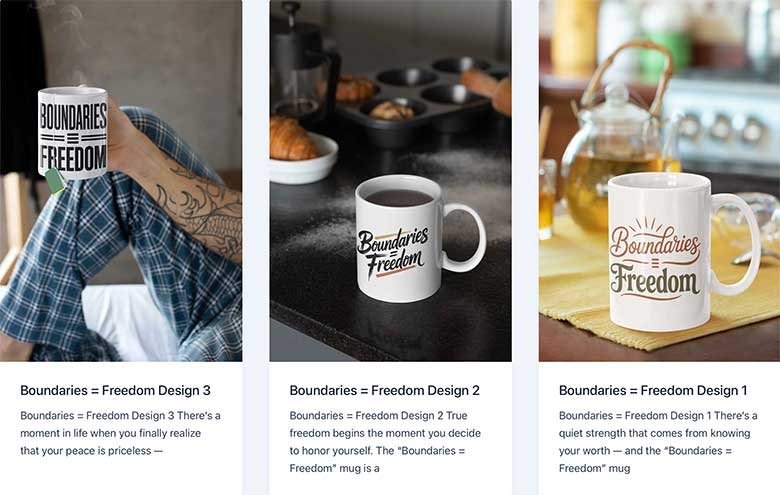
The reminders that help you respond from your values rather than your reactions are worth having close. Premier Print Works offers prints, mugs, and art for people who are building emotional intelligence and want their daily space to reflect the kind of person they are actively becoming. Visit the shop today.
Visit Premier Print Works4. The ten-minute delay rule for significant responses.
For situations where the reactive impulse is toward communication, sending an email, making a phone call, sending a message, responding to a comment, a ten-minute delay rule before sending anything significant is one of the most practically useful emotional intelligence tools available. Write the response if you need to. Do not send it for ten minutes. In ten minutes, reread what you wrote from the perspective of the person who will receive it rather than the person who felt the need to send it. The percentage of reactive communications that survive the ten-minute review without significant revision is small. The damage prevented by those revisions is real and disproportionate to the ten minutes they required.
5. The cognitive reframe: event versus meaning.
A significant portion of emotional reactivity is not triggered by events themselves but by the meanings that are instantaneously and often inaccurately assigned to them. Someone does not respond to a message: the meaning assigned might be they are ignoring me, they are upset, this relationship is in trouble. The meaning produces the emotional reaction. The event was a non-response, which has dozens of possible neutral explanations. The cognitive reframe tool asks you to separate the observable event from the assigned meaning and examine the meaning before acting on it. Is there another explanation? Is the worst-case interpretation the only available one, or just the one that arrived first? This separation is not toxic positivity. It is accurate thinking. Accurate thinking produces more proportionate responses.
6. The body scan for early reactive signals.
“The meaning assigned to an event arrives instantaneously, feels like fact, and is frequently wrong. Separating the event from the meaning before acting on it is accurate thinking, not toxic positivity.”
Reactive states almost always have physical precursors that arrive before the conscious awareness of the emotional state. Jaw tension. Shoulder tightening. Chest constriction. Stomach activation. Shallow breathing. Building the habit of a brief body scan when entering potentially triggering situations, meetings where tension is expected, conversations with people who historically produce reactivity, situations with known stress, creates an early warning system that makes it possible to apply regulation tools before the reactive state is fully established rather than after. The earlier the intervention in the reactivity cycle, the more effective and the less effortful it is. The body scan is how you catch the window when the intervention is cheapest.
7. The values anchor.
Reactivity takes you away from your values. The response that reflects emotional intelligence brings them back. The values anchor tool is the brief practice of asking, in the moment before a significant response, what my values say about how to handle this. Not what I feel like doing. What the person I am trying to be would do in this situation. The answer to that question does not have to change the feeling. It changes the behavior that follows from the feeling. The value of honesty does not require you to say everything you think. The value of respect does not require you to agree with someone. It requires you to treat them with dignity regardless of how you feel. The values anchor reconnects the difficult moment to the deliberate choices about who you are building yourself to be.
How Daniel and Kezia Each Found the Tool That Changed Their Most Challenging Interactions
Daniel had a long-standing pattern of responding to conflict at work in ways that were technically professional but that carried an edge he was aware of and unable to stop. He was not yelling. He was not unprofessional. He was reactive in a way that was visible to everyone in the room and that was slowly affecting how people engaged with him on difficult topics. A coach he worked with for a month identified the specific physical signal that preceded the reactive edge: a tightening across his shoulders and a slight forward lean in his posture. She taught him to use those signals as his trigger to pause. When the shoulders tightened, he had learned to treat that as a signal that the physiological sigh was needed before he opened his mouth. It took three weeks of consistent practice before it became even partially automatic. By the end of two months it was reliably available in the meetings where it was most needed. The edge did not disappear. But it stopped arriving before he had a chance to choose whether to bring it. That interval, small as it was, changed everything about how those meetings went.
Kezia’s tool was the ten-minute delay rule. She had a habit of responding to messages and emails in the moment of maximum emotional activation, which meant that the responses that most needed care were the ones that received the least. A particularly damaging email she sent in a moment of genuine frustration, one she had regretted for weeks afterward, finally motivated her to build the rule she had known she needed. She wrote a note on a sticky pad on her computer: ten minutes. She applied it to any response that she could feel an emotional charge in before sending. In the first month she revised nine responses that would have caused damage. One of them she never sent at all. The ten minutes had not cost her anything in any of those situations. It had prevented nine instances of the specific kind of damage that the reactive response produces: the one she was still managing months later in the form of repaired relationships and follow-up explanations. The rule was simple. The return was significant.
8. Perspective-taking before responding in conflict.
“Reactivity takes you away from your values. The values anchor reconnects the difficult moment to the deliberate choices about who you are building yourself to be, one response at a time.”
Perspective-taking, the deliberate practice of imagining the situation from the other person’s point of view before responding, is one of the most consistently effective tools for reducing reactivity in conflict because it interrupts the natural human tendency to experience conflict from a single, self-centered perspective. The person who said the thing you reacted to almost certainly had an internal experience of the interaction that was entirely different from yours. Their motivations, their fears, their history, their current emotional state: all of these are invisible to you unless you deliberately imagine them. Perspective-taking does not require you to excuse behavior that hurt you. It requires you to respond to the whole person rather than to your own reaction to them. That response is almost always more effective and less damaging than the purely self-centered one.
9. The repair script.
Emotional intelligence is not the elimination of reactive responses. It is the reduction of their frequency and the quality of recovery when they occur. The repair script is the tool for recovery: a simple, honest, specific acknowledgment of what happened when the reaction was not the response you wanted to make. It does not require a lengthy explanation or extensive self-justification. I reacted in a way I did not intend earlier and I want to address it. I was more reactive than the situation called for and I apologize for the impact of that on you. Brief, genuine, specific. The speed of the repair matters as much as the quality of the language. A fast, honest acknowledgment does more for the relationship and for your own self-respect than a delayed, elaborate explanation that keeps the wound open longer than necessary.
10. The pre-commitment strategy.
Pre-commitment is the practice of deciding in advance how you will respond to a known trigger before it arrives, when you are calm and the decision can be made deliberately rather than reactively. Before the meeting where a particular person consistently provokes reactivity, decide specifically how you will respond when they do what they consistently do. Before the conversation you know will be difficult, decide what the one thing you will not say is, regardless of what happens. The pre-commitment does not prevent the feeling. It creates an advance decision that is more accessible in the triggered moment than the deliberate response would be without it, because the thinking was done before the emotion arrived to cloud it.
11. The daily emotional intelligence review.
“Pre-commitment decides in advance how you will respond to a known trigger before it arrives. The thinking done before the emotional activation is accessible in the triggered moment in a way that thinking during activation is not.”
A brief daily review of your emotional responses, five minutes before the day ends, asking specifically what triggered reactivity today, how you responded, and what a more deliberate response would have looked like, builds the self-awareness over time that is the foundation of all emotional intelligence development. Not a harsh self-evaluation. An honest, curious one. The patterns that emerge from a consistent daily review across weeks and months are genuinely informative: the recurring triggers, the specific contexts that produce reactivity, the times of day when regulation is weakest, the relationships where the most work is needed. You cannot improve a pattern you cannot see. The daily review makes the patterns visible in a way that produces real change rather than just real self-awareness.
The Space Between Feeling and Behavior Is Where Your Character Lives. These Tools Are How You Build It.
Emotional intelligence is not the absence of strong feeling. It is the presence of enough space between the feeling and the behavior for choice to operate. That space is built through tools, practiced consistently in ordinary situations until they are available in extraordinary ones.
The eleven tools in this article cover the nervous system, the cognitive, the behavioral, and the relational dimensions of the reactive-to-responsive shift. You do not need all eleven. You need the two or three that address the specific way your reactivity most consistently shows up. Build those until they are reliable. Then add more when you are ready.
The response you are capable of is already inside you. These tools are how you make it available when you need it most.

Free Download: The Self-Care Starter Kit
Let these emotional intelligence tools be the reminder that responding instead of reacting starts with taking care of the person doing the responding. The free Self-Care Starter Kit gives you the daily practices that build the emotional foundation genuine responsiveness requires. Download it free today.
Get the Free Self-Care Starter KitOur Top Picks for a Better Life
We have gathered our favorite tools, resources, and recommendations for building emotional intelligence, deeper self-awareness, and the daily practices that help you show up in your most important relationships with more intention and less regret. Everything we trust enough to share, all in one place.
See Our Top Picks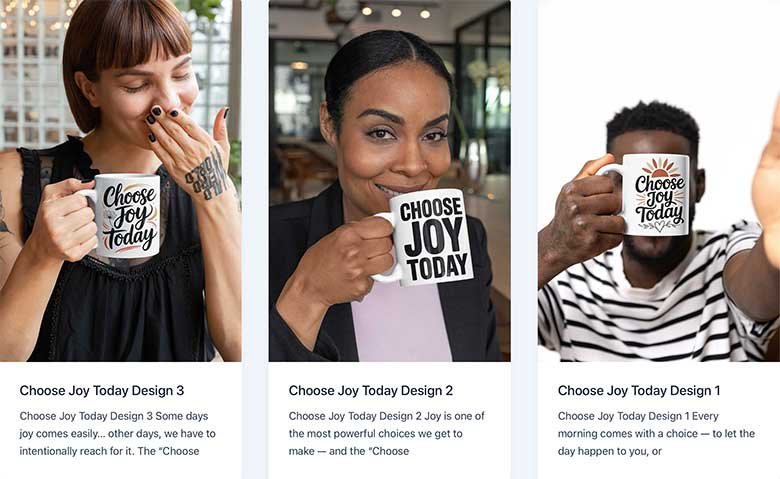
Emotional Intelligence Reminders at Premier Print Works
Keep the reminders of how you want to show up visible on the days when the reaction comes faster than the intention. Visit Premier Print Works for prints, mugs, and art for people who are building emotional intelligence and the daily responsiveness that makes their most important relationships genuinely better.
Visit Premier Print WorksDisclaimer
The content on A Self Help Hub is for informational and inspirational purposes only. The emotional intelligence tools and personal stories in this article offer general support for everyday self-awareness, emotional regulation, and interpersonal effectiveness. They are not professional mental health advice, psychotherapy, medical advice, or any form of clinical treatment.
If you are dealing with significant anxiety, depression, trauma, personality disorders, anger management issues, or other conditions affecting your emotional regulation and relationships, please speak with a qualified mental health professional. General self-help content is not a substitute for professional care.
The stories and composite characters in this article, including Daniel and Kezia, are illustrative. They are based on common experiences and created to make the content relatable. They are not real people. Any resemblance to a specific person is coincidental.
Some links on this site, including links to Premier Print Works, may be affiliate links. A Self Help Hub may earn a small commission at no extra cost to you. We only recommend things we genuinely believe in.
If you are in a mental health crisis or thinking about self-harm, please do not rely on this content for support. Contact emergency services or a crisis helpline right away. You deserve real help and it is available to you now.
All content on A Self Help Hub is copyrighted. You may not copy or republish it without written permission. By reading this article you agree to this disclaimer.