13 Real Life Examples That Help You Understand Emotional Intelligence
Emotional intelligence is a concept that is easy to describe in theory and harder to recognize in practice until you see it illustrated in specific, real situations. Definitions only go so far. The four domains, self-awareness, self-management, social awareness, and relationship management, are useful frameworks. But what most people actually need is to see what high and low emotional intelligence looks like in the ordinary moments of daily life: at work, in relationships, under pressure, and in conflict.
These 13 real life examples do that. Each one presents a situation and shows the contrast between what a reactive, low-EQ response looks like and what a thoughtful, high-EQ response looks like in the same situation. The contrast is where the learning lives. Read through them slowly. You will likely recognize yourself in some of both sides. That recognition is the beginning of the practice.

Free Download: The Self-Care Starter Kit
Emotional intelligence grows from a foundation of daily self-care. The free Self-Care Starter Kit gives you simple daily practices for your mind and body that build the emotional foundation genuine emotional intelligence requires. Download it free today.
Get the Free Self-Care Starter Kit1. Receiving criticism at work.
“Emotional intelligence is easier to understand through real situations than through definitions. The contrast between a reactive response and a thoughtful one in the same situation is where the real learning lives.”
A manager gives you direct, critical feedback on a project in front of a colleague. The low-EQ response is immediate defensiveness: explaining why the criticism is wrong, listing everything that went right, or going quiet in a way that communicates resentment. The high-EQ response acknowledges the feedback without immediately agreeing or disagreeing: I hear you and I want to think about this carefully. Can we find time to go deeper on it? The high-EQ response is not passive acceptance of unfair criticism. It is the choice to receive feedback in a regulated state rather than a reactive one, which produces a better outcome for everyone including the person receiving it.
2. Your partner says something hurtful during an argument.
In the middle of a disagreement, your partner says something cutting. The low-EQ response is to match the heat: say something equally cutting in return, escalating the argument into territory that neither person will navigate well. The high-EQ response is to name what just happened without weaponizing it: that landed really hard and I need a few minutes before I can keep talking about this productively. That response is not weakness or avoidance. It is the recognition that the conversation cannot go somewhere useful while the emotional activation is at its current level, and the choice to protect the relationship by stepping back from the escalation before it causes damage that requires significantly more than a few minutes to repair.
3. A friend cancels on you at the last minute, again.
“The high-EQ response is not passive acceptance. It is the choice to receive the difficult moment in a regulated state rather than a reactive one, which almost always produces a better outcome for everyone involved.”
A friend cancels plans for the fourth time in two months with a vague excuse. The low-EQ response is either to say nothing and accumulate resentment, or to send an angry message that is more about releasing the frustration than addressing the actual issue. The high-EQ response takes a moment to identify what is actually being felt, which is probably more than just inconvenience: something like hurt or a sense of not being valued. Then it addresses the pattern honestly but without attack: I have noticed we have had to cancel a lot lately and I wanted to check in about it. I value our friendship and I want to understand what is going on. That conversation is harder to have than the angry message. It is also the one that has a chance of actually changing something.

Visit Premier Print Works
Keep the reminders of who you are working to become visible in your daily space. Premier Print Works offers prints, mugs, and art for people who are building emotional intelligence and want their environment to reflect the kind of person they are actively choosing to be. Visit the shop today.
Visit Premier Print Works4. You make a significant mistake at work.
You make an error that affects a project and other people are aware of it. The low-EQ response is either excessive self-flagellation that centers your own distress over the practical problem, or deflection that minimizes the error and subtly assigns responsibility elsewhere. The high-EQ response owns the mistake clearly and moves directly to what can be done: I made an error here. I understand how it affected the project. Here is what I am doing to address it. The high-EQ response does not require theatrical remorse or self-punishment. It requires honest accountability followed immediately by constructive action. The mistake is the same in both responses. Everything that happens after the mistake is determined by which response is chosen.
5. A colleague takes credit for your idea.
In a meeting, a colleague presents an idea as their own that you shared with them privately earlier that week. The low-EQ response is to either say nothing and stew, or to publicly correct the record in a way that becomes confrontational and creates an awkward dynamic for everyone in the room. The high-EQ response is measured and clear: I am glad we are pursuing this direction. I shared a similar idea with [colleague] earlier this week and it is great to see it getting traction. The response corrects the record without attacking the colleague, keeps the focus on the work rather than the grievance, and handles the situation in a way that preserves professional relationships while still addressing the issue. The follow-up private conversation with the colleague is separate and also necessary.
6. You are passed over for a promotion you expected.
“The low-EQ response centers your own distress over the practical problem. The high-EQ response owns what happened clearly and moves directly to what can be done. Everything after the mistake is determined by which response is chosen.”
You find out someone else got the promotion you had been expecting and working toward. The low-EQ response is to withdraw, express bitterness to colleagues, or interpret the decision as a personal rejection and allow it to affect the quality of your work going forward. The high-EQ response manages the disappointment without performing it for others, seeks a direct conversation with the decision-maker to understand the feedback, and uses that feedback to build toward the next opportunity rather than treating the setback as a verdict. It is genuinely disappointing and the high-EQ response does not require pretending otherwise. It requires processing the disappointment without letting it become the primary story of your professional life.
7. Someone you care about is going through a hard time and shares it with you.
A close friend tells you they are struggling. The low-EQ response is to immediately offer solutions, share a similar experience from your own life, or offer reassurances like I am sure it will work out that close the conversation down rather than opening it. The high-EQ response is to listen fully before responding: to give the person the experience of being genuinely heard before anything else. That sounds really hard. Tell me more about what has been going on. The solutions and the reassurances and the shared experiences may all have their place later in the conversation. But the most powerful thing you can give someone who is sharing something difficult is the experience of being heard first. That experience is itself a form of support that the immediate advice response cannot provide.
8. You are stuck in traffic and running late for something important.
“The most powerful thing you can give someone who is sharing something difficult is the experience of being heard before anything else. The immediate advice response cannot provide what full listening provides.”
You are twenty minutes late for an important meeting because of traffic you could not have predicted. The low-EQ response is to arrive frazzled, distracted by the frustration of the delay, and unable to fully engage with the meeting because the emotional residue of the drive is still present. The high-EQ response uses whatever time is available before entering the meeting to regulate: deep breaths, a brief acknowledgment of the frustration, and a conscious choice to arrive at the meeting rather than at the traffic. The traffic is already over. The meeting is now. High emotional intelligence includes the ability to transition between emotional contexts rather than carrying the emotional content of one situation into the next one it has nothing to do with.
9. A family member makes a comment that hits a nerve.
At a family gathering, a relative makes a comment about your life choices that activates an old, familiar hurt. The low-EQ response is either a sharp reply that produces a scene no one wanted, or the internal suppression that produces a withdrawal that the whole table notices and nobody discusses. The high-EQ response is the one that acknowledges the activation internally, I notice that landed harder than it probably should have, asks whether the reaction is proportionate to the comment or partly about something older, and chooses a measured response that does not make the family gathering a venue for a conversation the situation does not actually support. The feeling is real. The context may not be the right one to address it. That distinction is emotional intelligence applied to timing.
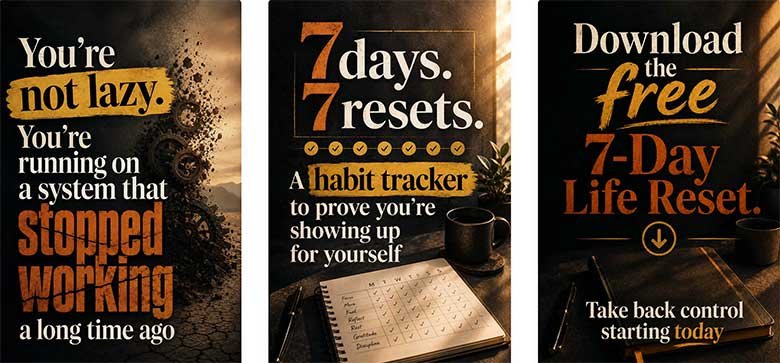
Free Download: The 7-Day Life Reset
Emotional intelligence grows through deliberate daily practice. The 7-Day Life Reset gives you seven days of intentional actions to reset your habits, build self-awareness, and start showing up in your most important relationships with more intention and less regret. Download it free today.
Get the Free 7-Day Life Reset10. You notice you are envious of someone else’s success.
“High emotional intelligence includes the ability to transition between emotional contexts rather than carrying the content of one situation into the next one it has nothing to do with.”
A peer announces a significant professional achievement and you notice envy arising alongside the congratulations you offer. The low-EQ response is to dismiss the envy without examining it, or to allow it to quietly color the relationship going forward in ways that produce distance neither person has explicitly chosen. The high-EQ response is curious about the envy rather than ashamed of it: what specifically am I envious of, and what does that tell me about what I want that I have not yet acknowledged or pursued? Envy is information. It almost always points toward something you genuinely want that the other person’s success has made visible. The high-EQ response treats that information as useful rather than as a character deficiency to be suppressed.
11. You are asked to do something you disagree with at work.
Your manager asks you to handle something in a way that you believe is wrong or ineffective. The low-EQ response is either silent compliance that produces resentment, or open resistance that becomes a power struggle rather than a professional conversation. The high-EQ response expresses the disagreement clearly and respectfully: I want to make sure I understand the reasoning here, because I have some concerns I would like to share before we move forward. The concerns are stated. The manager’s perspective is heard. If the decision stands, it is carried out professionally without ongoing passive resistance. The disagreement was expressed through the right channel. The outcome, whatever it is, has been handled with both honesty and professionalism.
12. You feel overwhelmed and do not know why.
You arrive at the end of a week feeling significantly worse than the individual events of the week seem to justify. The low-EQ response is to push through without examination or to attribute the feeling to something external, usually work or other people, without looking at what your own inner experience has been doing over the course of the week. The high-EQ response pauses and checks in honestly: what have I actually been feeling this week that I have not paid attention to? What has been accumulating below the surface? The answer to that question usually produces both the explanation for the overwhelm and the beginning of the processing that relieves it. Self-awareness is not the luxury version of emotional intelligence. It is the foundation everything else is built on.
13. You need to have a difficult conversation you have been avoiding.
“Self-awareness is not the luxury version of emotional intelligence. It is the foundation everything else is built on. Everything else in EQ depends on the ability to honestly examine your own inner experience.”
There is a conversation you know you need to have with someone, and you have been finding reasons to delay it for weeks or months. The low-EQ pattern is to continue the avoidance while the unspoken thing quietly damages the relationship or situation it is about. The high-EQ response identifies what specifically is making the conversation feel threatening, whether that is fear of the other person’s reaction, uncertainty about what you actually want to say, or discomfort with conflict itself, and then moves toward the conversation with preparation rather than avoiding it indefinitely. Emotionally intelligent people have difficult conversations not because the conversations are comfortable but because they understand that the damage of indefinite avoidance is consistently worse than the discomfort of the conversation itself.
How Kezia and Daniel Each Recognized Their Own EQ Pattern in a Real Life Example
Kezia had always thought of herself as emotionally intelligent. She was self-aware, she was empathetic, she was generally good in relationships. What the examples in an EQ workshop she attended revealed was a specific blind spot she had never named: she was excellent at receiving other people’s emotions and genuinely poor at expressing her own. When she was hurt, she offered understanding. When she was frustrated, she redirected into problem-solving. When she needed something from someone close to her, she consistently found a way to make the need about the other person’s comfort rather than her own. The workshop’s example of the person who never asks for support because they do not want to burden anyone was uncomfortably accurate. She had been performing half of emotional intelligence, the receiving half, and systematically avoiding the other half, the expressing half. That recognition did not change her overnight. It gave her something specific to work on that the general concept of emotional intelligence never had.
Daniel’s recognition came from example eleven, the one about disagreeing with a manager. He had always believed his pattern was professional and responsible: complete compliance with decisions he disagreed with, followed by private frustration he kept entirely to himself. What the example made visible was that his pattern was not actually professionalism. It was conflict avoidance producing resentment that was slowly affecting the quality of his work relationships from the inside without any of the relevant people knowing why. The high-EQ version, expressing the disagreement through the right channel and then genuinely releasing it once it had been heard, was not the pattern he had been practicing. He had been practicing half of it, the compliance part, and skipping the part that was the actual emotional intelligence, the honest expression before the compliance. He started practicing the expression. The resentment, deprived of the silence it had required, had significantly less room to build.
You Recognize Yourself in These Examples Because Emotional Intelligence Is Human. Every One of These Situations Has a Better Response Available.
Emotional intelligence is not a trait that some people have and others do not. It is a set of skills that anyone can build through awareness and practice. The examples in this article are not designed to show you how far you have to go. They are designed to show you exactly what the practice looks like in the moments that matter, so that the next time one of these situations arrives in your real life, you have a clearer sense of what a thoughtful response looks like from the inside.
Pick the one or two examples that resonated most. Think about the last time a similar situation appeared in your own life and what your response looked like. Not to judge it. To understand it clearly enough to do something different next time. That specific, situational awareness is where emotional intelligence actually gets built.

Free Download: The Self-Care Starter Kit
Let these emotional intelligence examples be the reminder that the practice starts with taking care of yourself well enough to show up fully for the moments that require it. The free Self-Care Starter Kit gives you the daily foundation emotional intelligence is built from. Download it free today.
Get the Free Self-Care Starter KitOur Top Picks for a Better Life
We have gathered our favorite tools, resources, and recommendations for building emotional intelligence, deeper self-awareness, and the daily practices that help you show up in your most important relationships with more intention and less regret. Everything we trust enough to share, all in one place.
See Our Top Picks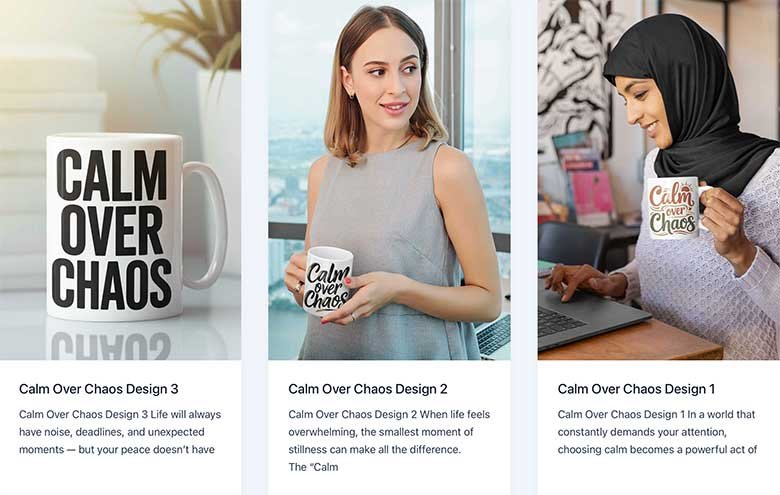
Emotional Intelligence Reminders at Premier Print Works
Keep the reminders of how you want to show up in the moments that matter visible in your daily space. Visit Premier Print Works for prints, mugs, and art for people who are building emotional intelligence and the kind of presence their most important relationships deserve.
Visit Premier Print WorksDisclaimer
The content on A Self Help Hub is for informational and inspirational purposes only. The emotional intelligence examples and personal stories in this article offer general support for everyday self-awareness, emotional regulation, and interpersonal effectiveness. They are not professional mental health advice, psychotherapy, relationship counseling, medical advice, or any form of clinical treatment.
If you are dealing with significant anxiety, depression, trauma, relationship difficulties, or other conditions affecting your daily emotional functioning and relationships, please speak with a qualified mental health professional. General self-help content is not a substitute for professional care.
The stories and composite characters in this article, including Kezia and Daniel, are illustrative. They are based on common experiences and created to make the content relatable. They are not real people. Any resemblance to a specific person is coincidental.
Some links on this site, including links to Premier Print Works, may be affiliate links. A Self Help Hub may earn a small commission at no extra cost to you. We only recommend things we genuinely believe in.
If you are in a mental health crisis or thinking about self-harm, please do not rely on this content for support. Contact emergency services or a crisis helpline right away. You deserve real help and it is available to you now.
All content on A Self Help Hub is copyrighted. You may not copy or republish it without written permission. By reading this article you agree to this disclaimer.