How to Protect Your Accounts With Strong Security Habits
Your money lives in more places than your wallet. Bank apps, card accounts, payment apps, shopping sites, and email all hold keys to it. Each one is a door, and each door needs a good lock.
Good account security habits are small, steady actions that make it harder for someone else to get into your accounts. They do not take special skills. Most take a few minutes to set up and then quietly protect you every day. A little effort now can save a great deal of stress later.
This guide shares general ideas and information about protecting your accounts. Think of it as a starting point and not advice or a full security plan. No product or company is being recommended, and the page is written with the United States in mind. Try one habit at a time, starting with the accounts that matter most to you.

List and Protect Your Money Accounts
Download the free Money Reset Workbook and get simple pages to list your accounts and track which security steps you have finished.
Get the Free WorkbookStart with your email account
Your email is often the master key. If someone gets into it, they may be able to reset passwords for your bank, cards, and shopping sites. That makes email one of the most important accounts to protect.
A strong, unique password and a second sign-in step on your email can go a long way. Checking the recovery phone number and backup email listed on the account is also a good idea.
Once your email is secure, the rest of your accounts get a stronger base.
Check the password, recovery phone, and backup email on your main email account.
Use long, different passwords for each account
A strong password is long and hard to guess. Many people use a passphrase, which is a string of several random words, like a short silly sentence. Longer is often stronger.
Using a different password for each account matters too. If one site has a data leak, a reused password could open your other accounts.
Keeping track of many passwords can feel hard. Some people use a password manager, which is a tool that stores passwords in a locked vault. Others keep a written list in a safe place at home.
Change the password on one important account to a long, unique passphrase.

A Small Reminder to Stay Safe Online
Premier Print Works creates quality prints, mugs, and shirts for careful, thoughtful people. Find a little reminder for your desk.
Visit Premier Print WorksTurn on a second sign-in step
Two-step verification, sometimes called multi-factor sign-in, adds a second check when you log in. After your password, you enter a code sent to your phone or shown in an app, or you approve the sign-in on a trusted device.
Even if someone learns your password, this second step can stop them. Many banks, card companies, and email services offer it in their security settings.
Setting it up usually takes just a few minutes per account.
Turn on two-step verification for your email and your main bank account.
“A few minutes spent locking your doors can save months of cleaning up a mess.”
Never share sign-in codes with anyone
Scammers often call or text pretending to be your bank, a delivery company, or even a family member. They may ask you to read back a code that was just sent to your phone. That code can let them into your account.
Real banks and companies rarely, if ever, ask you to share a sign-in code. If anyone asks, it is a strong sign of a scam.
When in doubt, hang up and call the number on the back of your card or on the company’s official website.
Make a promise to yourself to never read a sign-in code to anyone who calls or texts.

Track Your Security Steps in One Place
The free Money Reset Workbook gives you a clear page to check off each account as you secure it, so nothing gets missed.
Get the Free WorkbookLearn the signs of a scam message
Scam messages often create a sense of panic. They might say your account is locked, a payment failed, or you won a prize. They push you to act fast, click a link, or share details.
Some common signs include spelling mistakes, odd sender addresses, links that do not match the company’s real website, and requests for gift cards or wire transfers.
Slowing down is one of the best defenses. Going to the company’s website or app on your own, instead of clicking a link, can help you check safely.
Next time you get an urgent money message, pause and check it by going to the company’s site yourself.
Set up account alerts
Many banks and card companies let you turn on alerts by text, email, or app. You might get a message for every purchase, for large purchases, or when a new device signs in.
Alerts can help you spot something strange quickly. The sooner a problem is reported, the easier it often is to fix.
Some people prefer alerts only above a certain amount, so their phone does not buzz all day. That choice is up to you.
Turn on purchase alerts for at least one bank or card account.
Look over your statements often
A quick look at your bank and card activity once a week can catch problems early. Look for charges you do not recognize, even small ones. Scammers sometimes test a card with a tiny charge first.
If something looks wrong, contact your bank or card company right away using the number on your card or statement.
It is also worth checking your credit reports from time to time for accounts you did not open. For related reading, see reading a credit report step by step.
Pick one day each week to look over your bank and card activity.
Know what to do if you spot a problem
If you find a charge or account you did not make, staying calm helps. Contact the bank, card company, or credit bureau involved. Changing passwords on any affected accounts is often a good next step.
Errors on a credit report can be disputed. You may also like disputing an error on a credit report.
In the United States, a credit freeze is an option that limits who can see your credit report, which can make it harder for someone to open new accounts in your name. Rules and steps vary, so checking with each credit bureau can help.
Save the phone numbers for your bank and card companies in your contacts.
Keep your devices up to date
Phones, tablets, and computers get updates that often fix security holes. Turning on automatic updates means you get these fixes without having to remember.
A screen lock, like a PIN, a pattern, or a fingerprint, adds another layer. If your phone is lost, a lock helps keep your apps private.
Downloading apps only from official app stores can also lower the risk of harmful software.
Turn on automatic updates and a screen lock on your phone.
Be careful on public Wi-Fi
Free Wi-Fi at cafes, airports, and hotels is handy, but it may not be secure. Others on the same network could try to see what you are doing.
Some people wait until they are on their home network or use their phone’s data before checking bank accounts. Looking for the lock symbol and https at the start of a web address is another small check.
Small habits like this can lower the chances of trouble. Another place to look is common money mistakes for beginners.
Decide to check your bank accounts only on a trusted network or your phone’s data.
Protect your credit as part of the plan
Your credit history is tied to your identity, so protecting your accounts also protects your credit. Watching for new accounts or hard inquiries you did not expect is part of good security.
Understanding how credit works can make it easier to spot when something is off. For related reading, see how credit scores work.
A few simple habits, repeated over time, can make a big difference.
Write down the three security habits you want to start this week.
Explore Our Top Picks for a Better Life
We have gathered the tools, resources, and products we think are genuinely worth your time, covering mindset, self-care, health, and home. All in one place, hand-picked to support the goals you are working toward.
See Our Top PicksReal Stories, Real Results
Let me share two examples I like to use. Amara used the same password for almost everything. After a store she shopped at had a data leak, she changed her email password first and turned on two-step sign-in. She told me that it took one evening, and she finally stopped worrying every time she heard about a new leak.
Joel got a text saying his bank account was locked, with a link to fix it. He almost tapped it, then remembered to call the number on his card instead. He said the bank told him it was a scam and his account was fine. Both of them said the same thing: slowing down and building a few simple habits made them feel much safer.
Simple Habits Can Keep Your Money Safer
Picture opening your bank app with calm. Your passwords are strong, your sign-in has a second step, and alerts let you know about every purchase. When a scam text arrives, you simply delete it and move on.
Start with your email account, then pick one bank or card account to secure next. The free Money Reset Workbook can help you list your accounts. One habit at a time, your money gets safer.
Want Ready-Made Tools to Help You Put This Into Action?
Sometimes the fastest way forward is a tool that someone has already built. Browse our hand-picked resources and downloads, chosen to help you take the next step with less guesswork.
Browse Resources and Downloads
Ready to Lock Your Money Doors?
The free Money Reset Workbook helps you see your accounts clearly, so you can protect each one step by step.
Download Free Now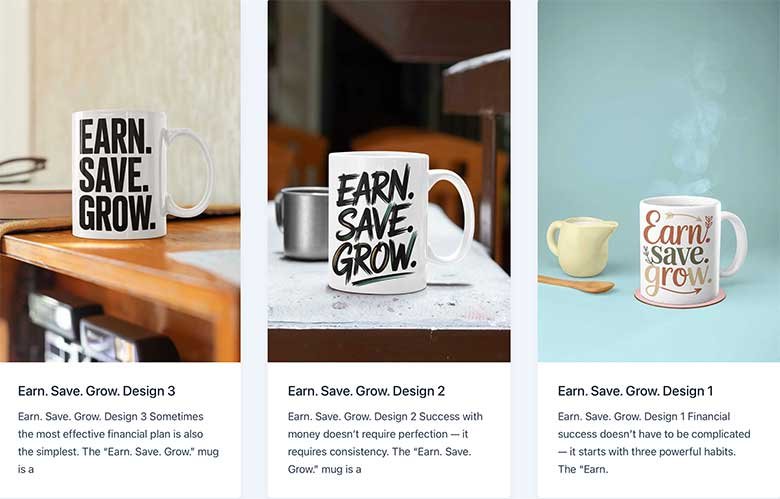
Bring Calm to Your Workspace
Premier Print Works makes quality prints, mugs, and shirts for people who like to plan ahead. Browse the collection and find a favorite.
Visit Premier Print WorksDisclaimer
The content on this page is for informational and inspirational purposes only. It is not professional financial, investment, tax, legal, insurance, cybersecurity, or estate planning advice, and it is not a recommendation of any product, service, or company. This page is written with the United States in mind. Security features, credit freeze steps, and account terms vary by company and change over time, so please check with each bank, card company, or credit bureau. If you think you are a victim of fraud, contact your bank or card company right away. Prices, fees, and account terms vary and change. Results vary widely from person to person.
I am not a financial advisor, and I am not a licensed tax, legal, or investment professional. I share this information to help people learn about money and see new options. Please treat it as general information only, and talk with a qualified professional about your own situation before making financial decisions.
The stories of Amara and Joel are illustrative composite characters created to bring the content to life. They are not real people. Any resemblance to a real person is purely coincidental.
Some links on this page, including links to Premier Print Works and other resources, are affiliate links. If you make a purchase through one of these links, we may earn a small commission at no extra cost to you. We do not own, produce, or control any affiliate products, and we are not responsible for them — we only own and sell the products offered through our own store, Premier Print Works.
All content on A Self Help Hub is the property of Digital Marketing 215 LLC and is protected by copyright law. No part of this page may be copied, reproduced, republished, distributed, or transmitted in any form without prior written permission from the author.