Cost Per Use: The Simple Math Behind Smarter Buying
The price tag tells only part of the story. A cheap item can turn out to be costly, and a pricey item can turn out to be a bargain. The missing piece is how often you will actually use it.
Cost per use is a simple way to fill in that missing piece. You take what something costs and divide it by the number of times you use it. The answer shows what each wear, ride, or meal really cost. It takes a few seconds with a phone calculator, and it can change how a purchase looks.
This guide covers the basic math, the hidden costs that change the answer, and the places where cost per use can lead people astray. Every example uses made-up numbers, and each one is checked so the math adds up. These are general ideas to think about, not advice. Read one section at a time and try the math on something you already own.

Run the Numbers Before You Buy
Download the free Money Reset Workbook and get simple pages to compare prices, uses, and upkeep for your next big purchase.
Get the Free WorkbookStart with the basic formula
The math has one step. Cost per use equals the price divided by the number of uses. That is it. You can do it before you buy, by guessing the uses, or after, by counting them.
Here is an example with made-up numbers. A pair of boots costs $120. If they get worn 200 times, $120 divided by 200 equals $0.60 per wear. A second pair costs $40 but gets worn only 20 times before falling apart. That is $40 divided by 20, or $2.00 per wear.
In this example, the boots with the bigger price tag cost less each time they are worn. The lower price only looked cheaper at the register.
Pick one item you use often and divide its price by a rough count of how many times you have used it.
Guess the number of uses honestly
The weakest part of the formula is the guess. It is easy to picture yourself using a new blender every morning. Real life may look more like twice a month. An honest guess makes the answer useful.
One way to guess well is to look back. How often did you use the last item like this one? If a juicer sat in the cupboard before, a new one may follow the same path. For related reading, see planning before you spend.
When unsure, some people cut their first guess in half. If the item still looks like a good deal, it probably holds up.
Before your next planned purchase, write down how often you used something similar in the past.

Keep a Reminder to Buy What You Will Use
Premier Print Works creates quality prints, mugs, and shirts for thoughtful shoppers. Find a small reminder that good value lasts.
Visit Premier Print WorksAdd the upkeep to the price
Many things cost money after you bring them home. A bike needs tune-ups. A printer needs ink. A wool coat may need dry cleaning. That upkeep belongs in the math.
In a made-up example, a bike costs $200 and needs a $50 tune-up over its life with you. The total is $250. If it gets ridden 100 times, $250 divided by 100 equals $2.50 per ride. Without the tune-up, the answer would have been $2.00, which looks better than the truth.
Upkeep can flip a comparison. A cheap printer with costly ink can end up costing more than a pricier one with cheap ink.
List any ongoing costs, like refills, parts, or cleaning, for one item you own.
“The best price is the one you divide by many happy uses.”
Subtract what you can sell it for later
Some items keep part of their value. Furniture, tools, and some sports gear can often be resold. Money that comes back lowers the true cost.
Here is a made-up example. A desk costs $300. A few years later it sells for $100. The true cost is $300 minus $100, which equals $200. If it gets used 400 times, $200 divided by 400 equals $0.50 per use.
Resale is never a sure thing. Prices for used goods go up and down, and some items are hard to sell. It can be safer to treat resale as a small bonus and not count on it.
Think of one item you own that could be resold and write a rough guess of what it might bring.

Keep Your Cost Per Use Math in One Place
The free Money Reset Workbook gives you a clear page to jot down prices and uses, so comparing choices is quick and easy.
Get the Free WorkbookCompare buying with renting or borrowing
Cost per use is handy when deciding whether to buy at all. Think about a carpet cleaner. In a made-up example, renting one costs $30 a day, and buying one costs $150.
If you clean the carpets twice, renting costs $30 times 2, or $60. Buying would cost $150 divided by 2, or $75 per use. Renting wins. If you clean ten times, renting costs $30 times 10, or $300. Buying costs $150 divided by 10, or $15 per use. Now buying wins.
Borrowing from a friend or neighbor can bring the cost close to zero. A small thank-you, like returning it clean, keeps the door open for next time.
Name one item you might buy and find out what it would cost to rent or borrow instead.
Watch for cheap items that need replacing often
A low price can hide a short life. Take an umbrella. In a made-up example, a $10 umbrella breaks after 10 rainy days. That is $10 divided by 10, or $1.00 per use. A $30 umbrella lasts 60 rainy days. That is $30 divided by 60, or $0.50 per use.
This does not mean the pricier item always lasts longer. A high price does not promise good quality. Reviews from real buyers, a sturdy feel in the hand, and a good return policy can all give clues. Return policies vary by store, so it can help to check the written policy.
Sometimes the cheap version is the smart pick, like for an item you only need once.
Think of one thing you have replaced more than twice and add up what all the copies cost.
Remember that cost per use has limits
A low cost per use can make almost anything sound reasonable. A $900 jacket worn 900 times is $1.00 per wear. That math is right, but it does not mean the jacket fits your budget. Cost per use shows value, not whether you can afford it.
The first question is still whether the money is there without a strain. A budget answers that question. Cost per use comes second, as a way to compare choices that already fit. You may also like a smarter money plan.
Paying for a high-priced item with a credit card balance that grows interest can also undo the savings. Interest adds to the price, so it belongs in the math too.
Before using cost per use on a big item, check whether the full price fits your monthly plan.
Try the math on clothing first
Clothes are one of the easiest places to practice. Most closets hold a few things worn every week and a few things worn once. Counting wears can be eye-opening.
One simple method is a tally sheet taped inside the closet door. Each time you wear an item, add a mark. After a month or two, the favorites and the forgotten pieces become clear. Many people find that a small set of well-loved basics carries most of their wardrobe.
This can guide future buying without any guilt about the past. Every closet has a few items that did not work out. That is part of learning what you like.
Tape a simple tally sheet in your closet and mark each item you wear for one month.
Make cost per use a quick habit at the store
Once the math feels easy, it can become a quick pause before buying. Hold the item and ask, about how many times will I use this? Then divide. It takes less than a minute.
Some people like to keep a short money saying on their phone as a reminder to pause. For related reading, see money quotes about spending.
Over time, the habit can shift what ends up in the cart. Fewer things that sit unused, and more things that earn their place. For anyone just starting out with money, this one pause can be a steady friend. Another place to look is money tips for young adults.
Next time you shop, guess the uses and divide the price before heading to checkout.
Explore Our Top Picks for a Better Life
We have gathered the tools, resources, and products we think are genuinely worth your time, covering mindset, self-care, health, and home. All in one place, hand-picked to support thoughtful, well-used purchases.
See Our Top PicksReal Stories, Real Results
Let me share two examples I like to use. Kezia kept buying low-priced work shoes that wore out every few months. She added up what she had spent on four pairs and divided by the days she wore them. Then she did the same math on a sturdier pair. She told me that seeing the per-wear price side by side made the choice feel calm and clear.
Daniel wanted a pressure washer for his patio. He guessed he would use it twice a year. He did the math on renting versus buying and saw that renting cost far less for his needs. He said that he felt good spending the difference on something he would use every day. Both of them said the same thing: dividing the price by the uses turned a guess into a clear answer.
Every Purchase Can Earn Its Place in Your Home
Picture opening your closet, your kitchen drawers, and your garage, and seeing things you truly use. Fewer items gathering dust. Fewer repeat buys. Each thing you own pulls its weight.
Pick one item today and run the simple math. Download the free Money Reset Workbook to keep your numbers and your plans in one place. A few seconds of division can lead to many good choices.
Want Ready-Made Tools to Help You Put This Into Action?
Sometimes the fastest way forward is a tool that someone has already built. Browse our hand-picked resources and downloads, chosen to help you take the next step with less guesswork.
Browse Resources and Downloads
Ready to Shop With Simple Math on Your Side?
The free Money Reset Workbook helps you see your numbers clearly, so each purchase earns its place.
Download Free Now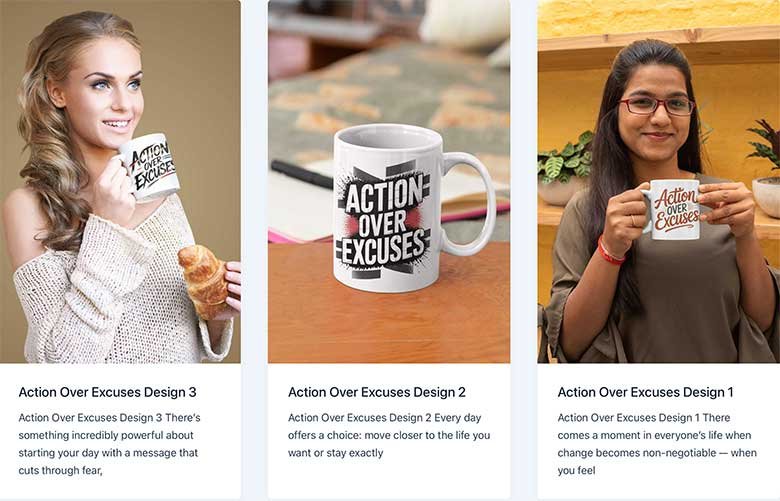
Fill Your Space With Things You Truly Use
Premier Print Works makes quality prints, mugs, and shirts for people who value what they own. Browse the collection and find one you will love for years.
Visit Premier Print WorksDisclaimer
The content on this page is for informational and inspirational purposes only. It is not professional financial, investment, tax, legal, insurance, or estate planning advice. All the example numbers on this page are made up to show how the math works, and real prices, uses, and resale values will differ. Prices, fees, and account terms vary and change, and store return policies vary widely, so please check the details. Credit card interest and terms vary by card. Results vary widely from person to person.
I am not a financial advisor, and I am not a licensed tax, legal, or investment professional. I share this information to help people learn about money and see new options. Please treat it as general information only, and talk with a qualified professional about your own situation before making financial decisions.
The stories of Kezia and Daniel are illustrative composite characters created to bring the content to life. They are not real people. Any resemblance to a real person is purely coincidental.
Some links on this page, including links to Premier Print Works and other resources, are affiliate links. If you make a purchase through one of these links, we may earn a small commission at no extra cost to you. We do not own, produce, or control any affiliate products, and we are not responsible for them — we only own and sell the products offered through our own store, Premier Print Works.
All content on A Self Help Hub is the property of Digital Marketing 215 LLC and is protected by copyright law. No part of this page may be copied, reproduced, republished, distributed, or transmitted in any form without prior written permission from the author.