Building Trust With Yourself Through Small Money Promises
How many money promises have you made to yourself and then quietly let slide? Spend less next month. Start saving for real. Finally make a budget. Most people have a long list, and each broken one can chip away at the belief that change is possible.
Small money promises offer a gentler path. Instead of one big vow, you make a tiny promise you are almost sure to keep, like checking your balance every Friday. Then you keep it. Over time, those kept promises can add up to something bigger than money, which is the feeling that you can count on yourself.
This guide shares general ideas for making, keeping, and growing small promises around money. It is information only and not advice or instructions, so adapt anything here to your own life. Start with one promise, and go one step at a time.

Start With One Small Money Promise
Download the free Money Reset Workbook to write your promise and track every one you keep.
Get the Free WorkbookWhat self-trust looks like when it comes to money
Self-trust is a simple idea. When you say you will do something, you believe you will follow through. With money, that might mean trusting yourself to pay a bill on time, stick to a grocery list, or leave savings alone.
Many people lose some of that trust after a few rough months. A string of missed goals can start to feel like proof that you are bad with money. That belief can make the next goal feel harder before you even begin.
The good news is that trust can be rebuilt the same way it is built with anyone else. Small promises, kept again and again, slowly change the story.
Write one sentence about how much you trust yourself with money right now.
Why big money promises often fall apart
Big promises tend to sound exciting on day one. Save a thousand dollars by spring. Never eat out again. Pay off every card fast. The trouble is that real life rarely leaves room for that much change at once.
When a big promise breaks, it can feel like a total failure, even if you made real progress. That feeling can lead people to give up completely, and the cycle starts again.
Smaller promises leave space for busy weeks, surprise costs, and low-energy days. They are easier to keep, and every kept one counts.
Look at one big money goal you have set before and notice what made it hard to keep.

A Reminder to Keep Your Word to Yourself
Premier Print Works makes quality prints, mugs, and shirts for people building trust one step at a time.
Visit Premier Print WorksMake each promise small enough to keep on a hard day
A helpful test is to ask whether you could keep the promise on your worst week. If the answer is yes, the size is probably right. If you hesitate, you might shrink it.
Some examples of small money promises are moving $5 to savings each payday, checking your bank balance every Friday morning, or writing down every purchase for three days. Others include waiting one night before any online order over a set amount.
Tiny promises may feel almost silly at first. Their real job is to give you a win you can count on, and that win matters more than the size.
Pick one small money promise you are confident you could keep even in a stressful week.
“Every small promise you keep is a quiet vote for the person you are becoming.”
Write the promise down in clear, simple words
A vague promise is hard to keep because it is hard to tell when you have done it. Writing it down with a clear what, when, and how much can help. For example, “Every Friday at breakfast, I will open my bank app and read my balance.”
Some people put the promise on a sticky note by the coffee maker or set it as a phone reminder. Others write it on the first page of a notebook they use for money.
Seeing the promise often keeps it in mind. It also makes it easy to check off when it is done.
Write your promise with a clear time, action, and amount, and post it where you will see it.

Keep Your Promises in One Place
The free Money Reset Workbook gives you simple pages to track small wins and growing savings.
Get the Free WorkbookTrack every promise you keep
Kept promises are easy to forget, while broken ones tend to stick in memory. A simple tracker can balance that out. You might draw a row of boxes on a calendar and mark each one when you follow through.
Watching the checkmarks grow can be encouraging. After a few weeks, you have real proof that you follow through, and that proof can quiet some of the old doubts. For related reading, see what your money habits can say about you.
There is no need to be fancy. A pencil and a scrap of paper can work just as well as an app.
Draw a simple tracker and mark today’s box if you kept your promise.
Grow the promise slowly, with an example using made-up numbers
Once a promise feels easy, you can make it a little bigger. The key is to grow it in small steps, so it still feels doable.
Here is an example with made-up numbers. Say someone promises to move $5 to savings each week. After 10 weeks, that is $50. Then they raise it to $10 a week for the next 10 weeks, which adds $100. Over 20 weeks, they have saved $150, and they kept every promise along the way. You may also like thoughts on starting an emergency fund.
The dollar amount may look modest. The bigger change is that they now trust themselves to keep going.
Once your first promise feels easy, decide on one small way to grow it.
When you break a promise, respond with kindness
Everyone misses sometimes. A surprise bill shows up, a busy week takes over, or you simply forget. How you respond can matter more than the slip itself.
Instead of giving up, you might ask a few calm questions. Was the promise too big? Was the timing off? Did something unusual happen? Then you can adjust and start again the next day.
One missed box does not erase all the checkmarks before it. If money worries or avoidance feel heavier than everyday stress, a counselor or trusted professional can help with the deeper parts.
Write down what you will do the next time you miss a promise, so you have a plan ready.
Choose promises that look after your future self
Some of the most meaningful promises are the ones that protect you later. A small transfer to savings, a quick review of upcoming bills, or setting aside a few dollars for an annual cost can make a future month easier.
These promises may not feel exciting right now. Yet when a car repair or a doctor bill arrives, past you has already helped. That moment can deepen trust in yourself even more.
It can help to picture the version of you a few months ahead and ask what would make their life easier.
Pick one small promise that would make your life a little easier a few months from now.
Let small money wins spill into other parts of life
Keeping promises with money can build confidence in other areas too. Once you see that you can follow through on a Friday balance check, a short morning routine or a weekly tidy might feel more possible.
Some people find that the same simple method works anywhere. Make it small, write it down, track it, and grow it slowly. Another place to look is principles of building real discipline.
Over time, the biggest change may be how you see yourself. You become someone who keeps their word, starting with yourself. For related reading, see building trust in yourself during change.
Think of one non-money area where a tiny promise could help, and write it down.
Explore Our Top Picks for a Better Life
We have gathered the tools, resources, and products we think are genuinely worth your time, covering mindset, self-care, health, and home. All in one place, hand-picked to support the goals you are working toward.
See Our Top PicksReal Stories, Real Results
Let me share two examples I like to use. Kezia had set big savings goals many times and dropped each one within weeks. She started with a single promise to move five dollars every payday. She told me that after a few months of checkmarks, she finally felt like someone who could save.
Daniel avoided looking at his bank account because it made him anxious about what he might see. He promised himself just one thing: read his balance every Friday morning. Within a couple of months, he added a small grocery list promise too. He said he had stopped dreading money. Both of them said the same thing: tiny promises they could keep did more than big ones they kept breaking.
Small Promises Can Build a Big Kind of Trust
Picture a few months from now. Your tracker is full of checkmarks, your savings has grown a little, and you believe yourself when you set a money goal.
Choose one tiny promise today and write it down. Download the free Money Reset Workbook to keep your promises and progress together. Trust can grow one small step at a time.
Want Ready-Made Tools to Help You Put This Into Action?
Sometimes the fastest way forward is a tool that someone has already built. Browse our hand-picked resources and downloads, chosen to help you take the next step with less guesswork.
Browse Resources and Downloads
Ready to Trust Yourself With Money?
The free Money Reset Workbook helps you see your progress clearly, one kept promise at a time.
Download Free Now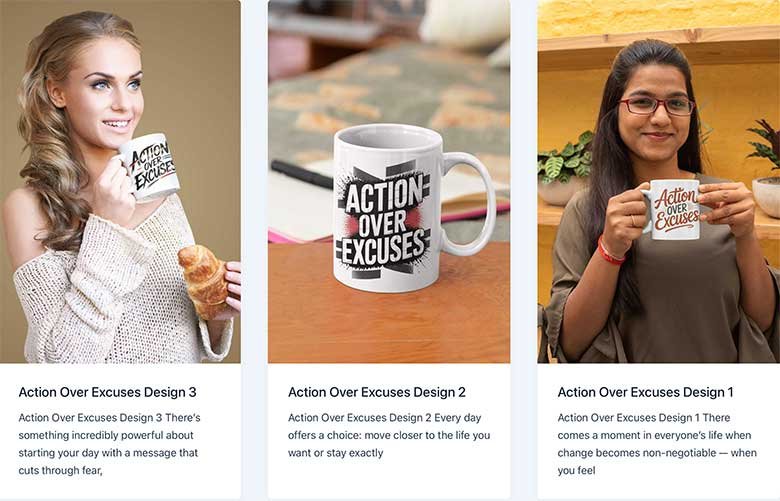
Celebrate Your Kept Promises
Premier Print Works offers prints, mugs, and shirts for people who follow through. Browse the collection today.
Visit Premier Print WorksDisclaimer
The content on this page is for informational and inspirational purposes only. It is not professional financial, investment, tax, legal, insurance, medical, or estate planning advice. The example numbers are made up to show how the math works. Prices, fees, and account terms vary and change, so please check the details with your bank. This page is not a substitute for mental health care, and a counselor or trusted professional can help with deeper money worries. Results vary widely from person to person.
I am not a financial advisor, and I am not a licensed tax, legal, or investment professional. I share this information to help people learn about money and see new options. Please treat it as general information only, and talk with a qualified professional about your own situation before making financial decisions.
The stories of Kezia and Daniel are illustrative composite characters created to bring the content to life. They are not real people. Any resemblance to a real person is purely coincidental.
Some links on this page, including links to Premier Print Works and other resources, are affiliate links. If you make a purchase through one of these links, we may earn a small commission at no extra cost to you. We do not own, produce, or control any affiliate products, and we are not responsible for them — we only own and sell the products offered through our own store, Premier Print Works.
All content on A Self Help Hub is the property of Digital Marketing 215 LLC and is protected by copyright law. No part of this page may be copied, reproduced, republished, distributed, or transmitted in any form without prior written permission from the author.