
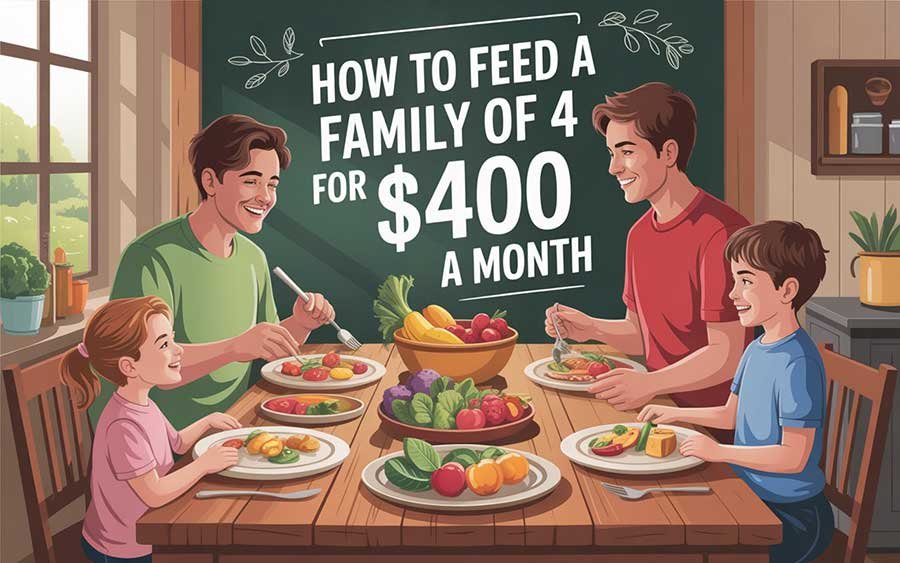
Feast for Four on $400: Your Ultimate Guide to Budget-Friendly Family Meals
In an era where grocery prices seem to climb higher with each passing week, the idea of feeding a family of four on just $400 a month might sound like a relic from a bygone era, or perhaps even an impossible dream. For many households, grocery bills are one of the most significant and often overwhelming monthly expenses. The pressure to provide nutritious, satisfying meals without breaking the bank can feel immense, leading to stress, takeout temptations, and sometimes, compromises on meal quality.

But what if I told you it’s not only possible but entirely achievable? What if you could significantly slash your food budget, enjoy delicious and wholesome meals, and even find joy in the process of smart shopping and creative cooking? This isn’t about deprivation; it’s about strategic planning, conscious consumption, and unlocking the immense power of your kitchen. It’s about becoming a master of your pantry and a wizard of your wallet.
This comprehensive guide is designed to transform your approach to grocery shopping and meal preparation. We’re going to dive deep into actionable strategies, real-life examples, and a mindset shift that will empower you to nourish your family abundantly, all while staying within that lean $400 budget. Get ready to turn that seemingly impossible goal into your new financial superpower!
Why a $400 Food Budget for a Family of Four Matters More Than Ever
Beyond the obvious financial savings, mastering a tight food budget offers a cascade of benefits that ripple through your entire life:
- Financial Freedom: Every dollar saved on groceries is a dollar that can go towards debt repayment, an emergency fund, a family vacation, or other crucial financial goals. This directly contributes to your overall financial well-being and can be one of the most effective 5 money-saving hacks that actually work for your household.
- Reduced Stress: Knowing you can comfortably manage your food expenses brings immense peace of mind, freeing up mental energy for other aspects of life.
- Healthier Eating: Believe it or not, cooking from scratch with whole ingredients, a necessity on a tight budget, often leads to far healthier meals than relying on processed foods or restaurant takeout.
- Culinary Creativity: A limited budget forces you to become more inventive in the kitchen, experimenting with new recipes and making the most of every ingredient.
- Reduced Food Waste: When every dollar counts, you become incredibly mindful of using up leftovers and preventing food from spoiling, a major win for your budget and the environment.
- Teaches Valuable Life Skills: Involving your family in the process – from meal planning to cooking – instills essential life skills and financial literacy in children.
This isn’t about pinching pennies to the point of pain; it’s about intelligent resourcefulness and maximizing value. It requires a shift in perspective, embracing the challenge as an opportunity for innovation and smart living.
The Pillars of a $400 Food Budget: Your Blueprint for Success
Achieving this goal isn’t magic; it’s a combination of consistent strategies, diligent planning, and a few clever tricks. Here are the foundational pillars:
Pillar 1: Master Meal Planning (Your Secret Weapon)
This is arguably the most crucial step. Without a plan, you’re susceptible to impulse buys, takeout temptations, and wasted ingredients.
- Audit Your Pantry & Fridge First: Before you even think about recipes, see what you already have. Leftover rice? A can of beans? Frozen chicken? Build your plan around these existing ingredients to avoid duplication and waste.
- Real-Life Example: The Chen family used to wander the grocery aisles aimlessly, leading to duplicate purchases and forgotten items. Now, on Sunday evenings, they take stock of their pantry, freezer, and fridge. Last week, they found a forgotten bag of lentils, two sweet potatoes, and some half-used spices. Their meal plan for the week started with Lentil & Sweet Potato Curry, saving them from buying additional ingredients and reducing waste.
- Plan for Every Meal, Every Day: Don’t just plan dinners. Think about breakfasts, lunches, and snacks. This prevents those mid-day “I’m hungry, what’s quick?” moments that lead to expensive impulse buys.
- Theme Nights (Optional but Helpful): Taco Tuesday, Pasta Thursday, Meatless Monday. This can simplify planning and create anticipation for meals.
- Embrace Repetition (Within Reason): You don’t need 30 unique meals a month. Repeating ingredients or even entire meals once a week or every other week is perfectly acceptable and budget-friendly.
- Utilize Leftovers Strategically: Plan for dinners that yield leftovers for lunches the next day. A roasted chicken one night can become chicken sandwiches, salads, or soup the next.
Pillar 2: Smart Shopping Strategies (Where Every Penny Counts)
Your approach to the grocery store will make or break your budget.
- Shop Your Sales Flyers: This should be your first point of reference. Build your meal plan around what’s on sale, especially for proteins and produce.
- Price Match Aggressively: Many stores will price match competitors. Take advantage of this to avoid multiple trips.
- Bulk Buy Smartly: Items like rice, pasta, dried beans, oats, and frozen vegetables are almost always cheaper in bulk. Only buy in bulk if you have space to store it and know you’ll use it before it spoils.
- Embrace Generic/Store Brands: For most pantry staples, generic brands are just as good as name brands, often for a fraction of the cost.
- Real-Life Example: Maria, a single mom of three, used to be loyal to specific brand names. After challenging herself to buy store-brand pasta, canned tomatoes, and even cereal, she found virtually no difference in quality but saw her weekly grocery bill drop by $15-20. This small shift added up to significant savings over the month.
- Stick to Your List Religiously: This is where discipline comes in. The moment you deviate, you risk blowing your budget.
- Avoid Shopping Hungry: This is a classic trap! You’re far more likely to make impulse purchases when your stomach is rumbling.
- Shop the Perimeter of the Store: This is where you’ll typically find fresh produce, dairy, and meats – the whole, unprocessed foods. The inner aisles are often where processed (and more expensive) items lurk.
- Utilize Loyalty Programs & Coupons: Sign up for your grocery store’s loyalty program for discounts. Check their app or website for digital coupons tailored to your purchases.
- Consider Discount Stores or Ethnic Markets: Stores like Aldi or Lidl often have significantly lower prices. Ethnic markets can be fantastic for spices, produce, and sometimes even meats at a fraction of supermarket costs.
- Minimize Processed Foods & Sugary Drinks: These are not only expensive but also less nutritious. Stick to whole foods as much as possible.
Pillar 3: Kitchen Wizardry & Frugal Cooking (Making Every Ingredient Work Hard)
This is where your creativity truly shines.
- Cook from Scratch (Almost Everything): Pre-chopped vegetables, ready-made sauces, and frozen dinners are convenient, but they come with a hefty price tag. Learning basic cooking skills is paramount.
- Utilize Cheap Protein Sources: Dried beans, lentils, eggs, peanut butter, and cheaper cuts of meat (chicken thighs, ground turkey/pork) should be your go-to.
- Real-Life Example: The Davis family decided to incorporate at least two vegetarian meals a week to cut down on meat costs. Lentil soup, black bean burgers, and chickpea curries became staples. Not only did their grocery bill drop by about $50 a month, but they also found they felt lighter and more energetic on those days.
- Stretch Meat with Fillers: If a recipe calls for a pound of ground beef, try using half a pound and supplementing with lentils, mushrooms, or oats to stretch it further without sacrificing flavor.
- Embrace “Dirt Cheap” Staples: Rice, pasta, potatoes, oats, cornmeal, and flour are incredibly versatile and inexpensive bases for meals.
- Minimize Food Waste Aggressively:
- Use Every Part: Save vegetable scraps for homemade broth. Roast chicken bones for stock. Use stale bread for croutons or breadcrumbs.
- Proper Storage: Learn how to store produce correctly to extend its shelf life.
- “Eat Me First” Box: Designate a spot in your fridge for items that need to be eaten soon.
- Love Your Freezer: Freeze leftovers, bulk-cooked grains, chopped vegetables, and even milk before it expires.
- Pack Lunches and Snacks: Eating out, even just for lunch, can quickly derail your budget. Packing meals and snacks is one of the most effective 9 ways to save more money on everyday expenses.
- Limit Restaurant Meals & Takeout: Treat these as rare indulgences, not regular occurrences. Even a single takeout meal can eat a significant chunk of your $400.
- Make Your Own Basics: Salad dressing, bread, yogurt, granola, and coffee drinks are often much cheaper to make at home.
- Grow Your Own (Even a Little): A small herb garden or a few tomato plants can save you money on fresh produce and add incredible flavor.
Pillar 4: Mindset & Resilience (The Psychological Edge)
This budget requires more than just tactics; it needs a robust money mindset.
- Shift Your Perspective: View this as a challenge, a game, or a creative endeavor, rather than a deprivation. This is a crucial money mindset shift that can change your life.
- Track Your Spending Religiously: You can’t manage what you don’t measure. Use an app, a spreadsheet, or a simple notebook to track every food-related expense. This awareness is key to knowing where your money is actually going.
- Learn to Substitute: Don’t have an ingredient? Look up common substitutions before running to the store.
- Batch Cooking: Dedicate a few hours on a weekend to cook large quantities of staples like grains, roasted vegetables, or a big pot of soup that can be used for multiple meals throughout the week.
- Embrace “Frugal Comfort Food”: Think hearty, inexpensive meals like chili, lentil soup, pasta with simple sauces, bean burritos, or oatmeal.
- Be Patient and Persistent: You won’t be perfect overnight. There will be weeks you go over budget. Learn from it, adjust your strategy, and keep going. This journey is about continuous improvement, a key aspect of 14 ways to save money without sacrificing your lifestyle.
Picture This…
Imagine your grocery cart. Instead of overflowing with impulse buys and expensive pre-packaged meals, it’s filled with vibrant produce, economical proteins, and pantry staples. You walk through the aisles with a sense of purpose, a well-crafted list guiding your every move. Back home, your kitchen transforms into a hub of delicious activity, as you effortlessly turn simple ingredients into wholesome, flavorful meals that nourish your family’s bodies and souls. The stress of the grocery bill has evaporated, replaced by the quiet satisfaction of knowing you’re providing well for your loved ones, building financial stability, and creatively adapting to challenges. This isn’t just about saving money; it’s about reclaiming control, fostering culinary confidence, and embracing a more resourceful, resilient way of living.
20 Powerful Quotes on Frugal Living & Food Management
- “A penny saved is a penny earned.” – Benjamin Franklin
- “Eat to live, not live to eat.” – Socrates
- “He who has a why to live can bear almost any how.” – Friedrich Nietzsche (Applies to budget motivation!)
- “Waste not, want not.” – Proverb
- “Frugality is founded on the most generous of instincts, and is the happy medium between avarice and profusion.” – Charles Caleb Colton
- “The way to save money is to get out of your head that you have to spend it.” – Catherine Zeta-Jones
- “Annual income twenty pounds, annual expenditure nineteen six, result happiness. Annual income twenty pounds, annual expenditure twenty pounds ought and six, result misery.” – Charles Dickens, David Copperfield
- “Poverty consists in feeling poor.” – Ralph Waldo Emerson
- “Money, like emotions, is something you must control to keep your life on the right track.” – Natasha Munson
- “It’s not how much money you make, but how much money you keep, how hard it works for you, and how many generations you keep it for.” – Robert Kiyosaki
- “The art of being wise is the art of knowing what to overlook.” – William James (Overlook expensive convenience foods!)
- “A budget tells us what we can’t afford, but it doesn’t keep us from buying it.” – William Feather (Self-discipline is key!)
- “Do not save what is left after spending, but spend what is left after saving.” – Warren Buffett
- “Empty pockets never held anyone back. Only empty heads and empty hearts can do that.” – Norman Vincent Peale
- “Frugality is enjoying the things you have.” – Unknown
- “Good food is the foundation of genuine happiness.” – Auguste Escoffier (And it doesn’t have to be expensive!)
- “The greatest wealth is health.” – Virgil (Eating well on a budget supports this.)
- “Don’t tell me what you value, show me your budget, and I’ll tell you what you value.” – Joe Biden
- “Food is our common ground, a universal experience.” – James Beard
- “You don’t have to cook fancy or complicated masterpieces – just good food from fresh ingredients.” – Julia Child
Disclaimer
Please note: This article is for informational purposes only and is based on general principles of budgeting, meal planning, and frugal living. While the strategies outlined have been successfully implemented by many individuals and families, individual results may vary greatly depending on local grocery prices, dietary needs, family size specifics, and personal discipline. This content is not a substitute for professional financial advice or dietary recommendations. Always consider your unique circumstances and consult with relevant professionals if needed.
Share This Article!
Are you ready to take control of your food budget and transform your family’s eating habits? If this guide has inspired you or someone you know, please share it! Let’s build a community of empowered, budget-savvy home cooks.