How to Live Frugally Without Feeling Poor
I’ve spent years being genuinely frugal, and there’s a real difference between that and feeling poor, even though they can look identical from the outside. The difference isn’t the dollar amount. It’s whether the restriction was actually chosen, and whether it’s actually going somewhere. Feeling poor is restriction with no agency and no real destination. Frugal, done right, is the opposite of both.
Here’s how I actually think about that difference, and how to build a frugal life that feels like a choice instead of a sentence.

Get the Workbook That Helped Me Find This Balance
Grab my free Money Reset Workbook. It gives you a simple way to see where your own money is actually going, and where it could go instead.
Get the Free WorkbookCut Ruthlessly on What You Don’t Actually Care About
The feeling of being poor often comes from cutting everything equally, treating every category of spending as equally sacred, which means every single cut feels like a real loss. Frugal living, done well, works the opposite way. Identify honestly the categories that genuinely don’t matter to you, and cut those hard, without guilt, since you’re not actually giving anything up that you cared about in the first place.
Name one category today that you genuinely don’t care about, and cut it without guilt.

A Small Reminder for the Choices You’re Making
I’ve got prints, mugs, and shirts at Premier Print Works for people building a real, chosen frugal life. Take a look if a daily reminder would help.
Visit Premier Print WorksSpend Extravagantly, on Purpose, on the Few Things That Genuinely Matter
The money saved from cutting the categories you don’t care about has to go somewhere real, or the whole thing just feels like deprivation with no payoff. Pick a small number of categories that genuinely matter to you, and spend generously there, on purpose. This is what separates frugal from cheap. Cheap cuts everything. Frugal redirects.
Name today one category you’ll spend generously on, funded by what you cut elsewhere.
“Feeling poor is restriction with no agency and no real destination. Frugal, done right, is the opposite of both.”
Get Honest About What Actually Matters to You
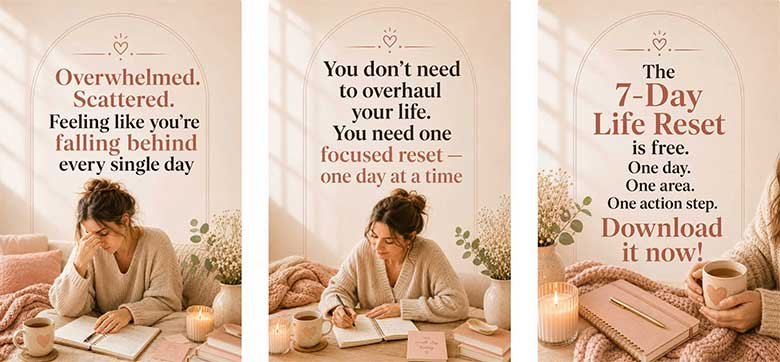
My free 7-Day Life Reset gives you one honest prompt a day for a week. It’s a good place to figure out what you actually care about spending on.
Start the Free ResetWhen You Do Spend, Lean Toward Experiences Over Things
There’s real research behind this that changed how I personally spend. Researchers Leaf Van Boven and Thomas Gilovich, publishing in the Journal of Personality and Social Psychology, found across multiple studies that people consistently report more lasting happiness from experiential purchases, meals out, trips, tickets to something, than from material purchases, even at similar prices. People also reported thinking back on their experiential purchases considerably more often than their material ones.
If you’re going to spend on the category that matters to you, spending it on an experience rather than a thing tends to genuinely stretch further, emotionally, than the receipt would suggest.
Consider today whether your next meaningful purchase could be an experience instead of a thing.
Separate the Feeling of “Poor” From the Actual Number in Your Account
Feeling poor is often triggered by comparison, a neighbor’s car, a friend’s vacation, rather than by your own actual, real financial position. Notice honestly when the feeling shows up, and check whether it’s actually about your own numbers or about someone else’s. Most of the time, it’s the second one.
Notice today the next time you feel “poor,” and check honestly whether it’s really about comparison.
Keep a Visible Reminder of What the Saving Is Actually For
Restriction with no visible destination feels like punishment. Restriction tied to something real and visible, a trip, a paid-off debt, a specific number, feels like progress. Keep whatever you’re actually working toward somewhere visible, so the cutting connects to something real instead of floating in the abstract.
Put your current real goal somewhere visible today, so the cutting has a real destination.
Change the Language From “Can’t Afford” to “Choosing Not To”
“I can’t afford this” frames every cut as a limitation imposed on you. “I’m choosing not to spend on this right now” frames the exact same decision as something you’re actually doing on purpose. The underlying math doesn’t change. The felt experience of making the choice does.
Catch yourself today the next time you say “I can’t afford it,” and reframe it honestly as a choice.
Explore Our Top Picks for a Better Life
I put together a list of tools and products I genuinely think are worth your money, covering finances, mindset, health, and home.
See Our Top PicksTwo Shifts From Feeling Poor to Feeling Frugal
I know a woman named Amara who used to cut every single category of her budget equally, and felt genuinely deprived no matter how much she actually saved, since nothing she cared about ever got protected. The month she identified the two categories that genuinely mattered to her and let herself spend generously there, funded by cutting everything else hard, she said it was the first time saving money had ever felt like a real choice instead of a punishment.
I also think about a guy named Joel, who used to say “I can’t afford that” about nearly everything, even things he genuinely didn’t want, which left him feeling broke even when his actual numbers were fine. The week he started saying “I’m choosing not to” instead, he told me the exact same financial reality suddenly felt like something he was actively steering, not something happening to him.
The Difference Is Agency, Not the Number
Feeling poor and living frugally can involve the exact same dollar amount. What actually separates them is whether the restriction was chosen, whether it’s going somewhere real, and whether the language you use makes it feel like your decision or something done to you.
Pick one thing from this article, the ruthless cut, the chosen extravagance, the reframed language, and try it this week. Get the free Money Reset Workbook to see where your own numbers actually stand.
Want to Go Further?
I’m building out some deeper, paid resources for people who want more than a single article can cover. They’re not live yet, but you can see everything I currently have ready for you, free and otherwise, on my Top Picks page.
See What’s Available
Ready to See Where Your Own Numbers Stand?
My free Money Reset Workbook walks you through this exact process, step by step, with room to write your own numbers.
Download Free Now
A Small Reminder for the Choices You’re Making
Take a look at Premier Print Works for prints, mugs, and shirts made for people building a real, chosen frugal life.
Visit Premier Print WorksDisclaimer
This page is for information only. It is not financial, investment, tax, or legal advice, and should not be treated as a recommendation for a specific financial strategy. The research on experiential versus material purchases referenced here comes from the real, published work of researchers Leaf Van Boven and Thomas Gilovich, summarized here in plain language. Talk to a qualified professional licensed in your state before making major financial decisions. Results vary from person to person.
Amara and Joel are made-up characters used to bring this content to life. They are not real people.
Some links on this page, including links to Premier Print Works, are affiliate links. If you buy something through one, we may earn a small commission at no extra cost to you. We only own and sell products through our own store, Premier Print Works.
All content on A Self Help Hub belongs to Digital Marketing 215 LLC and is protected by copyright law. No part of this page may be copied or reused without written permission.