How to Sell Printable Planners Without Overpromising Results
Can a planner really change someone’s life? Many product pages seem to say yes. Buy this budget sheet and get out of debt. Print this habit tracker and finally get fit. If you want to sell printable planners, those big promises can look like the way to stand out.
A planner is a tool. It can make a goal easier to see and track, and the work still belongs to the person using it. People who sell printable planners with honest words often build more trust over time. Clear descriptions can also mean fewer refund requests and fewer unhappy buyers.
This guide shares general ideas and information to think about. It is not business, legal, or tax advice, and income from any side project is never guaranteed. You will find ideas on plain descriptions, fair previews, careful wording, pricing, records, and policies. Try one section at a time, and go at your own pace.

Plan Your Planner Side Income With Clear Numbers
Download the free Money Reset Workbook and get simple pages to track costs, sales, and goals for your side project.
Get the Free WorkbookBe clear in your own mind about what a planner can do
Before you write a single product line, it helps to name what your planner truly offers. A budget planner gives someone a place to write numbers. A meal planner gives them a grid for the week. A habit tracker gives them boxes to check.
Those are real benefits. They can make a task feel more organized and less scattered. What a planner cannot do is pay off a loan, lose weight, or build a business on its own. The buyer’s own effort and situation shape the outcome.
Keeping this picture in mind makes honest writing easier. You are selling a helpful tool, and that is plenty to be proud of.
Write one sentence that says what your planner gives the buyer, without mentioning any result.
Describe exactly what is inside the file
Buyers like to know what they are getting before they pay. A clear description lists the number of pages, the page size, the file type, and whether the pages can be typed on or are meant for printing only.
You might add a short list of each page, such as a monthly calendar, a bill tracker, a savings goal page, and a notes page. Mentioning whether the dates are blank can help too, since blank pages can be used any time.
Simple printing notes are a kind touch. You could mention the paper size the file was made for and whether it prints well in black and white.
List every page in your planner along with the size and file type.

Keep a Reminder to Create With Care
Premier Print Works creates quality prints, mugs, and shirts for makers and side hustlers. Find a small reminder to keep your work honest and steady.
Visit Premier Print WorksSwap result promises for plain feature words
Some phrases promise more than any product can deliver. Lines like guaranteed to fix your finances, or you will save hundreds, or the only planner you will ever need can set buyers up for disappointment. Claims like these may also create legal trouble in some places, and the rules vary.
Feature words describe the tool itself. Examples include a page to list every bill, space to track spending each week, or a simple layout with large boxes. These lines are true for every buyer, no matter how their month goes.
If you want warmer wording, you can talk about how the planner is designed. Phrases like made to feel calm and simple, or built for beginners, describe your intent without promising an outcome.
Rewrite any line in your description that promises a result so it describes a feature.
“Honest words about a simple tool can earn more trust than big promises ever will.”
Handle reviews and buyer stories with care
Kind words from buyers can be lovely to share. Honest sharing means using real feedback, sharing it only with permission, and leaving it as written. Making up reviews or paying for fake ones can break platform rules and the law in many places.
Be careful with stories about big results. If a buyer says the planner helped them pay off a card, that was their effort, their income, and their choices. Sharing that as typical can mislead others. Some sellers add a short note that results vary from person to person.
Keeping health topics general matters too. A planner for meals, sleep, or exercise is a tracking tool. Claims about weight loss, healing, or mental health belong to doctors and other qualified professionals.
Check every review or story you share and remove anything that sounds like a promise.

Track Your Planner Costs and Sales in One Place
The free Money Reset Workbook gives you a clear page to note fees, costs, and what you keep from each sale.
Get the Free WorkbookShow previews that match the real file
Preview images help buyers decide. When the images look just like the pages they will print, buyers feel the purchase was fair. When the images show fancy props, extra pages, or colors that are not in the file, buyers can feel misled.
One option is to show a few real pages as flat images, plus one photo of a printed page. You might add a small note if a mockup includes items that are not part of the download, like a pen or a clipboard.
Clear previews also help the right buyers find you. A person who wants a simple, plain design will know your planner fits before they click buy.
Compare each preview image with the real file and fix any that show something extra.
Price your planner with your real costs in mind
Digital files feel free to make, yet they usually carry some costs. You might pay for design software, fonts with a business license, listing fees, or payment fees. Your time has value too.
Here is an example with made-up numbers. Say a planner sells for $6, and the fees on each sale come to $1.20. You keep $4.80 per sale. If 25 people buy it in a month, you would keep $120 before any other costs. Real sales are hard to predict and can be much lower. Another place to look is comparing side hustles by startup cost.
Many sellers choose a price that feels fair for what is inside. Pricing a small planner like a full course can lead to unhappy buyers, even when the design is lovely.
Write down every cost tied to one planner and work out what you keep from one sale.
Keep simple records from the first sale
Selling planners is a small business, even when it feels like a hobby. Writing down each sale, each fee, and each cost makes it easier to see if the project is worth your time. A plain notebook or spreadsheet works fine.
Side income often has tax rules attached, and those rules vary by location and situation. A qualified tax professional can explain what applies to you. Good records make that talk much easier. For related reading, see tracking side hustle income and expenses.
Some sellers keep a separate account for planner money. That way, business money and personal money stay easier to tell apart.
Start a simple log with columns for date, sale amount, fees, and costs.
Write clear policies before buyers ask
Short, plain policies can prevent a lot of confusion. Common topics include how buyers get the file, what happens if the download fails, whether refunds are offered, and how buyers can reach you with questions.
A use note can help too. Many planner sellers say the file is for personal use only and may not be resold or shared. Wording like this protects your work and sets clear expectations. Rules around copyright and licenses vary, so a legal professional can explain the details.
Answering messages kindly and quickly often matters as much as the planner. A buyer who feels heard may come back, even after a small problem.
Draft three short policies for file access, refunds, and personal use.
Learn as you go without spending a lot
Plenty of people sell big programs that promise planner success. Many of the basics can be learned slowly and for free. Library books, free tutorials, and your own trial and error can teach you a lot about design and listings.
Starting small also lowers your risk. You might make one planner, list it, and see what you learn before making ten more. You may also like earning extra money without buying a course.
Feedback from friends can help too. Asking a few people to print and try your planner can show you which pages feel clear and which ones feel crowded.
Ask two friends to print and use one page of your planner, then write down their feedback.
Fit the work into the time you really have
Designing, listing, and answering buyers all take time. It can be easy to pour every free evening into a planner shop. A steady, gentle pace often lasts longer than a rush of late nights.
Some people block out one or two set times each week for planner work. Others make new designs in a busy season and rest in a slow one. For related reading, see a side hustle that fits your schedule.
Checking in with yourself every few months can keep the project healthy. If it still feels fun and worth the effort, you can keep going. If not, pausing is a fine choice too.
Pick one or two time slots each week for planner work and write them on your calendar.
Explore Our Top Picks for a Better Life
We have gathered the tools, resources, and products we think are genuinely worth your time, covering mindset, self-care, health, and home. All in one place, hand-picked to support honest, steady side income goals.
See Our Top PicksReal Stories, Real Results
Let me share two examples I like to use. Kezia made a budget planner and first described it as the planner that will get you out of debt. She got a few sales and a few upset messages. She rewrote the page to list every sheet and explain how to print it. She told me that her new buyers seemed happier, and the refund requests mostly stopped.
Daniel designed a meal planner and was tempted to say it would help people lose weight. He chose to describe the weekly grid, the shopping list page, and the large writing spaces instead. He kept a simple sales log and asked a tax professional about his records. Both of them said the same thing: describing the tool honestly felt better than promising what it might do.
An Honest Planner Shop Can Grow at Its Own Pace
Picture opening your messages and finding a note from a buyer who says the planner was just what the page described. No one feels tricked, and no one is waiting on a promise you cannot keep. You feel proud of the work and calm about how you sell it.
Choose one planner and review its description with fresh eyes. Download the free Money Reset Workbook to plan your side income and track your costs. Small, honest steps can add up over time.
Want Ready-Made Tools to Help You Put This Into Action?
Sometimes the fastest way forward is a tool that someone has already built. Browse our hand-picked resources and downloads, chosen to help you take the next step with less guesswork.
Browse Resources and Downloads
Ready to Sell With Confidence and Honesty?
The free Money Reset Workbook helps you see your side income numbers clearly, so every choice rests on real information.
Download Free Now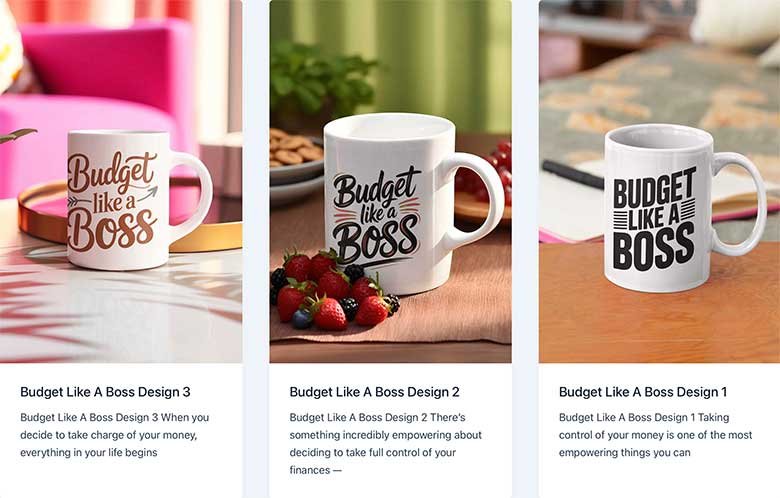
Fill Your Workspace With Things That Inspire You
Premier Print Works makes quality prints, mugs, and shirts for creative people who work with heart. Browse the collection and find what speaks to you today.
Visit Premier Print WorksDisclaimer
The content on this page is for informational and inspirational purposes only. It is not professional financial, investment, tax, legal, insurance, or estate planning advice. Income is not guaranteed, and many side projects earn little or nothing. The numbers in the pricing example are made up to show how the math works. Tax rules, consumer protection rules, and copyright rules vary by location, so a qualified tax or legal professional can explain what applies to you. Prices, fees, and account terms vary and change, so please check the details. Results vary widely from person to person.
I am not a financial advisor, and I am not a licensed tax, legal, or investment professional. I share this information to help people learn about money and see new options. Please treat it as general information only, and talk with a qualified professional about your own situation before making financial decisions.
The stories of Kezia and Daniel are illustrative composite characters created to bring the content to life. They are not real people. Any resemblance to a real person is purely coincidental.
Some links on this page, including links to Premier Print Works and other resources, are affiliate links. If you make a purchase through one of these links, we may earn a small commission at no extra cost to you. We do not own, produce, or control any affiliate products, and we are not responsible for them — we only own and sell the products offered through our own store, Premier Print Works.
All content on A Self Help Hub is the property of Digital Marketing 215 LLC and is protected by copyright law. No part of this page may be copied, reproduced, republished, distributed, or transmitted in any form without prior written permission from the author.