No-Spend Month Rules That Actually Make Sense
Why do so many no-spend months fall apart by the second weekend?
In my experience, it is rarely a lack of willpower. It is usually a lack of clear rules. A vague plan to spend as little as possible leaves a hundred small decisions for you to make while tired and tempted, and some of those decisions are bound to go the wrong way.
Good rules take the guesswork out. They decide ahead of time what counts, what does not, and what happens when something goes wrong. The rules below are the ones that I have seen work for real households. They are practical, they protect what matters, and they leave room for real life. Use all of them or just a few, and adjust them to fit your family.

Write Your No-Spend Rules on One Clear Page
Download the free Money Reset Workbook and get a simple page to list your bills, your essentials, and your rules, so the month starts with no guesswork.
Get the Free WorkbookRule 1: Decide the length and write down the start and end
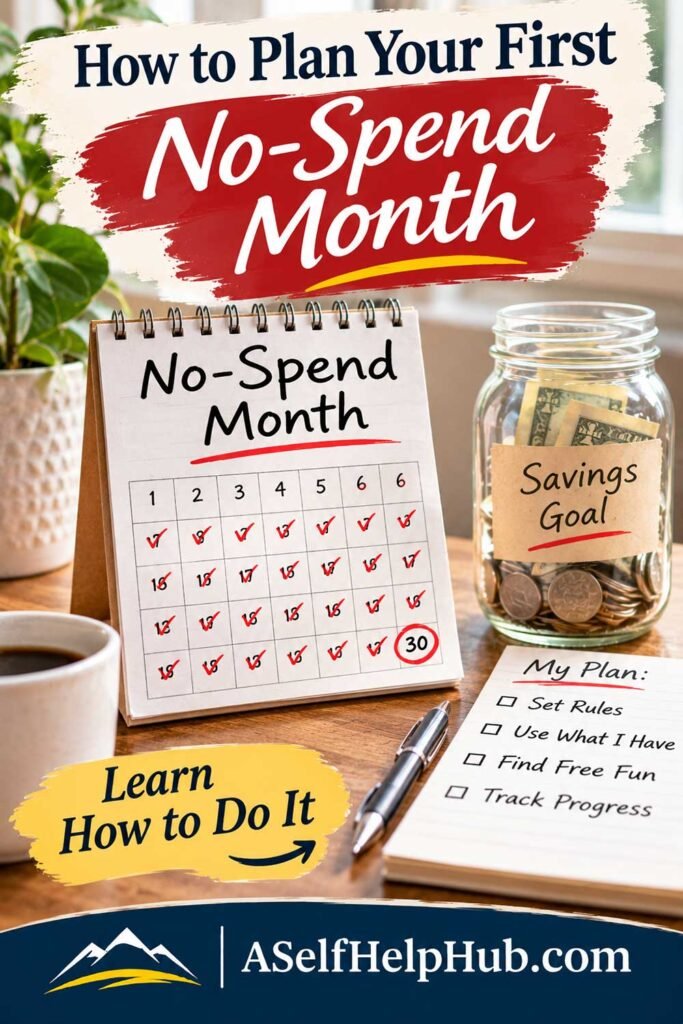
A no-spend month works best with a clear beginning and a clear end. Choose a length that feels doable, such as thirty days, or even two weeks if a month feels like too much for a first try. Write the start and the end on a calendar.
A finish line makes the hard days easier, because you know they will end. It also gives you something to look forward to, like reviewing what you learned.
Shorter is better than abandoned. You can always do it again.
Choose your length, and write the first and last days on your calendar.
Rule 2: Write your essentials list in advance
The most important rule is to define what is allowed. Essentials usually include rent or mortgage, utilities, insurance, minimum debt payments, groceries, medicine, necessary transportation, and anything your health, safety, or job requires. Write them out in a list, so you are not deciding at the checkout.
Everything not on the list is a want for this month. That includes eating out, clothes, gadgets, subscriptions you can pause, and most impulse buys.
Never put your health or safety on the pause list. A no-spend month is for wants, and not for needs.
Write a must-have list and a pause list on one page, and keep them together.

Keep Your Rules Where You Can See Them
Premier Print Works creates quality prints, mugs, and shirts for people who spend on purpose. Find a small reminder of why you are doing this.
Visit Premier Print WorksRule 3: Pay every bill, and do not skip what you owe
A no-spend month is not a way to avoid bills. Rent, utilities, and loan payments still get paid, on time. If you are struggling to cover your bills, this is a different situation, and these ways to save money fast on a tight budget may help more than a no-spend challenge.
Set up your bills before the month starts, so nothing sneaks up on you. Automatic payments help. Check that your accounts have enough to cover them.
The goal is to stop the extra spending, so you have more room for what you must pay.
List every bill due during your no-spend month, and confirm that each one is scheduled or paid.
“Clear rules turn a month of willpower into a month of simple decisions.”
Rule 4: Cook from what you have first, with a small limit for fresh food
Food is the biggest challenge for most people. A simple rule works well. Use what is in your pantry, freezer, and fridge first. Plan meals around it. Then set a small weekly amount for fresh items, like milk, fruit, and vegetables.
Write the limit down, and keep a running total. When it is gone, you work with what you have. Many people discover how much food they actually own.
If you have a family, involve everyone in meal ideas, so the rule feels shared and not forced.
Set a weekly fresh food limit, and plan three meals from what is already in your kitchen.

Put Your Essentials and Your Rules in One Place
The free Money Reset Workbook gives you a clear page for your must-haves and your rules, so you never have to argue with yourself at the store.
Get the Free WorkbookRule 5: No replacement spending
This rule prevents a very common trap. When you cannot buy one thing, you buy something else instead. No takeout, but an expensive grocery run. No new clothes, but a pile of small home items. The total ends up the same.
If you feel the urge to buy, ask what you are really looking for. Comfort, reward, entertainment, or relief from stress? Then choose a free way to meet that need, like a walk, a call, or a favorite show.
Write a short list of free replacements, and keep it handy for tough moments.
Write five free things that meet the same needs that spending usually meets for you.
Rule 6: Agree on exceptions before the month begins
Life brings surprises, so decide in advance what counts as an exception. A real emergency, such as a medical bill or a needed car repair, is allowed. A birthday gift you committed to earlier might be too, with a small limit. Write the list down. If you share your finances, work this out together, and these money saving tips for married couples who want less stress may help the conversation.
A short, specific list protects you. When something comes up, you do not argue with yourself. You check the list.
If something is not on the list, it waits until the month is over.
Write down what counts as an exception, and agree on it with anyone who shares your money.
Rule 7: Use a want list instead of buying on the spot
Impulses are strongest in the moment, and they fade with time. When you want something, write it on a want list with the price and the date, and move on. Do not buy it.
At the end of the month, look at the list. Many items will no longer feel important. Some will still matter, and you can decide on purpose whether to buy them.
This turns a battle of willpower into a simple note, and it gives you real information about your wants.
Start a want list in your phone or notebook, and write down the next thing you want to buy.
Rule 8: Track what you save and what you notice
Keep a short daily log. Write what you did not buy, and about what it would have cost. Add a few words about how you felt. By the end of the month, you will have a clear picture of your habits. For a calm view of your overall plan, these budgeting tips for creating a more peaceful money life may help.
Move the money you save into a separate account each week. If it sits in your checking account, it tends to disappear.
Seeing the total grow is a real source of motivation.
Start a daily log with two columns, what I did not buy and how I felt, and move your savings weekly.
Rule 9: If you slip, write it down and keep going
A slip does not mean the month is ruined. Everyone makes a purchase they did not plan. The rule is simple. Write down what you bought, what led to it, and then carry on with the next day. Do not start over, and do not give up. If you want a gentler approach to money stress, these budgeting tips for building a life with less money stress may be a good fit.
Some people add the slip amount to their savings goal at the end, so the cost is visible. Others simply note the pattern for next time.
A month with a slip or two is still far more useful than a month you never tried.
Write a one sentence slip rule, such as write it down, learn from it, and continue.
Rule 10: Plan how you will end the month
The end of the month is a risky moment. Many people celebrate with a spending spree, and undo much of what they saved. Plan ahead. Decide which paused items you want to bring back, and which you can leave behind.
Look at your want list and your log. What did you miss the most? What did you not miss at all? Use that to shape your spending going forward.
You may decide to keep a few no-spend days each week, or to repeat the month another time with a new goal.
Write what you will do on the last day of the month, and decide on one habit to keep.
Explore Our Top Picks for a Better Life
We have gathered the tools, resources, and products we think are genuinely worth your time, covering mindset, self-care, health, and home. All in one place, hand-picked to support the goals you are working toward.
See Our Top PicksReal Stories, Real Results
Let me share two examples I like to use. Kezia tried a no-spend month with a vague plan, and it fell apart in ten days. The next time, she wrote an essentials list, a short exception list, and a want list. She told me that having the rules on paper meant she stopped arguing with herself, and she finished the month.
Daniel’s biggest help was the no replacement spending rule. He noticed that he had been buying small things every time he felt stressed, and he replaced the habit with a walk. He said that the walks cost nothing, and they helped him more than the purchases ever did. Both of them said the same thing: clear rules made the month possible.
A Few Good Rules Can Make a No-Spend Month Feel Simple
Picture a month with a single page of rules on your fridge. You know what counts, what does not, and what to do when something comes up. The urges still appear, and you have an answer ready for each of them.
Choose the rules that fit your life, and write them down before day one. Download the free Money Reset Workbook to put your essentials and your rules in one place. A little planning makes the whole month easier.
Want Ready-Made Tools to Help You Put This Into Action?
Sometimes the fastest way forward is a tool that someone has already built. Browse our hand-picked resources and downloads, chosen to help you take the next step with less guesswork.
Browse Resources and Downloads
Ready to Try a No-Spend Month That Actually Works?
The free Money Reset Workbook helps you see your numbers clearly, so your rules are based on your real life.
Download Free Now
Fill Your Space With a Plan You Believe In
Premier Print Works makes quality prints, mugs, and shirts for people who keep their own rules. Browse the collection and find what speaks to you today.
Visit Premier Print WorksDisclaimer
The content on this page is for informational and inspirational purposes only. It is not professional financial, investment, tax, legal, insurance, or estate planning advice. Please do not skip payments or purchases that you need for your health, safety, or legal obligations. If you are struggling to cover basic needs, please contact local assistance services or a qualified professional. Prices, fees, and account terms vary and change, so please check the details before making financial decisions. Results vary widely from person to person.
The stories of Kezia and Daniel are illustrative composite characters created to bring the content to life. They are not real people. Any resemblance to a real person is purely coincidental.
Some links on this page, including links to Premier Print Works and other resources, are affiliate links. If you make a purchase through one of these links, we may earn a small commission at no extra cost to you. We do not own, produce, or control any affiliate products, and we are not responsible for them — we only own and sell the products offered through our own store, Premier Print Works.
All content on A Self Help Hub is the property of Digital Marketing 215 LLC and is protected by copyright law. No part of this page may be copied, reproduced, republished, distributed, or transmitted in any form without prior written permission from the author.