Quotes About Enough: Quiet Reminders to Read Before You Shop
The fitting room mirror, the online cart, the end of an aisle with a bright red tag. Each one asks the same quiet question in its own voice. Do you have enough yet? And most of the time, the store hopes the answer is no.
These quotes about enough are small lines to read before you shop. You might read one in the parking lot, save one on your phone, or tape one inside your wallet. Each saying comes with a short reflection, so the words have a little room to settle.
The sayings here are original reflections written for this page. They are shared as general information, not advice, and you get to decide what each one means for you. Caring for yourself does not require spending. Read one at a time, and keep the ones that feel true.

Decide What Enough Looks Like for You
Download the free Money Reset Workbook for a simple way to set your own spending numbers before you shop.
Get the Free WorkbookThe cupboard already knows what I own
So many shopping trips start with a vague feeling that something is missing. Then you get home and find two of the same thing behind the cereal box. The cupboard was keeping track all along, even when your mind was not.
This saying is a nudge to look before you leave. A two-minute peek in the pantry, the closet, or the bathroom drawer can answer the question of enough before you spend a cent.
Here is a small made-up example. Say you plan to buy shampoo for $6 and find a full bottle at home. That $6 stays with you, and the shelf stays a little less crowded.
Open one cupboard or drawer before your next shopping trip and note what is already there.
I can admire it on the shelf and leave it there
Pretty things are a joy to look at. A soft sweater, a carved bowl, a bright notebook. Somewhere along the way, many of us learned that liking something means taking it home.
This saying offers a different idea. You can enjoy a lovely object the way you enjoy a sunset. Look at it, smile, and let it stay where it is. The good feeling still counts, even with nothing in the bag.
Some people find this small habit makes stores feel more like museums and less like tests.
Pick one item to admire on your next trip and leave it on the shelf.

Keep a Quiet Reminder Close
Premier Print Works makes quality prints, mugs, and shirts for people who like a calm word in view.
Visit Premier Print WorksMy worth was settled before I picked up the basket
Ads often hint that the right shoes or the right phone will make you more likable, more put together, or more grown up. That message can sink in quietly, until a purchase feels like proof of your value.
This saying is a reminder that your worth came with you into the store. It does not grow at the register, and it does not shrink when you walk out with nothing. You are the same kind person either way.
Holding onto that can make it easier to buy only what serves your life. For related reading, see what frugal living means.
Write this saying on a small card and keep it where you keep your shopping list.
“Enough arrives the moment I stop waiting for the next thing to bring it.”
A want can wait in the hallway for a while
A strong wish to buy something can feel urgent, like it will never fade. It knocks loudly and asks to be let in right now. Yet most wants grow quieter when they are left to wait a little.
This saying invites you to give the want a spot in the hallway instead of the living room. You can notice it and let it sit without acting on it. Often, after a day or two, the knocking has stopped.
Here is a made-up example. Say you want a $40 throw blanket you see online. You wait three days and check again. If the wish is still there, you can decide with a calm mind. If it faded, the $40 stays in your account.
Write down one thing you want and look at the list again in three days.

Set Your Shopping Numbers in One Place
The free Money Reset Workbook gives you clear pages to plan trips and spending limits, so enough is something you choose.
Get the Free WorkbookEnough is a number I choose before the store chooses one for me
Stores are built to help you spend more. Big carts, sale signs, and items at eye level all nudge the total higher. Without a number in mind, the store often ends up deciding how much you buy.
This saying is about choosing your own number first. Before you walk in, you might pick a spending limit for the trip and write it at the top of your list. That number becomes your quiet line of enough.
There is no right number. What matters is that it comes from you.
Write a spending number at the top of your next shopping list.
Last season’s must-have is in a drawer somewhere
Most homes have a drawer or a closet full of things that once felt like must-haves. A gadget, a trendy top, a kit for a hobby that lasted a weekend. At the time, each one felt important.
This saying is a gentle way to remember that the thrill of new things often fades. It is not meant to bring shame. Those buys made sense in the moment. The saying just helps you pause before the next one. You may also like a note on pausing before a purchase.
Looking through that drawer now and then can be a kind teacher.
Open one drawer of past must-haves and notice which ones you still use.
I have room in my days for what I already love
New things take time, not just money. They need to be learned, cleaned, stored, and cared for. Meanwhile, the things you already love may be waiting on a shelf for a free hour.
This saying is about making space for what you have. The guitar in the corner, the half-read book, the craft box under the bed. Giving them your time can bring the joy you were hoping to buy.
Some people find that spending one evening with an old favorite quiets the urge to shop for something new.
Spend one evening this week with something you already own and love.
A full life and a full closet are two different things
It is easy to mix up having a lot with living a lot. A full closet can look like a full life from the outside. Yet the moments that feel rich often cost little, like a long talk, a shared meal, or a walk at dusk.
This saying asks you to look at what really fills your days. Which memories warm you most? Many people notice that few of them came from a store. For related reading, see living well on less.
Seeing this can make it easier to say no to the extra and yes to the moments.
List three happy memories and note whether any of them cost much.
Counting what I have takes less time than paying for what I lack
Paying for things takes time in quiet ways. There is the trip, the wait, the return, and the hours of work it took to earn the money. Counting what you have, on the other hand, can take just a few minutes.
This saying is an invitation to take a short inventory now and then. You might list the clothes you wear most, the dishes you use daily, or the tools you reach for often. It can be surprising how complete things already are.
Here is a made-up example. Say you earn $15 an hour and want a $45 item. That is three hours of work. Sometimes the item is worth three hours. Sometimes a quick count shows you already have something that does the same job. Another place to look is living frugally without feeling deprived.
Pick one thing you want and figure out how many work hours it would cost.
A pause at the door is free every single time
Many shopping choices happen in the first few steps inside a store. The bright display by the door, the cart that seems to fill itself, the music that keeps you strolling. By the time you reach the back, the plan may be long gone.
This saying is about the doorway. Before you walk in, you can stop for one breath and look at your list. That pause costs nothing, and it often sets the tone for the whole trip.
The same idea works online. You might pause on the home page, read your list, and then search only for what is on it. A short pause, used again and again, can add up to a lot of calm.
Stop at the door of your next store and read your list before going in.
Explore Our Top Picks for a Better Life
We have gathered the tools, resources, and products we think are genuinely worth your time, covering mindset, self-care, health, and home. All in one place, hand-picked to support the goals you are working toward.
See Our Top PicksReal Stories, Real Results
Let me share two examples I like to use. Amara kept a short saying on a sticky note inside her wallet. Every time she opened it to pay, she saw the words and took one breath. Some days she still bought the item, and some days she put it back. She told me that the little note turned shopping into a choice instead of a habit.
Joel noticed he bought something new almost every weekend. He started opening his hall closet before heading out and counting what he already owned. Over time, his weekend trips became shorter and his closet felt lighter. Both of them said the same thing: a few quiet words at the right moment made enough feel real.
Picture Walking Out of a Store Feeling Full
Imagine leaving a store with only what you came for and a calm, steady feeling inside. You looked at lovely things and enjoyed them. You stuck to your number. Nothing is missing, because you already had enough at home.
That feeling can start with one short line. Pick a saying from this page and keep it close. Download the free Money Reset Workbook to plan your spending, and let enough feel like a gift instead of a loss.
Want Ready-Made Tools to Help You Put This Into Action?
Sometimes the fastest way forward is a tool that someone has already built. Browse our hand-picked resources and downloads, chosen to help you take the next step with less guesswork.
Browse Resources and Downloads
Ready to Shop With a Calm Sense of Enough?
The free Money Reset Workbook helps you see your numbers clearly, so every purchase feels like your choice.
Download Free Now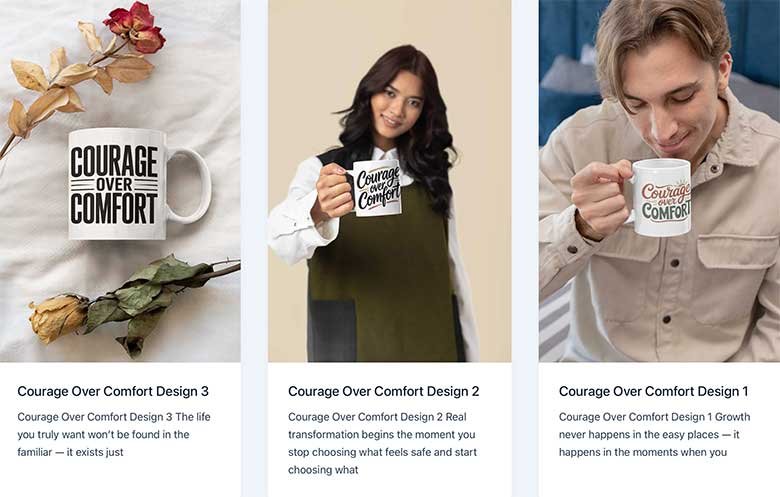
Words That Feel Like Home
Premier Print Works creates quality prints, mugs, and shirts for people who value what they already have. Browse the collection and find one that speaks to you.
Visit Premier Print WorksDisclaimer
The content on this page is for informational and inspirational purposes only. It is not professional financial, investment, tax, legal, insurance, or estate planning advice. Every saying on this page is an original reflection written for this site and is not credited to anyone. The self-care ideas here are general and are not medical or mental health advice, and a doctor or counselor can help if shopping or money brings up heavy feelings. The numbers in the examples are made up to show how the math works. Prices, fees, and account terms vary and change. Results vary widely from person to person.
I am not a financial advisor, and I am not a licensed tax, legal, or investment professional. I share this information to help people learn about money and see new options. Please treat it as general information only, and talk with a qualified professional about your own situation before making financial decisions.
The stories of Amara and Joel are illustrative composite characters created to bring the content to life. They are not real people. Any resemblance to a real person is purely coincidental.
Some links on this page, including links to Premier Print Works and other resources, are affiliate links. If you make a purchase through one of these links, we may earn a small commission at no extra cost to you. We do not own, produce, or control any affiliate products, and we are not responsible for them — we only own and sell the products offered through our own store, Premier Print Works.
All content on A Self Help Hub is the property of Digital Marketing 215 LLC and is protected by copyright law. No part of this page may be copied, reproduced, republished, distributed, or transmitted in any form without prior written permission from the author.