7 Smart Spending Habits That Help You Save More Money
Saving more money is a goal that most people hold and most people struggle with, not because they lack discipline but because the focus is almost always in the wrong place. People look at what they earn and wish it were more, when the more powerful lever is almost always what happens to the money after it arrives. How you spend determines how much you keep, and how much you keep determines the financial life you are able to build.
These 7 smart spending habits are not about radical frugality or joyless deprivation. They are about spending with enough intention that your money reflects your actual priorities rather than just your impulses and defaults. The difference between a person who feels financially squeezed on a decent income and one who consistently saves on a similar income is almost always a handful of spending habits. These are seven of the most impactful ones.

Free Download: The Money Reset Workbook
Smart spending starts with knowing exactly where your money is going. The free Money Reset Workbook gives you a practical spending tracker, budget template, and savings goals framework to help you see your money clearly and start keeping more of it. Download it free today.
Get the Free Money Reset Workbook1. Shop with a list and do not deviate from it.
“How you spend determines how much you keep, and how much you keep determines the financial life you are able to build. The income is rarely the problem.”
Grocery stores, and retail environments generally, are designed by professionals to maximize unplanned purchases. The layout, the placement, the lighting, the end-cap displays, all of it exists to put things in your path that were not on your list. Shopping with a specific, written list and committing to buying only what is on it is one of the simplest and most consistently effective smart spending habits available. It is not glamorous. It works. Studies consistently show that shoppers without lists spend significantly more than shoppers with them, and the gap is not small. Write the list. Stick to it. The difference compounds over a year in ways that are genuinely meaningful.
2. Wait twenty-four hours before any non-essential purchase over a set threshold.
The impulse purchase is one of the most reliable leaks in any budget. The item that felt necessary in the moment frequently feels unnecessary the following day, once the emotional charge of wanting it has faded and the rational assessment of whether it serves your actual priorities has had time to surface. Setting a personal threshold, any non-essential item over thirty, fifty, or one hundred dollars requires a twenty-four-hour wait before purchase, creates a pause between the impulse and the transaction that filters out a significant portion of spending that you would not miss. What survives the wait is usually worth buying. What does not survive it usually was not.
3. Pay yourself first before any discretionary spending.
“The impulse purchase is one of the most reliable leaks in any budget. The wait between the impulse and the transaction filters out spending you would not miss and keeps what is actually worth keeping.”
The conventional approach to saving is to spend first and save whatever is left. The problem is that whatever is left is almost always very little or nothing. The smart spending approach reverses the order. As soon as income arrives, transfer the savings amount first, before any discretionary spending begins. Not what is left after you spend. What comes out before you spend at all. This single habit change, automating the savings transfer on payday, is responsible for more meaningful financial progress than any other single behavior change available to someone who wants to save more. The money you never see in your spending account is the money you do not spend.

Visit Premier Print Works
The financial habits that change your life are worth celebrating. Premier Print Works offers prints, mugs, and art for people who are building smarter spending habits and a financial life that reflects what they actually value. Visit the shop today.
Visit Premier Print Works4. Calculate the true cost of purchases in hours worked, not dollars.
One of the most effective reframes for discretionary spending is converting prices from dollar amounts into time amounts. If you earn twenty dollars per hour after tax, a two-hundred-dollar item costs ten hours of your working life. A monthly subscription you do not use costs one hour of work per month, or twelve hours of your year, to maintain. This calculation does not mean you should never spend money on things you enjoy. It means the decision about whether something is worth buying is more honest and more grounded when you know what it actually costs in terms of your time and effort rather than just an abstracted number. Some things are worth ten hours. Many things are not.
5. Distinguish clearly between wants, needs, and values-aligned spending.
Not all spending is equal, and treating it as though it is leads to either over-restriction that collapses or under-restriction that prevents saving. A cleaner framework divides spending into three categories. Needs are genuine requirements: rent, utilities, food, transportation. Wants are things that improve life but are not necessary. Values-aligned spending is a subcategory of wants that deserves protection: the spending that reflects your actual priorities and brings genuine satisfaction rather than just momentary pleasure. Smart spending is not about eliminating wants. It is about scrutinizing the wants that do not actually align with your values and redirecting that money toward the savings that do.
6. Meal plan for the week before you shop.
“Not all spending is equal. Scrutinize the wants that do not align with your actual values. Protect the ones that do. Redirect the rest toward the savings that are building the life you actually want.”
Food is one of the largest and most controllable discretionary expense categories for most households, and it is also one of the most consistently over-spent due to unplanned decisions. Buying groceries without a meal plan leads to buying more than you need, wasting what does not get used, and filling in the gaps with takeout or restaurant meals when the fridge is full of ingredients that were never assembled into a coherent dinner. A weekly meal plan, written before the shopping trip, dramatically reduces all three of these costs. It also reduces the daily decision fatigue of figuring out what to eat at six in the evening when you are tired and the easiest answer is always the most expensive one.
7. Review your spending against your values once a month.
The most important smart spending habit is the one that keeps all the others honest: a monthly review of where your money actually went versus where your values say it should have gone. Pull up last month’s transactions. Look at each category. Ask honestly: does this spending reflect what I actually care about? Is this money going toward the life I want to build or toward the defaults and habits I have never consciously examined? This review is not about guilt. It is about alignment. The goal is to close the gap between the spending that happens by default and the spending that reflects your actual choices. Even a small improvement in that alignment each month compounds significantly over the course of a year.
How Joel and Kezia Each Found the Habit That Finally Made Saving Feel Possible
Joel had been telling himself for two years that he would start saving seriously once his income went up. His income went up. The saving did not start. What changed was not his income but his approach to the money that arrived. A friend who managed finances for a living gave him a single piece of advice: move the savings the same day you get paid, before you touch anything else. Joel set up an automatic transfer for the following payday. He never saw the money in his spending account. He did not miss it the way he expected to. By the end of the month he had his first real savings contribution in longer than he could remember. The income had not changed. The order of operations had. That was the only difference and it was the whole difference.
Kezia’s habit was the monthly values review. She had been spending in ways that felt vaguely unsatisfying for months without being able to identify why. She sat down one evening and went through three months of bank statements, categorizing each purchase as aligned or not aligned with the things she had said mattered most to her. The results were clarifying and uncomfortable in equal measure. She was spending significant money on things she could not have named as priorities if asked and almost nothing on the experiences and relationships she would have named without hesitation. The review did not change her income or her total spending. It changed where the spending went. Within six months her financial life felt more like hers than it had in years. The money was the same. The intention behind it was completely different.
Smart Spending Is Not About Spending Less. It Is About Spending Better.
The seven habits in this article are not asking you to give up the things you love or live on the financial equivalent of bread and water. They are asking you to be honest about the difference between the spending that genuinely serves your life and the spending that is just happening because you have not examined it carefully enough to decide otherwise.
That examination is where the savings come from. Not from earning more. Not from cutting everything joyful out of your budget. From knowing clearly where your money is going and making sure that where it goes is where you actually want it to be.
One habit at a time. One month at a time. The savings add up faster than you expect when the spending is finally working for you instead of against you.
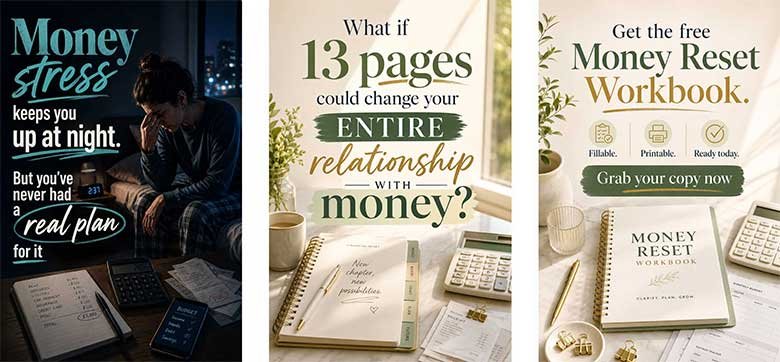
Free Download: The Money Reset Workbook
Let these smart spending habits be the starting point for keeping more of what you earn. The free Money Reset Workbook gives you the practical tools to track your spending, review it against your values, and build the financial habits that actually make saving possible. Download it free today.
Get the Free Money Reset WorkbookOur Top Picks for a Better Life
We have gathered our favorite tools, resources, and recommendations for building smarter spending habits, saving more consistently, and creating a financial life that feels intentional rather than accidental. Everything we trust enough to share, all in one place.
See Our Top Picks
Smart Money Reminders at Premier Print Works
Keep the reminders that keep your spending intentional visible in your daily life. Visit Premier Print Works for prints, mugs, and art for people who are building smarter financial habits and working toward a life where their money reflects their actual values.
Visit Premier Print WorksDisclaimer
The content on A Self Help Hub is for informational and educational purposes only. The smart spending habits and personal stories in this article offer general guidance for everyday financial wellness and are not professional financial advice, investment advice, tax advice, or any form of regulated financial planning or counsel.
Every person’s financial situation is unique. Before making significant financial decisions, please consult with a qualified financial advisor, accountant, or other licensed professional who can assess your specific circumstances. General self-help content is not a substitute for professional financial guidance.
The stories and composite characters in this article, including Joel and Kezia, are illustrative. They are based on common experiences and created to make the content relatable. They are not real people. Any resemblance to a specific person is coincidental.
Some links on this site, including links to Premier Print Works, may be affiliate links. A Self Help Hub may earn a small commission at no extra cost to you. We only recommend things we genuinely believe in.
If you are in a mental health crisis or thinking about self-harm, please do not rely on this content for support. Contact emergency services or a crisis helpline right away. You deserve real help and it is available to you now.
All content on A Self Help Hub is copyrighted. You may not copy or republish it without written permission. By reading this article you agree to this disclaimer.