17 Small Habits That Lead to Big Self Improvement Over Time
Big self improvement does not usually arrive in dramatic moments of transformation. It arrives slowly, quietly, and almost imperceptibly through the accumulation of small choices made consistently over time. The person who is meaningfully better in two years is not better because something dramatic happened. They are better because they kept doing a few small things right even when the results were invisible.
These 17 habits are small enough to start today and significant enough — done consistently — to produce real, lasting change over the months and years ahead. You do not need to do all 17. You need to pick a few that fit your life and do them until they are not habits anymore. They are just who you are.

Start With the 9 Daily Habits That Build Real Self Improvement
Download the free 9 Daily Habits guide and build a simple morning routine of small, powerful practices that compound over time into the kind of self improvement that actually sticks.
Get the Free Guide1. Read for 20 minutes every day on a topic that expands your thinking or builds a skill you actually want to develop.
Twenty minutes of focused reading each day adds up to roughly 18 books a year. That number sounds significant because it is. The person who reads consistently and intentionally — choosing books that actually challenge or expand them rather than books that simply confirm what they already think — becomes measurably different in the quality of their thinking, their vocabulary, and their ability to navigate complexity over time.
The habit works best when the reading is deliberate. Not whatever is available but whatever is useful or genuinely interesting to you right now. Build a small reading list of two or three books. Work through it. Build another. Twenty minutes before sleep or during lunch is enough to change the trajectory of your intellectual life over a decade.
2. Write three sentences every morning about what you want from the day before the day tells you what it wants from you.
Intention-setting does not require a journal practice or a lengthy morning routine. Three sentences — what you want to feel today, what you want to accomplish, what you want to bring to your most important interaction — takes about two minutes and shifts the entire orientation of the day from reactive to intentional. You are not at the mercy of what arrives. You have already decided something about who you want to be in it.
Do this before you check your phone. The phone will set a direction for your attention immediately. Three sentences written before that happens means you have already set one first. That sequence — your intention before the world’s demands — changes the quality of the entire day.
“Self improvement does not happen in dramatic moments. It happens in the consistent repetition of small choices that most people overlook because they do not look like much — until you look at where they have taken you a year later.”
3. Move your body for at least 20 minutes every single day without exception — even if the movement is just a walk.
Daily movement is one of the highest-leverage self improvement habits available because its benefits extend across every other area of life. Sleep quality improves. Mood stabilizes. Cognitive function sharpens. Energy increases. Stress decreases. And the sense of having done something for yourself every day — however small — builds a quiet self-respect that competes effectively with the voice of self-doubt.
The habit works best when the bar is low enough to clear on bad days. Twenty minutes. Any kind of movement. No excuses accepted except genuine illness. A walk counts. Stretching counts. Dancing in your kitchen counts. The key is the daily streak — the unbroken record that teaches your identity that you are someone who moves every day, regardless.
4. Drink a full glass of water before your first cup of coffee every morning to build a simple but powerful hydration habit.
This habit sounds almost too small to matter. It is not. After eight hours of sleep your body is mildly dehydrated. Drinking water before caffeine primes your physical systems, supports your cognitive function, and reduces the mid-morning energy crash that often drives the second cup of coffee. Over years of consistent practice it changes your baseline energy and reduces the habitual over-reliance on stimulants to feel functional.
The habit is worth building specifically because it is so easy to do and so easy to overlook. It takes 60 seconds. It requires nothing except a glass and a tap. And every morning you do it you make a small, genuine investment in your physical well-being before the day has asked you for anything else.
5. Spend five minutes every evening reviewing what you did well and what you would do differently tomorrow.
A brief evening review — not a lengthy journal session but five honest minutes — is one of the most effective self improvement habits available because it closes the feedback loop between intention and action. You started the day with something you wanted. You are ending it by asking whether you got there. That question, asked consistently, produces a quality of self-knowledge that no other habit can build as efficiently.
Keep it balanced. Not just what went wrong — what went right. Not just what to fix — what to repeat. The review is most useful when it builds an accurate picture of how you actually operate, not just a record of where you fell short. You are building self-awareness. Balance is part of that.
6. Say no to one low-priority commitment each week to protect time for what actually matters to you.
A calendar full of other people’s priorities is a life lived by default rather than design. One deliberate no per week — to a meeting, an obligation, a social event that feels more like duty than genuine desire — protects time and energy for the things that actually matter. Over a year that adds up to 52 protected hours that would otherwise have gone to things that were not important enough to say yes to on purpose.
Start small. One no a week. Make it a low-stakes no at first — something you genuinely feel comfortable declining. Build the muscle. The more you practice it, the easier it becomes, and the more clearly you can see which yeses you have been giving out of habit or obligation rather than genuine choice.

Surround Yourself With What Keeps You Committed to Your Growth
Premier Print Works creates quality prints, mugs, and shirts for people who are building better habits and working toward a better version of themselves. Find what keeps you going today.
Visit Premier Print Works7. Replace 15 minutes of social media scrolling each day with something that actively builds you — reading, learning, creating, or resting.
Fifteen minutes a day of scrolling replaced with something intentional adds up to over 90 hours a year — more than two full work weeks — redirected toward whatever you choose. That is enough time to learn a new skill, read a dozen books, build a side project, or simply rest in a way that actually restores rather than depletes. The swap does not require quitting social media. It requires one smaller daily choice.
Pick the replacement before you open the app. What are you going to do with these 15 minutes instead? The answer can change daily. It just needs to be intentional rather than reflexive. That intention — chosen in advance — is what prevents the reflex from winning.
8. Acknowledge one person in your life every week with a specific and genuine expression of appreciation.
Relationships are one of the primary determinants of life satisfaction and most people invest far less in them than in their career, finances, or fitness. One genuine expression of specific appreciation per week — not a casual thanks but an honest acknowledgment of something specific someone did or means to you — deepens relationships in ways that compound quietly and significantly over time.
Make it specific. Not “thanks for everything” but “I noticed how you showed up for me when I was struggling last month and I want you to know that mattered.” Specificity is what makes appreciation land. It shows the other person that you were actually paying attention. That attention is one of the most valuable things one person can offer another.
9. Sleep at a consistent time every night — not just a consistent amount but a consistent schedule that trains your body clock.
Sleep quality is more dependent on consistency than on quantity. Going to bed and waking up at the same time every day — including weekends — trains your circadian rhythm in ways that improve every stage of sleep, reduce the time it takes to fall asleep, and increase the quality of the rest you actually get. It is one of the most impactful health habits available and one of the least practiced.
Pick a bedtime you can actually keep — not an aspirational one, a realistic one — and protect it for 30 days. The first two weeks will require discipline. By week four the rhythm will have established itself and you will notice the difference in your energy, your mood, and your cognitive clarity the following day.
10. Learn one new thing each week — a skill, a concept, a piece of history, anything that expands what you know and how you think.
Consistent learning is one of the most reliable sources of both intellectual vitality and life satisfaction. The brain responds to novelty and challenge with increased engagement and neuroplasticity. And the cumulative effect of learning one new thing each week — 52 new things a year — is a gradually but genuinely expanded mind that is more capable and more interesting over time.
It does not need to be complex or time-consuming. A podcast episode on a topic you know nothing about. A Wikipedia rabbit hole on something that caught your interest. A skill practiced for 20 minutes. The learning is what matters, not the format. Build the habit of regular curiosity and it will take you places no plan could predict.
11. Spend 10 minutes in silence each day — no input, no distraction, just you and your own thoughts in the quiet.
Most people are deeply uncomfortable with silence because it removes the buffer between themselves and whatever they have been avoiding thinking about. But that discomfort is precisely why the habit is valuable. Regular silence teaches you to be present with your own mind without immediately reaching for stimulation to fill it. That capacity — for quiet, for presence, for sitting with yourself — is foundational to almost every other form of self improvement.
Ten minutes. No phone, no podcast, no background noise. Sit somewhere comfortable and simply notice what arises without directing or dismissing it. Start a timer if it helps. Do not judge what you think or feel. Just practice being there with yourself. Over time this is one of the most transformative small habits on this list.

Reset Your Habits and Build Real Momentum in Seven Days
The free 7-Day Life Reset gives you a simple daily plan to break old patterns, build better habits, and start your self improvement journey with the kind of momentum that actually carries you forward.
Get the Free Reset Guide12. Eat at least one meal each day with real intention — choosing what you eat deliberately rather than reaching for whatever is fastest.
Food choices made habitually and mindlessly are one of the most consistent sources of both poor nutrition and missed opportunity for genuine self-care. One intentional meal per day — where you thought about what you were eating before you ate it and chose it with some care for what your body actually needs — is a small but meaningful daily investment in your physical well-being.
It does not need to be elaborate. An apple instead of a bag of chips. A meal prepped the night before instead of grabbed from a drive-through. One conscious choice, once a day. Over years of consistent practice the choices compound into a noticeably healthier relationship with food and your own body.
13. Practice one small act of courage each week — the conversation you have been avoiding, the ask you have been too afraid to make.
Courage is a muscle. Like any muscle it atrophies without use and strengthens with regular practice. One small act of courage per week — not a dramatic gesture, just the next uncomfortable thing that needs doing — builds the capacity for courage that makes the bigger things feel more possible over time. And the small uncomfortable things are exactly where that practice has to start.
What is the one thing this week that you have been putting off because it makes you uncomfortable? The email you have not sent. The conversation you have been avoiding. The idea you have not shared. Do that one thing. Notice what happens. Notice how much smaller it felt once it was done than it did while you were dreading it. Use that information next week when a new one arrives.
14. Spend at least one hour each week doing something purely for enjoyment with no productive purpose attached to it.
Rest and play are not optional add-ons to a productive life. They are what make the productive life sustainable. When everything you do serves a purpose, your sense of self narrows to your output. You become what you produce rather than who you are. One hour per week of something done purely for the enjoyment of doing it — a hobby, a game, a walk, cooking something new, music, anything — restores the sense that you are a person, not just a function.
Protect this hour. Put it on the calendar if that helps. Defend it from the productivity voice that says it is wasted time. It is not wasted. It is the hour that makes every other hour more sustainable and more genuinely human.
15. Keep every promise you make to yourself for 30 days and notice how your relationship with your own word changes.
Self-trust is built the same way other kinds of trust are built — through keeping your word consistently over time. When you tell yourself you are going to do something and then do not do it, you teach yourself that your promises to yourself do not mean much. That lesson, learned over many small broken promises, erodes confidence at its foundation. Reversing it requires the opposite pattern.
For 30 days, only make promises to yourself that you will keep. Make them small enough to be keepable. Then keep them. At the end of 30 days you will have built a track record that your confidence can actually stand on — not borrowed confidence from external praise but earned confidence from the evidence of your own follow-through.
16. Reduce one drain on your energy each month — a relationship, a habit, a commitment, or a pattern that costs more than it gives.
Self improvement is not only about adding good things. It is equally about reducing what depletes you. Most people carry several consistent energy drains — a relationship dynamic that exhausts them, a habit that costs them sleep or health or peace, a commitment they said yes to long ago that no longer fits — and accommodate them indefinitely without asking whether the accommodation is serving them.
Once a month, identify one drain. Then take one real step toward reducing it. Not eliminating all drains at once — one, per month, one step at a time. Over a year you will have addressed 12 things that were costing you more than they were worth. The energy that returns goes toward everything else on this list.
17. End each day by writing one thing you are genuinely proud of — not just what you accomplished, but who you were in how you did it.
Character is built in the way you do things, not just in what you do. One daily acknowledgment of how you showed up — the patience you exercised, the honesty you chose, the kindness you gave when you were tired, the courage you practiced when you were afraid — shifts self-assessment from output to character over time. And character, built and noticed daily, becomes one of the most stable sources of genuine self-respect available.
Write it down. Say it out loud. Text it to someone who will receive it well. The form does not matter. The daily acknowledgment does. You are building something. Notice it. Let it count. Let it be evidence that the self improvement is already happening — one small, consistent day at a time.
“The person you want to become is not waiting for a dramatic transformation. They are being built right now — in the small choices you make today, and tomorrow, and every ordinary day between now and who you will be a year from now.”
Explore Our Top Picks for a Better Life
We have gathered the best tools, resources, and products to help you build better habits, grow consistently, and become the version of yourself that you are working toward. All in one place, hand-picked just for you.
See Our Top PicksReal Stories, Real Results
Kezia had tried to overhaul her life three times in two years and failed three times in two years. Big changes, dramatic commitments, complete lifestyle redesigns that lasted between three weeks and two months before collapsing under their own weight. Then she tried something different. She picked three habits so small they felt almost embarrassing to call goals: a glass of water before coffee, three sentences of intention in the morning, and one sentence of daily pride at night. She did nothing else for 60 days. At the end of those 60 days she was still doing all three — and had been doing them consistently for the first time in her adult life. She added a fourth habit. Then a fifth. A year later she had 11 consistent habits. Not from a dramatic effort but from the discovery that small and sustainable beats large and abandoned every single time.
Daniel had been trying to improve himself in ways that required enormous willpower — strict diets, intense exercise regimens, productivity systems that demanded perfect execution. They all worked for a few weeks. Then life happened and the perfect system broke and he abandoned it entirely rather than accepting the imperfect version. The turning point was reading something that reframed the whole project: you do not rise to the level of your goals, you fall to the level of your systems. He stopped building goals and started building systems — tiny, boring, reliable ones. Twenty minutes of movement every day, no matter what it looked like. Eight minutes of reading before sleep. A two-minute evening review. Eighteen months later he was not the person who had tried and failed repeatedly. He was someone who simply had daily systems that ran regardless of how he felt. He said the boring habits were the most transformative things he had ever done. He just had not expected boring to be the answer.
Small Habits Are the Architecture of the Person You Are Becoming
Every habit in this article is a brick. None of them look like much on its own. But laid consistently, one after another, they build the structure of a life that is measurably and recognizably better than the one you are living now. That building does not happen all at once. It does not happen through dramatic effort or perfect execution. It happens through small things done consistently, on ordinary days, by a person who has decided that who they are becoming is worth the investment.
Pick one habit from this list — just one — and commit to it for 30 days. Download the free 9 Daily Habits guide to build a morning routine that gives your self improvement a daily anchor and a structure that makes consistency easier than inconsistency. You are already building something. These habits just make the building more intentional.
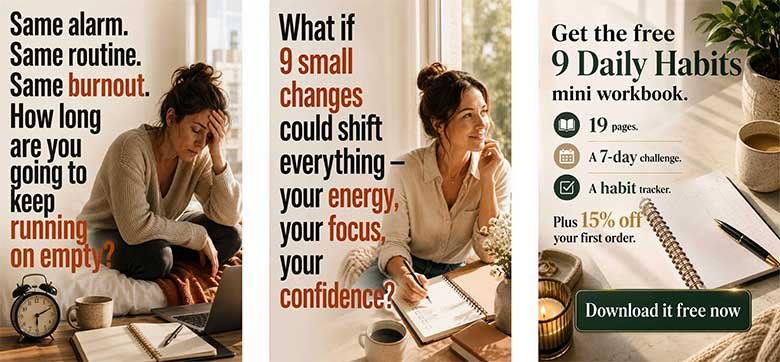
Build the Daily Foundation That Makes Self Improvement Automatic
The free 9 Daily Habits guide gives you nine simple morning practices that compound over time into real, lasting self improvement — without requiring willpower, perfection, or a dramatic overhaul of your life.
Download Free Now
Put Something in Your Space That Keeps You Committed to Your Growth
Premier Print Works makes quality prints, mugs, and shirts for people who are building better habits and investing in who they are becoming. Browse the collection and find what keeps you consistent today.
Visit Premier Print WorksDisclaimer
The content on this page is for informational and inspirational purposes only. It is not professional mental health, medical, or personal advice of any kind. Results vary significantly from person to person. Always use your own judgment and consult a qualified professional when making significant lifestyle or health changes.
The stories of Kezia and Daniel are illustrative composite characters created to bring the content to life. They are not real people. Any resemblance to a real person is purely coincidental.
Some links on this page, including links to Premier Print Works and other resources, are affiliate links. If you make a purchase through one of these links, we may earn a small commission at no extra cost to you. We only recommend things we genuinely believe in.
If you are in crisis, please contact emergency services or a crisis helpline in your area immediately. You are not alone and help is available.
All content on A Self Help Hub is protected by copyright. It may not be copied, republished, or distributed without written permission from the author.