How to Decide Whether a Sale Is Actually a Good Deal
The banner says forty percent off, and your heart does a small, happy jump.
Sales are designed to feel good. The red tags, the countdown clocks, and the words limited time all push in one direction, which is toward buying now. Sometimes the deal is real, and you walk away with something useful for less. Sometimes you walk away with something you never needed, and the receipt says you saved money.
The difference is whether you would have bought it at full price, and whether the price is truly lower than usual. This guide gives you a short list of questions you can ask in a minute or two, at the store or on your phone. They will help you keep your money for the deals that actually help you, without turning you into a stingy shopper.

Know What You Plan to Spend Before the Sale Starts
Download the free Money Reset Workbook and get a simple way to set your spending plan, so every sale is measured against it.
Get the Free WorkbookAsk the first question: did I need this before the sale?
This is the most important question, and it is easy to skip. If you were not planning to buy the item before you saw the sale, then the discount did not save you anything. It created a new reason to spend. A $60 item at 40 percent off costs $36. If you did not need it, you did not save $24. You spent $36. For more on this kind of thinking, you may enjoy my money quotes that inspire smarter spending choices.
Look at your list or your need. Is this on it? Does it replace something that is worn out? Will it solve a problem you really have?
If the honest answer is no, a sale is not a good enough reason.
The next time you see a sale, ask yourself if you were already planning to buy the item.
Find out what the usual price is
A sale price only means something compared to a regular price. Some stores raise prices before a sale, or keep a high original price that few people ever pay. The sticker that says was $100 and now $60 does not tell you much by itself.
Look up the item at another store, or look at the store’s own price at another time. A price book, where you note the usual prices of things you buy often, makes this fast. Over time, you will know right away when a price is low.
If you cannot tell what the normal price is, treat the deal with caution. You are making a decision without enough information.
Check the regular price of one item you want, at two different stores or on two different days.

Keep a Reminder to Pause Before You Buy
Premier Print Works creates quality prints, mugs, and shirts for thoughtful shoppers. Find a small reminder to check the real price first.
Visit Premier Print WorksCheck the size, the quality, and whether the item has changed
Packages sometimes shrink while prices stay the same, and sale items can differ from the regular ones. A sale product may be a lower-quality version, made to hit a price. A smaller box, fewer ounces, or a cheaper material can turn a deal into an ordinary price.
Look at the unit price, which is the price per ounce, per count, or per pound. Compare it with similar products. For clothes and household items, check the materials, the size, and the reviews.
Be especially careful with items made only for sales events. They may look the same as the regular version and be built differently.
Compare the unit price on one sale item with the same or similar product at regular price.
“A good deal is when you save money on something you actually need.”
Add up the true total, with shipping, tax, and extras
A low price can grow quickly once you add shipping, tax, fees, and the extras you need. A printer on sale may need ink. A game console may need controllers. A sale phone may need a case and a plan. Add all the costs before you decide. If you want help keeping an eye on the whole picture, my list of savings strategy habits for wasting less money is a good companion.
Think about what happens if you need to return it. Some stores charge a restocking fee or only give store credit on sale items. Know the return policy before you pay.
The best deal is the lowest total cost for something you actually use.
Before you buy a sale item, write down the full cost, with shipping, tax, and any extras you will need.

Plan Your Purchases in One Clear Place
The free Money Reset Workbook gives you a clear page to plan what you will buy, so sales work for your budget and not against it.
Get the Free WorkbookWork out the cost per use
Cost per use is a simple way to judge whether something is worth the price. Divide the price by the number of times you expect to use it. A $36 jacket you wear twenty times costs $1.80 per wear. A $12 gadget you use once costs $12 per use.
This approach often shows that a higher-priced item, used a lot, is a better value than a cheap one that sits in a drawer. It also helps you say no to things that look like bargains and rarely get used.
Be honest about how often you will really use it. Think about the last time you bought something similar.
Pick one thing you want to buy, and estimate its cost per use.
Watch out for spend more to save traps
Some deals ask you to spend more in order to save. Free shipping over $50 can tempt you to add $15 of extras to avoid a $6 shipping fee, and you end up spending $9 more than you would have. Buy two, get one free is only a deal if you really want three. Minimum purchase discounts can lead you to buy things you did not plan to. If you tend to get pulled in by offers like these, these smart spending tips for wasting less money may help.
Before you add something to reach a threshold, ask whether you would buy it anyway. If not, you may be better off paying the shipping.
A deal that makes you spend more is not a savings.
Next time a store offers a minimum spend or a bundle, write down whether you would buy the extra items without the offer.
Decide whether it is something you will buy again, and whether stocking up makes sense
For things you use regularly, such as rice, soap, toilet paper, or pet food, a sale can be a real chance to save. If the item keeps well, you will use it, and you have room to store it, buying a bit extra at a low price makes sense.
For one-time or occasional purchases, a sale can still help, but only if you were going to buy anyway. Do not stock up on things you will not use before they expire, or things that take up too much space.
A small, steady stock of items you use often, bought at good prices, is one of the quiet ways to save money.
Write a list of five items you use regularly that keep well, and watch for low prices on them.
Give it a short wait, and use a sale budget
Many sales are designed to push you into a fast decision. A short pause can protect you. Put the item in your cart or on a list, and wait a day or two. If you still want it, and it is still on sale or the price is still reasonable, you can decide with a clear head. If you want a gentle way to build the habit, take a look at these money saving habits that help you feel more in control.
It also helps to set a sale budget. Decide ahead of time how much you are willing to spend during big sale seasons, and keep to it. That way, you can enjoy a good deal without letting it take over your month.
Real deals come around again. If you miss one, another will come.
Set a small sale budget for the next big shopping season, and write it in your plan.
Explore Our Top Picks for a Better Life
We have gathered the tools, resources, and products we think are genuinely worth your time, covering mindset, self-care, health, and home. All in one place, hand-picked to support wise, confident spending.
See Our Top PicksReal Stories, Real Results
Let me share two examples I like to use. Kezia loved a good sale, and she noticed that her closet and her credit card both grew during every one. She started asking, Did I need this before the sale? and waiting a day. She told me that she skipped more than half of the deals she would have taken, and the ones she kept were much better.
Daniel’s best tool was cost per use. He used to buy cheap tools that broke after a few uses. He started working out the cost per use, and he began choosing better-made items on sale. He said that spending a little more once saved him from buying the same thing three times. Both of them said the same thing: a few simple questions helped them shop sales with confidence.
A Real Deal Is One You Would Be Glad You Bought Next Month
Picture standing in front of a big red sale sign, and feeling calm. You know what you came to buy, what the usual price is, and what the whole thing will cost. You take the deals that help, and you walk past the ones that only look good.
Choose a few questions from this guide, and keep them handy on your phone. Download the free Money Reset Workbook to set your spending plan before the next sale. Good deals feel even better when you shop with a plan.
Want Ready-Made Tools to Help You Put This Into Action?
Sometimes the fastest way forward is a tool that someone has already built. Browse our hand-picked resources and downloads, chosen to help you take the next step with less guesswork.
Browse Resources and Downloads
Ready to Shop Sales With a Plan?
The free Money Reset Workbook helps you see your numbers clearly, so every deal you take is one you chose.
Download Free Now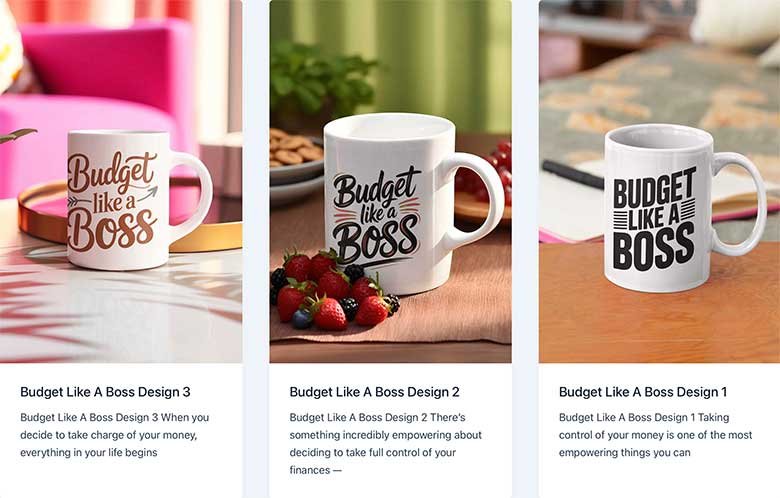
Fill Your Space With Things Chosen With Care
Premier Print Works makes quality prints, mugs, and shirts for people who shop with a plan. Browse the collection and find what speaks to you today.
Visit Premier Print WorksDisclaimer
The content on this page is for informational and inspirational purposes only. It is not professional financial, investment, tax, legal, insurance, or estate planning advice. The numbers in the examples are made up to show how the math works. Prices, discounts, return policies, and fees vary by store and change over time, so please check the details and consult a qualified professional before making financial decisions. Results vary widely from person to person.
The stories of Kezia and Daniel are illustrative composite characters created to bring the content to life. They are not real people. Any resemblance to a real person is purely coincidental.
Some links on this page, including links to Premier Print Works and other resources, are affiliate links. If you make a purchase through one of these links, we may earn a small commission at no extra cost to you. We do not own, produce, or control any affiliate products, and we are not responsible for them — we only own and sell the products offered through our own store, Premier Print Works.
All content on A Self Help Hub is the property of Digital Marketing 215 LLC and is protected by copyright law. No part of this page may be copied, reproduced, republished, distributed, or transmitted in any form without prior written permission from the author.