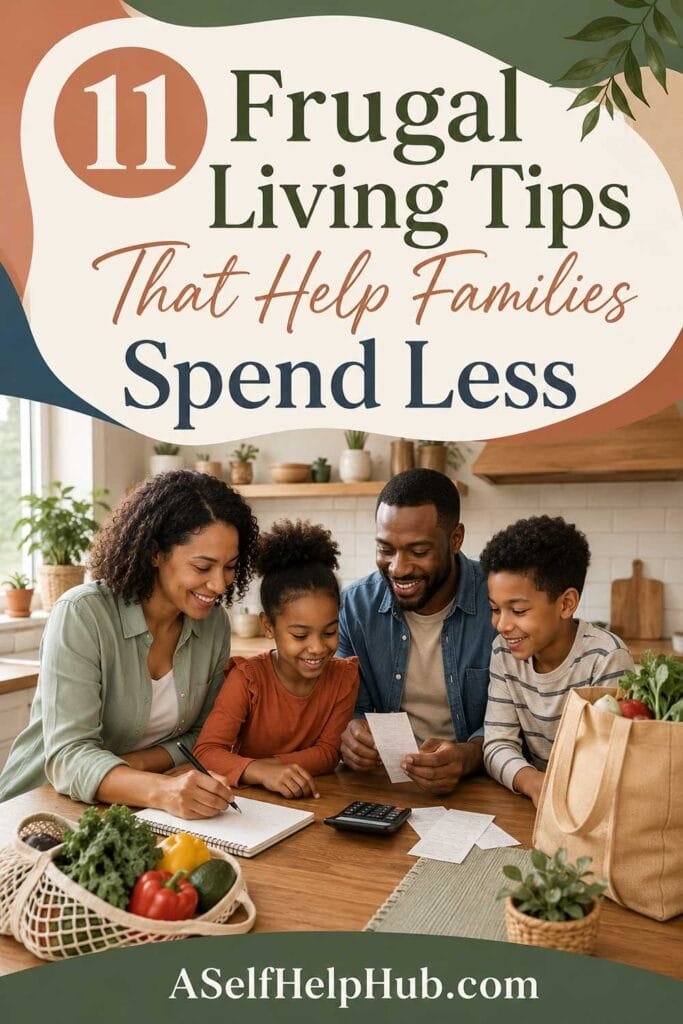
9 Frugal Living Tips That Help You Spend Less Without Feeling Deprived
The frugal life that most people imagine is the life of the person who has removed everything enjoyable from the daily experience in the service of the savings account — the grey, restricted, pleasure-postponed existence that will eventually justify itself when enough has been accumulated that the living can resume. This frugality is not available as a long-term practice for most people because the human need for the present enjoyment of the life is not the character flaw to be overridden — it is the legitimate requirement of the sustainable financial practice. The frugality that works is not the deprivation until the destination. It is the intentional spending that serves the genuine values of the person doing the spending — which means it eliminates what is not genuinely valued and fully protects what is.
These nine frugal living tips will help you cut what drains you without sacrificing what feeds you, so your money goes further and your life still feels full, rich, and worth living every single day. The secret to having it all is knowing that you already do — frugality just helps you protect it. Spending less is not about having less — it is about making room for the things that matter most. You can absolutely live well and spend wisely at the same time — and these nine tips are going to show you exactly how. Begin with the one that resonates most immediately. Let it prove what the next eight are also pointing toward.
Free Download: The Money Reset Workbook
The frugal living tips in this article free the dollars — and the free Money Reset Workbook gives you the clear financial plan that directs the freed dollars where they produce the most impact for the most valued goals. With step-by-step prompts for identifying the spending to cut and the goals to fund, the Money Reset Workbook is the practical companion to every tip here. Download it free today.
Get the Free Money Reset Workbook1. Identify Your Ten Non-Negotiable Spending Joys Before Cutting Anything
“The secret to having it all is knowing that you already do — frugality just helps you protect it. The ten non-negotiable spending joys are the spending that frugality is specifically designed to protect by eliminating the spending that was competing with them for the same limited dollars.”
The frugal living practice that does not begin with the honest identification of the spending that genuinely matters is the frugal living practice that will eliminate both the spending that drains and the spending that feeds — producing the deprivation that makes the practice unsustainable. The first frugal living tip is the one that makes every other tip safe to implement: before touching a single spending category, identify the ten specific spending items that genuinely contribute to the quality and joy of the daily life. Not the aspirational list of what should bring joy — the honest list of what actually does.
The list is personal and specific and requires the honest answering rather than the socially acceptable one. The weekly dinner at the specific restaurant with the specific people is on the list if it is genuinely the most enjoyable regular spending. The book purchase habit is on the list if the reading is genuinely one of the week’s most valued experiences. The coffee shop morning once per week is on the list if the specific ritual genuinely matters rather than the daily automatic version that has lost the pleasure in the repetition. Write the ten. Protect every one of them from the frugal living practice that follows. Cut everything else first, most, and without guilt. The ten non-negotiables are the reason the cutting of everything else is sustainable.
“Identify the ten genuine spending joys before cutting anything. Protect them completely. Cut everything else first. The protected joys make the cutting of everything else sustainable.”
2. Replace the Automatic Spending With the Deliberate Choosing
“Spending less is not about having less — it is about making room for the things that matter most. The automatic spending is the spending that is claiming the room the deliberate choosing was supposed to fill. Replace the automatic with the deliberate. The room appears.”
The largest category of the cuttable spending in most households is not the dramatic excess or the obvious luxury — it is the automatic spending, the habit-driven purchasing that happens without the ongoing conscious choosing and that therefore claims the budget allocation of the genuine wanting without providing the genuine satisfaction that the genuine wanting, when spent on, produces. The daily coffee purchased on autopilot without the specific anticipation or enjoyment that the coffee purchased as the specific, chosen indulgence produces. The streaming service renewed without the decision that the content recently watched justified the renewal. The grocery item that arrives in the cart without the meal plan that confirms it will be used.
Practice the deliberate choosing as the replacement for the automatic spending. Not the elimination of all spontaneous purchase — the application of the brief conscious check before the automatic habit completes itself: is this purchase the deliberate choosing of something genuinely wanted, or is it the completion of the autopilot that was going to happen regardless of the genuine wanting? The brief check does not require the elaborate decision-making. It requires the ten-second pause that the automatic purchase was not providing. The deliberate choosing that results from the pause either confirms the genuine wanting — in which case the purchase is made with the full pleasure of the chosen thing — or reveals the automatic habit — in which case the dollars stay for the thing that will be genuinely chosen later. The pause is the practice.
“Apply the ten-second pause before every habitual purchase. The genuine wanting confirmed by the pause purchases with full pleasure. The automatic habit revealed by the pause saves the dollars for the genuine wanting.”
3. Master the Art of the Substitution Rather Than the Elimination
“You can absolutely live well and spend wisely at the same time — and the key is the substitution that provides the equivalent value at the lower cost rather than the elimination that provides the lower cost and the lost value. Substitute. Do not merely eliminate. The substitution is the sustainable frugality.”
The frugal living tip most directly responsible for the deprivation-free experience of the spending less is the substitution rather than the elimination — the specific practice of replacing the high-cost version of the genuinely valued experience with the lower-cost version that provides the equivalent or near-equivalent value at the fraction of the price. The home-brewed coffee that provides the morning ritual at fifteen cents rather than five dollars. The library book that provides the reading experience at zero cost rather than twenty-five. The homemade version of the restaurant meal that provides the cooking and the eating experience at a third of the dining-out cost. The same value, the reduced cost, the sustained enjoyment, the freed dollars.
For every spending category that the frugal practice is addressing, ask the substitution question before the elimination question: is there a lower-cost alternative that provides the genuine value of this spending at a lower price? The elimination question — can I do without this? — produces the deprivation when applied to the genuinely valued spending. The substitution question — what is the lower-cost version of this value? — produces the frugal living that preserves the enjoyment while reducing the cost. Build the substitution habit one category at a time. The accumulated substitutions produce the meaningful monthly savings without the meaningful sacrifice of the life’s genuine pleasures.
Visit Premier Print Works
Keep the reminder that spending less makes room for what matters most visible in the spaces where the daily spending decisions happen. Premier Print Works offers prints, mugs, and art designed for the person building the intentional, values-driven financial life — honest, grounding pieces for the home where the frugal living is practiced as the liberation rather than the deprivation.
Visit Premier Print WorksHow Neven Discovered That the Frugal Life Felt Fuller Than the One He Had Been Living Before It
Neven had approached frugal living twice before with the same result both times: the initial motivated period of the significant reduction followed by the gradual restoration of the eliminated spending until the budget was approximately where it had been before the frugal experiment began, and with the additional discouragement of the person who has tried the thing twice and drawn the conclusion that the thing is not available to them. The frugal living was not unavailable to him. The version he had been attempting — the elimination-first, everything-is-negotiable approach that made no distinction between the spending that was genuinely valued and the spending that was automatic habit — was the version that required more ongoing willpower than the motivation from the inspired beginning was able to sustain.
The different approach began with the list. He wrote down, over the course of a week, the specific spending occasions that had produced the specific feeling of the genuine pleasure and the genuine worth — the Saturday morning coffee shop ritual with the book and the two hours of the unhurried time that was the week’s most anticipated regular experience, the monthly dinner with the two friends that was the social occasion he most looked forward to, the streaming service that he actually used and whose content was the genuinely enjoyable regular part of his evenings. He also wrote down, with equal honesty, the spending that had been occurring without the specific anticipation or the specific pleasure — the daily coffee purchased on the commute without the ritual quality of the Saturday version, the additional streaming service that he had stopped watching three months ago, the dining-out occasions that were the default answer to the what-are-we-eating question rather than the genuinely chosen experience.
The protected list and the cuttable list looked different enough to make the frugal living feel like something other than the punishment it had felt like before. The protected list was genuinely protected — every item on it continued untouched, some with the increased attention that the freed budget allowed the specifically-valued experiences to receive. The cuttable list was cut without the guilt that the previous approach had generated from cutting both the valued and the unvalued simultaneously. The monthly savings from the cuttable list was larger than he had expected. The quality of the daily life was higher than before the cutting, because the spending that had been diluting the genuinely valued was no longer competing with it for the same budget dollars. The frugal life felt fuller. The fuller felt like the thing the previous frugal experiments had been trying to achieve from the wrong direction.
4. Cook at Home With Intention Rather Than Convenience
“The meal cooked at home with the genuine attention to the cooking is the meal that costs less than the restaurant version and often surpasses it in the specific pleasure of the person who made it deliberately rather than the person who ordered it automatically.”
The home cooking habit is the frugal living tip with the highest ratio of financial impact to life quality improvement — because the cooking at home done well produces the food that is typically better-tasting, better-nourishing, and significantly less expensive than the dining-out or the delivered alternative, and that adds the specific pleasure of the making to the pleasure of the eating. The deliberate home cooking is not the deprivation replacement for the restaurant — it is the distinct experience that produces its own specific pleasures and that the restaurant cannot replicate: the specific satisfaction of the made thing, the smell of the actual cooking in the actual home, the sharing of the specifically-made meal with the specific people who are worth the making.
The transformation of the home cooking from the obligation to the practice worth doing begins with the planning — the weekly meal plan that converts the what-are-we-eating question from the evening’s stress into the Sunday’s solved problem — and the treating of the cooking as the genuine activity rather than the task to be completed as quickly as possible in the service of the eating. One new recipe per week. The ingredients shopped with the attention to the quality within the budget. The thirty minutes of the cooking given the same quality of presence that the person would bring to the activity they were looking forward to. The cooking elevated from the chore to the practice is the cooking that makes the frugal living feel like the fuller life rather than the lesser one.
“Elevate the home cooking from the chore to the deliberate practice. The deliberate practice produces the better meal, the specific pleasure of the making, and the fraction of the cost. Cook with intention.”
5. Build the Free and Low-Cost Social Life That Is More Nourishing Than the Expensive Default
“The most nourishing social experiences are almost never the most expensive ones — because the nourishment comes from the quality of the genuine connection, not the quality of the venue where the connection happens. Build the social life around the connection. Let the venue be whatever the connection requires.”
The social spending category is the frugal living area that most people approach with the most anxiety — the fear that the reduction of the social spending is the reduction of the social life, which is the reduction of the connection and the belonging that the social life provides. The anxiety is based on the assumption that the social life requires the expensive venue — the restaurant, the bar, the paid experience — to produce the genuine connection that the social life is actually for. The assumption is inaccurate. The genuine connection happens despite the venue rather than because of it. The conversation that matters is the same conversation whether the table is in the restaurant or the kitchen.
Build the specific, planned free and low-cost social practices that replace the expensive-venue default without the reduction of the genuine connection. The potluck dinner at the home that produces the longer, more relaxed conversation than the restaurant table with the time pressure of the next reservation. The afternoon walk that produces the side-by-side conversation that the face-to-face restaurant setting does not. The board game evening that produces the specific shared laughter of the played game. The picnic in the park that produces the outdoor, unhurried, genuinely enjoyable version of the gathering. The social life built around the connection rather than the venue is the social life that costs less and nourishes more than the expensive-default version. Build it deliberately. The friends who matter will show up for the kitchen table the same way they show up for the restaurant.
“Build the social life around the genuine connection, not the expensive venue. The kitchen table and the park produce the same conversation as the restaurant — at the fraction of the cost.”
Free Download: The 9 Daily Habits Checklist
The frugal living habits that free the money for what matters most are most sustainable when they are part of the broader daily habit structure that keeps every intentional choice consistent. The free 9 Daily Habits Checklist gives you the daily framework that supports the frugal living habits alongside every other important daily practice. Download it free.
Get the Free Habits Checklist6. Practice the One-In-One-Out Rule for Physical Possessions
“The home that contains exactly the things that are genuinely used and genuinely loved is the home that requires nothing additional. The one-in-one-out rule is the specific practice that maintains the genuinely-used-and-loved collection rather than the accumulated-and-forgotten one.”
The one-in-one-out rule — the practice of removing one owned item for every new item that enters the home — is the frugal living habit that addresses the spending pattern most responsible for the accumulated possession without the accumulated enjoyment: the buying of the new item without the honest assessment of whether the new item is adding to the genuinely-used-and-loved collection or joining the accumulated-and-forgotten one. The one-in-one-out rule forces the assessment by requiring the identification of the item being replaced — and the difficulty of identifying what can be removed is the specific, honest indicator of whether the new item is genuinely needed or is the wanting without the needing.
Practice the rule at the point of purchase rather than the point of the home organization session that comes after the accumulation has already happened. Before buying the new item, identify the item in the home that it is replacing — the item that will leave when the new item arrives. If the item to be replaced cannot be identified, the new item is adding to the collection rather than replacing within it, which is the honest indicator that the purchase deserves the 24-hour pause rather than the immediate execution. The rule does not prevent all purchasing — it ensures that the purchasing is the deliberate choosing of the new over the kept rather than the accumulation of the new alongside the kept that produces the full home without the full enjoyment of what the full home contains.
“Apply the one-in-one-out rule at the point of purchase. Identify what leaves before the new item arrives. The difficulty of identifying what can leave is the honest indicator of whether the new item is needed.”
7. Reframe the Want as the Goal Rather Than the Immediate Purchase
“The want that becomes the goal rather than the immediate purchase is the want that produces the anticipation, the saving, and the specific pleasure of the earned acquisition that the immediate purchase — charged to the card, delivered overnight — cannot produce. The wanting is the pleasure. The having is often the ending of it.”
The reframe of the want from the immediate purchase to the goal is the frugal living habit that most directly addresses the psychological mechanism of the impulse purchase — its presentation of the having as the immediate resolution to the wanting, when the genuine pleasure is often in the anticipation and the working-toward rather than the immediate possession. The item placed on the wish list and saved for over the weeks of the anticipation is the item enjoyed more fully when acquired than the item ordered on the impulse and delivered before the wanting has had the time to confirm the genuine value of the having.
When the want arrives — the specific item, the experience, the upgrade — place it on the wish list rather than the cart. Set the savings goal for it. Watch the goal progress toward the purchase price. The anticipation of the specifically-wanted and specifically-saved-for item is the specific pleasure that the immediately-purchased item forecloses. The saving toward the wanted item confirms the genuine wanting over the weeks of the anticipating — the item still wanted after eight weeks of the saving is the item genuinely wanted. The item no longer wanted after two weeks of the saving was the impulse that the wanting’s resolution without the immediate purchasing revealed. The reframe extends the enjoyment of the wanting and confirms the genuine value of the having.
“Place the want on the wish list and save for it rather than purchasing immediately. The anticipation is the pleasure. The saving confirms the genuine wanting. The earned acquisition is more fully enjoyed.”
Frugal Living Through Recovery? This Is for You.
For some people, the work of building a more intentional, frugal financial life is happening alongside the daily practice of sobriety — where the intentional living and the recovery are the same courageous daily work. If that is where you are, the free Sober Survival Guide offers honest support for the person building both kinds of intentional life at once. Download it free.
Get the Free Sober Survival Guide8. Make the Library, the Park, and the Community Your Default Entertainment
“The library, the park, and the community are the three most consistently underused free resources in most people’s daily lives — and the person who uses them as the default entertainment rather than the exceptional alternative has access to more genuine enrichment per dollar than almost any alternative available.”
The entertainment category is one of the most significant sources of the unnecessary spending in most household budgets — not because entertainment is not genuinely valued but because the default entertainment options (the streaming subscription, the ticketed event, the paid experience) have become the automatic response to the desire for the enrichment that the free alternatives provide with equal or greater quality. The library that provides the books, audiobooks, ebooks, films, and in many cases the free access to digital learning platforms. The park that provides the outdoor restorative experience that the research consistently identifies as among the most effective wellbeing practices available. The community events, the public arts, the free performances that the local cultural environment provides to anyone who looks for them.
Make the library and the park the first consultation when the desire for the entertainment or the enrichment arrives — before the streaming queue is opened, before the ticketed event is considered, before the paid experience is scheduled. The week’s entertainment built from the library’s current offerings and the weekend’s outdoor time in the park and the local community event is the entertainment week that costs little and produces the genuine enrichment that the expensive default was attempting to provide. Build the habit of the free-first consultation. The paid entertainment that remains after the free alternatives have been genuinely considered is the entertainment that was worth the cost — the specific paid experience that the free alternatives genuinely could not have provided.
“Consult the library, the park, and the community before the paid entertainment. The free-first habit makes the paid entertainment the genuinely-chosen exception rather than the automatically-reached-for default.”
9. Track the Spending for Thirty Days and Let the Data Tell the Truth
“The spending tracked honestly for thirty days tells the truth about where the money is going that the estimated budget and the approximate memory cannot. The truth told by the honest tracking is always more useful — and usually more surprising — than the truth the approximation was suggesting.”
The thirty-day spending track — the honest, complete recording of every purchase for thirty consecutive days — is the frugal living habit that most reliably reveals the specific gap between the spending that is genuinely valued and the spending that is automatic habit. The estimate of the monthly dining spending is almost always lower than the tracked thirty-day total. The estimate of the coffee spending is almost always lower. The estimate of the small, frequent, individually-forgettable purchases is always lower — because the estimate is based on what is easily remembered and the tracking is based on what actually happened. The tracking does not require the judgment or the behavior change during the thirty days. It requires only the honest recording. The data produced by the honest recording is the frugal living plan.
Track every dollar for thirty days before making any significant frugal living decisions. The tracking produces the specific picture of the actual spending that the plan is designed to address. Which categories are the largest? Which are the most surprising? Which contain the most automatic spending that the deliberate choosing would have redirected? Which contain the genuinely-valued spending that the frugal practice needs to protect? The thirty-day tracking is the diagnostic that the treatment is built from. Without the diagnostic, the treatment is the approximation. With the diagnostic, the treatment is the specific, accurate, evidence-based plan that addresses the actual spending rather than the estimated one. Track first. Plan from the tracking.
“Track every dollar for thirty days before making the frugal living plan. The tracked data is the accurate picture. The plan built from the accurate picture addresses the actual spending rather than the estimated one.”
How Asha Built the Frugal Life That Felt Like More Than the Non-Frugal One Had
Asha had been resistant to the idea of frugal living with the specific resistance of the person who had tried it once, found it joyless, and drawn the conclusion that the joylessness was the product of the frugality rather than the product of the specific frugality she had tried — which was the eliminate-everything-and-see-what-survives approach that had eliminated both the joyless spending and the spending she had not recognized as the source of the daily joy until it was gone. The morning ritual that had seemed like the obvious first cut. The specific weekly social occasion that had seemed like the luxury. Both were gone within the first month of the experiment and the month had been measurably worse for their absence. She had restored both and concluded that frugal living was not for her.
The reframe came from the thirty-day spending track she did as a separate, non-frugal exercise — just the honest accounting of where the money was going, with no judgment and no plan to change anything. The picture the thirty days produced was specific and in several categories genuinely surprising. The coffee purchased on the commute without the anticipation or the ritual quality of the coffee she genuinely loved. The clothing purchases made in the specific emotional state that the browsing of the online shop produced on the difficult days. The dining occasions that had been the default answer to the what-are-we-eating question rather than the specifically-chosen experience of the dining she actually valued. The tracking had identified the spending that was costing her the most and providing her the least without touching a single item on the list of what she genuinely loved.
She made three changes from the tracking data. The commute coffee replaced by the home-brewed version carried in the travel mug — saving sixty dollars per month while preserving the morning ritual in a different vessel. The online shop removed from the phone’s home screen — the browsing habit disrupted by the one additional step that converted the impulse visit into the deliberate visit, reducing the emotional-state purchasing significantly. The dining-out occasions reduced from the default-answer frequency to the specifically-chosen-experience frequency — which meant fewer but more genuinely enjoyable dining occasions. The monthly savings from three changes was larger than the previous full-frugal experiment had produced from the eliminating of everything. The frugal life built from the honest data felt fuller than the one she had been living before, because the spending that remained after the cuts was the spending that was genuinely, specifically, honestly hers.
Picture the Full, Rich, Intentionally-Spent Life That Costs Less Than the One Before It
Not the grey, restricted, pleasure-postponed life of the deprivation frugality. The full life — with the ten non-negotiable spending joys fully protected, the automatic spending replaced by the deliberate choosing, the substitutions providing the equivalent value at the lower cost, the social life built around the genuine connection rather than the expensive venue, and the thirty-day honest tracking continuously revealing the specific cuts that free the dollars for the things that genuinely matter. That life costs less than the one before it. It feels more genuinely full — because the spending that drains without feeding has been removed, and what remains is the spending that feeds without draining. The frugal life is the full life. Begin building it today.
Spending less is not about having less. It is about making room for the things that matter most. Start with one tip today. Let the room it creates show you what the next tip makes possible.
Free Download: The Money Reset Workbook
Direct the dollars freed by the frugal living tips toward the goals that make the frugal living worth building. The free Money Reset Workbook gives you the clear financial plan that puts every freed dollar to work on the financial goals that matter most. Download it free and complete the loop from the intentional spending to the intentional saving.
Get the Free Money Reset WorkbookOur Top Picks for a Better Life
We have gathered our favorite tools, resources, and recommendations for frugal living, intentional spending, and building the financially-grounded, genuinely-full life that proves spending less and living well are not mutually exclusive — everything we trust enough to share, all in one place.
See Our Top PicksIntentional Living Prints at Premier Print Works
Keep the reminder that frugality is the art of making room for what matters most visible in the spaces where the daily financial choices are made. Visit Premier Print Works for prints, mugs, and art designed for the person building the intentional, values-driven life that spends less and lives more.
Visit Premier Print WorksDisclaimer
The content published on A Self Help Hub is provided for informational, educational, and inspirational purposes only. The frugal living tips, financial perspectives, and personal stories shared in this article are intended to offer general guidance for people who are working to live more intentionally and manage their personal finances more effectively. They do not constitute professional financial advice, investment advice, tax advice, debt counseling, or legal advice of any kind. A Self Help Hub is not a licensed financial advisor, credit counselor, or professional financial planning organization.
Individual financial results from frugal living practices vary significantly and depend on many factors including income, cost of living, existing financial obligations, and personal circumstances outside our knowledge or control. The frugal living tips described in this article are general practices and may not produce the same results for every individual financial situation. Before making significant financial decisions, we recommend consulting with a qualified financial professional who can provide guidance specific to your individual circumstances.
The personal stories and composite characters featured in this article, including Neven and Asha, are illustrative in nature. They are drawn from a combination of common financial and lifestyle experiences and narrative examples created to make the content relatable and accessible. They are not presented as factual accounts of specific individuals, and any financial outcomes described are examples only and not guarantees or typical results.
Some links on this site, including links to Premier Print Works and other recommended resources, may be affiliate or partner links through which A Self Help Hub earns a commission at no additional cost to you. We only recommend products and resources we genuinely believe in and would share regardless of any compensation received.
The Sober Survival Guide and any recovery-related content linked from this site is provided as general supportive information only. It is not a substitute for professional addiction treatment, clinical intervention, medical detox, or licensed counseling services. If you or someone you love is struggling with addiction or substance use, please seek the care of a qualified healthcare or addiction treatment professional. Recovery is possible and professional support significantly improves outcomes.
If you are experiencing a mental health crisis, thoughts of self-harm, or are in immediate danger, please do not rely on this content for support. Contact emergency services, a crisis helpline, or a qualified mental health professional immediately. You deserve real, immediate help — and it is available to you.
All content on A Self Help Hub is the copyrighted property of A Self Help Hub. You may not copy, reproduce, or republish our content without prior written permission. By reading this article you acknowledge that you have read and agree to this disclaimer.