Values-Based Spending: Lining Up Your Money With What Matters to You
Picture two receipts lying side by side. One is for a weekend visit to see your grandmother. The other is for a gadget you used twice and then forgot in a drawer. They might even cost the same. Yet one probably still makes you smile, and the other might make you wince. Values-based spending starts with that difference.
Values are the things that matter most to you, such as family, health, learning, freedom, or fun. Values-based spending is a simple idea. You notice where your money goes, then gently move more of it toward what you care about, and less toward what you do not. It is less about spending less and more about spending on purpose.
This guide shares general ideas to think about, and it is not advice or a set of rules. You will read how to name your values, look at your current spending, spot what fits and what does not, and make small shifts over time. Go one step at a time, and let your own values lead the way.

Line Up Your Money With What You Love
Download the free Money Reset Workbook and get simple pages to list your values and sort your spending.
Get the Free WorkbookName the three things that matter most to you
Many people have never written down their values. It can help to sit quietly for a few minutes and ask, “What do I care about most?” You might think about how you like to spend a free day, or what you hope people say about you.
Some common values are family, friendship, health, faith, learning, travel, security, creativity, comfort, and giving. There are no right or wrong answers. Your list only has to be true for you.
If you end up with a long list, you might circle the top three. Three is easy to remember and easy to use when making a choice. For related reading, see defining your core values.
Write down your top three values on a card.
Look at where your money went last month
Next, you might pull up your bank and card statements from the past month. The goal is just to see where the money went. You can group things into simple buckets like housing, food, transportation, bills, fun, gifts, and other.
Try to look without judging. You are gathering facts, not grading yourself. Some spending will be fixed, like rent. Some will be flexible, like eating out or shopping.
Many people find a few surprises in this step. A small daily habit might add up to more than expected. That is useful to know.
Sort last month’s spending into five to seven simple buckets.
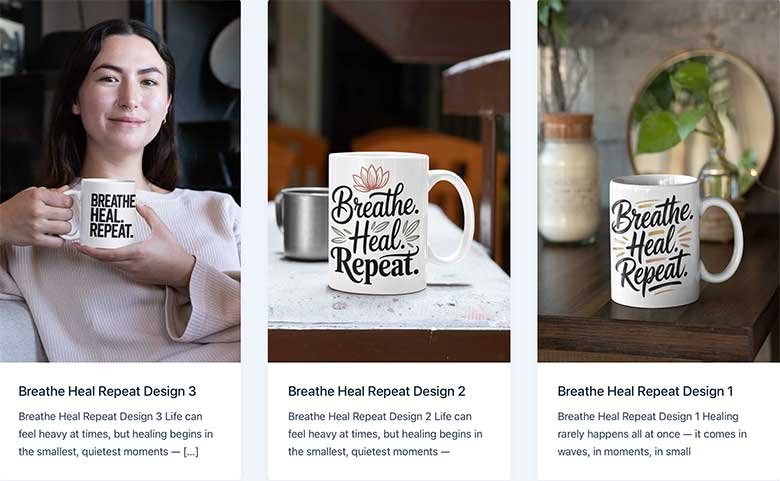
A Small Reminder of What Matters Most
Premier Print Works creates quality prints, mugs, and shirts for people who want their money to reflect their values.
Visit Premier Print WorksMark each flexible purchase as a match or a miss
Now you can hold your spending up against your values. For each flexible purchase, ask, “Does this match something I care about?” If it does, mark it as a match. If it does not, mark it as a miss.
For example, if one of your values is family, a pizza night with your kids might be a match. If one of your values is health, a gym class you love might be a match. A pile of fast food eaten alone in the car on a stressful day might feel like a miss.
The same purchase can be a match for one person and a miss for another. That is the whole point. Your values decide, not anyone else’s.
Go through your flexible purchases and mark each one match or miss.
“When your money follows what you love, even small amounts can feel like plenty.”
Look for the spending that sneaks in
A lot of misses happen without much thought. They come from boredom, stress, tiredness, or a clever ad. Spotting these moments can help you see where money slips away from your values.
You might notice patterns, like shopping online late at night, or buying snacks every time you get gas. Once you see the pattern, you can plan a small pause, like waiting a day before buying, or keeping snacks in the car.
Small pauses give your values a chance to speak up before the money is gone. You may also like ways to slow down impulse buys.
Write down one moment or place where spending tends to sneak in.

Map Your Matches and Misses
The free Money Reset Workbook gives you clear pages to see where your money goes and where you want it to go.
Get the Free WorkbookDo the math on moving money from misses to matches
Once you know your misses, you can see how much money they add up to. Then you can picture where that money might go instead.
Here is an example with made-up numbers. Say you spent $15 a week on snacks you did not really want, plus $40 a month on two apps you rarely open. Over four weeks, the snacks add up to $60. Add the $40, and that is $100 a month. That $100 could go toward a value like travel, saving, or time with friends.
Seeing a real number tied to something you care about can make a change feel exciting instead of strict.
Add up your misses for one month and write down a value you could put that money toward.
Give your top values their own spot in the budget
Many budgets only list bills and needs. One idea is to give each of your top values its own small line. If travel matters to you, there could be a travel line. If learning matters, there could be a line for classes or books.
Even a small amount can make a big difference in how your budget feels. Instead of a list of things you cannot have, it becomes a plan for things you care about. Some people find they stick with a budget longer when it reflects what they love.
These lines can grow over time as you shift money away from misses. For related reading, see sorting money goals by priority.
Add one budget line for each of your top values, even if the amount is small.
Remember that needs still come first
Values-based spending works alongside the basics, not in place of them. Housing, food, utilities, transportation, health care, and minimum payments on debt still come first for most people.
If money is very tight, values might show up in small, free, or low-cost ways. A picnic in the park, a library book, or a phone call with family can all honor what matters most to you without much spending.
If you are struggling to cover the basics, a nonprofit credit counselor or 2-1-1 in the United States may be able to point you toward help.
List your must-pay costs first, then see what is left for your values.
Use your values when making bigger choices
Values can be a helpful guide for big decisions too. When thinking about a new car, a move, or a large purchase, you might ask how each option lines up with your top three values.
For example, if security matters most to you, you might lean toward a choice that leaves more savings in place. If freedom matters most, you might lean toward a choice with fewer monthly payments. Neither is right or wrong. They simply fit different people.
Writing your values next to your options can make a hard choice feel clearer. Another place to look is a save more, live better mindset.
Next time you face a bigger money choice, write your top three values beside each option.
Check in on your values every few months
Values can shift as life changes. A new baby, a new job, a move, or a health change can all move your priorities around. What mattered most a few years ago might look a little different now.
You might set a reminder every few months to look at your top three values again. Do they still feel true? Does your spending still line up with them?
Small adjustments over time can keep your money moving with your life, instead of against it.
Set a reminder to review your values and spending every three months.
Explore Our Top Picks for a Better Life
We have gathered the tools, resources, and products we think are genuinely worth your time, covering mindset, self-care, health, and home. All in one place, hand-picked to support the goals you are working toward.
See Our Top PicksReal Stories, Real Results
Let me share two examples I like to use. Kezia valued time with her friends, but most of her fun money went to online shopping. She added up her misses and found about $90 a month she barely noticed. She moved it into a small fund for dinners and outings with friends. She told me that she spent about the same amount, but she enjoyed it far more.
Daniel cared most about learning, yet his budget had no room for it. He canceled two apps he never used and put that money toward a community woodworking class. He said that his money finally felt like it was working for him. Both of them said the same thing: spending on what matters made their money feel more meaningful.
Imagine Spending Without Second-Guessing
Picture looking at your bank statement and feeling good about most of what you see. The money went to people you love, things you enjoy, and goals you care about. There is less room for regret, because your choices came from your values.
You can start with a single card and three values. Then download the free Money Reset Workbook to sort your spending and plan where your money goes next.
Want Ready-Made Tools to Help You Put This Into Action?
Sometimes the fastest way forward is a tool that someone has already built. Browse our hand-picked resources and downloads, chosen to help you take the next step with less guesswork.
Browse Resources and Downloads
Ready to Spend on What Matters?
The free Money Reset Workbook helps you see your numbers clearly, so your money follows your values.
Download Free Now
Keep Your Values Close By
Premier Print Works makes quality prints, mugs, and shirts for people living with intention. Browse the collection and find one you like.
Visit Premier Print WorksDisclaimer
The content on this page is for informational and inspirational purposes only. It is not professional financial, investment, tax, legal, insurance, or estate planning advice. The example numbers in this article are made up to show how the math works, and your own numbers will differ. Prices, fees, and account terms vary and change. Results vary widely from person to person. This article is written with the United States in mind. If you are having trouble covering basic needs, a nonprofit credit counselor, local legal aid, or 2-1-1 may be able to help.
I am not a financial advisor, and I am not a licensed tax, legal, or investment professional. I share this information to help people learn about money and see new options. Please treat it as general information only, and talk with a qualified professional about your own situation before making financial decisions.
The stories of Kezia and Daniel are illustrative composite characters created to bring the content to life. They are not real people. Any resemblance to a real person is purely coincidental.
Some links on this page, including links to Premier Print Works and other resources, are affiliate links. If you make a purchase through one of these links, we may earn a small commission at no extra cost to you. We do not own, produce, or control any affiliate products, and we are not responsible for them — we only own and sell the products offered through our own store, Premier Print Works.
All content on A Self Help Hub is the property of Digital Marketing 215 LLC and is protected by copyright law. No part of this page may be copied, reproduced, republished, distributed, or transmitted in any form without prior written permission from the author.