Opportunity Cost in Everyday Choices: What You Give Up When You Say Yes
Your phone buzzes with a friendly invite. Dinner out on Saturday, then a movie after. You type “Yes!” almost before you finish reading. It sounds fun, and it probably will be. Yet that quick yes also says no to a few other things, without making a sound.
That hidden no has a name. It is called opportunity cost, which means the next best thing you give up when you pick one option. Every choice has one, even a tiny one. The money spent on Saturday cannot also go toward the trip you keep thinking about. The evening out cannot also be a quiet night of rest.
This guide shares general information about opportunity cost in daily life. It looks at money, time, and energy, with small made-up examples you can check. It is not advice or instructions, and there is no single right answer here. The goal is simply to notice what a choice costs beyond its price tag. You might try one idea at a time and see what fits.

See What Each Money Choice Really Trades Away
Download the free Money Reset Workbook and get a simple place to list your plans, your trades, and the choices that matter most to you.
Get the Free WorkbookNotice the quiet no inside every yes
Every yes uses up something. It might be money, time, or energy. Once it goes to one thing, it cannot go to another. The thing you would have picked next is the opportunity cost of your choice.
Here is an example with made-up numbers. Say you have $60 set aside for fun this month. A concert ticket costs $60. Pizza night with the kids would cost about $25, and a new book would cost $15. Those two add up to $40, which would leave $20 still in your pocket.
If you buy the ticket, the pizza, the book, and the spare $20 all go away. That other plan is what the ticket really costs, beyond its price. You might still pick the concert. The point is simply to see the trade before you make it.
Write down one recent yes and the plan it quietly replaced.
Look at time as well as money
Time is one of the things people give up most often, and it is easy to overlook. An hour spent on one task cannot go to anything else. Many people find it useful to name both costs, the dollars and the hours.
Here is a made-up example. Picking up a three-hour Saturday shift at $18 an hour would bring in $54 before taxes and other deductions. Three times $18 is $54. The trade might be a family picnic, a long nap, or your child’s soccer game.
Some weeks the $54 might matter more. Other weeks the game might. For related reading, see sorting money goals that all feel important.
Pick one upcoming choice and jot down both its money cost and its time cost.

Keep a Small Reminder to Pause Before You Say Yes
Premier Print Works creates quality prints, mugs, and shirts for people who like to choose with care. Find a small reminder for your desk or kitchen.
Visit Premier Print WorksTurn a price into hours of work
A price tag is just a number until you link it to your own effort. Changing it into hours of work can make the trade easier to picture. To do this, you divide the price by what you take home for one hour. Take-home pay means the money left after taxes and other deductions.
In a made-up example, a jacket costs $120 and you take home $15 an hour. Here, 120 divided by 15 equals 8. So the jacket costs about 8 hours of work. For many people, that is a full workday.
Eight hours might feel fair for a warm coat you will wear for years. It might feel like a lot for a jacket you will wear twice. Only you can weigh that.
Try changing your next planned purchase into hours of work.
“Every yes carries a small no inside it, and seeing that no is what makes the choice truly yours.”
Ask what else the money could do before a bigger buy
A bigger purchase often feels like a simple yes or no. Adding one more question can change how it looks: compared with what? Listing two or three other uses for the same money gives the choice a fuller picture.
Here is a made-up example. You are thinking about a $300 tablet. The same $300 could pay for a weekend visit with family. It could go toward a winter heating bill. It could stay in savings for a surprise car repair. Each of those is a real option, and each has value.
Seeing the list does not make the choice for you. It just puts the trade in plain view. You may also like money tips for planning before you spend.
List two or three other ways you could use the money before your next big buy.

Weigh Your Choices in One Place
The free Money Reset Workbook gives you clear pages to list what you get and what you give up, so bigger choices feel calmer.
Get the Free WorkbookRemember that saying no has a cost too
Opportunity cost works in both directions. Choosing to save money also means giving something up. Seeing that trade clearly can make saving feel like a choice and less like a punishment.
Here is a made-up example. Skipping a $15 lunch out every Friday for four weeks would keep $60 in your account. Four times $15 is $60. The cost might be four relaxed lunches with coworkers and the chats that come with them.
Some people keep one lunch out a month and skip the rest. In this example, that would mean $15 spent and $45 kept. Small middle paths like this are often an option.
Think of one thing you are saving for and name what you are trading to get there.
Count the small choices that repeat
One small yes rarely changes much. The same small yes made every day can add up fast. Repeated choices carry a repeated opportunity cost.
In a made-up example, a $4 snack bought five workdays a week costs $20 a week. Over 52 weeks, that is $20 times 52, or $1,040 in a year. Spread out, it barely shows. Added up, it could cover a weekend trip or part of a big repair.
This is no reason to give up treats you enjoy. It simply shows the full size of the trade. For related reading, see smart money choices for more stability.
Pick one small daily purchase and multiply it out over a full year.
Include energy and hassle in the picture
Some trades cost effort more than money. A cheaper choice can take more time, more driving, or more stress. Those costs are harder to count, and they still count.
Here is a made-up example. A store across town sells your usual groceries for $8 less. The drive there and back takes 40 extra minutes and about $3 in gas. Take away the $3, and you save $5 for 40 minutes of driving.
Some people find that worth it. Others would rather keep the 40 minutes. Seeing the real numbers just makes the choice your own, instead of a habit.
Next time you chase a lower price, add up the extra time and travel it takes.
Try a two-column list for bigger choices
For a bigger choice, a simple list can make things clearer. Draw a line down a page. Label one side “What I get” and the other side “What I give up.” Fill in both sides with money, time, and feelings.
Seeing both columns side by side often makes the trade easier to judge. Some choices look great until the second column fills up. Others look scary until you see how little they really ask of you.
Another place to look is a save money, live better mindset.
Make a two-column list for one choice you are weighing right now.
Talk through shared choices with your household
When money is shared, so is opportunity cost. A new couch might mean a smaller family trip. Extra shifts might mean fewer dinners together. Each person in the home may see a different cost.
One option is to talk about the trade out loud. You might ask, “If we do this, what are we saying no to?” The answers can be surprising. A child might care more about a picnic than a new toy.
Hearing each person’s view does not mean everyone gets their way. It simply means the choice gets made with the whole picture in view.
Ask the people you share money with what they would trade for one upcoming plan.
Let go of guilt about the paths you did not take
Every choice leaves other options behind. That is simply how choices work. Seeing the opportunity cost is meant to help you choose with open eyes, and never to make you feel bad later.
If a past choice cost more than you hoped, you might treat it as useful information. Ask what you would like to try next time, then let the rest go.
Small, kind steps are enough. You might start with one choice in the coming days and notice how it feels to see the trade.
Choose one past money decision and write down one thing it taught you.
Explore Our Top Picks for a Better Life
We have gathered the tools, resources, and products we think are genuinely worth your time, covering mindset, self-care, health, and home. All in one place, hand-picked to support the goals you are working toward.
See Our Top PicksReal Stories, Real Results
Let me share two examples I like to use. Kezia said yes to every weekend plan with friends and wondered why her savings never grew. She began asking herself one quiet question before each plan: what am I saying no to? She kept the outings that mattered most and swapped a few for cozy nights at home. She told me that her weekends still felt full, and a little money was finally building up.
Daniel took every extra shift he was offered. One evening he did the math and saw that Saturday shifts meant missing most of his son’s games. He kept some shifts and passed on others, and he felt good about the mix. Both of them said the same thing: a choice feels clearer once you can see what it quietly replaces.
Seeing What Each Yes Costs Can Make Choices Feel Calmer
Picture yourself at a checkout, or reading a text invite, and pausing for just a moment. You ask what this yes will quietly replace. Then you choose, knowing the trade. Some days you say yes with joy. Other days you say no without guilt.
You might begin with one small choice and a two-column list. Download the free Money Reset Workbook to jot down your plans and trades in one place. Every clear choice is a small win.
Want Ready-Made Tools to Help You Put This Into Action?
Sometimes the fastest way forward is a tool that someone has already built. Browse our hand-picked resources and downloads, chosen to help you take the next step with less guesswork.
Browse Resources and Downloads
Ready to Make Your Next Yes a Clear One?
The free Money Reset Workbook helps you see your numbers and your trades side by side, so every choice feels like your own.
Download Free Now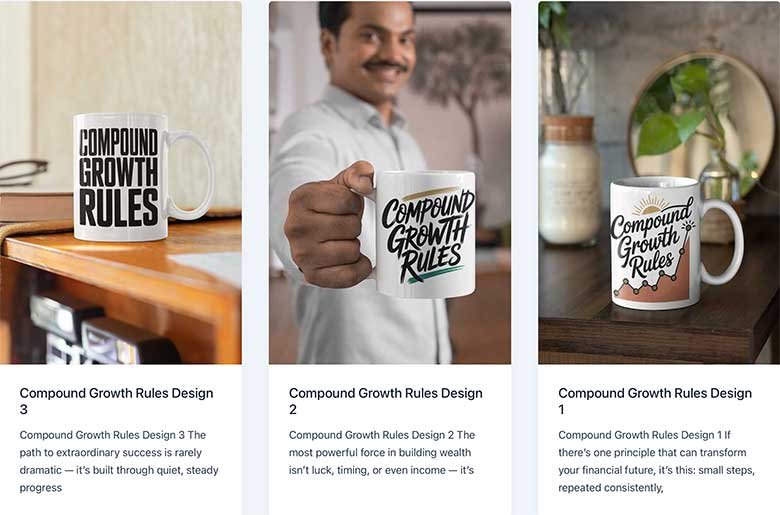
Bring a Little Calm to Your Everyday Choices
Premier Print Works makes quality prints, mugs, and shirts for people who think before they spend. Browse the collection and find what speaks to you.
Visit Premier Print WorksDisclaimer
The content on this page is for informational and inspirational purposes only. It is not professional financial, investment, tax, legal, insurance, or estate planning advice. The numbers in the examples are made up to show how the math works, and your own prices, pay, and plans will differ. Pay figures in the examples are shown before taxes and other deductions, which vary by person and place. Prices, fees, and account terms vary and change. Every household weighs its choices in its own way, and there is no single right answer. Results vary widely from person to person.
I am not a financial advisor, and I am not a licensed tax, legal, or investment professional. I share this information to help people learn about money and see new options. Please treat it as general information only, and talk with a qualified professional about your own situation before making financial decisions.
The stories of Kezia and Daniel are illustrative composite characters created to bring the content to life. They are not real people. Any resemblance to a real person is purely coincidental.
Some links on this page, including links to Premier Print Works and other resources, are affiliate links. If you make a purchase through one of these links, we may earn a small commission at no extra cost to you. We do not own, produce, or control any affiliate products, and we are not responsible for them — we only own and sell the products offered through our own store, Premier Print Works.
All content on A Self Help Hub is the property of Digital Marketing 215 LLC and is protected by copyright law. No part of this page may be copied, reproduced, republished, distributed, or transmitted in any form without prior written permission from the author.