A 14-Day Impulse-Spending Challenge
Impulse buys are rarely big. They are the snack at the checkout, the extra shirt in the cart, and the late-night order that seemed like a good idea at the time. A short impulse spending challenge can bring those small moments into view without turning your life upside down.
Two weeks is long enough to notice patterns and short enough to feel doable. This impulse spending challenge breaks the time into pairs of days, each with one small focus. Nothing here asks you to stop buying what you need. The aim is simply to pause before the extras.
This guide shares general ideas to think about, and it is not advice or a strict set of rules. We will start with a simple setup, move through seven pairs of days, and finish with a wrap-up to keep the habits you like. Go at your own pace, and feel free to repeat any pair of days that feels useful.

Track Your Two-Week Challenge in One Place
Download the free Money Reset Workbook and get simple pages to log your spending, your skipped buys, and what you learn along the way.
Get the Free WorkbookBefore you begin: set up your challenge
A little setup can make the two weeks run more smoothly. One option is to pick a start day when your schedule feels fairly normal. A busy travel week or a birthday weekend might make the challenge harder than it needs to be.
It can help to grab a small notebook or a note on your phone. This will be your challenge log. Each day, you can jot down what you were tempted to buy, what you bought, and how you felt.
Some people also write a short line about why they are doing the challenge. It might be to save for a goal, to feel calmer, or just to learn more about their habits. Reading that line on a hard day can be a gentle reminder.
Choose a start day and write one sentence about why you are trying the challenge.
Days 1 and 2: Notice without changing anything
The first two days are about watching. Spend the way you usually do, and write down every unplanned purchase. Note the time, the place, and what was going on right before you bought it.
You might find that impulse buys happen at certain times. Maybe it is the drive home after work, or scrolling in bed at night. Some people notice that they buy more when they are tired, bored, or stressed.
There is no wrong answer here. These notes are just a starting point for the days ahead.
Write down every unplanned purchase, along with the time and how you felt.
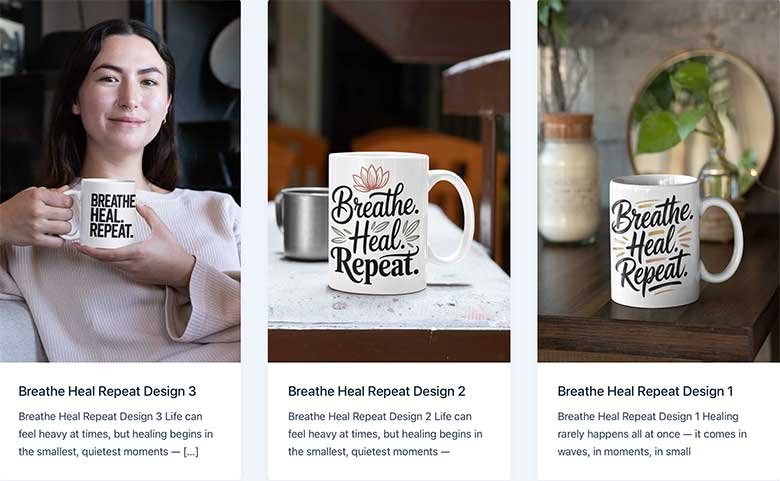
Keep a Gentle Reminder to Pause
Premier Print Works creates quality prints, mugs, and shirts for people who spend on purpose. Find a small reminder to slow down before you buy.
Visit Premier Print WorksDays 3 and 4: Try a 24-hour pause
For these two days, try a simple pause rule. When you want to buy something unplanned, wait 24 hours. If you still want it tomorrow and it fits your budget, you can go ahead.
Many people find that the urge fades after a day. The item that felt exciting in the store may seem less important the next morning. Others find they still want it, and that is fine too.
During the pause, it can help to look at the price in a few places. For related reading, see a price comparison habit.
Wait 24 hours before any unplanned purchase and note whether you still want it.
“A short pause before you buy can be one of the kindest things you do for your budget.”
Days 5 and 6: Limit the easy triggers
Now look back at your notes from the first few days. Which places or habits led to the most impulse buys? These two days are about making those triggers a little harder to reach.
Some ideas to try include unsubscribing from a few sale emails, turning off shopping app alerts, or logging out of stores that save your card. Taking a different route that skips a favorite store is another option.
Small changes like these can add a bit of friction. A purchase that takes a few extra steps is easier to rethink.
Remove or turn off one shopping trigger you noticed in your log.

Write Down What You Skip and Why
The free Money Reset Workbook gives you a clear page to track skipped purchases, so you can see your progress add up.
Get the Free WorkbookDays 7 and 8: Start a skipped-buys list
At the halfway point, try writing down each item you decided not to buy and its price. This becomes your skipped-buys list. Seeing it grow can feel encouraging.
Here is an example with made-up numbers. Say over these two days you skip a $12 lunch out, an $8 drink, and a $25 shirt. That adds up to $45 that stayed in your budget. Your own list will look different, and even a small total counts.
Some people like to move the skipped amount into savings. You may also like turning a spare-change challenge into a habit.
Write each skipped purchase and its price on a running list.
Days 9 and 10: Shop only with a list
For these two days, try making a list before every shopping trip, in a store or online. If an item is not on the list, it can wait for a future trip. This simple step can keep a quick errand from turning into a big bill.
Lists work in many kinds of stores. Grocery runs, hardware stores, and secondhand shops can all be easier with a clear plan. Another place to look is shopping thrift stores with a specific list.
If you spot something new that you really want, you can add it to the next list. That gives it time to pass the 24-hour pause from earlier days.
Write a list before every shopping trip and buy only what is on it.
Days 11 and 12: Swap the feeling, not the purchase
Impulse buys often fill a feeling, like boredom, stress, or wanting a treat. For these two days, try noticing that feeling and picking a free option instead. A walk, a call with a friend, a library book, or a cup of tea at home are all simple swaps.
Some people make a short list of free things they enjoy and keep it near their phone. When the urge to shop shows up, they pick one from the list.
It can help to be kind to yourself here. A treat now and then is part of a good life. The goal is to choose it on purpose.
Write a list of three free things you can do when the urge to shop shows up.
Days 13 and 14: Look back at your log
The last two days are for looking back. Read through your notes from the whole challenge. What triggers came up the most? Which steps felt easy, and which felt hard?
You can also add up your skipped-buys list. Many people are surprised by how much the small items add up to in only two weeks. Others find their total was small, and that they mostly buy what they plan.
Either way, the log tells a useful story. It shows your real habits, written in your own words.
Read your full log and circle the two steps that felt most helpful.
After the challenge: keep what worked
Once the two weeks end, you can choose which habits to keep. Maybe the 24-hour pause felt natural, or shopping with a list saved you time. You can keep one or two of those and let the rest go.
Some people repeat the challenge every few months as a check-in. Others fold the ideas into a bigger money plan. For related reading, see a financial reset plan.
There is no need to be perfect. A few small habits that last can do more than a strict plan that fades quickly.
Pick one or two habits from the challenge to keep for the next month.
Explore Our Top Picks for a Better Life
We have gathered the tools, resources, and products we think are genuinely worth your time, covering mindset, self-care, health, and home. All in one place, hand-picked to support calmer, more mindful spending.
See Our Top PicksReal Stories, Real Results
Let me share two examples I like to use. Amara kept finding small online orders on her card that she barely remembered making. She tried the challenge, turned off shopping alerts, and waited a day before each order. She told me that most of the urges faded by morning, and her card bill felt lighter at the end of the month.
Joel noticed that he bought snacks and drinks on the drive home almost every day. He started keeping a skipped-buys list and moved the money into savings. Both of them said the same thing: watching their habits for two weeks made it easier to spend on purpose.
Two Weeks of Small Pauses Can Change How Shopping Feels
Picture standing at the checkout with only what you planned to buy. The impulse items on the shelf catch your eye, and you smile and walk past. Your skipped-buys list keeps growing, and so does your sense of calm.
Choose a start day, grab a notebook, and begin with the first two days of noticing. Download the free Money Reset Workbook to track your spending as you go. Small pauses can lead to big shifts.
Want Ready-Made Tools to Help You Put This Into Action?
Sometimes the fastest way forward is a tool that someone has already built. Browse our hand-picked resources and downloads, chosen to help you take the next step with less guesswork.
Browse Resources and Downloads
Ready to Spend More on Purpose?
The free Money Reset Workbook helps you see your numbers clearly, so every purchase feels like a choice.
Download Free Now
Bring a Little Mindfulness Into Your Space
Premier Print Works makes quality prints, mugs, and shirts for people building calmer spending habits. Browse the collection today.
Visit Premier Print WorksDisclaimer
The content on this page is for informational and inspirational purposes only. It is not professional financial, investment, tax, legal, insurance, or estate planning advice. The numbers in the example are made up to show how the math works. Prices, fees, and account terms vary and change. This challenge is a set of general ideas, and it is never meant to stop anyone from buying food, medicine, safety items, or other true needs. If spending feels out of control or debt feels heavy, a nonprofit credit counselor, local legal aid, or 2-1-1 in the U.S. may be able to point you toward support. Results vary widely from person to person.
I am not a financial advisor, and I am not a licensed tax, legal, or investment professional. I share this information to help people learn about money and see new options. Please treat it as general information only, and talk with a qualified professional about your own situation before making financial decisions.
The stories of Amara and Joel are illustrative composite characters created to bring the content to life. They are not real people. Any resemblance to a real person is purely coincidental.
Some links on this page, including links to Premier Print Works and other resources, are affiliate links. If you make a purchase through one of these links, we may earn a small commission at no extra cost to you. We do not own, produce, or control any affiliate products, and we are not responsible for them — we only own and sell the products offered through our own store, Premier Print Works.
All content on A Self Help Hub is the property of Digital Marketing 215 LLC and is protected by copyright law. No part of this page may be copied, reproduced, republished, distributed, or transmitted in any form without prior written permission from the author.