Anchoring and Price Tags: How the First Number Can Shape What Feels Fair
Is $60 a lot for a pair of shoes? It depends on what you saw a moment earlier. If the pair beside them was $150, sixty might feel like a steal. If the last pair you bought cost $25, it might feel steep. That pull from a first number is often called price anchoring.
An anchor holds a boat in place, and a first number can hold a shopper’s sense of fair in place too. Price anchoring simply means the first price someone sees can shape how the next prices feel. Many people notice it once it is pointed out, and it shows up in stores, menus, websites, and even paychecks.
This guide explains common places an anchor may appear and a few calm ways to set your own number first. It uses small made-up prices you can check. It shares general information only, and it is not advice or instructions. It does not claim that any store sets prices in a certain way. Take it one section at a time.

Set Your Own Numbers Before You Shop
Download the free Money Reset Workbook and get simple pages to plan spending ranges, so the first price you see is not the one that decides.
Get the Free WorkbookWhat an anchor looks like in daily life
An anchor is any number that comes first and becomes a reference point. It might be an old price, a high-priced item on the same shelf, or a number a salesperson mentions early in a chat.
Once that first number is in mind, a person might judge the next one against it. A price below the anchor can feel like a good deal. A price above it can feel too high, even when the item is the same.
Noticing anchors simply shows one more thing that can shape a choice, with no distrust needed. A person can still enjoy a deal while knowing where the feeling came from.
Think of the last thing you bought and write down the first price you saw for it.
The was price next to the sale price
Sale tags often show two numbers. One is crossed out, and one is the price today. The crossed-out number can act as an anchor, since it sets the size of the deal in a shopper’s mind.
Here is an example with made-up numbers. A jacket says was $80, now $50. That looks like $30 off, since $80 minus $50 is $30. The question many people find helpful is a different one. Does $50 fit my plan for a jacket, whatever the old price was?
Sometimes the old price is a real price that many people paid. Sometimes it is harder to know. Either way, the sale price is what leaves your wallet. Looking at that number on its own can make a choice feel clearer. For related reading, see this page about paying full price.
The next time you see a was price, cover it with your thumb and look only at the price today.
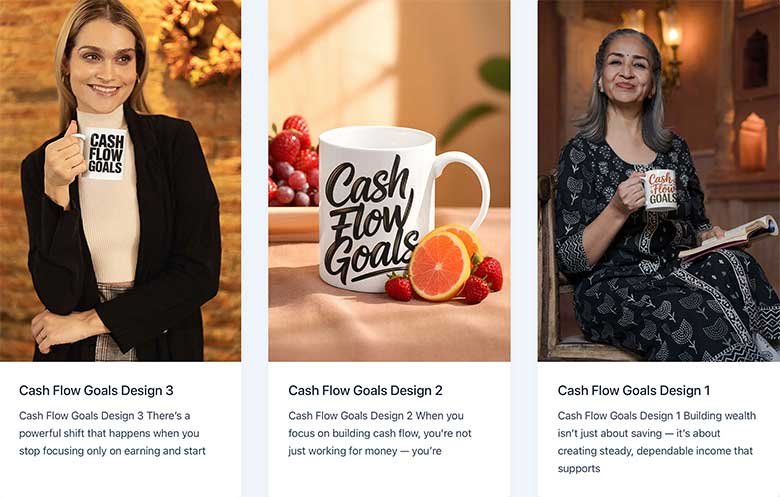
A Small Reminder to Shop With a Plan
Premier Print Works creates quality prints, mugs, and shirts for thoughtful shoppers. Find a little reminder you will enjoy.
Visit Premier Print WorksWhen a pricey item sits first in line
Where items are placed can create an anchor too. A very expensive item at the top of a menu or the front of a display may make the next items feel modest by comparison.
Here is a made-up example. A menu lists a $48 special at the top. Below it is a $26 dish. After seeing $48, the $26 dish may feel middle of the road. If the $48 special were not there, $26 might feel like a treat.
There is nothing wrong with ordering the $26 dish. Noticing the pull simply lets a person choose with the full picture. Some people like to glance at the whole menu or shelf before landing on a number.
At your next meal out, look at the full menu before reading any single price closely.
“The first number in the room does not have to be the one that decides.”
Three choices and the pull of the middle
Many plans and products come in three levels, such as basic, standard, and premium. The top level can act as an anchor that makes the middle one feel sensible.
Here is a made-up example. Three plans cost $10, $20, and $45 a month. The $45 plan makes $20 look moderate. Over a year, though, the $20 plan is $240, since $20 times 12 is $240. The $10 plan is $120. The gap between the two lower plans is $120 a year.
The middle plan may be a great fit. It may also include features someone rarely uses. Looking at what each level offers, and at the yearly total, can help a choice line up with real needs.
Pick one service you pay for, list its levels, and write the yearly cost of each.

Plan Your Spending Ranges in One Place
The free Money Reset Workbook gives you a clear page to set price ranges and track what you buy, so choices feel steady.
Get the Free WorkbookSuggested amounts on screens and forms
Some screens and forms show suggested amounts. A tip screen may show three percent choices. A donation form may show a few dollar buttons. The first numbers shown can act as anchors for what feels normal.
Here is a made-up example. A tip screen shows 20, 25, and 30 percent on a $40 bill. Those buttons equal $8, $10, and $12. A custom option is often there too, though it may be smaller on the screen.
Tipping and giving are personal choices shaped by many things, including local customs and the service. Knowing that a custom button is usually available simply gives a person room to pick the amount they want.
Next time you see a suggested amount screen, look for the custom option before tapping.
Your own past prices can act as anchors
Anchors are not only set by others. The price you paid last time can become your own anchor. If milk cost a certain amount the last time you shopped, a higher price may feel unfair, even if prices everywhere have shifted.
This can help and hurt. A past price can help a person spot a real jump. It can also make a fair new price feel wrong, or keep someone from buying something they truly need.
Keeping a short record of prices over time can turn a fuzzy memory into a clear number. Then a person can compare against facts as well as a feeling. You may also like this page on unit prices.
Start a short note with the prices of five items you buy often, so your anchors are real numbers.
Setting your own number before you look
One calm way to work with anchors is to set your own number first. Before shopping, some people decide on a price range that fits their plan. Then the first price they see meets a number that already exists.
Here is a made-up example. Someone plans to spend up to $70 on a coffee maker. In the store, the first model shown is $140, and the next is $90. With a number set ahead of time, the $90 model can be seen as over the plan, rather than as a bargain next to the first.
A preset number can bend. A person can still change it after learning more. It simply gives the first number in the conversation to you. For related reading, see this page about impulse spending.
Before your next planned purchase, write a price range on a note and bring it with you.
Comparing with outside numbers
Another way to balance an anchor is to bring in other numbers. Checking the same item at a few places, or comparing the cost per unit, can show where a price really sits.
Unit price means the cost for one ounce, one sheet, or one item. Here is a made-up example. A 20-ounce box costs $4, which is 20 cents an ounce. A 32-ounce box costs $5.76, which is 18 cents an ounce. The bigger box is cheaper per ounce, though only if all of it gets used.
Outside numbers do not need to be perfect. Even two or three comparisons can loosen the hold of a single anchor and make a choice feel more grounded. Another place to look is this page about comparing prices.
For one item on your list, check the price in two places and write the cost per unit for each.
A short check before you buy
A few plain questions can help when an anchor may be at work. What was the first number I saw? Is it shaping how this price feels? Would I pay this price if I had never seen that first number?
A couple more can help too. What is the total over a month or a year? Does this fit the range I set ahead of time? Is there a simpler option that meets the need?
None of this means a person has to skip a purchase. It just brings the choice back to your own plan and your own needs. Many people find that the pause itself is the most useful part.
Copy these questions into your phone and read them before your next bigger purchase.
Explore Our Top Picks for a Better Life
We have gathered the tools, resources, and products we think are genuinely worth your time, covering mindset, self-care, health, and home. All in one place, hand-picked to support the goals you are working toward.
See Our Top PicksReal Stories, Real Results
Let me share two examples I like to use. Kezia went shopping for a couch and saw a $2,000 model first. Every couch after that felt cheap, and she almost spent more than she planned. She told me that writing her own price range on a card before her next trip made her feel like she was steering the choice.
Daniel paid for the middle level of a streaming plan because it seemed like the sensible pick. He wrote down the yearly cost of each level and saw that the basic plan covered everything he watched. He felt good knowing why he chose what he chose. Both of them said the same thing: once they saw the first number for what it was, prices felt easier to judge.
Choosing Prices That Fit Your Own Plan
Picture walking into a store with a number already in mind. You see the high price first, notice its pull, and smile. Your own plan guides the choice, and you leave feeling settled.
Start with one purchase and one preset range. Download the free Money Reset Workbook to keep your spending plan in one place. A little planning can make every price tag easier to read.
Want Ready-Made Tools to Help You Put This Into Action?
Sometimes the fastest way forward is a tool that someone has already built. Browse our hand-picked resources and downloads, chosen to help you take the next step with less guesswork.
Browse Resources and Downloads
Ready to Let Your Plan Lead the Way?
The free Money Reset Workbook helps you set your own numbers first, so every purchase fits your budget.
Download Free Now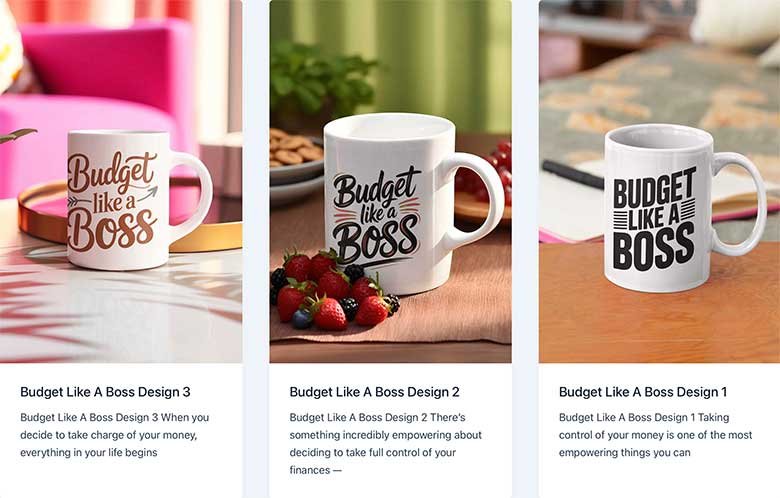
Add a Calm Touch to Your Home
Premier Print Works makes quality prints, mugs, and shirts for people building steady money habits. Browse the collection and find what fits.
Visit Premier Print WorksDisclaimer
The content on this page is for informational and inspirational purposes only. It is not professional financial, investment, tax, legal, insurance, or estate planning advice. It describes a general idea about how a first number can shape a choice and does not claim that any store or seller sets prices in a certain way. All numbers in the examples are made up to show how the math works, and they are not real prices. Prices, fees, and account terms vary and change. Results vary widely from person to person. If a price or offer seems misleading, a state consumer protection office can answer questions.
I am not a financial advisor, and I am not a licensed tax, legal, or investment professional. I share this information to help people learn about money and see new options. Please treat it as general information only, and talk with a qualified professional about your own situation before making financial decisions.
The stories of Kezia and Daniel are illustrative composite characters created to bring the content to life. They are not real people. Any resemblance to a real person is purely coincidental.
Some links on this page, including links to Premier Print Works and other resources, are affiliate links. If you make a purchase through one of these links, we may earn a small commission at no extra cost to you. We do not own, produce, or control any affiliate products, and we are not responsible for them — we only own and sell the products offered through our own store, Premier Print Works.
All content on A Self Help Hub is the property of Digital Marketing 215 LLC and is protected by copyright law. No part of this page may be copied, reproduced, republished, distributed, or transmitted in any form without prior written permission from the author.